

Your Guide to SMP Training Adelaide and Scalp Micropigmentation
Starting a career in Scalp Micropigmentation (SMP) is an incredible opportunity for anyone in Adelaide with a creative touch and a genuine desire to help people feel their best. Getting the right SMP training in Adelaide is your non-negotiable first step, giving you the hands-on skills and business smarts to truly make a mark in this booming field. This guide will walk you through finding a program that sets you up for success.
Your Path to an SMP Career in Adelaide
Scalp Micropigmentation isn't just a clever solution for hair loss; it's a genuine art form. It demands a unique blend of artistic vision and technical skill to create results that genuinely restore a person's confidence. For anyone in South Australia looking to become a practitioner, choosing the right training provider is the single most important decision you'll make. It’s the foundation for your skill, your future clients' results, and the long-term health of your business. With more people seeking out highly skilled SMP artists, investing in a top-tier education opens up a world of opportunity.
Don't think of it as just another course. See it as an apprenticeship in a highly specialised craft. The best programs do more than just show you how to operate a machine; they dive deep into the principles that separate a technician from a true artist.
What Does the Training Journey Actually Look Like?
Becoming a certified SMP artist involves hitting several key milestones. Any quality course will be structured to guide you through each stage, building your skills and your confidence along the way. You should expect the curriculum to cover:
- The Theory First: This means getting a solid grasp of skin anatomy, mastering colour theory to perfectly match pigments, and understanding the science behind different types of hair loss.
- Developing Your Technical Skills: You’ll get familiar with various needle configurations, learn to properly handle your machine, and perfect the techniques needed to create hyper-realistic hair follicle replications.
- Hands-On, Real-World Practice: This is where everything comes together. You'll start on practice skins and then move on to live models. This practical experience is absolutely essential.
- Health & Safety Standards: Complying with Australian health and safety regulations is critical. It protects your clients and safeguards your professional reputation.
Choosing the right training provider is the single most important investment you'll make in your SMP career. It's about finding a mentor who will guide you not just through the course, but into the industry itself.
To kickstart your research, the table below breaks down the most important things to consider when you're comparing providers for SMP training in Adelaide. It’s a simple framework to help you make a smart, informed decision. For a more detailed look at what it takes, you can learn more about the training required to become a professional hair tattoo artist in our comprehensive guide.
Key Considerations for Your SMP Training Journey
| Factor | What to Look For | Why It Matters |
|---|---|---|
| Instructor Experience | An artist with a massive portfolio of real client work and years of genuine, hands-on experience. | An experienced pro teaches from real-world scenarios, not a manual. Their insights are pure gold. |
| Class Size | Small, intimate classes—ideally just 1-3 students. | This guarantees you get personal attention, direct feedback, and plenty of one-on-one time with your instructor. |
| Hands-On Practice | A guarantee that you will work on live models under close supervision. | It’s the only way to build the practical confidence and muscle memory you need to work on paying clients. |
| Post-Training Support | Ongoing mentorship, access to a professional community, and guidance on starting your business. | Your learning journey doesn't end on the last day of class. Continuous support is vital for tackling those early career hurdles. |
Ultimately, finding a trainer who is as invested in your success as you are is the key. Look for a program that feels like a partnership, one that will support you long after you've received your certificate.
What a Top-Tier SMP Training Course Actually Covers
Choosing professional SMP training in Adelaide isn't just about learning to use a machine; it's about mastering an intricate craft. Think of it like a chef's apprenticeship. You don't just learn a recipe; you learn about ingredients, flavour profiles, and techniques until you can create a masterpiece from scratch.
A truly comprehensive course breaks down the art and science of Scalp Micropigmentation into connected, easy-to-grasp modules. Each piece of the puzzle builds on the last, taking you from a curious beginner to a skilled practitioner who can confidently handle any client that walks through the door.
The Theory: Building Your Foundation
Before you even touch a needle, you need to get the fundamentals down pat. This isn't the boring part—it's the knowledge that will separate you from the amateurs. Trying to perform SMP without this theoretical base is like building a house on sand. It just won’t last.
Any quality course will spend serious time on these three pillars:
- Skin Science & Anatomy: The scalp is your canvas, so you need to understand it inside and out. You'll dive into different skin types (oily, dry, sensitive), learn how skin thickness varies across the head, and see how these factors affect how the pigment heals and lasts. This is the secret to predicting your results long-term.
- Advanced Colour Theory: This goes way beyond the primary school colour wheel. SMP colour theory is all about creating a perfect illusion. You'll learn to mix pigments with precision to match a client’s hair colour and skin undertones, making sure the final look is completely natural and won't turn blue or fade unnaturally over time.
- Health, Safety, and Sanitation: In Australia, health standards are strict and non-negotiable. This part of your training is critical. It covers everything from bloodborne pathogen safety and preventing cross-contamination to setting up a sterile workspace. It’s all about protecting your clients, and yourself.
The Technique: Mastering the Artistry
With the theory locked in, it’s time to get hands-on and develop your technical skills. This is where your creative vision meets clinical precision. It’s a bit like a musician practising scales over and over before they can play a beautiful symphony. Every follicle impression is a single note that contributes to the final, harmonious result.
The goal isn't just to tattoo dots on a head. It's about understanding the subtle dance of depth, angle, and spacing that creates a hairline so natural, it's completely undetectable.
You’ll spend hours and hours honing these essential skills with an expert watching over your shoulder, ensuring every move you make is controlled and purposeful.
The path from student to practitioner is a clear one, and it all hinges on the quality of your training, as this flowchart shows.
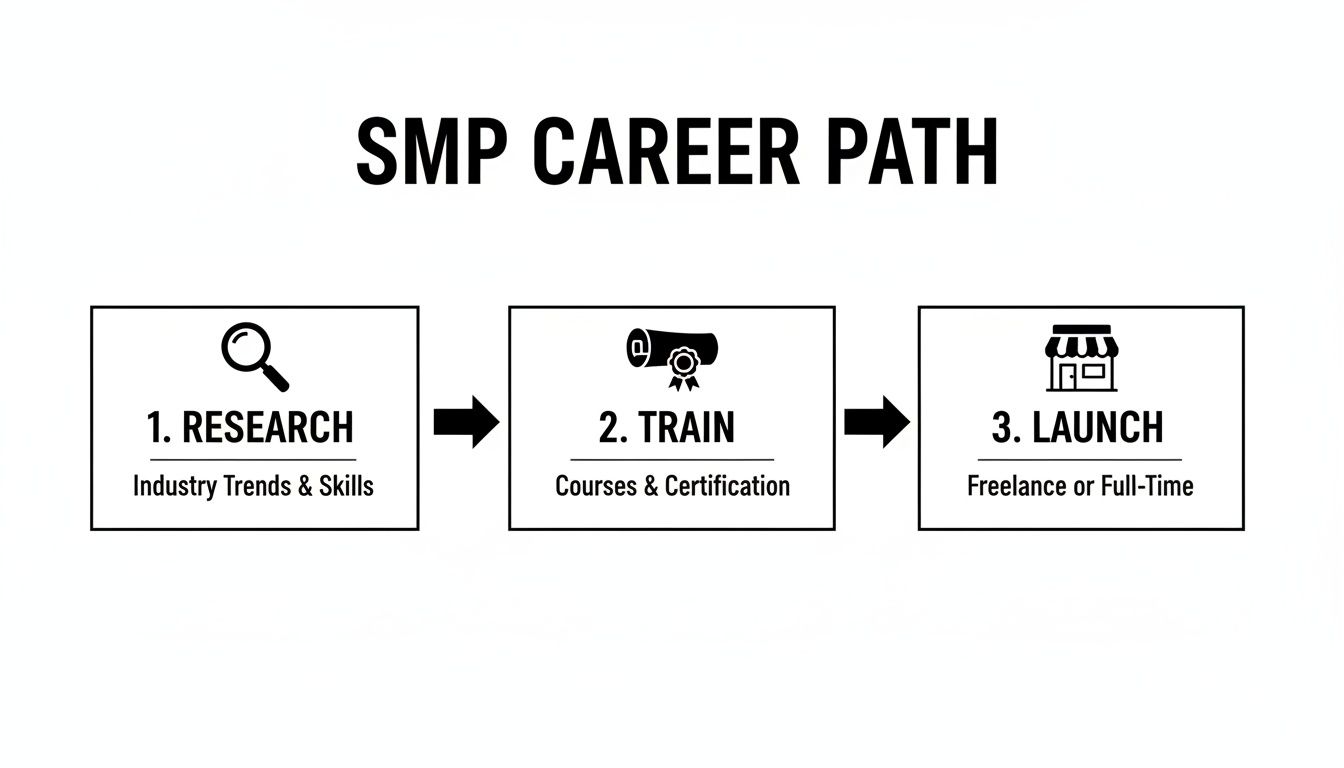
As you can see, solid training isn't just a step; it's the bridge between doing your research and launching a successful career.
The Practice: From Fakes to Live Models
This is where it all comes together. The final, and arguably most important, phase of any legitimate SMP course is putting your skills to the test in the real world. A good program eases you into this to build your confidence one step at a time.
- Work on Synthetic Skins: You'll start on practice skins made of latex or silicone. This is your chance to get a feel for the machine, nail your hand pressure, and perfect your depth and speed without the pressure of working on a real person.
- Guided Live Model Sessions: This is the peak of your training. You’ll work on actual clients under the direct, one-on-one supervision of your instructor. The experience you gain here is priceless and gives you the confidence you need to go out on your own. For anyone looking to get the most out of their study, these online course tips offer great advice that applies to any learning environment.
By the time you finish a course like this, you won’t just walk away with a certificate. You'll have a portfolio of your own work from the live model sessions, which is the ultimate proof that you’re ready for the industry. To see what a detailed curriculum looks like, you can learn more about how to learn scalp micropigmentation and see what we offer here at My Transformation.
How to Evaluate SMP Training Providers in Adelaide
Choosing the right academy is easily the most important decision you'll make on your path to becoming a professional SMP artist. Let me be clear: not all SMP training in Adelaide is the same. The quality of your education will directly shape your skill, your confidence, and ultimately, your success in this industry. Think of it less like signing up for a course and more like finding a mentor.
This isn't a decision to rush. You've got to look past the slick websites and fancy marketing promises to figure out what's really being offered. A good trainer is a partner in your career, someone who's as invested in your growth as you are.
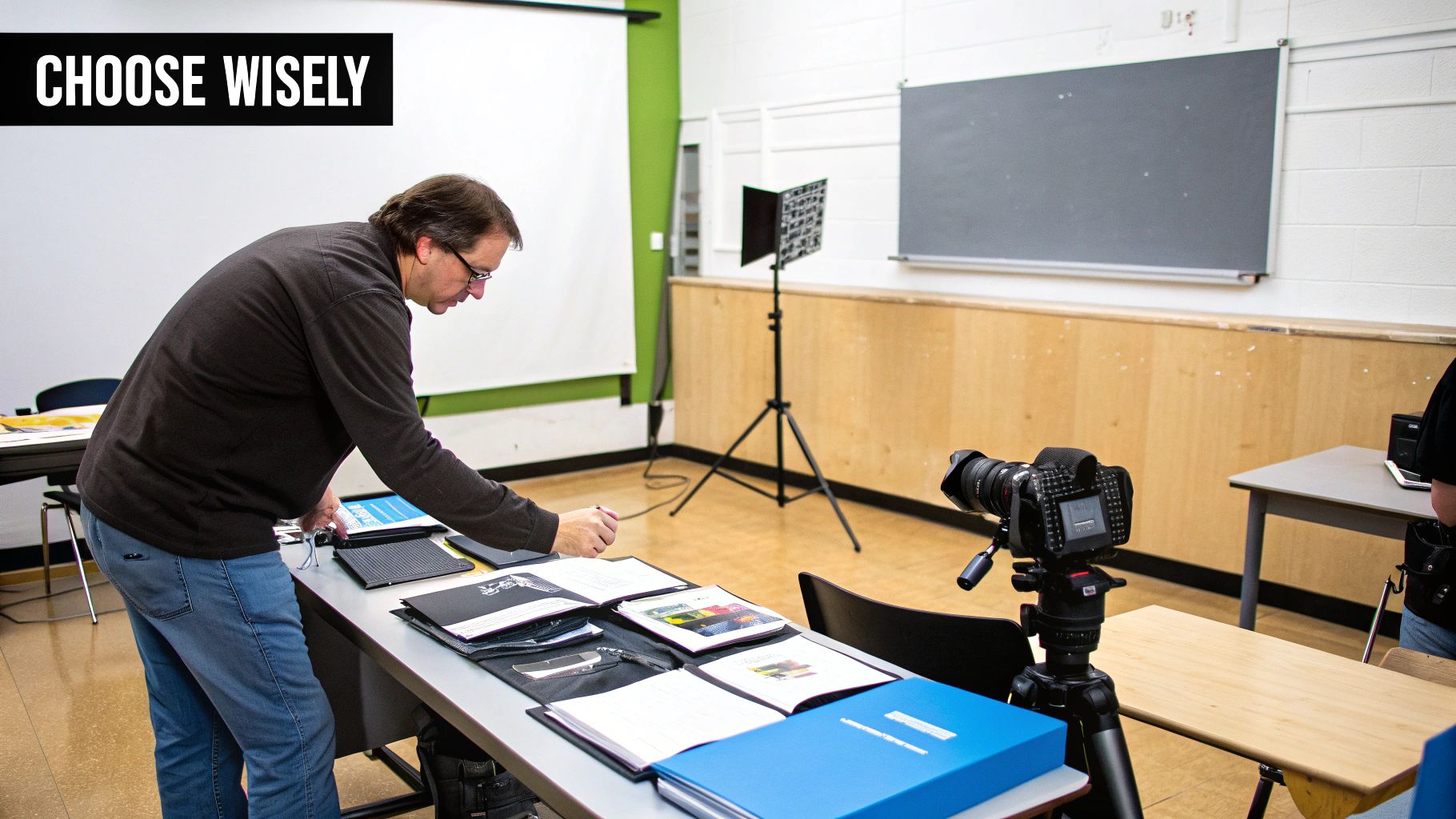
Scrutinise the Trainer’s Experience and Portfolio
First things first, you need to vet the person who will be teaching you. You aren't just learning a set of steps; you're absorbing an art form from a specific artist. Their real-world experience is the most valuable thing you'll take away from any course.
Get ready to ask some direct questions:
- How many years have they actually worked as a full-time SMP artist? You want someone who has spent years in the trenches, working with real clients day in and day out.
- Can you see a massive portfolio of their work? A great trainer should be able to show you hundreds of examples on different skin tones, with different hair colours, and across all stages of hair loss. This proves they can handle anything that walks through the door.
- Do they seem passionate about teaching? Being a brilliant artist doesn't automatically make someone a good teacher. Look for someone patient, clear in their explanations, and genuinely excited to help new artists succeed.
An experienced trainer teaches from a depth of knowledge that no textbook can replicate. They're the ones who can share stories about tricky client situations and how they handled them—that’s where the real learning happens.
Insist on Small Class Sizes
This one is a deal-breaker. SMP is a hands-on skill requiring absolute precision. You simply can't learn it effectively in a large group.
The ideal class size is just one to three students. This is the only way to guarantee you get constant, personalised feedback from your instructor, especially when you start working on live models.
In a small group, the trainer is right there beside you, watching your every move. They can correct your hand pressure on the spot, refine your technique, and answer your questions the second they pop into your head. Anything bigger than a handful of students and you risk getting lost in the crowd, missing out on the very feedback that builds true skill and confidence.
Assess the Training Facility and Equipment
The place you learn and the tools you use matter more than you think. When you check out a potential training academy in Adelaide, pay attention to the little things. Does the space feel professional? Is it spotless? It absolutely must be compliant with all South Australian health and safety regulations.
Also, ask what kind of equipment you'll be training on. You should be learning with the same professional-grade machines, needles, and pigments used in top-tier clinics. Getting a feel for high-quality, industry-standard tools from day one makes the transition into your own professional practice so much smoother.
Prioritise Post-Training Support
What happens after you get your certificate is just as crucial as the training itself. Your learning journey doesn't just stop when the course ends; in many ways, it's just beginning.
This is where ongoing support separates the average courses from the exceptional ones. A training provider who genuinely cares about your success will have a solid support system in place. This could look like:
- Ongoing Mentorship: The ability to call or text your trainer when you're facing a challenging client and need advice.
- Community Access: An invite to a private group for graduates where you can share your work, ask for feedback, and learn from each other's experiences.
- Business Guidance: Real, practical advice on setting up your business, marketing your new skills, and making a name for yourself in Adelaide.
Choosing a program with strong post-training support means you're not just buying a course; you're joining a professional network. It’s an investment that will continue to pay off for years to come.
Understanding Course Costs and Time Commitments
Getting into professional SMP training in Adelaide is a big step, and it's one that involves both your time and your money. But it’s important to see it as an investment in yourself and your future career, not just an upfront cost. A top-notch course gives you the skills, confidence, and ongoing support you need to build a successful and rewarding business.
The price of SMP courses can really vary across Adelaide, so it's crucial to know exactly what your money is getting you. The fee isn't just for the days you spend in the classroom; it covers the whole package, from the tools you'll walk away with to the experience of the person teaching you.
Breaking Down the Cost of Training
When you're looking at the price of an SMP course, you'll quickly realise it’s not an apples-to-apples comparison. Several things factor into that final number, and digging into the details is key to making a smart choice. A cheaper course might look good on paper, but if it's missing critical elements, it could cost you a lot more down the track.
Here’s what generally makes up the cost:
- A Comprehensive Starter Kit: This is a big one. A professional-grade kit should include a reliable SMP machine, a solid range of pigments, different needle cartridges, and practice materials. A quality kit means you can get to work right after you're certified.
- Your Instructor's Expertise: You're paying for access to an expert's hard-won knowledge. A trainer with years of real-world client experience and a solid reputation will naturally command a higher fee, but their mentorship is priceless.
- An Ongoing Support System: The best courses don't just end on the last day. They include post-training support, which gives you a lifeline to expert guidance and a community of fellow artists—an essential resource when you're just starting out.
The real measure of a training course is the success of its students. The initial investment should set you on a direct path to earning it back by performing skilled, confident work on paying clients.
What Your Course Fee Should Include
Transparency is everything. Before you sign up, you should get a crystal-clear list of what’s included and what's not. While there's no public database of what every Adelaide provider offers, a quality course should give you everything you need to hit the ground running. For a deeper look into local pricing, you can find more insights about the costs associated with the SMP industry in Adelaide to get a feel for the market.
What's Typically Included:
- All theory manuals and learning resources.
- A complete professional starter kit (machine, power supply, pigments).
- All consumables used during training (needles, practice skins, hygiene supplies).
- Hands-on practice on live models, organised by the academy.
- Your certificate of completion.
It’s always a good idea to ask about any potential hidden costs. Do you need to buy your own machine? Is there an extra fee for the live model sessions? Get these answers upfront.
Intensive Workshops vs Flexible Schedules
Your time commitment is the other big piece of the puzzle. Most professional SMP training in Adelaide is delivered through an intensive, hands-on workshop, usually over 3 to 5 consecutive days. This immersive format is designed to build your skills and muscle memory quickly, without long gaps between lessons where you might forget what you've learned.
This focused approach keeps you in the zone, helping you smoothly transition from theory to practical work. To see what a well-structured program involves, take a look at the curriculum for our 5-Day SMP Hair Tattoo Training Course, which we've designed to get you clinic-ready from day one. Ultimately, choosing the right format comes down to what works for your learning style and sets you up for professional success.
Getting Your Qualification and Staying Above Board
Finishing your SMP course is a massive milestone. But that certificate you earn? It's much more than just a piece of paper. It’s your proof that you know what you’re doing and tells clients you’ve met a high professional standard. A quality certification is your ticket into the industry, showing you have the skills to perform SMP safely and get fantastic results.
That said, not all certificates are created equal. A qualification from a well-known trainer that includes plenty of hands-on practice with live models is worth its weight in gold. It carries far more authority than a certificate from a quick, theory-only online course. This difference becomes crystal clear when you start marketing your business and building trust with clients here in Adelaide.
What a Good Certificate Really Means
Think of your certification as your professional passport. It should show that you've been properly tested and have a solid handle on the most important parts of the job. When you finish a high-calibre SMP training in Adelaide, your certificate is proof you've mastered:
- Infection Control and Safety: You know Australian hygiene and sterilisation standards inside and out and can apply them to prevent any risk of cross-contamination.
- Technical Skill: You've proven you can create realistic, natural-looking follicle replications. This means you understand needle depth, pigment choice, and how to design a hairline that actually suits the client.
- Client Consultation and Care: You know how to talk to a client, figure out what they need, set realistic expectations, and give them clear aftercare instructions.
Understanding the Rules in South Australia
Once you’ve got your certificate in hand, the next step is making sure your business is set up legally. In South Australia, SMP is considered a 'skin penetration procedure'. This means it’s regulated by SA Health and your local council. Flying under the radar simply isn't an option.
Meeting these local regulations is non-negotiable. It protects your clients, makes your business legitimate, and saves you from massive legal and financial headaches down the track.
Before you even think about treating your first client, you need to have a firm grasp of what's required. This is the foundation of your professional reputation.
Your Legal Checklist for Practising in Adelaide
To get your SMP studio up and running in Adelaide, you'll need to tick a few specific legal boxes. A good training provider should point you in the right direction, but at the end of the day, it's on you as the business owner to be compliant. Here’s what to focus on first:
- Council Approval: You need to register your business premises with your local council. They’ll come out and inspect your studio to make sure it complies with the South Australian Public Health (General) Regulations 2013.
- Infection Control Qualification: You'll need to show proof of a formal qualification in infection control. The national standard is the HLTINF005 Maintain Infection Prevention for Skin Penetration Treatments certificate.
- Public Liability Insurance: This is an absolute must-have. It covers you and your business if a client has an unexpected reaction or an accident happens in your studio.
- Keeping Proper Records: You're legally required to keep detailed, confidential records for every client. This includes their signed consent forms, patch test results, and notes from every single session.
Getting these things sorted from day one means your business starts on a solid, professional, and legal footing. It gives both you and your future clients total peace of mind.
Building Your SMP Business After Graduation
Finishing your professional SMP training in Adelaide is a massive milestone, but let's be honest—it's the starting pistol, not the finish line. This is where the real work begins: taking those hard-earned skills and turning them into a business that doesn't just survive, but thrives.
Whether you're picturing your own private studio or thinking of joining an established clinic to get your feet wet, the fundamentals are the same. It all boils down to showing off your artistry, connecting with the local Adelaide community, and running your business like a pro.
Crafting a Powerful Portfolio
Your portfolio is everything. It's your most powerful marketing tool and the first thing potential clients will look at to decide if you’re the right artist for them. Forget about blurry phone snaps; crisp, high-quality before-and-after photos are absolutely non-negotiable.
You need to get serious about learning how to take clear, well-lit photos and videos that do justice to your work. Consistency is your best friend here. Get into the habit of capturing every client's results from multiple angles (front, top, sides) under the same lighting. This builds a professional, compelling gallery that screams "I know what I'm doing" and builds trust instantly.
Mastering Your Local Digital Presence
As a new SMP artist on the Adelaide scene, your first clients are going to come from right here in your local area. That makes your digital presence mission-critical. You have to be easy to find for people who are actively looking for a hair loss solution.
A simple, professional website is a great start, but social media, especially Instagram, is where you can really build a following for a visual craft like SMP. Use it to showcase your best work, share glowing client testimonials, and post helpful content that educates people about the procedure. To really draw in local clients, getting your head around Mastering Local SEO in Adelaide is a game-changer for getting seen online.
Think of your online presence as your 21st-century shopfront. It has to look sharp, professional, and be easy for Adelaide locals to find, reassuring them you're a skilled and credible artist.
On top of that, setting up a Google Business Profile is a must-do. It gets you on the map—literally—and gives happy clients a place to leave reviews. In a service industry like ours, those five-star reviews are pure gold.
Setting Your Prices and Managing Your Business
Figuring out your pricing is one of the biggest decisions you'll make straight out of the gate. Have a look at what other reputable artists in Adelaide are charging to get a feel for the going rate. Your price should be a reflection of your skill, the quality of your service, and the professional space you provide.
Whatever you do, don't get sucked into a race to the bottom on price. People looking for a permanent cosmetic treatment want quality and safety, not the cheapest bargain they can find. You can always adjust your rates as you build a killer portfolio and a solid reputation.
Nailing the business basics from day one will set you up for success down the road.
- Appointment System: Get a simple online booking system. It helps you manage your calendar, send out reminders, and take deposits, all while making you look incredibly professional.
- Client Management: Keep meticulous, confidential records for every single client. This means consultation notes, consent forms, patch test results, and photos from every session.
- Embrace Storytelling: Nothing sells your service better than a happy client. A quick video testimonial or a written story from someone whose confidence you restored is more powerful than any ad you could ever run.
By focusing on these practical steps, you'll close the gap between being a freshly certified technician and a successful business owner. And if you're coming from a barbering background, you might find our article on SMP training for barbers particularly interesting.
Your SMP Training Questions, Answered
Thinking about professional SMP training in Adelaide is a big move, so it's only natural to have a few questions before you dive in. Let's clear up some of the most common queries we get from aspiring artists to help you make your decision with confidence.
Do I Need a Tattooing or Beauty Background?
Not at all. While coming from a background in tattooing or beauty therapy can give you a bit of a head start, it’s definitely not a requirement to succeed. In fact, some of the best artists I know started from scratch.
A great SMP course is built for complete beginners. It will take you right back to basics, covering everything from the science of skin to the nitty-gritty of application techniques. What truly matters is having a steady hand, an eye for detail, and a real desire to help people feel good about themselves again.
What’s the Earning Potential Like in Adelaide?
How much you earn as a certified SMP artist really comes down to your skill, your reputation, and how well you run your business. Here in Adelaide, you can expect a standard multi-session SMP treatment to bring in anywhere from $1,200 to over $4,000, depending on what the client needs.
As you start to build a portfolio of fantastic results and gather glowing client reviews, you can create a seriously profitable and fulfilling business. A skilled, dedicated artist has the potential to make a very comfortable living. A good training provider will also give you the inside scoop on current market rates and how to price your services effectively.
The secret isn't just getting into the industry—it's about standing out. Superior training, genuine artistry, and exceptional client care will always set you apart, no matter how much competition there is.
What Kind of Support Should I Expect After the Course?
The best training programs know that learning doesn't stop the moment you get your certificate. Your journey is just beginning, and a top-tier academy will provide solid support long after you’ve graduated.
Here’s what you should be looking for in a provider:
- Ongoing Mentorship: You need to be able to call on your instructor for advice when you come across a tricky client case. That real-world guidance is priceless.
- A Professional Community: Being part of a private group with other artists is a game-changer. It’s a place to share your work, ask for a second opinion, and learn from everyone's wins and challenges.
- Continuous Guidance: Look for dedicated support channels that help you polish your skills and navigate the business side of things once you're out on your own.
This kind of ongoing support system is what builds real confidence as you go from student to professional. If you're still weighing things up, our article on whether you should train in Scalp Micropigmentation might give you some extra clarity.
At My Transformation, we’re firm believers that world-class training is the bedrock of a successful career. Our courses give you the skills, the confidence, and the ongoing support you need to truly thrive in the SMP industry. https://rightwing-health.info/a%3E%3C/p%3E