

Scar Camouflage Tattoo Perth Your Ultimate Guide to Healing with Ink
A scar camouflage tattoo is a highly specialised cosmetic treatment designed to make scars less noticeable. Using medical-grade pigments that are custom-blended to your exact skin tone, a skilled practitioner can carefully deposit colour into scar tissue, helping it blend seamlessly with the surrounding skin.
It’s an incredible option for reducing the visibility of scars from surgery, accidents, or even stretch marks, and for many people, it’s a huge confidence booster.
How a Scar Camouflage Tattoo Can Restore Your Skin's Story
Think of this process less as "covering up" a scar and more as skilfully blending it into the background. It’s about being able to look at your skin and not have a scar be the first thing you see, effectively helping you rewrite the story your skin tells.
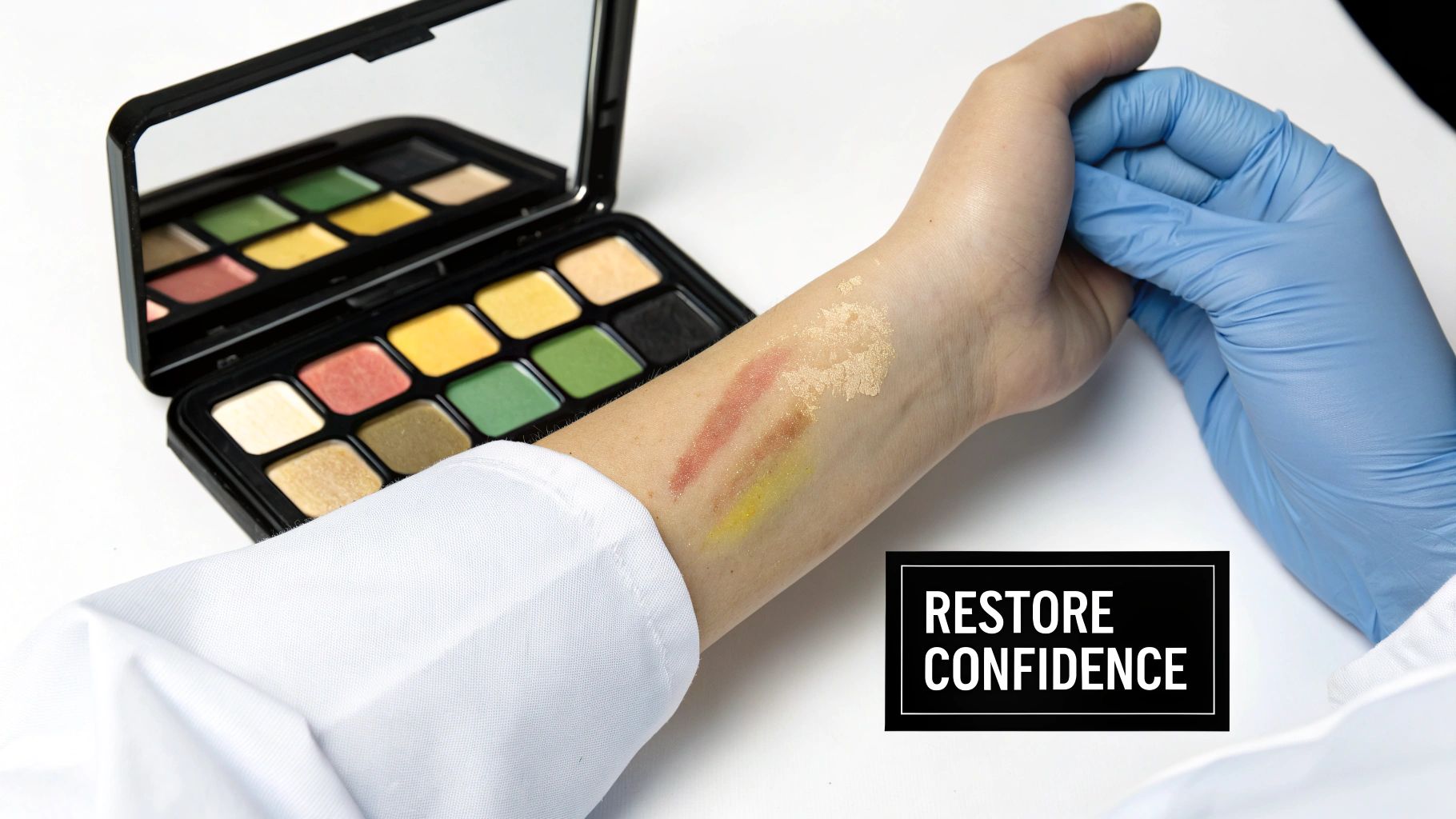
The process is a bit like a master art restorer meticulously matching pigments for a priceless painting, but in this case, the canvas is your skin. Paramedical tattoo artists are experts at this. They create a perfect pigment blend that matches your unique skin tone and then use precise techniques, like pixelation, to gently deposit it into the scar tissue.
This creates an illusion of evenness, making the scar much less prominent. It’s an empowering way to feel more comfortable and confident in your own skin.
Redefining Your Skin's Appearance
The goal here isn’t total erasure—that’s not realistic—but a dramatic reduction in how visible the scar is. For so many of my clients, this treatment is about reclaiming a sense of control over their reflection and moving on from a past event that left a physical mark. It helps people feel whole again after experiences like:
- Surgical Procedures: Scars from mastectomies, tummy tucks, or other operations can be significantly softened.
- Accidental Injuries: Lingering marks from old cuts or burns can be made far less obvious.
- Skin Conditions: Discolouration left behind by healed acne scars can often be addressed.
- Stretch Marks: Those silvery lines that often appear after pregnancy or weight changes can be blended beautifully into the skin.
It’s a fantastic non-surgical way to regain confidence, whether that means feeling better in a swimsuit or simply not being distracted by a scar when you look in the mirror. While scar camouflage focuses on specific areas, many people also explore effective skincare approaches to hyperpigmentation to improve their overall skin tone.
The Artistry Behind the Technique
A successful scar camouflage treatment really comes down to the artist's skill. It's a delicate dance between science and art, demanding a deep understanding of skin anatomy, colour theory, and how skin heals from trauma. A true professional has to carefully assess the scar's texture, age, and colour to develop the right plan.
This procedure is about so much more than aesthetics; it's about emotional healing. Reducing the appearance of a scar often brings a profound sense of peace and closure, helping someone close a chapter with grace.
The technique is versatile enough for most parts of the body, including the face and scalp. In fact, similar principles are used to address hair loss, and you can learn more about concealing scars with scalp tattoos in our detailed guide on the topic.
Ultimately, every treatment has to be customised because every scar and every person's skin is completely unique. The end result is a natural-looking finish that helps you reconnect with your body on your own terms.
Is Scar Camouflage Right For You? A Candid Look at Suitability
Figuring out if scar camouflage is the right move for you is easily the most important first step. While the results can be life-changing, it's not a one-size-fits-all solution for every scar. The key to a great outcome is understanding what makes a scar a perfect candidate and, just as crucially, knowing when it's best to wait or explore other options.
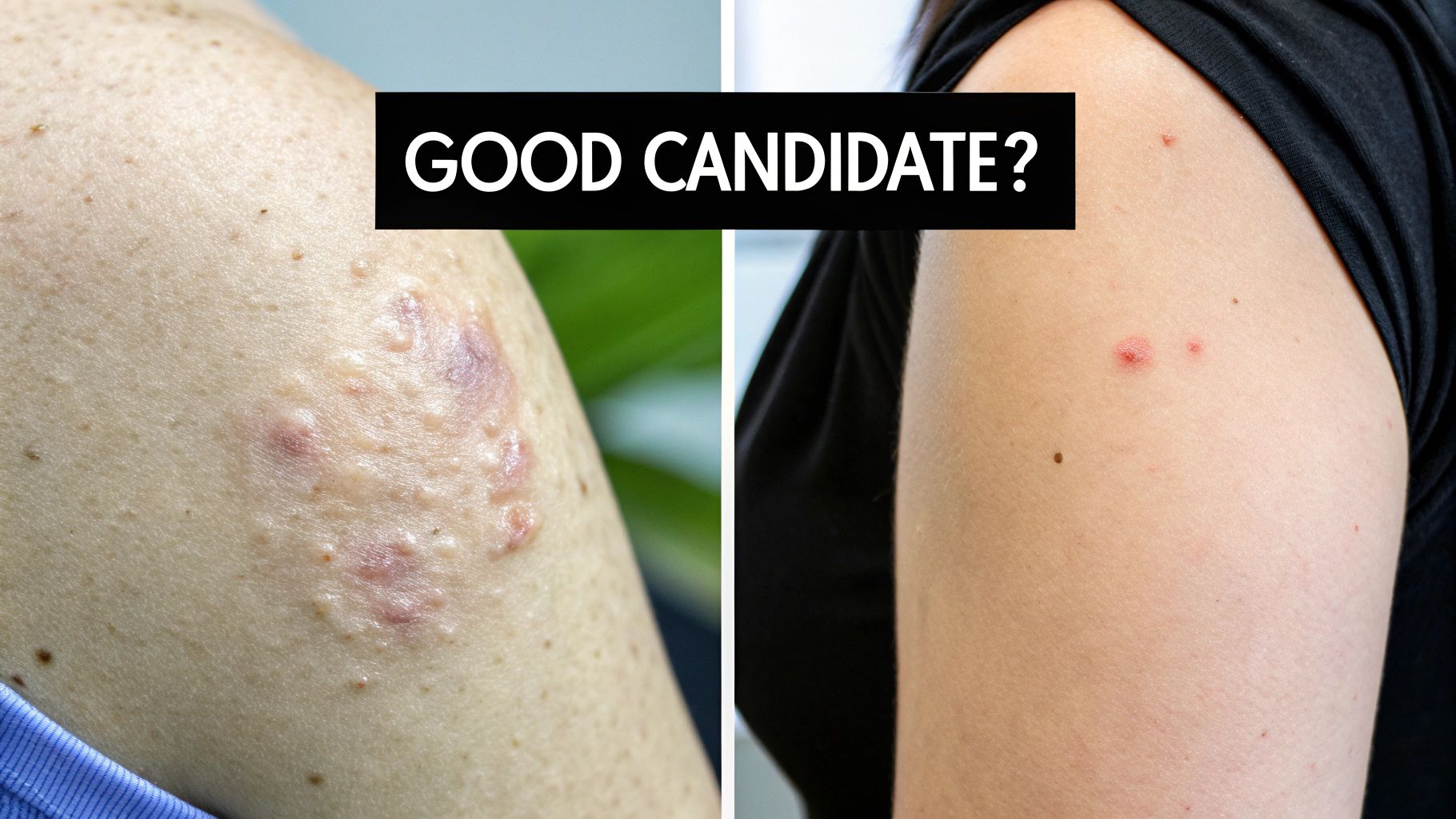
Think of it like painting a masterpiece. You wouldn't start on a canvas that's still wet or bumpy, would you? For the best result, the canvas needs to be properly prepped. In paramedical tattooing, your scar tissue is our canvas, and its condition is everything when it comes to the success of the treatment.
The Ideal Scar for Camouflage
Some scars are just made for this procedure. If your scar has the following characteristics, you're likely a fantastic candidate. This is your chance to do a quick self-check and get a realistic idea of what's possible before booking a professional consultation.
An ideal scar for camouflage tattooing is:
- Fully Healed: This is non-negotiable. The scar must be completely settled, which usually takes at least one year. This ensures the tissue is stable and won't change its shape or colour down the track.
- Lighter Than Your Skin Tone: The magic of this technique works best on hypopigmented scars—the ones that look pale, white, or silvery. We are carefully adding pigment, so starting with a lighter base is what allows us to achieve that seamless blend.
- Relatively Flat and Smooth: The flatter the scar, the more naturally the tattoo will blend in. While we can work with a little bit of texture, the primary goal here is to correct colour, not to physically flatten raised skin.
This treatment is incredibly effective for many common scars, such as those from surgery, old acne marks, injuries, and even stretch marks that have faded to that silvery-white stage.
When to Hit Pause: Scars That Need a Cautious Approach
Not every scar is ready for pigment. Trying to tattoo a scar that isn't suitable is a recipe for disappointment and can sometimes even make things worse by irritating the tissue. Knowing the red flags is essential for a safe and successful outcome.
A professional assessment is absolutely vital. An experienced paramedical artist in Perth won’t just look at your scar—they’ll ask about its history and assess the health of the skin to ensure it can safely handle the treatment.
Here are the situations where a scar is generally not a good candidate for camouflage tattooing:
- Keloid or Hypertrophic Scars: These are the thick, raised scars that often grow beyond the original wound. Tattooing them can trigger even more collagen to form, potentially making the scar bigger and more noticeable.
- Scars That Are Still Pink, Red, or Dark: Any colour in a scar means it's still actively healing or has its own pigmentation. The colour is unstable and will likely continue to change, making a colour match impossible.
- Very Dark Scars (Hyperpigmented): Trying to camouflage a dark scar by adding more pigment can unfortunately make it look even darker.
- Unstable Skin Conditions: If you have active acne, eczema, or psoriasis in or around the scar area, you need to wait until the skin is completely clear and calm before considering a tattoo.
Scar Camouflage Suitability Checklist
To make it even clearer, here’s a quick checklist to help you see where your scar might fit.
| Scar Characteristic | Ideal for Camouflage | May Require Consultation | Not Recommended |
|---|---|---|---|
| Age | Over 12 months old | 6-12 months old | Under 6 months old |
| Colour | Lighter than your skin tone | Faintly pink, slightly uneven | Pink, red, purple, or dark brown |
| Texture | Flat and smooth | Slightly uneven or indented | Raised, bumpy, or rope-like (Keloid) |
| Location | Stable skin area | Areas that stretch frequently | On areas with active skin conditions |
This table is a great starting point, but it can't replace the trained eye of a professional. If your scar falls into the "May Require Consultation" column, an expert evaluation is the only way to know for sure what's possible.
Making an empowered choice starts with good information. Understanding these distinctions helps align your hopes with what scar camouflage can realistically deliver, setting you up for a much more positive and rewarding experience.
Your Scar Camouflage Journey: From First Chat to Final Touch
Taking the first step towards scar camouflage can feel a little daunting, but knowing exactly what’s involved can make all the difference. Think of it less as a single appointment and more as a collaborative journey with your artist—a carefully planned process designed to get the most natural, seamless result possible.
This isn’t a rush job. It’s a thoughtful partnership built on expertise, artistry, and a good deal of patience. The entire process is broken down into clear phases, making sure every detail is perfect before any pigment even touches your skin. It all kicks off with an honest conversation where we listen to your goals and map out a professional plan together.
The All-Important First Step: The Consultation
Your path to scar camouflage always begins with a thorough consultation. Honestly, this initial meeting is probably the most crucial part of the whole thing, as it sets the foundation for everything to come. It’s a two-way street—your chance to get all your questions answered and our opportunity to make sure this is the right treatment for you.
During this session, a true professional will:
- Assess Your Scar: We’ll take a close look at the scar’s age, texture, colour, and location. This detailed assessment helps us understand its unique characteristics and predict how your skin will likely respond to the pigment.
- Discuss Your Goals: What are you hoping to achieve? A skilled artist will take the time to hear your story and understand your aesthetic goals. This helps us manage expectations and make sure we’re both on the same page about the desired outcome.
- Perform a Colour Patch Test: This is an absolute must for any reputable practitioner. We’ll perform a small, discreet patch test to see how your skin accepts the pigment and, most importantly, to rule out any potential adverse reactions.
This initial chat is all about ensuring the scar camouflage tattoo is safe, appropriate, and will deliver the results you’re hoping for.
The Art and Science of Pigment Matching
Once we’ve established you’re a good candidate, we move on to the meticulous task of matching the pigment. This is where technical skill really meets artistic intuition. It’s so much more than just picking a colour out of a bottle; it involves custom-blending multiple shades to create a formula that perfectly mimics your unique skin tone.
Your skin is a complex canvas with subtle variations in hue and undertone. The artist has to account for all these tiny nuances to create a colour that looks completely natural in any light. We'll mix up a bespoke pigment cocktail just for you, often testing small swatches right against your skin to confirm the match is perfect before we start the main treatment.
The success of a scar camouflage tattoo hinges almost entirely on the accuracy of the colour match. An artist who rushes this step or relies on a limited palette is unlikely to achieve the subtle, blended finish that makes this treatment so effective.
The Tattooing Procedure: Gentle and Precise
During the procedure itself, your paramedical artist uses specialised equipment and needles to gently deposit the custom-blended pigment into the scar tissue. The technique is worlds away from traditional tattooing; it demands an incredibly delicate touch and a deep understanding of how to work with skin that has been compromised.
We use methods like pixelation or pointillism, creating tiny dots of colour that gradually build up coverage. This approach avoids that dense, flat block of colour that would look completely unnatural. Instead, it creates an illusion of texture and tone that blends right in with the surrounding skin. While the core principle of implanting pigment is similar to other cosmetic tattoos, the specifics of working on scar tissue are unique. If you're curious about how this compares to other procedures, you can read about the process of getting a hair tattoo, which uses related techniques for a different purpose.
It’s so important to understand that lasting, natural-looking results are rarely achieved in just one session. The process is a gradual build, typically requiring anywhere from 2 to 4 sessions spaced several weeks apart. This multi-session approach allows the artist to layer the pigment carefully, make adjustments as the skin heals, and fine-tune the colour for a perfect final result. Each visit brings you another step closer to that beautifully blended outcome you’re looking for.
What To Expect and How To Maintain Your Results
The first step to a great outcome is understanding what scar camouflage can realistically achieve. The aim isn't to make the scar completely invisible, but to soften its appearance so it blends seamlessly with the surrounding skin and no longer catches the eye.
Most people see a 50% to 90% improvement in the scar's visibility, which can be a massive confidence booster. While the results are designed to last, it's important to remember this is a semi-permanent treatment. Over time, things like your skin's natural renewal cycle and sun exposure will cause the pigment to fade. This is perfectly normal, and periodic touch-ups down the line will keep it looking fresh.
This simple breakdown shows the key stages of the journey, from our initial chat to the all-important healing process.
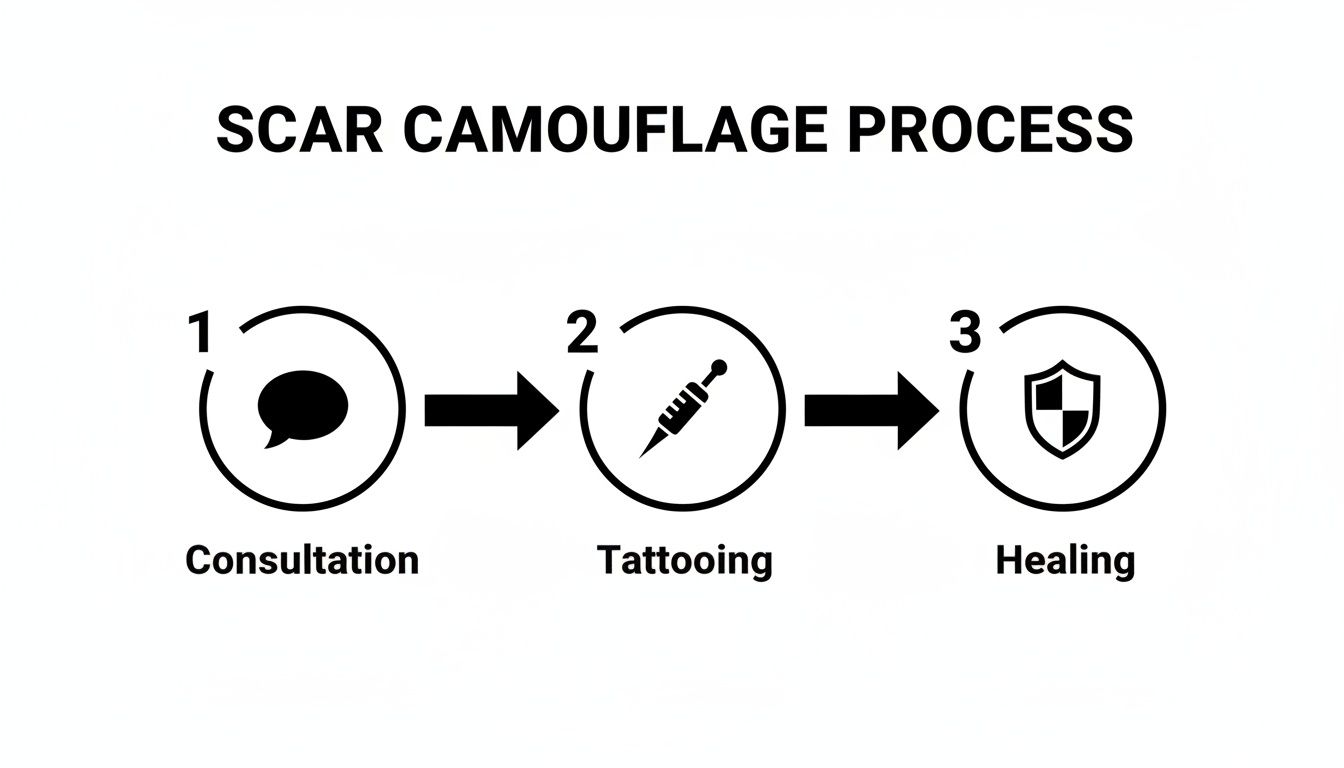
Each step plays a vital role in creating a natural result that heals perfectly and stands the test of time.
Your Aftercare Commitment
Great results don't just happen in the clinic—they're made in the weeks that follow. Your aftercare routine is absolutely non-negotiable for locking in the pigment and ensuring your skin heals properly. We'll give you a detailed plan to follow, but the main principles are pretty straightforward.
The first couple of weeks are the most critical for healing and getting the best colour retention.
Immediate Aftercare (First 1-2 Weeks):
- Keep it Clean and Dry: Gently clean the area exactly as instructed, but don't let it get waterlogged. That means no swimming, saunas, or steamy showers for a bit.
- Avoid Sun Exposure: Fresh pigment and the sun are not friends. You must keep the treated area completely covered and out of direct sunlight.
- No Heavy Sweating: Hold off on any intense workouts for at least a week. Sweat can actually push the pigment out of the skin before it has a chance to settle.
- Let it Breathe: Whatever you do, don't pick, scratch, or peel the area. Let any light flaking or scabbing fall off on its own.
Following your procedure, good aftercare is the key to a great outcome. You can also explore strategies for quick healing that can support your skin's recovery and help your tattoo last longer.
Long-Term Care for Lasting Results
Once everything is fully healed, your focus shifts to maintenance. How you look after your scar camouflage from here on out will determine how long it looks its best before needing a touch-up. This is especially true for us here in sunny Western Australia.
The single most important thing you can do to protect the colour and clarity of your tattoo is use sunscreen. Every. Single. Day.
Think of sunscreen as the insurance policy for your investment. UV rays break down pigment, causing it to fade and shift in colour. By making a high-quality, broad-spectrum SPF 50+ a non-negotiable part of your daily routine, you're actively preserving your results.
Just like with other paramedical treatments such as Scalp Micropigmentation, aftercare is everything. Many of the same healing principles apply, and you can get more great advice from our guide on the top tips to care for your scalp after SMP. It’s a simple habit that makes a world of difference in keeping your scar beautifully camouflaged for years.
What Does Scar Camouflage Cost in Western Australia?
Thinking about scar camouflage is a big step, and naturally, one of the first questions on your mind is about the cost. Here in Perth, there isn't a one-size-fits-all price list. It’s a highly personalised service, and the final investment really depends on your unique needs.
Think of it less like an off-the-shelf purchase and more like commissioning a bespoke piece of art for your skin. The price is carefully worked out based on the time, specialist skill, and materials needed to get that seamless, natural-looking result you’re after.
What Goes Into the Final Price?
The main things that shape the cost are the scar itself and the treatment plan we map out for you. For instance, a small, flat surgical scar is a much more straightforward job than camouflaging extensive, textured stretch marks that cover a large area.
Here’s a look at the key factors we consider:
- Size of the Scar: This is a big one. Larger scars simply take more time and pigment in each session, which directly impacts the overall cost.
- Complexity and Texture: A smooth, flat scar is easier to blend. If a scar is raised, pitted, or has significant discolouration, it requires more advanced techniques and artistry to conceal effectively.
- Location on the Body: Some parts of the body are more sensitive or tricky to work on, which can affect the time and skill involved.
- Number of Sessions: Getting the colour just right is a process. Most people need between two to four sessions to gradually build the pigment and achieve a perfect, long-lasting blend.
Typical Price Ranges in Australia
While every clinic in Perth sets its own prices, looking at industry averages can give you a ballpark figure. As a guide, you might find a small surgical scar costs between AUD $350–$600 for one or two sessions. Medium-sized areas could fall into the AUD $600–$1,200 range for two or three sessions.
For larger and more complex jobs, like treating stretch marks, the total investment could reach AUD $3,000 or more, spread across multiple treatments. Generally, you can get a better idea of industry standards by looking at these Australian scar camouflage pricing benchmarks on cosmetictattooingbrisbane.com.au.
A word of warning: be wary of unusually low prices. If a quote seems too good to be true, it often is. It could be a sign of compromises in pigment quality, safety protocols, or the artist's specialised training.
An Investment in Yourself
Ultimately, it’s best to see this as an investment in your long-term confidence and comfort. The cost truly reflects the high level of skill, artistry, and precision needed to work safely and effectively on delicate scar tissue.
It’s a lot like other specialised cosmetic treatments, where the focus should always be on the value you get from an expert practitioner. You can see a similar breakdown of pricing factors in our guide on the cost of Scalp Micropigmentation. Choosing an experienced artist is your best guarantee for a safe, effective treatment that delivers the confidence-boosting results you deserve.
How to Choose the Right Paramedical Artist in Perth
Choosing the right person for your scar camouflage tattoo is easily the most critical decision you'll make in this whole process. This isn't just about finding a good tattooist; it’s a highly specialised field where art meets medical science. You’re placing a lot of trust in someone to work on your skin and help you rewrite part of your story, so finding a real professional is absolutely essential.
A top-tier paramedical artist in Perth is a unique mix of technician, artist, and skin specialist. It’s not enough to be good with a needle; they need a deep understanding of traumatised skin, how it heals, and the strict safety protocols required. Your goal is to find someone who puts your health first while delivering natural-looking results that make you feel incredible.
Look for Specialised Training and Certifications
First things first, check their qualifications. A standard tattoo licence just doesn't cut it here. You're looking for an artist with specific certifications in paramedical tattooing or scar camouflage, which is a whole different level of training.
This kind of advanced education dives into crucial areas like:
- Skin and Scar Pathology: Knowing the difference between a keloid and hypertrophic scar and how each will respond to pigment.
- Advanced Colour Theory: The complex science behind mixing pigments to perfectly match the subtle undertones of your skin.
- Needle Techniques for Scar Tissue: Using the right touch and technique to work on delicate skin without causing more trauma.
The skillset is incredibly specific. For a glimpse into the expertise involved, you can read about the training required to become a professional hair tattoo artist, as it shares a similar need for precision and skin science.
Scrutinise Their Portfolio of Work
When it comes to scar camouflage, photos are everything. Ask to see a full portfolio of their work, and don’t be satisfied with just a few glamour shots. You want to see clear evidence of consistent, high-quality results.
As you look through their gallery, keep an eye out for:
- Healed Results: Any tattoo looks different when it’s fresh. A truly skilled artist will be proud to show you photos taken months after the final session, once the skin has fully settled.
- Variety of Scars: Have they worked on scars like yours before? Look for a good mix of surgical scars, self-harm scars, stretch marks, or burns.
- Diverse Skin Tones: A master of the craft can work on any skin colour, which proves they know how to custom-blend pigments for a perfect match.
A professional's portfolio should demonstrate a seamless, natural-looking blend. If the work looks obvious, the colour seems flat, or it doesn't match the surrounding skin, that’s a major red flag.
The Consultation is Your Litmus Test
Any artist worth their salt will insist on a thorough consultation before even thinking about starting the treatment. This is your opportunity to really size them up and see how they operate. It should be an in-depth, professional meeting where the focus is entirely on you.
Here’s what a proper consultation should look like:
- They’ll examine your scar carefully, in person.
- They’ll ask you about its history—how old it is and how you got it.
- They’ll be upfront about what’s achievable, setting realistic expectations.
- They’ll walk you through their entire process, from the first session to the final aftercare steps.
- Crucially, they’ll perform a patch test to make sure your skin doesn’t have an adverse reaction.
If someone tries to give you a quote over the phone without seeing your scar, or if they rush you through the consultation, walk away. Your safety and a beautiful outcome should be their number one priority. Taking the time to choose wisely means putting your skin in the hands of a true expert.
Your Questions Answered: Scar Camouflage Tattoos
It’s completely normal to have a lot of questions when you’re thinking about a specialised treatment like scar camouflage. Getting into the details about pain, healing, and how it all works with your specific skin is key to feeling confident in your decision. Here are the answers to some of the most common queries we hear from our clients here in Perth.
We've pulled together the top concerns to give you clear, straight answers and help you feel ready for your consultation.
Does the Scar Camouflage Tattoo Procedure Hurt?
Most people find the procedure quite comfortable. The feeling is usually described as a light scratching on the skin, a world away from the deep, intense sensation of a traditional tattoo.
We always apply a strong topical numbing cream to the area beforehand to make sure you’re as comfortable as possible. Everyone’s pain tolerance is different, of course, but the feedback we get is that it's a very manageable process.
How Long Will My Skin Take to Heal After the Treatment?
The initial healing period, where you might see a bit of redness and feel some tenderness, is quite short—usually around 7 to 14 days. A thin layer might form over the area, which is totally normal and will flake away on its own.
But that’s just the first step. The pigment itself needs a bit longer to truly settle into the skin and show its final colour. This can take about 4 to 6 weeks. It’s why we always space our sessions at least a month apart; it gives your skin the time it needs to heal properly so we can see the stabilised colour before making any touch-ups.
Following your aftercare instructions to the letter is the single most important thing you can do for a great result. It protects the delicate work and ensures your skin heals perfectly.
Can This Treatment Work on Dark or Tanned Skin?
Absolutely. Scar camouflage can be incredibly effective on a whole spectrum of skin tones, including darker skin. The real magic lies in the artist's skill at mixing pigments to get that perfect custom blend. A seasoned practitioner can match almost any skin colour.
The key thing to remember is that we match the pigment to your stable, natural skin tone. This means we match it to your non-tanned skin. If you tan later, the colour difference will become obvious.
What Happens to the Tattoo if I Get a Tan?
The specialised pigments we use don't change colour when exposed to the sun. So, if the skin around the scar tans, the camouflaged area will stay the same colour, making it look lighter in comparison and more noticeable.
This is exactly why sun protection is so important. We can't stress this enough: using a high-SPF sunscreen on the treated area every single day is essential to keep the blend looking seamless all year round.
Ready to see what a scar camouflage tattoo could do for you? At My Transformation, we're here to offer expert advice and a personalised plan. Book your no-obligation consultation today by visiting https://rightwing-health.info/a%3E.%3C/p%3E