

The Complete Hair Transplant Recovery Timeline
Your hair transplant recovery journey kicks off the moment you leave the clinic, but the full, final results won't be in the mirror for about 12 to 18 months. It's a process that unfolds in very distinct stages, beginning with the initial healing, moving into a temporary (and often surprising) shedding phase, and finally, culminating in the gradual growth of your new, permanent hair. Knowing what’s coming is the key to managing your expectations and ensuring everything goes smoothly.
Mapping Your Hair Transplant Recovery Journey
Making the decision to get a hair transplant is a huge step, but the real journey begins once the procedure is over. This isn't an overnight transformation; it's a biological process that calls for a good deal of patience and careful aftercare.
Think of it like planting a new lawn. The seeds—your newly grafted follicles—are in place, but they need time and the right environment to properly take root, sprout, and eventually mature into a thick, healthy head of hair. Your recovery timeline follows a predictable path with several key stages, each with its own visual milestones and specific care instructions. This guide is your roadmap, breaking down each phase so you know exactly what to expect.
Key Milestones in Your Recovery
Understanding the major phases helps you track your progress and stay positive throughout what can feel like a long wait. Here’s a quick look at what’s in store for you:
- Initial Healing (Days 0-7): This is the most delicate period. Your main job is to protect the new grafts while your scalp heals from minor swelling and scabbing.
- The Shedding Phase (Weeks 2-8): Don't panic! This is often called "shock loss," and it’s a completely normal part of the process where the transplanted hairs fall out before new ones start to grow.
- New Growth Emerges (Months 3-6): This is when things get exciting. You'll start to see the first signs of fine, new hairs pushing through, slowly but surely.
- Maturation and Density (Months 7-18): Over this final stretch, the new hairs will thicken, darken, and grow longer, blending in to create your final, natural-looking result.
This infographic gives you a great visual breakdown of the key stages of healing, shedding, and new growth.
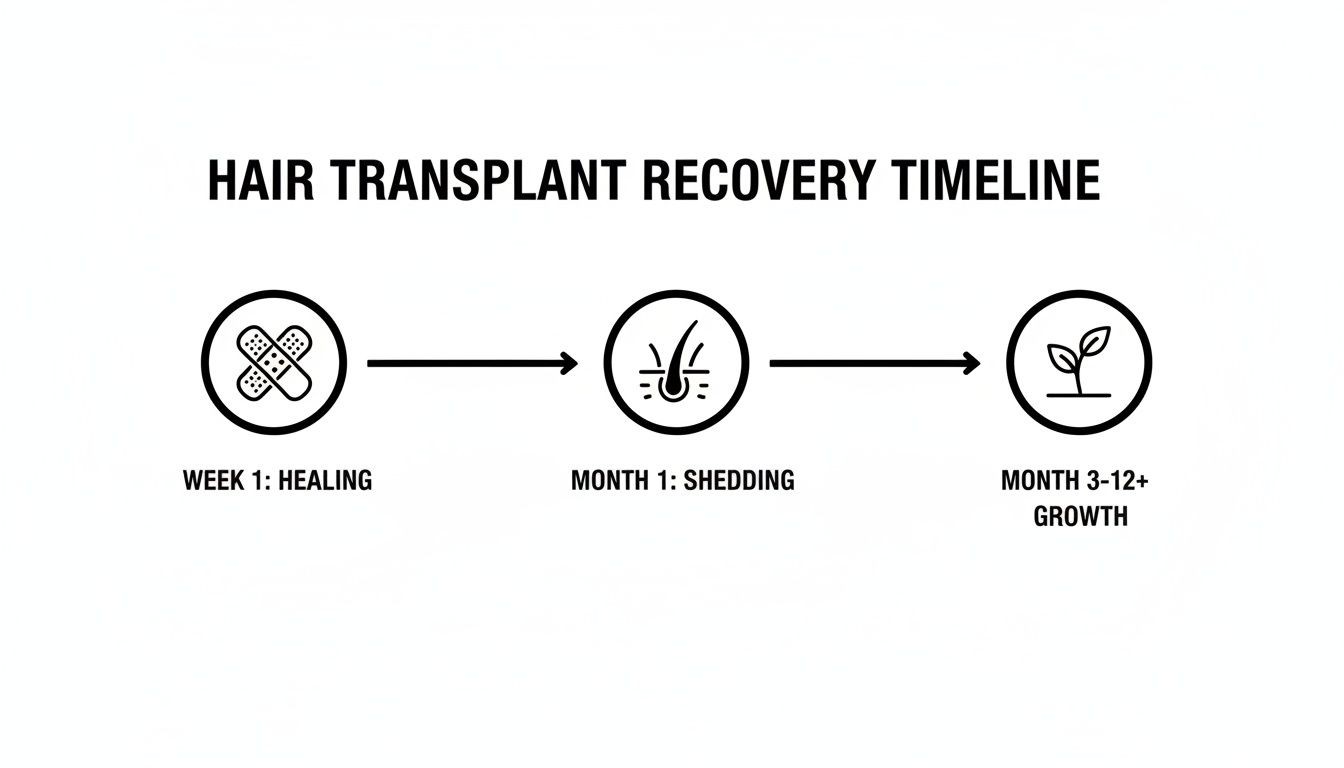
As you can see, recovery is a marathon, not a sprint. Each phase builds on the last, leading you toward that final result you’ve been waiting for.
Thanks to modern techniques, the process is surprisingly manageable. Here in Australia, most people are back to work within 2-5 days of their procedure, particularly if they’ve had the minimally invasive FUE transplant. You can usually get back to light physical activities around day 7-10, as long as you keep swelling down and avoid breaking a sweat.
For those looking to improve the appearance of density while waiting for the new hair to grow in, it’s worth learning more about what a FUE hair transplant is and how SMP complements it. It can be a fantastic way to boost your confidence during the recovery months.
The First Week: Your Critical Healing Window
Those first seven days after your hair transplant are, without a doubt, the most important part of your entire recovery. I often tell my clients to think of their new follicles like tiny seeds that have just been carefully planted. Their survival is all down to how gently you treat them and the environment you create for them to heal.
This first week is all about one thing: protection. Your scalp has just been through a minor surgical procedure, and it's going to kickstart its natural repair process. That means you'll see some redness, a bit of swelling, and small scabs forming around each graft. Don't panic—these are all good signs that your body is getting to work securing your new hair.
Knowing what to expect day by day really helps take the anxiety out of the process, so let's break it down.
What to Expect Day By Day
Everyone heals at a slightly different pace, but the first week almost always follows a predictable path. Being ready for these changes will make everything feel much more manageable.
- Days 1–3: Expect some mild redness and swelling in both the donor area and where the new hairs were placed. This is just a normal inflammatory response. The swelling usually peaks around day three and can sometimes travel down to your forehead or even around your eyes.
- Days 4–7: You'll notice small crusts or scabs have formed around each individual graft. It is absolutely crucial that you do not pick or scratch them. Doing so could pull the follicle right out. They’ll start to lift and fall away naturally towards the end of the week, especially once you do your first gentle wash.
Itching is also very common as the skin begins to heal. Resisting that urge to scratch is probably one of the toughest but most important jobs you have right now.
Your Essential Aftercare Checklist
Your clinic will give you a detailed set of instructions, but the fundamentals of aftercare in week one are pretty universal. Follow these steps religiously, and you’ll give your grafts the best possible chance of survival.
- Sleep Smart: For the first few nights, you absolutely must sleep with your head propped up at a 45-degree angle. A few pillows behind your back and head will do the trick. This one simple step does wonders for reducing swelling by letting fluid drain away from your scalp.
- Hands Off: This is a strict rule. Do not touch, rub, or bump the recipient area at all. Those new grafts are incredibly fragile and can be dislodged with very little effort in the first few days.
- Stay Hydrated and Rest: Drink plenty of water and let your body rest up. Good hydration and avoiding any physical strain give your body the fuel it needs to heal as efficiently as possible.
- The First Wash: Your surgeon will tell you exactly when and how to wash your hair for the first time, which is usually around day 3 or 4. It’s a very delicate process—you’ll be gently dabbing or patting a special shampoo and water onto the scalp, never rubbing.
Following post-operative instructions isn't just a suggestion; it is the single most important factor within your control for achieving a successful outcome. Each step is designed to protect the grafts while they anchor themselves permanently into the scalp.
To give this critical period an extra boost, some people look into advanced methods like Hyperbaric Oxygen Therapy to support the healing process.
Activities to Strictly Avoid
Protecting your investment is as much about what you don't do as what you do. For this first week, you need to put a few things on hold to keep those delicate follicles safe.
- No Strenuous Exercise: Anything that makes you sweat or raises your blood pressure is off-limits. That means no gym, no running, and no heavy lifting.
- No Hats or Helmets: Don't wear any tight headwear that could press on or rub against the new grafts. If you need a hat for sun protection later in the week, make sure it’s very loose and has been given the okay by your clinic.
- Avoid Direct Sun Exposure: Your scalp is extremely sensitive right now. Keep it out of direct sunlight to prevent sunburn, which can cause serious irritation.
- Limit Alcohol and Smoking: Both can interfere with healing by affecting blood flow to the scalp. It's really best to avoid them completely during this first week.
By sticking to these guidelines, you're building the perfect foundation for a great result. The first week demands a bit of diligence, but it's a small price to pay for a lifetime of confidence. To understand more about how different techniques influence healing, you can read about the potential for hair transplant scarring and what can be done to minimise it.
Weeks Two To Eight: Navigating The "Shock Loss" Phase
Once you've made it through the first week, your hair transplant recovery enters what can be a bit of a head-scratcher. This next stage, from week two right through to week eight, is all about a phenomenon called "shock loss". It can be a little unsettling, but trust me, it’s a totally normal and essential part of the journey.
Think of it like a tree in autumn. The tree doesn't shed its leaves because it's dying; it does it to conserve energy for the big burst of new growth in spring. Your newly transplanted hair follicles do something very similar. The stress of being moved puts them into a temporary resting phase, so they shed the existing hair shaft. This allows them to focus all their energy on settling in, connecting to a new blood supply, and gearing up for a strong, new growth cycle.
This shedding is actually a great sign. It means the procedure worked and your body is resetting the follicles for their new, permanent home.
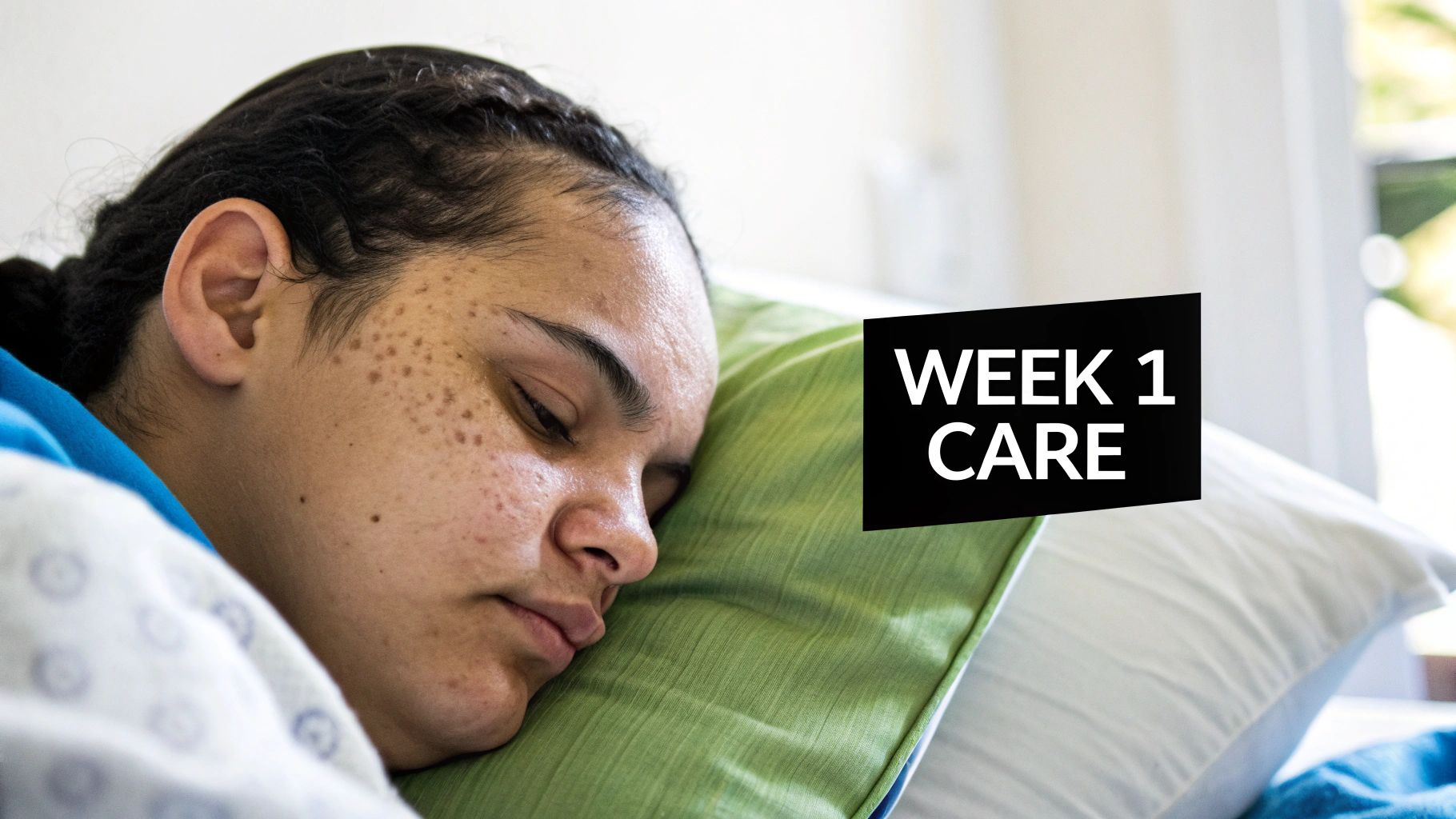
What To Expect From The Shedding
The term "shock loss" sounds a lot more dramatic than it is. It’s a standard, predictable part of the process that almost every patient goes through. You'll notice the main shedding phase really kicks in around weeks two to four, when the transplanted hairs begin to fall out.
It's so important to remember that you're only losing the hair shaft. The precious follicle itself is safe and sound, anchored securely under your skin.
"Don't panic when you see hairs on your pillow or in the shower. This shedding is an essential, healthy part of the hair growth cycle. The follicle is just hitting the reset button before it starts producing your new, permanent hair."
By the end of week two, any leftover scabs from the first week should be long gone. Your scalp will look and feel clean, ready for the next stage of the timeline.
Your Aftercare Routine Now
During this phase, your aftercare routine gets a bit easier, but staying consistent is still key. The main goal is to keep your scalp healthy, creating the perfect environment for those resting follicles to prepare for regrowth.
- Gentle Hair Washing: You can start washing your hair a bit more normally now. Stick with a mild, sulphate-free shampoo and avoid any aggressive scrubbing on the recipient area. Just use the pads of your fingers and gentle pressure.
- Sun Protection is a Must: Your scalp is still quite sensitive. If you’re heading outside for any length of time, wear a loose-fitting hat or use a high-SPF sunscreen made for the scalp. This is crucial to prevent sun damage.
- Getting Back to Exercise: Most people get the green light to resume their normal exercise routines by week three or four. Ease back into it, especially with strenuous activities, and listen to your body. Definitely steer clear of contact sports where your head could get knocked.
Knowing what’s happening on a biological level can make this waiting game much easier. To get a better handle on the "why," you can learn more about the different stages of the hair growth cycle in our detailed article. It helps you see the shedding not as a setback, but as a productive first step towards the final result you’re waiting for.
Months Three to Six: Witnessing the First New Growth
After weathering the initial healing and the often-startling "shock loss" phase, this period is the one you've been holding out for. Between the three and six-month mark, the first real, tangible signs of your new hair begin to poke through. It’s a genuinely exciting time, but it’s so important to keep your expectations grounded.
This isn't an overnight explosion of thick, luscious hair. Think of it more like the first green shoots appearing in a newly seeded lawn—they don't all pop up at once, and they start out as delicate, fine blades before they mature. Your new hair is going to follow a very similar, gradual pattern.
What That Initial Growth Really Looks Like
Those first hairs to break through are often very fine, almost like "baby hair." Don't be surprised if they’re also thin and maybe even a bit lighter in colour than your other hair. This is completely normal and exactly what we expect to see.
Growth won't be perfectly even across your scalp, either. Some follicles will wake up from their resting phase sooner than others, which can create a slightly patchy look at first. Remember, this is a marathon, not a sprint, and every single follicle is on its own schedule.
Tracking Your Progress, Month by Month
Taking a few photos each month can be a fantastic way to really appreciate the slow but steady progress. Without them, it's easy to miss the subtle changes. Here’s a rough guide to what you can anticipate:
- By the End of Month Three: You might just start to feel tiny, stubble-like hairs when you gently run your hand over your scalp. Visually, they might not be obvious yet, but these are the pioneers of your new hairline.
- Around Months Four and Five: This is usually when the new growth becomes more visible to the naked eye. The fine hairs begin to gain a bit of length and thickness. Your density will still be quite low, but you should see a clear difference from the bareness of the shock loss phase.
- Hitting the Six-Month Mark: This is a major milestone. By now, a good portion of the transplanted follicles should be actively growing. The hair will be longer and feel stronger, giving you a real preview of the final result.
This whole phase is about celebrating the small wins. Seeing those first few hairs, no matter how fine or sparse they seem, is concrete proof that the procedure was a success. Your patience is starting to pay off.
Caring for Your New Hair
As these new hairs emerge, they’re still quite delicate. While your aftercare routine can start to feel a bit more normal, there are a few key things to focus on to really nurture these new strands.
The main goal is simply to maintain a healthy scalp, which provides the perfect environment for strong, continued growth. You can learn more about how to support this process with good habits by reading up on how to thicken hair naturally.
Gentle Styling and Product Choices
- Shampoo and Conditioner: Stick with a mild, sulphate-free shampoo. You can wash your hair more regularly now, but always use the soft pads of your fingers—never your nails.
- Styling Products: It’s best to avoid any heavy waxes, thick gels, or sticky sprays. These can clog pores or, worse, pull on the fragile new hairs. If you need to use something, make sure it's lightweight and water-based.
- Your First Haircut: Most people feel ready for their first trim around the three or four-month mark. Just be sure to give your barber or stylist a heads-up about your transplant. They’ll need to be extra gentle with scissors or clippers in the recipient area, and razors are still a definite no-go on the scalp.
This stage of your recovery journey is incredibly rewarding. While your final, full density is still a few months down the track, witnessing these first signs of life is a massive confidence boost and a clear sign you’re well on your way.
Months 7 to 18: The Home Stretch to Your Final Result
This is it—the final leg of your hair transplant journey. Between month seven and eighteen, you get to see all that patience finally pay off. The early days of healing, the dreaded shedding phase, and the first hints of growth are all in the rearview mirror. Now, your focus shifts from watching for new hairs to watching your new hair mature.
Think of the first six months as laying the groundwork and seeing the first shoots appear. This final stage is all about watching those shoots thicken into a strong, healthy lawn. Your new hair is now entering a maturation phase where the biggest changes are in quality, texture, and overall density.
What to Expect: Maturation and Thickening
During these months, you'll notice a few key things happening at once, all of which contribute to that natural, full look you’ve been waiting for.
- Hair Shafts Thicken: Those initial hairs that came through might have been a bit fine or wispy. Now they’ll start to gain some real calibre, bulking up to match the thickness and strength of your original hair.
- Colour and Texture Improve: As the hair shaft matures, its colour will deepen to its natural shade. This is crucial for making sure it all blends together seamlessly, leaving no visible difference between the transplanted and native strands.
- It Finally Grows Long: This is the fun part. With steady growth, you can finally start styling your hair, get a proper haircut from your barber, and generally treat it like you would any other hair on your head.
This gradual improvement is exactly why we don't call it a 'final' result at six or even nine months. The subtle but significant changes in hair diameter and texture that happen between months seven and eighteen make a massive difference to the cosmetic outcome.
Your Timeline to the Finished Look
Everyone’s hair grows at a slightly different pace, but the progression during this period is pretty reliable. It’s all about refinement as the full impact of your procedure really comes to life.
By the one-year mark, most people are looking at about 80-90% of their final result. The difference from day one is usually huge, and you’ll have a fantastic idea of your new hairline and overall coverage. But the journey isn’t quite finished.
That last stretch, from 12 to 18 months, is what takes a 'good' result and makes it a 'great' one. It’s that final 10-20% of maturation that adds the finishing touch, delivering that undetectable density and texture that truly integrates the new hair with the old.
The patience needed for a hair transplant is no small ask, but the results speak for themselves. For example, data from Australian clinics often shows patient satisfaction rates hitting 90% around the 12-month milestone, as proper aftercare turns thinning areas into full, natural-looking hairlines. To get a better sense of what this looks like, you can discover more about month-by-month expectations from local experts.
Living With Your New Hair
The absolute best part of reaching this stage? Life gets back to normal. Completely. No more special routines or being overly cautious. Your transplanted hair is now permanently rooted and acts just like the rest of your hair.
You’re now free to:
- Cut and Style It: Head back to your barber or stylist with no restrictions. Cut it, style it, shave it—do whatever you want.
- Colour or Treat It: Thinking about dyeing your hair or using other products? Go for it. It's perfectly safe now.
- Get Back to Everything: Swimming, playing sports, and chucking on a hat are all back on the table without a second thought.
This phase wraps up your hair transplant journey, rewarding your diligence with a result that doesn’t just look incredible—it’s yours for good.
How Scalp Micropigmentation Can Enhance Your Transplant Results
Let’s be honest, patience is the hardest part of the hair transplant journey. You've gone through the procedure, and now you have to wait, especially during those first few months when new growth is still finding its feet. This is where Scalp Micropigmentation (SMP) can be a game-changer. Think of it as a support act for your main event, creating an immediate illusion of fullness long before your new hair really starts to perform.
It's a bit like painting a room. You could just paint the walls, but adding a primer first makes the final colour look richer and more even. SMP is that primer for your scalp. It instantly reduces the harsh contrast between your skin and your hair, making everything look denser from day one. This can be a massive confidence boost, helping you sail through those awkward early stages like shock loss and the initial "fluffy" growth phase.

Bridging The Gap During Recovery
That period between the first and sixth month can really test your resolve. You know things are happening under the surface, but what you see in the mirror might not reflect that just yet. SMP is the perfect solution to bridge this visual gap.
The technique involves carefully placing tiny pigment deposits into the scalp, which perfectly replicate the look of individual hair follicles. This doesn't get in the way of your new grafts at all. Instead, it creates a subtle "shadow" effect that makes thinning patches look much fuller. It's especially brilliant for taking the sting out of shock loss, keeping you feeling good about your appearance throughout the entire timeline.
Long-Term Benefits Beyond The Wait
The partnership between SMP and a hair transplant goes well beyond just the recovery phase. When you combine them, you’re tackling hair loss from two different angles to create a superior long-term result.
- Maximising Visual Density: A hair transplant gives you real, tangible hair, but the amount of donor hair you have is limited. SMP adds that crucial underlying density, making the final result look significantly thicker and more complete.
- Camouflaging Scars: For anyone with older FUT (strip) scars, SMP is a fantastic tool. It expertly conceals the linear scar tissue, giving you the freedom to wear your hair shorter without a second thought.
- Defining The Hairline: We can use SMP to add the finishing touch to your new hairline, creating a sharper, more defined frame for your face.
Combining these two treatments gives you a truly comprehensive approach to hair restoration. To get a better idea of how they work together, you can read our detailed guide on combining a hair tattoo with a hair transplant.
By integrating SMP, you're essentially layering two powerful solutions. The transplant provides the texture and length of real hair, while SMP provides the underlying shadow and illusion of base density. The final look is often greater than the sum of its parts.
At My Transformation, we often integrate SMP into our clients' recovery timelines. It’s perfect for anyone who wants that look of immediate density while they wait for their transplant to mature. Many of our clients who combine treatments feel a huge boost in confidence as early as week two, seeing the immediate effects of SMP alongside their FUE recovery.
Common Questions About Hair Transplant Recovery
It's completely normal to have a long list of questions when you're thinking about the recovery journey. Getting clear, straight answers is the best way to manage your expectations and feel confident as you heal. Let's walk through some of the most frequent queries we hear from patients.
Probably the biggest question is, "How obvious will it be?" You can expect some redness and scabbing for the first 7-10 days – there’s no getting around that initial healing phase. But you’d be surprised how quickly it all settles down. By the two-week mark, most of those tell-tale signs have faded, and the procedure is much less noticeable to the casual eye.
When Can I Get Back to My Normal Life?
Everyone wants to get back into their usual routine, and the good news is, it happens quicker than most people imagine. The key is to be sensible. Pushing things too soon can put those delicate new grafts at risk, so sticking to the recommended timeline is crucial.
Most people feel ready to return to a desk job or other non-physical work within just 2-5 days. When it comes to exercise, though, you need to ease back in.
- Light Workouts: Think gentle walks. These are usually fine to start again after about 7-10 days.
- Strenuous Exercise: Anything that gets your heart pounding and makes you sweat, like heavy weights or intense cardio, needs to wait for at least 2-3 weeks.
- Swimming: You'll need to stay out of the pool and the ocean for at least three weeks to prevent any chance of infection.
How Do I Look After My New Hair?
Good long-term care is what locks in those fantastic results for years to come. Your transplanted hair is permanent, but you also need to look after your existing, non-transplanted hair to maintain a full, consistent appearance.
Remember, your transplanted hair is simply your own natural hair, just moved to a new spot. Once it’s fully grown in after 12-18 months, you can treat it exactly as you did before – cut it, style it, even colour it.
For a really deep dive into the post-surgery and recovery phases, you can find excellent information from respected sources like the leading hair transplant clinics in Istanbul.
The main thing to remember is that while you can't force hair to grow faster, you can give it the best possible environment to thrive. Following your surgeon’s aftercare advice to the letter, living a healthy lifestyle, and being patient are the real secrets to a brilliant, natural-looking result that brings back your hair and your confidence.
At My Transformation, we are dedicated to helping you find the perfect solution for your hair loss. Learn more about how Scalp Micropigmentation can support your hair transplant journey or provide an alternative path to renewed confidence. Visit us at https://rightwing-health.info/a%3E.%3C/p%3E