

A Guide to Wireless Tattoo Machines Australia for SMP Artists
For any scalp micropigmentation (SMP) artist working in Australia, the move to a wireless tattoo machine is a game-changer. It’s all about gaining complete freedom of movement and precision, finally cutting the cord that literally tied us to a power supply. This single change makes it so much easier to create the kind of intricate, natural-looking results our clients are after.
The Cordless Revolution in Australian SMP
Going wireless isn't just a fleeting trend in the Australian SMP scene; it’s a genuine shift in how we work. Think about trying to paint a detailed portrait with a cord always snagging on your arm or the chair. That’s what it was like for years. Now, cordless machines give us the fluid, unrestricted movement we need to craft those hyper-realistic hairlines and build up seamless density.
This freedom directly impacts the quality of the work. As an artist, you can change your angle, lean in, and reposition yourself without a second thought, ensuring every single follicle impression is placed perfectly. The final result is far more natural, whether you're creating a full buzz-cut look or just adding some subtle depth to thinning hair.
A Growing Demand Down Under
This leap in technology has come at the perfect time. The demand for non-invasive cosmetic treatments is absolutely booming across Australia. In fact, our local medical aesthetics sector—which includes SMP—is forecast to jump from USD 396.4 million in 2025 to a massive USD 784.8 million by 2034.
This isn't just a number; it shows how many more people are seeking out effective, surgery-free solutions for things like hair loss. It’s a huge and growing market.
Why Cordless is the New Standard
For the practitioner, the benefits go well beyond the finished look. A lighter, cordless machine means less strain on your hand and wrist, which is a big deal during those long, detail-oriented SMP sessions. Being more comfortable helps you stay sharp and maintain your best work from the first client of the day to the last.
For today's SMP artist, a wireless machine isn't a luxury item anymore—it's a core part of the toolkit. It allows for a level of detail and control that was just so much harder to get with a corded setup.
As the industry keeps moving forward, getting comfortable with tools like the Inksoul Wireless Tattoo Pen Machine is essential. And for artists wanting to expand their skills, there's a great range of Australian beauty industry training available to help you grow. This guide will walk both new and experienced practitioners through everything they need to know about choosing and using wireless SMP equipment in Australia.
Getting to Know Your Wireless SMP Machine
To truly master scalp micropigmentation, you have to know your tools inside and out. Think of your wireless machine as an extension of your own hand—it's the instrument that brings your artistry to life. Getting your head around its core components is the first step to creating those flawless, hyper-realistic results that clients are looking for.
The tech packed into these devices is what really separates a good result from a great one. Things like motor type, stroke length, and battery life aren't just specs on a box; they're the levers you pull to control precision, consistency, and your own stamina during long sessions. If you're a practitioner in Australia, understanding this stuff is non-negotiable.
This image perfectly captures the leap we've made, moving from restrictive cords to the total freedom of wireless tech.
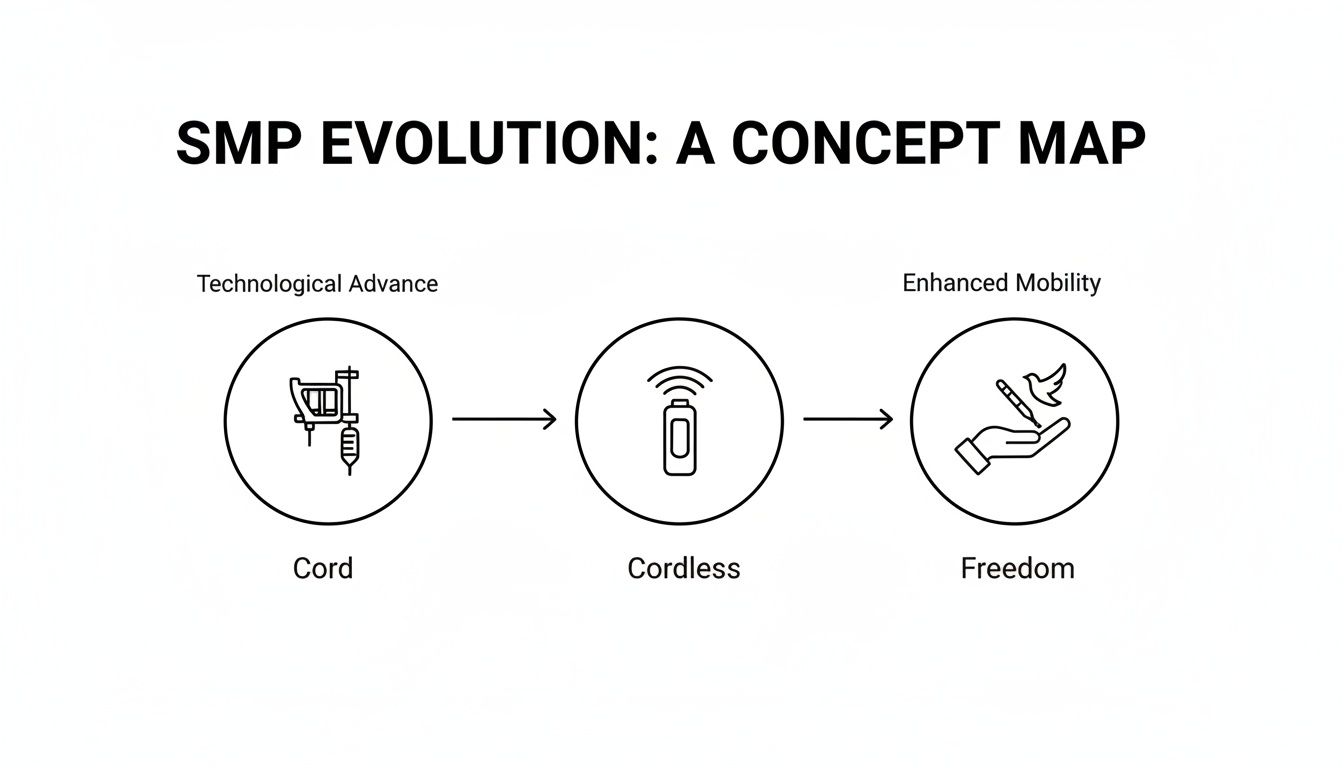
Breaking free from that tether has been a game-changer, letting us focus entirely on the delicate work at hand without a cord getting in the way.
Decoding Stroke Length: The Key to Precision
When it comes to SMP, stroke length is one of the most critical settings you need to understand. Put simply, it’s how far the needle travels in and out of the cartridge tip with each movement. For the incredibly delicate work of replicating tiny hair follicles on the scalp, a short, precise stroke is everything.
- Long Stroke (3.5mm+): This is for traditional tattooing—think bold lines and packing in solid colour. Using this on a scalp is a recipe for disaster. It’s far too aggressive and will almost certainly cause pigment blowouts and unnecessary trauma to the skin.
- Short Stroke (1.8mm - 2.5mm): Now, this is the sweet spot for SMP. It gives you the control to gently deposit pigment into the upper dermis, creating that soft, stippled look of a real follicle without going too deep.
Here’s a simple analogy: a long stroke is like using a thick permanent marker, while a short stroke is like using a fine-point technical pen for tiny, precise dots. For SMP, you always need the technical pen.
The Heart of the Machine: Motor and Voltage
The motor is the engine of your machine. It’s what drives the needle, and for SMP, you want one that’s smooth and consistent. A jerky or overly aggressive motor can throw off your precision, so finding one that runs reliably without harsh vibrations is key.
If the motor is the engine, then the voltage is your accelerator. Adjusting the voltage lets you control the speed and force of the needle.
A seasoned artist learns to adjust voltage on the fly. You might use a lower setting for sensitive areas like the temples and hairline, then dial it up slightly for the denser, less sensitive crown. This dynamic control is essential for achieving that seamless, uniform density across the entire scalp.
The Practical Stuff: Battery and Ergonomics
Finally, let’s talk about the practicalities that make a huge difference during a long day in the clinic. Battery life and ergonomics are crucial. You absolutely need a battery that can run for at least 4-6 hours on a single charge to get through a session without interruption. Many of the best machines come with two battery packs, so you can just swap and go.
Just as important is how the machine actually feels in your hand. A lightweight, well-balanced machine means less hand and wrist fatigue. This isn't just about comfort; it allows you to maintain rock-steady control from the first dot to the last, ensuring your work is consistently top-notch.
To make things clearer, here’s a quick-reference table breaking down the key specifications and what they mean specifically for SMP work.
| Wireless SMP Machine Key Specifications at a Glance |
| :--- | :--- | :--- |
| Specification | What It Means for SMP | Ideal Range/Type for SMP |
| Stroke Length | Determines needle travel distance; crucial for creating follicle impressions without skin trauma. | 1.8mm – 2.5mm |
| Motor Type | The engine driving the needle. A smooth, reliable motor prevents inconsistent dot work. | Brushless DC Motor (for quiet, low-vibration operation) |
| Voltage Range | Controls the speed and power of the needle. A wide range allows for adjustments on different skin types/areas. | 4V – 10V (operating typically between 5V-7V) |
| Battery Life | Defines how long you can work cordlessly. Essential for completing sessions without interruption. | 4-8 hours per battery pack (models with 2+ packs are ideal) |
| Machine Weight | Affects artist comfort and reduces hand fatigue during long, detailed sessions. | Under 180g (including battery) |
| Grip Diameter | Relates to ergonomics and control. A comfortable grip improves precision and reduces strain. | 25mm – 35mm (varies by personal preference) |
This table should give you a solid foundation for evaluating different models and choosing a machine that truly fits the specific demands of scalp micropigmentation.
Weighing Up the Pros and Cons of Going Cordless
Deciding to switch to a wireless machine is a big step for any SMP artist here in Australia. The benefits are pretty clear, but it's crucial to look at the whole picture—the good and the not-so-good. Getting your head around these trade-offs is the key to investing in a tool that will genuinely improve your work.
The most talked-about advantage is, of course, the total freedom of movement. When you're not tethered to a power supply by a cord, you can move around your client's head effortlessly, adjusting your angle to nail those intricate hairlines and create that perfect, seamless blend. This isn't just about convenience; it has a direct impact on the quality of your work and helps you deliver more natural-looking results.
On top of that, a lot of artists find that going cordless seriously cuts down on physical strain. Long sessions are just easier to handle without the constant drag and weight of a cable. That means less fatigue in your hand, wrist, and shoulder, which helps you stay precise from the first dot to the last.
The Upside of Unrestricted Movement
The perks of cutting the cord go beyond just being able to move freely. A wireless setup instantly makes your workspace look cleaner, more organised, and far more professional. Fewer cables mean less clutter on your station and, importantly, one less trip hazard, creating a safer environment for you and your client.
Here's a quick rundown of the main benefits:
- Unrestricted Movement: Gives you the freedom for incredible precision and artistry, which is a game-changer on tricky areas of the scalp.
- Reduced Fatigue: Lighter, better-balanced machines mean less physical strain during those long, multi-hour sessions.
- Streamlined Workspace: Your clinic looks tidier and more professional with fewer cables to manage or sanitise.
- Portability: Perfect for artists who travel, work in different clinics, or demonstrate their skills at industry events.
Practical Considerations and Potential Downsides
Of course, it's not all smooth sailing. The main thing you have to get used to is battery management. Here in Australia, SMP treatments often involve multiple sessions, and each one can last for hours. A typical client might need 2–4 sessions, each lasting 2–4 hours, to allow the pigment to settle properly. You absolutely need a rock-solid battery system to make sure you never have to stop mid-session.
The biggest mental shift when going wireless is becoming obsessive about battery management. Your daily routine has to include a charging protocol so you're never caught out. Most pros I know keep a second battery on the charger at all times.
Another thing to think about is the initial cost. High-quality wireless tattoo machines in Australia tend to have a higher price tag than their corded cousins. While the long-term gains in efficiency and comfort often make it worth it, it’s a significant upfront investment, especially for new artists or smaller clinics. You can check out options like a rechargeable rotary tattoo gun to get a feel for the features and pricing.
Finally, the machine's balance can feel a bit different. Because the battery is built right into the machine, the weight is distributed differently. Some artists pick it up and feel right at home, while others need a bit of time to adjust to the new feel and get their steady hand back.
Navigating Australian Regulations and Safety Standards
If you're performing scalp micropigmentation in Australia, you're running a skin penetration practice. That means you're bound by some pretty strict health and hygiene standards—and for good reason. These aren't just best-practice suggestions; they're legal requirements put in place to keep both you and your clients safe. Getting your head around these rules is the first step to running a professional, trustworthy, and fully compliant SMP clinic.
The regulatory side of things can feel a bit like a maze at first. There isn't one single national body policing everything. While the Therapeutic Goods Administration (TGA) has oversight on things like the quality of sterile needles, your day-to-day clinic operations are governed by your local council and state health department. So, the specific rules in Perth could be slightly different from what’s required in Sydney or Melbourne.
State-Specific Health and Hygiene Laws
Your top priority should be to get intimately familiar with the Public Health Act or Skin Penetration Industry Regulations for your state or territory. These are the documents that lay out the absolute non-negotiables for your practice. To get a solid overview, it's worth checking out A Comprehensive Guide to Australian Workplace Safety Standards.
No matter where you are in Australia, these regulations will always hit on a few key areas:
- Sterilisation: This covers the proper procedures for any reusable equipment. Honestly though, the industry standard now is to use fully disposable setups wherever possible.
- Single-Use Items: This is a big one. It's mandatory that anything breaking the skin—needles, cartridges, you name it—must be sterile, single-use, and tossed into a sharps container straight after the session. No exceptions.
- Premises Standards: Your clinic itself has to be up to scratch. This means easily cleanable surfaces, good lighting, and proper hand-washing stations that are separate from everything else.
- Record Keeping: Keeping detailed client records and consent forms isn’t just good practice; it's often a legal requirement.
Barrier Protection for Wireless Machines
Let's talk about one of your most important day-to-day habits: barrier protection. Your wireless machine is a serious investment, and the last thing you want is for it to become a source of cross-contamination. Since you can't just pop the whole thing in an autoclave, creating an effective barrier is absolutely critical.
This means before every single client, you need to meticulously wrap your machine in disposable plastic barriers. Think clip cord sleeves and grip tape. The goal is to ensure no blood or bodily fluids ever touch the machine's surface. Once the session is over and the barriers are disposed of, you still need to wipe down the machine with a hospital-grade disinfectant.
Think of barrier protection as the equivalent of a surgeon's sterile field. It creates an untouchable, clean zone around your equipment, which is the only way to guarantee client safety and uphold professional standards.
This commitment to hygiene doesn't stop with your machine. It extends to your personal protective equipment (PPE), too. Wearing high-quality, single-use gloves is non-negotiable. Keeping your clinic stocked with essentials like black disposable nitrile gloves from a trusted Aussie supplier is just part of the job. Following these safety standards isn’t just about ticking boxes—it’s about building rock-solid client trust and protecting your hard-earned reputation.
How to Choose Your First Wireless SMP Machine
Alright, so you’re ready to take the plunge and invest in your first wireless SMP machine. This is a big step, and making the right choice now will save you a world of frustration down the track. Let’s walk through a practical buyer's checklist to help you find a workhorse that will become a genuine asset for your Australian clinic.
First things first: where are you buying it from? It can be tempting to chase a bargain on an overseas website, but I always recommend buying from a reputable Australian supplier. This isn't just about "shopping local." It’s about practicalities like having a local warranty, someone to actually call for support, and getting your machine quickly. When a tool is your livelihood, you want help in your own time zone, not halfway across the globe.
Needle Compatibility and Ergonomics
Next, let's talk needles. You need to make absolutely sure that the machine you’re eyeing up is compatible with your go-to brand of needle cartridges. While most modern machines use a universal system, it’s a rookie mistake not to double-check. The last thing you want is to be locked into a single, hard-to-find cartridge brand. That’s an inconvenience you just don’t need.
Now for something that’s often overlooked until it’s too late: the machine’s weight and how it feels in your hand. As an SMP artist, your hands are your most valuable asset. You'll be holding this machine for hours, performing thousands of tiny, precise movements.
A heavy, clunky, or poorly balanced machine is a one-way ticket to hand fatigue and wrist strain. By the end of a long day, that fatigue can genuinely impact the quality of your work. Look for a machine under 180g—it might not sound like much, but that small difference in weight gives you far greater comfort and control over a full session.
Due Diligence and Hands-On Testing
Before you click "buy," do your homework. Get online and hunt down genuine reviews from other SMP artists. Don’t just read the marketing blurbs; find forums and social media groups where real practitioners are talking. Pay close attention to what they say about battery life in real-world use, motor consistency, and how the machine performs after months of daily grind.
Nothing beats a hands-on demo. If you get a chance to try a machine at a trade show or borrow a colleague's for a feel, do it. Feeling the vibration, the weight, and the balance in your own hand is the only way to truly know if it’s the right fit for you.
If you want to dig a bit deeper and compare your options, this guide on how to buy tattoo machines in Australia is a great resource. By following these steps—sourcing locally, checking compatibility, focusing on ergonomics, and doing solid research—you’ll be in a great position to pick a wireless machine that elevates your work and serves you well for years.
Keeping Your Machine in Top Shape
Your wireless machine is a serious investment in your craft, and just like any high-end tool, it needs proper care to perform at its best. Think of it like a luxury car—you wouldn't skip its scheduled service, right? A simple, consistent maintenance routine is key to protecting your investment, extending its life, and upholding the strict hygiene standards your clients deserve.
It all starts with your day-to-day cleaning and disinfection. These steps are non-negotiable and form the foundation of a safe, professional practice. After every single client, your machine needs a thorough clean and disinfection that meets Australian health regulations.
Battery Care and Longevity
The battery is the powerhouse of your wireless machine. Looking after it properly means you'll get a longer lifespan and consistent performance, session after session. The last thing any SMP artist wants is a battery dying unexpectedly mid-procedure.
- Don't Run It Empty: Try to avoid letting your batteries drain completely. Lithium-ion batteries last longer when you keep them partially charged, rather than constantly running them from 100% down to 0%.
- Stick to the Original Charger: Always use the charger that came with your machine. Mismatched chargers can slowly damage the battery cells and can even be a safety hazard.
- Smart Storage: If you won’t be using a battery for a while, store it with about a 50% charge in a cool, dry spot. This simple trick helps maintain its health over the long term.
Catching Problems Before They Start
Even the best machines will show signs of wear over time. The trick is to spot the little things before they turn into big, expensive headaches that could put you out of action.
You get to know the feel and sound of your machine intimately. If it suddenly starts making a new noise, vibrating differently, or the battery life drops off, pay attention. These are the tell-tale signs that it's time for a professional check-up.
Listen out for any odd sounds like rattling or grinding, and take note if the machine feels hotter or vibrates more than usual. Any inconsistency in performance is a signal to get in touch with your supplier. Staying on top of maintenance means your wireless tattoo machines in Australia will remain the reliable workhorse your clinic depends on.
Frequently Asked Questions About Wireless SMP Machines
Let's clear the air on some of the most common questions we hear from artists and clients here in Australia. These are the things people always want to know before diving into the world of wireless SMP.
How Long Does a Wireless Tattoo Machine Battery Last?
You can expect a solid 4 to 8 hours of continuous work from a single charge on most professional wireless machines. That's more than enough juice to get you through a typical 2-4 hour client session without any stress.
The really smart setups come with two swappable battery packs. This means you can have one on the machine and the other on the charger, ready to go. It’s a simple system that completely eliminates downtime and keeps your workflow seamless.
Are Wireless Machines a Lot More Expensive in Australia?
The short answer is yes, the initial outlay for a quality wireless machine is usually higher than for a traditional corded one. But it's not just about the price tag.
Most artists see it as a smart investment. The freedom from cables, the reduced hand strain, and the overall improvement in how you move and work is a game-changer. That added comfort and control often leads directly to better, more precise results for your clients.
Think of it less as an expense and more as an investment in your craft and your comfort. When you can work without restriction, it shows in the quality of your art, and that's something clients will always value.
If you're looking to truly master the craft, a dedicated scalp micropigmentation training course can help you get the absolute most out of this advanced gear.
Can I Use Any Wireless Tattoo Machine for SMP?
Absolutely not. This is a crucial point. While there are countless wireless machines out there, the vast majority are not built for the delicate, precise work of scalp micropigmentation.
For SMP, you need a machine with a very short stroke length—somewhere in the 1.8mm to 2.5mm range. This is key to creating those tiny, realistic follicle impressions without damaging the sensitive scalp skin. A smooth-running motor and fine-tuned voltage control are also non-negotiable. Using a machine specifically designed for SMP isn't just a suggestion; it's essential for achieving professional results.
Ready to transform your practice with the best tools in the industry? At My Transformation, we're dedicated to helping artists achieve incredible results for their clients. Explore our range of SMP solutions and take the next step in your professional journey.