

Discover what is beard micropigmentation? (beard tattoo) and how it works
Ever feel like your beard just won't cooperate? You've got patches here, a weak spot there, or maybe it just lacks that full, dense look you're after. That’s where beard micropigmentation comes in.
It's a clever cosmetic tattoo that creates the illusion of thicker facial hair by depositing tiny dots of pigment into the skin. Think of it less like a traditional tattoo and more like a permanent, perfectly crafted five o'clock shadow that fills in all the right places.
Your Instant Answer to a Fuller Beard
Imagine an artist creating a masterpiece using nothing but tiny, perfectly placed dots—a technique called pointillism. Beard micropigmentation, or a beard tattoo as some call it, works in a very similar way. A highly trained technician uses specialised equipment to place thousands of micro-dots of pigment into the very top layer of your skin.
This isn't your average tattoo job. The needles are finer, the pigments are specially formulated, and the depth is precisely controlled to mimic the look of individual hair stubble. The end result is a completely natural-looking boost in density that blends seamlessly with your existing hair.
It's the ultimate grooming shortcut. Forget the daily hassle of messy powders or fibres that come off on your collar. This is a long-term fix that looks sharp whether you’re clean-shaven, rocking a bit of stubble, or growing your beard out over the top of it.
How Does It Work?
At its core, the goal is to add the look of density where nature didn't provide it. The procedure is all about creating the appearance of hair follicles in areas where your beard is thin, patchy, or non-existent.
It’s an incredibly versatile solution that can tackle a few common frustrations:
- Filling in Patches: For guys with uneven growth, micropigmentation can fill in those frustrating gaps, giving you a consistent, uniform look.
- Creating Definition: We can use it to build a sharp, clean beard line along your cheeks and neck, which does wonders for defining your jawline.
- Concealing Scars: It's also brilliant for camouflaging scars from acne, past injuries, or surgeries that have left bald spots in your beard.
- Adding Overall Fullness: Even if your beard is fairly even, the treatment can add an underlying layer of density, making the whole thing look much thicker and healthier.
Ultimately, beard micropigmentation is about restoring symmetry and boosting your confidence. It lets you design the exact beard shape and fullness you've always wanted, without the daily upkeep or the need for invasive surgery.
The technique behind beard micropigmentation is the same one used for its popular cousin on the scalp. To get a real sense of what's possible, it’s worth checking out some scalp micropigmentation before and after photos. You’ll see how this follicle replication principle creates an incredibly realistic effect. It's a meticulous process that takes a true artistic eye, but the payoff is a sharp, clean look that's with you 24/7.
Here's a quick rundown of what beard micropigmentation offers.
Beard Micropigmentation at a Glance
| Feature | Description |
|---|---|
| Procedure Type | Non-invasive cosmetic tattoo |
| Best For | Patchy beards, weak jawlines, scar camouflage, adding density |
| Pain Level | Minimal; a topical numbing cream is used |
| Session Duration | 2-4 hours per session |
| Number of Sessions | Typically 2-4 sessions for optimal results |
| Longevity | 3-6 years before a touch-up may be needed |
| Downtime | Minimal redness for 24-48 hours |
This treatment is designed to be a straightforward, effective way to get the beard you've always wanted with lasting results.
A Closer Look at the Beard Tattoo Procedure
So, what actually happens when you come in for beard micropigmentation? It’s far more than just a tattoo; it's a meticulous process where artistry meets precision. Let’s walk through it step-by-step so you know exactly what to expect. Think of it as a collaborative journey between you and your practitioner, designed to be comfortable and predictable from the moment you walk in.
It all kicks off with a conversation, not a needle. Your initial consultation is genuinely the most critical part of the whole process. This is where we sit down and design your ideal beard—mapping out the perfect shape for your face, figuring out the right density, and making sure the final result is a look you'll love.
We also spend time custom-blending pigments. This isn’t an off-the-shelf solution. We carefully mix shades to create a pigment that’s a perfect match for your natural hair colour and skin tone. This attention to detail is what makes the final result look so convincingly real.
The First Session: Laying the Foundation
This is where the transformation really starts. First, we’ll apply a topical numbing cream to the area to make sure you’re comfortable throughout. Then, your practitioner will start meticulously placing the first layer of tiny follicle impressions, depositing the custom-blended pigment into the upper dermis of your skin.
It helps to think of this first session as priming the canvas. We're not aiming for the final density just yet. Instead, the goal is to establish the defined shape and create the base layer of colour that we'll build on in the next appointments. Every single dot is placed with purpose, mimicking the slightly random pattern of natural stubble.
This diagram shows how we gradually turn a patchy beard into a full, defined one.
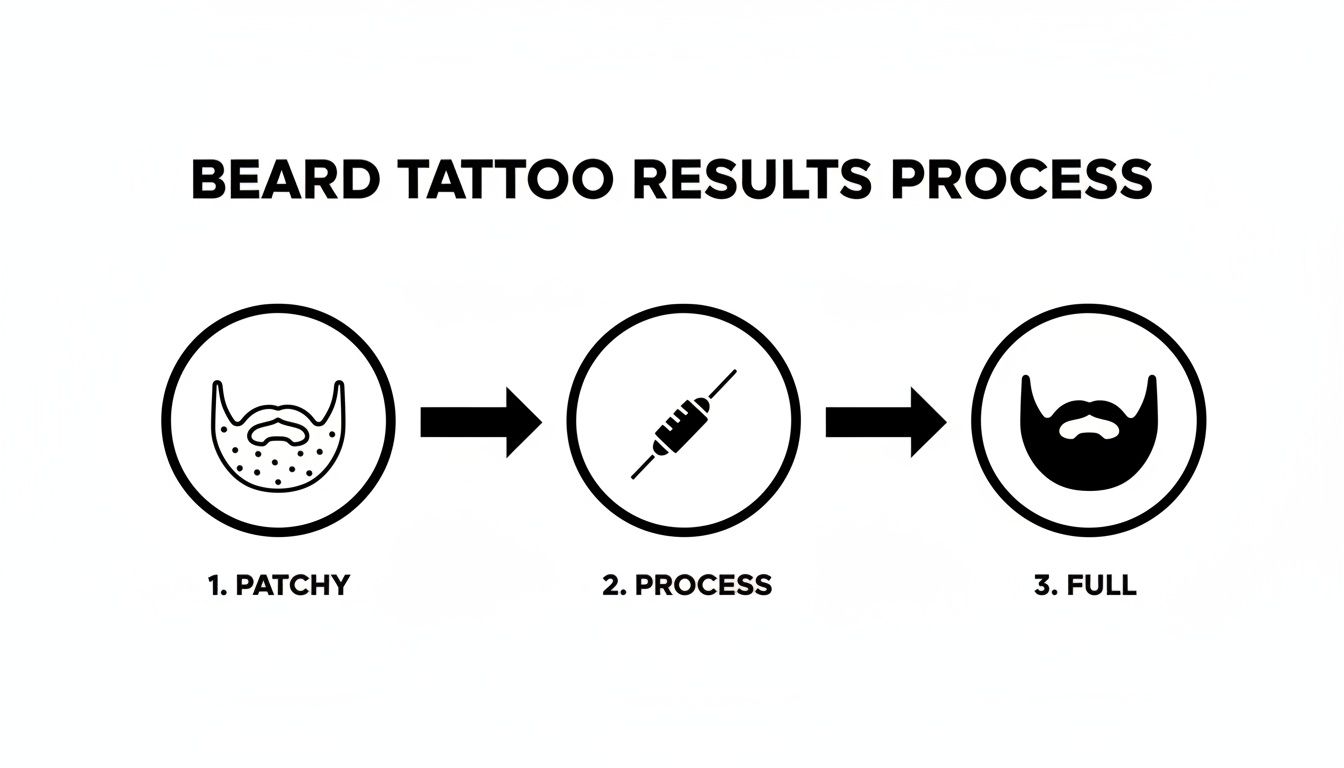
As you can see, it's the strategic layering over multiple sessions that creates that seamless, dense appearance.
Follow-Up Sessions: Building Density and Detail
Realism is all about depth. Your second and sometimes third sessions are all about building up that density and adding fine details. We use subtle variations in pigment shade and dot placement to create a three-dimensional effect that looks just like real stubble.
Your skin needs time to heal between sessions, which also allows the pigment to settle. This is a good thing! It lets your practitioner see how the colour has healed and make any necessary adjustments for the next layer. Most of our clients get to their ideal look within two to three sessions, usually spaced a few weeks apart.
The layering process is absolutely crucial. Trying to cram it all into one long session often results in a flat, "drawn-on" look. Multiple sessions allow us to gradually build up density, which is the secret to mimicking real hair follicles perfectly.
This multi-session approach is the gold standard for a reason. After your final session, you’ll get a simple set of aftercare instructions to follow. The healing is quick—usually just a few days of avoiding things like heavy sweating, direct sun, and harsh soaps. Follow these, and you'll lock in that sharp, full beard for years to come.
For a more detailed breakdown of what to expect, check out our guide on the beard and stubble tattoo process.
Who Is an Ideal Candidate for Beard Micropigmentation?
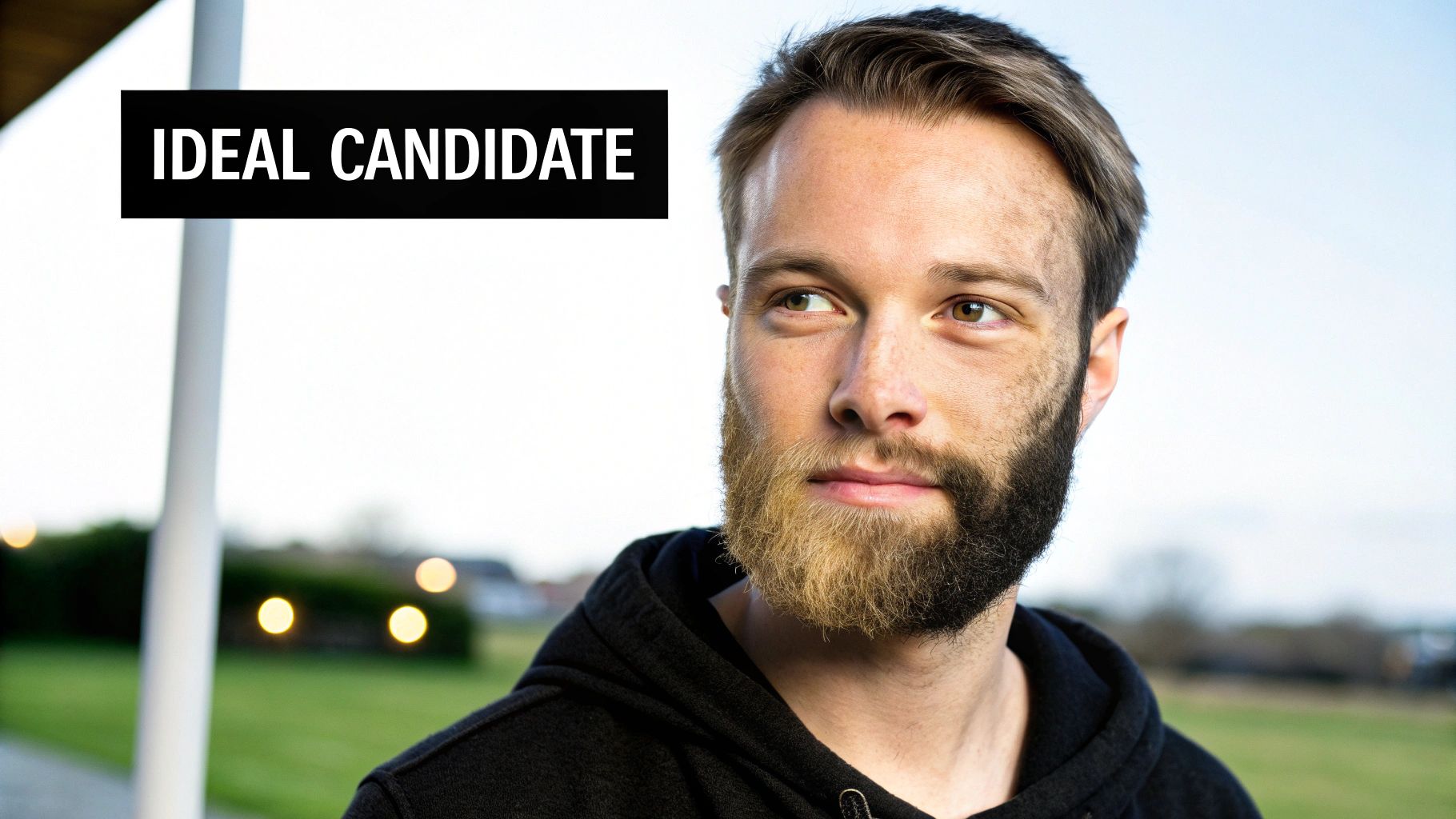
Beard micropigmentation is a brilliant solution for many men, but it isn't a one-size-fits-all fix. The best way to figure out if it's right for you is to see if you recognise your own frustrations in the problems it’s designed to solve. If you find yourself nodding along with any of the points below, then you're probably a great candidate.
This treatment is for guys who are fed up with their facial hair and want a permanent, low-maintenance way to fix it. It's really about taking back control of your look and finally getting the beard you've always wanted, without the hassle of temporary cover-ups or the cost of invasive surgery.
Let's dig into who benefits the most.
You Struggle with a Patchy or Thin Beard
This is far and away the most common reason men walk through our doors. If genetics have dealt you a hand with frustrating gaps, sparse patches on your cheeks, or a beard that stubbornly refuses to connect, then you’re exactly who this was made for. The procedure is fantastic at creating the illusion of uniform density.
Instead of a daily ritual with messy fibres or powders, a beard tattoo gives you a constant, underlying shade of "stubble." This simple change makes your whole beard look fuller and more complete, whether you keep it shaved down or let it grow out a bit.
You Want to Define and Strengthen Your Jawline
A strong, well-defined beard line can totally change your facial structure, giving you a sharper and more chiselled jawline. Plenty of men can grow a decent amount of facial hair, but it often comes in with a soft, undefined edge.
Beard micropigmentation allows us to literally sculpt the perfect beard shape for your face. We can create crisp, clean lines along your cheeks and neck, giving you that sharp, just-groomed look 24/7. It's the perfect answer for anyone who wants a more polished and deliberate style without constantly reaching for the trimmer.
You Need to Conceal Scars
Scars from old acne, surgery, or injuries can create really obvious bald spots in a beard, breaking up its flow and drawing unwanted attention. Micropigmentation is an incredibly effective tool for camouflaging scars.
By carefully depositing pigment into the scar tissue and blending it with the hair around it, a skilled practitioner can make these spots virtually disappear. This lets you wear your beard with total confidence, knowing that people are noticing your style, not an old scar.
A key benefit here is that micropigmentation can solve problems other treatments can't. A beard transplant might not even be possible on dense scar tissue, but micropigmentation works by adding colour and texture to simply mask the area.
You Have Alopecia Areata
For men dealing with hair loss patches in their beard due to alopecia areata, the effect can be pretty devastating. With alopecia affecting around 2% of Australian men, beard micropigmentation has become a real game-changer for restoring confidence.
Micropigmentation offers a way to reclaim the look of a full beard by meticulously filling in the bald patches caused by the condition. It can provide a massive psychological boost and bring back a sense of normality. While it doesn't cure the underlying condition, it masterfully conceals its effects. To learn more about who can benefit from this kind of treatment, read our article exploring how hair tattoos can help with hair loss.
Of course, while the procedure is a great fit for many, it might not be suitable if you have certain active skin conditions in the area, like severe cystic acne or psoriasis. The only way to know for sure is to have a professional consultation to confirm you’re a good candidate and can expect a safe, successful result.
Comparing Beard Micropigmentation to Other Solutions
So, you've decided it’s time to sort out that patchy beard. When you start looking around, you'll find a few different paths you can take, and each one comes with its own set of pros, cons, and level of commitment. Choosing the right one isn’t just about the promised results; it’s about finding what actually fits your life.
Let’s break down how a beard tattoo stacks up against the usual suspects: surgical transplants, topical creams, and cosmetic cover-ups.
The biggest difference comes down to two things: how fast you see results and how long they last. Beard micropigmentation hits a sweet spot. It gives you an instant visual boost that's long-lasting and, once healed, requires pretty much zero daily effort. It’s the perfect middle ground between temporary daily fixes and a full-blown surgical procedure.
Comparing Beard Enhancement Options
When you're weighing your options, it helps to see everything laid out side-by-side. Each method has its place, but they serve very different needs. One is a permanent surgical solution, another is a daily chemical treatment, and the last is a temporary cosmetic trick. Beard micropigmentation, on the other hand, offers a long-term aesthetic solution without the surgery or daily grind.
This table breaks down the key differences to help you figure out what makes the most sense for you.
| Feature | Beard Micropigmentation | Beard Transplant | Topical Solutions (e.g., Minoxidil) | Cosmetic Powders |
|---|---|---|---|---|
| Results | Creates the look of dense stubble; semi-permanent. | Grows real, physical hair; permanent. | Can stimulate some hair growth; results vary. | Temporary fill-in effect for one day. |
| Time to See Results | Immediate after the first session. | Up to 12 months for full, mature growth. | 3-6 months of consistent daily use. | Instant, but must be reapplied daily. |
| Procedure | Non-invasive cosmetic tattooing. | Surgical procedure with anaesthesia and incisions. | Daily application of a liquid or foam. | Daily makeup-style application. |
| Downtime | Minimal redness for 24-48 hours. | 1-2 weeks of scabbing, swelling, and recovery. | None, but can cause skin irritation. | None, but application can be messy. |
| Permanence | Semi-permanent, lasts 3-5 years. | Permanent. | Only works as long as you keep using it. | Washes off easily with water. |
| Best For | Creating a stubble look, defining edges, filling patches. | Growing a long, full beard. | Men with minor thinning or dormant follicles. | A quick fix for a special occasion. |
Ultimately, the "best" option is the one that aligns with your goals, budget, and how much effort you're willing to put in. For a guaranteed, hassle-free appearance of a full, sharp beard, micropigmentation holds a unique advantage.
Beard Micropigmentation vs Beard Transplants
A beard transplant is proper surgery. A surgeon takes hair follicles from the back of your head and implants them one by one into your face. While this gives you real, growing hair, the journey to get there is a whole different ball game.
First, there's the procedure itself. It's a minor surgery, but it still involves anaesthesia, incisions, and a significant recovery period. Think swelling, scabbing, and a good couple of weeks of careful healing. Micropigmentation is non-surgical, and any redness you get is usually gone in a day or two.
Then you have to wait. And wait. After a transplant, the new hairs fall out before starting to grow back properly. It can take up to a year to see the final result. With beard micropigmentation, you walk out of your very first session with a visible improvement.
A transplant is a permanent fix, no doubt about it, but it comes with a hefty price tag—often thousands of dollars. Micropigmentation is semi-permanent, lasting 3-5 years before you might need a simple touch-up, making the initial cost much more manageable.
If your dream is to grow a long, flowing beard, a transplant is the way to go. But if you want that sharp, permanent stubble look or a dense five o'clock shadow without the surgery, downtime, and high cost, micropigmentation is the clear winner. To really dive deep into this, check out our article comparing SMP vs other hair restoration methods.
Beard Micropigmentation vs Topical Solutions like Minoxidil
Topical treatments like Minoxidil are often the first thing guys try. You apply the foam or liquid directly to your skin twice a day, hoping it will kickstart some new growth from dormant follicles.
The biggest issue here is the endless commitment and unpredictable results. It doesn’t work for everyone, and for those it does help, you have to keep using it. Every. Single. Day. The moment you stop, any new hair you’ve gained will likely fall out. It traps you in a cycle of daily applications and constantly buying more product.
Beard micropigmentation is a "set it and forget it" solution. After a few sessions and a short healing period, your results are locked in for years. There are no creams to apply, no prescriptions to refill, and no daily grooming chores beyond your normal routine.
Beard Micropigmentation vs Cosmetic Powders and Fibres
Cosmetic fillers, like coloured powders or keratin fibres, are the ultimate temporary fix. They work by sticking to your existing hairs to make them look thicker or by colouring the skin underneath to hide the patchiness.
They can work in a pinch for a photo or a night out, but they have some serious drawbacks.
- It's a daily chore. Putting them on can be messy and takes a steady hand to avoid looking fake.
- They're not durable. A bit of sweat, a trip to the gym, or getting caught in the rain can lead to smudges and embarrassing streaks.
- They can look unnatural. Up close, they often look cakey or flat if you haven't applied them perfectly.
A beard tattoo, on the other hand, is completely waterproof and smudge-proof. It becomes a part of your skin, so you always look sharp and put-together, no matter what. It gives you the aesthetic benefit of a filler but with the kind of reliability and permanence that cosmetics just can't offer. You can see the parallels when you look into similar semi-permanent cosmetic tattooing techniques like microblading for eyebrows, which operate on the same principle of creating a lasting, natural look.
The Long-Term View: Cost, Care, and How Long It Lasts
Getting a great result from your beard tattoo is about seeing the whole picture. It’s not just about the sessions themselves, but understanding the initial investment, the simple aftercare, and how long you can expect it to last. Think of it less as an expense and more as a long-term investment in your confidence and daily routine—no more wasting time with temporary fixes.
The cost of beard micropigmentation really comes down to what you need. The biggest factor is the size of the area we’re working on. Filling in a couple of small, sparse patches is naturally going to be a smaller investment than crafting a full, sharp beard line from the ground up. Most treatments fall into a pretty standard price range, but a proper consultation will give you an exact figure.
Your Simple Aftercare Plan
Looking after your new beard tattoo is straightforward, but it's absolutely vital for getting that crisp, natural finish. Right after each session, the main goal is to keep the area clean and dry. This lets the pigment settle perfectly into the skin.
For the first few days, you'll need to steer clear of a few things:
- Heavy Sweating: Best to skip the intense gym sessions or saunas for a bit.
- Direct Sunlight: Keep your face out of the sun. UV rays are the enemy of fresh pigment and can cause it to fade.
- Getting the Area Soaked: When you wash your face, don't scrub the treated area. A gentle pat dry is all it needs.
Sticking to these simple rules helps the pigment heal cleanly, giving you that sharp, defined look you're after. One of the best things about this procedure is the minimal downtime. A bit of redness is the most you'll likely see, which happens in under 5% of cases and usually fades within 24 hours.
For a really detailed look at what to expect as you heal, our day-by-day scalp micropigmentation healing guide is a great resource. The process is very similar for beard aftercare.
How Long Will Your Beard Tattoo Last?
One of the biggest draws of beard micropigmentation is its staying power. We’re not talking about daily powders or pencils that wash away. This is a semi-permanent solution built to last for years.
On average, you can expect your beard tattoo to hold its colour and density for a solid 3 to 5 years. When it starts to fade, a quick, single-session touch-up is all you need to bring it right back to its original vibrancy.
This kind of longevity is what makes it such a practical choice. When you weigh up the one-off cost against the endless cycle of buying and applying temporary fillers, the value is obvious. You’re investing in years of waking up with a perfect beard, ready to face the day. It’s this long-term reliability that truly sets the beard tattoo apart.
Why Choose a Specialist for Your Beard Tattoo
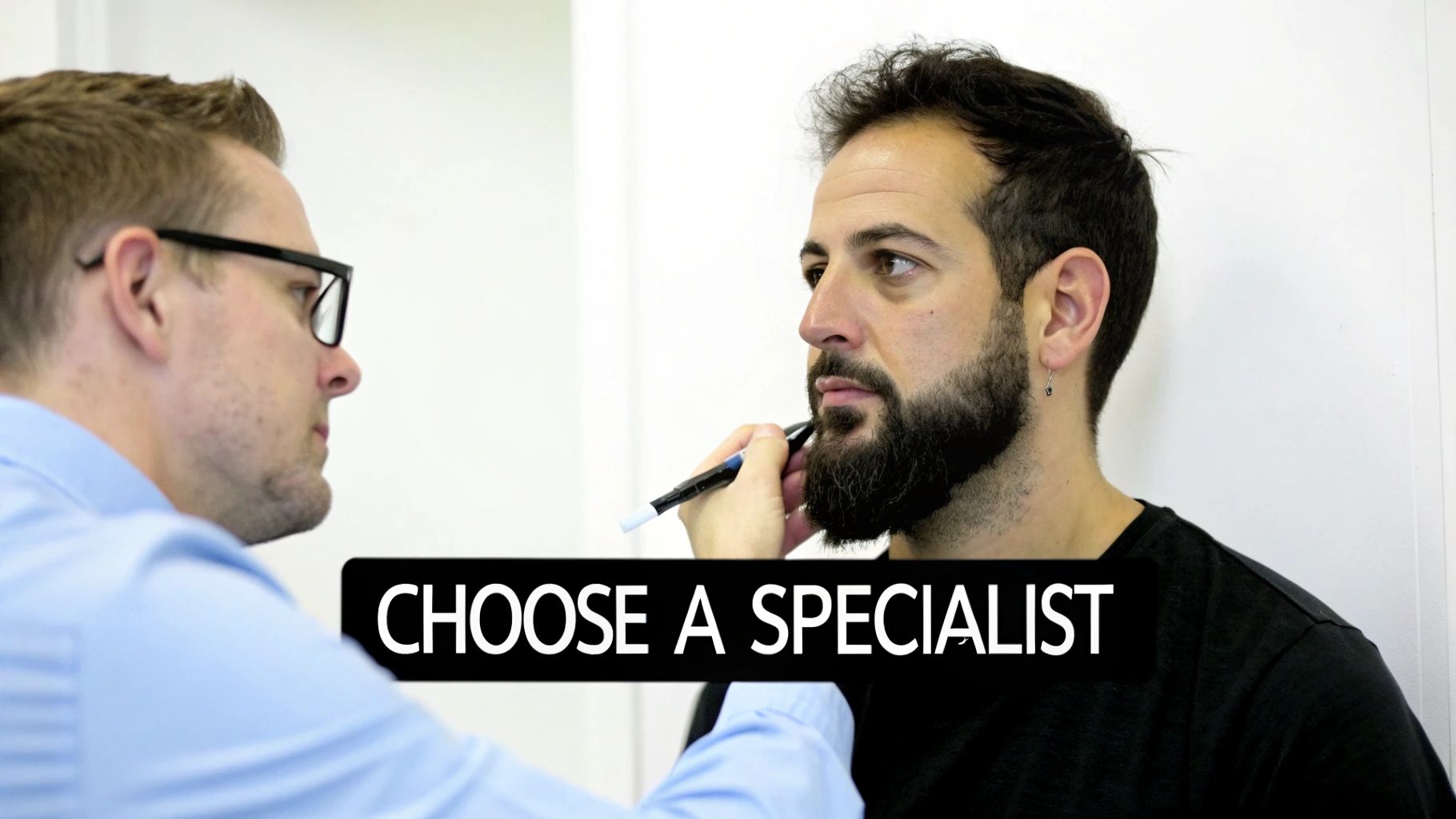
Getting a beard tattoo is a big step, and the final look comes down to one thing: the skill of the person holding the tool. This isn’t just about putting ink into skin; it’s a delicate craft that marries technical skill with an artist’s eye. Going to a dedicated specialist isn't just a good idea—it's the single most crucial factor in getting a result that looks completely real.
Think of it this way: your practitioner is part technician, part portrait artist. A general tattooist knows their way around needles and ink, but a micropigmentation specialist lives and breathes skin, hair follicles, and facial anatomy. They have the experience to create the subtle, multi-layered effect that perfectly mimics real stubble. That’s a level of detail you just won’t get without specialised training.
An expert understands the nuances that make all the difference, from the exact pressure of the needle to the precise spacing of each tiny follicle impression. It’s these tiny details that create a seamless, hyper-realistic beard instead of one that looks flat or obviously "drawn on."
The Mark of a True Professional
So, what really sets a specialist like Michael at My Transformation apart from everyone else? It comes down to a few key things that directly impact the quality, safety, and longevity of your beard tattoo. A true professional takes a meticulous, client-first approach to the entire process.
You should always look for these core strengths:
- An Artistic Eye: A specialist won’t give you a cookie-cutter beard. They’ll design a hairline that actually suits your facial structure, jawline, and personal style.
- Technical Mastery: They use custom-blended, medical-grade pigments that are formulated to heal true to colour and won't fade into those dreaded blue or green tones down the track.
- A Focus on Safety: They work in a sterile environment and understand how to handle different skin types, ensuring the procedure is safe and the healing is predictable.
The difference is in the details. A specialist doesn't just fill in patches; they build layers of density, create soft, natural edges, and ensure the final look integrates perfectly with your existing hair. This is artistry, not just a procedure.
Why Quality Pigments and Expertise Matter
In a busy city like Perth, there’s no shortage of options. But premium providers like My Transformation stand out because they invest in medical-grade pigments that are safe for all skin types. Cheaper, low-quality inks used by less experienced artists can break down unpredictably in the skin, often leading to discolouration that’s difficult and expensive to fix. If you're interested in the wider trends, you can explore the industry trends shaping the Australian aesthetics market.
Ultimately, choosing a specialist is an investment in your confidence. You're trusting someone with your appearance, and that trust should be earned through proven expertise, a portfolio of great results, and a commitment to using the best tools for the job. When it comes to your face, don't settle for anything less.
Ready to see what a true specialist can do for you? Book a free, no-obligation consultation with My Transformation today and discover the difference that genuine expertise makes.
Got Questions About Beard Tattoos? We've Got Answers
It's completely normal to have a few questions running through your mind, even after getting a good sense of the procedure. Making a decision like this is a big deal, and you want to be sure it's the right one for you. Let's tackle some of the most common queries we hear day in and day out.
Think of this as the final piece of the puzzle. We'll cover everything from what it feels like to how the treatment looks when you grow your beard out. The goal here is to get you feeling 100% confident.
Does Beard Micropigmentation Hurt?
This is usually the first thing people ask, and it's a fair question! The honest answer is that most guys find it surprisingly comfortable. Everyone's pain tolerance is different, of course, but the sensation is most often described as a faint tapping or a light scratch—nothing like the intense feeling of a traditional tattoo.
Before we even start, we apply a powerful topical numbing cream to the whole area. This stuff works wonders, taking the edge off so you can just relax. You'll likely feel the vibration from the tool, but actual discomfort is minimal for the vast majority of our clients.
Can You Really Match My Hair Colour Perfectly?
Absolutely. Getting the colour spot-on is what makes or breaks the final result, and it's something we take very seriously. This isn't about picking a generic "black" or "brown" ink off a shelf.
Your practitioner is an artist, and they will meticulously custom-blend several pigment shades to create a colour that's a perfect match for your specific hair and skin tone. We look at the subtle variations in your natural stubble to ensure the tiny dots we create are virtually indistinguishable from the real thing. For guys with greying beards, we can even mix a custom "salt and pepper" blend for a result that looks completely natural.
How Long Does a Session Actually Take?
The time you'll spend in the chair really comes down to the amount of area we're working on.
- Small Patches or Scars: If you're just filling in a few small gaps or covering up a scar, we could be done in as little as one to two hours.
- Full Beard Definition: For a more comprehensive job, like creating a sharp new beard line and adding density all over, you're looking at a session time of around two to four hours.
We'll give you a much clearer time estimate during your consultation once we've had a chance to see what you're hoping to achieve.
Keep in mind, this is detailed, artistic work. Rushing is not in our vocabulary because precision is what delivers those hyper-realistic results. It's a few hours of your time for years of confidence.
What Happens if I Grow My Beard Out?
Great question, and this is where the treatment really shines. If you decide to grow your facial hair out, the beard tattoo doesn't just disappear—it becomes the perfect foundation.
The micropigmentation provides a permanent "five o'clock shadow" on the skin beneath the longer hairs. This shadow effect completely masks any patchiness that might have been visible before, making your entire beard look significantly denser and fuller. It simply enhances what you've already got, giving you the freedom to rock a longer beard without worrying about see-through spots.
Ready to get answers tailored to you? The team at My Transformation is here to help. Book your free, no-obligation consultation today and let's discuss how we can achieve your perfect beard. Visit us at https://rightwing-health.info/a%3E.%3C/p%3E