

Your Guide to Thread by Thread SMP Restoration
You might hear the term ‘thread by thread SMP’ and picture actual threads being used, but that’s not the case. It’s a metaphor, a way of describing a philosophy that takes Scalp Micropigmentation (SMP) to a whole new level of artistry.
Think of it as building natural-looking hair density one tiny impression at a time. The focus isn't just on covering the scalp; it’s about meticulously placing each pigment deposit to replicate a single, individual hair follicle, creating an incredibly soft and undetectable result.
What Exactly Is Thread By Thread SMP?
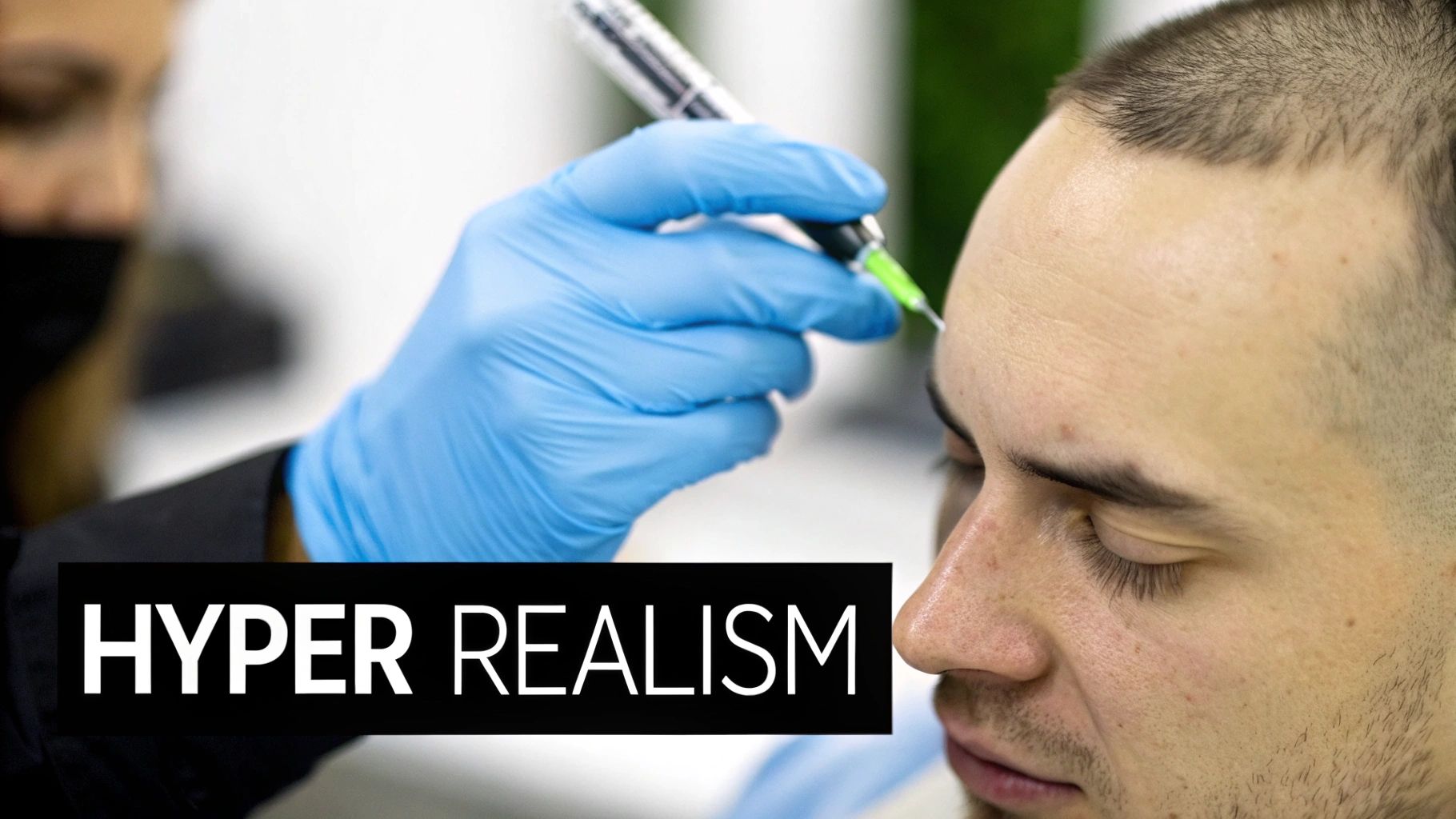
Picture a master artist creating a photorealistic portrait. They wouldn't use broad, sweeping brushstrokes. Instead, they’d build the image with thousands of tiny, individual dots, each one playing a crucial part in creating the final picture's depth, texture, and realism. That’s the very essence of the thread by thread SMP technique.
This method completely shifts the focus from simply colouring the scalp to give the impression of fullness. It’s a deliberate commitment to artistry and precision. The end game is to create a soft, feathered, and genuinely undetectable illusion of hair that looks completely natural, even up close. It’s all about embracing the ‘perfect imperfection’ you’d find on a real scalp.
The Philosophy of Precision
At its heart, this detailed approach is all about subtlety and nuance. Instead of a one-size-fits-all, uniform application, practitioners build density in careful layers, just like how natural hair grows.
This involves:
- Individual Follicle Replication: Every single microdot is placed with the specific intention of mimicking a real hair follicle.
- Layered Density: The treatment is built up over several sessions. This allows for a gradual, controlled, and far more natural-looking increase in perceived thickness.
- Artistic Placement: The dots are placed strategically to avoid creating harsh lines or unnatural patterns, leading to a much softer, more realistic finish.
This painstaking process ensures the final result is a custom piece of art, tailored specifically to your hair loss pattern, skin tone, and what you want to achieve. It’s about restoring your confidence with a result so natural that only you and your practitioner will know it’s there.
Scalp Micropigmentation is now a widely trusted and effective non-surgical treatment here in Australia. In fact, as of 2023, well over 1,000 SMP procedures are being performed every month across the country. And the feedback is incredible, with patients reporting a 95% satisfaction rate thanks to the ultra-realistic look that can be achieved.
Ultimately, the thread by thread method is for anyone who refuses to compromise on realism. To get a better grasp of the fundamentals behind the treatment, have a look at our guide on what is scalp micropigmentation and how it all works.
How This Hyper-Realistic Technique Actually Works
The real magic behind the thread by thread SMP approach is how it builds a completely convincing, three-dimensional illusion of hair. We're not just applying a flat layer of pigment to the scalp here; this is a highly meticulous process where artistry and technical skill come together to create what I like to call 'perfect imperfection'.
Unlike some standard methods that just aim for quick coverage, this technique is all about strategic, careful layering. Your practitioner will painstakingly build up density and texture by changing several key elements with every single micro-impression they place. This is how we achieve a final look that mirrors the beautifully random, organic pattern of a real head of hair.
The Three Pillars of Realism
Getting this level of detail means an artist has to juggle three critical variables at the same time. It’s the way these elements work together that takes the result from simple scalp colouring to a truly lifelike replication of hair follicles.
Here are the core components we manipulate:
- Varying Dot Sizes: If you look closely at natural hair, you'll see the follicles aren't all the same size. A skilled artist uses different needle setups and pressure to create tiny dots of various diameters, perfectly mimicking this natural inconsistency.
- Multiple Pigment Shades: Hair is never just one flat colour. We often blend two or even three different shades of pigment. This creates subtle shifts in tone that add incredible depth and stop that dreaded 'helmet' look you might see with lower-quality jobs.
- Controlled Penetration Depth: By slightly adjusting how deep each impression goes, a practitioner can change how the pigment looks once it settles. Deeper impressions might appear a touch larger or bolder, while shallower ones create softer, more subtle points of colour.
Think of it like this: we are building complexity from the ground up. By combining variations in size, shade, and depth, the artist crafts a textured, multi-tonal result that blends seamlessly with any existing hair and looks completely natural, even up close.
This process is absolutely vital when it comes to the hairline. A soft, feathered, and slightly imperfect hairline is the true hallmark of a world-class SMP treatment. The thread by thread SMP philosophy gives the artist the control to build this delicate transition zone one impression at a time, making sure it looks natural, age-appropriate, and completely undetectable. Each client’s treatment is essentially a custom piece of art, designed specifically for their unique hair loss pattern and what they want to achieve.
This intense focus on detailed execution is what truly defines a hyper-realistic result. If you're new to all this, you can get a great overview of the basics in our detailed explanation of how SMP works for hair loss.
Standard SMP vs The Thread by Thread Philosophy
Not all Scalp Micropigmentation is created equal. While the end goal is always to camouflage hair loss, the philosophy behind how an artist gets there makes a world of difference to the final look. Understanding this distinction is one of the most important things you can do before committing to a treatment.
Think of it like this: you could have a painter use a wide roller to quickly cover a wall, or you could have a fine artist use a tiny brush to create a detailed portrait. One gives you broad coverage, while the other delivers undeniable realism. That's the core difference we're talking about here.
A standard SMP approach often focuses on creating a uniform shade across the scalp. The aim is to give a general impression of density, essentially colouring in the scalp. In contrast, the thread by thread SMP philosophy is all about hyper-realism. The goal isn't just to add colour, but to meticulously replicate the look of individual hair follicles, one tiny impression at a time. This painstaking method builds up a soft, multi-tonal appearance that looks completely natural, even when someone's looking right at it.
Defining the Differences in Technique
The real contrast boils down to intent: is the goal general coverage or is it precise replication? This single difference shapes every part of the procedure, from how the hairline is designed to the way density is built up across the scalp.
A standard approach can sometimes create a hairline that’s a bit too strong or defined, which can be a giveaway that you've had work done. The thread by thread method, on the other hand, is perfect for creating those soft, feathered, and perfectly imperfect hairlines that look natural and age-appropriate.
When it comes to density, a standard application might rely on a single shade of pigment, which can sometimes look a bit flat or two-dimensional. The thread by thread technique is a different ball game entirely. It involves strategically layering multiple shades and varying the size of the impressions to build a genuine 3D effect that mimics the natural variation of a real head of hair. If you want to dive deeper into how pigments work, check out our guide to micro scalp micropigmentation.
This concept map breaks down the key artistic variables an artist has to juggle to achieve that hyper-realistic result.
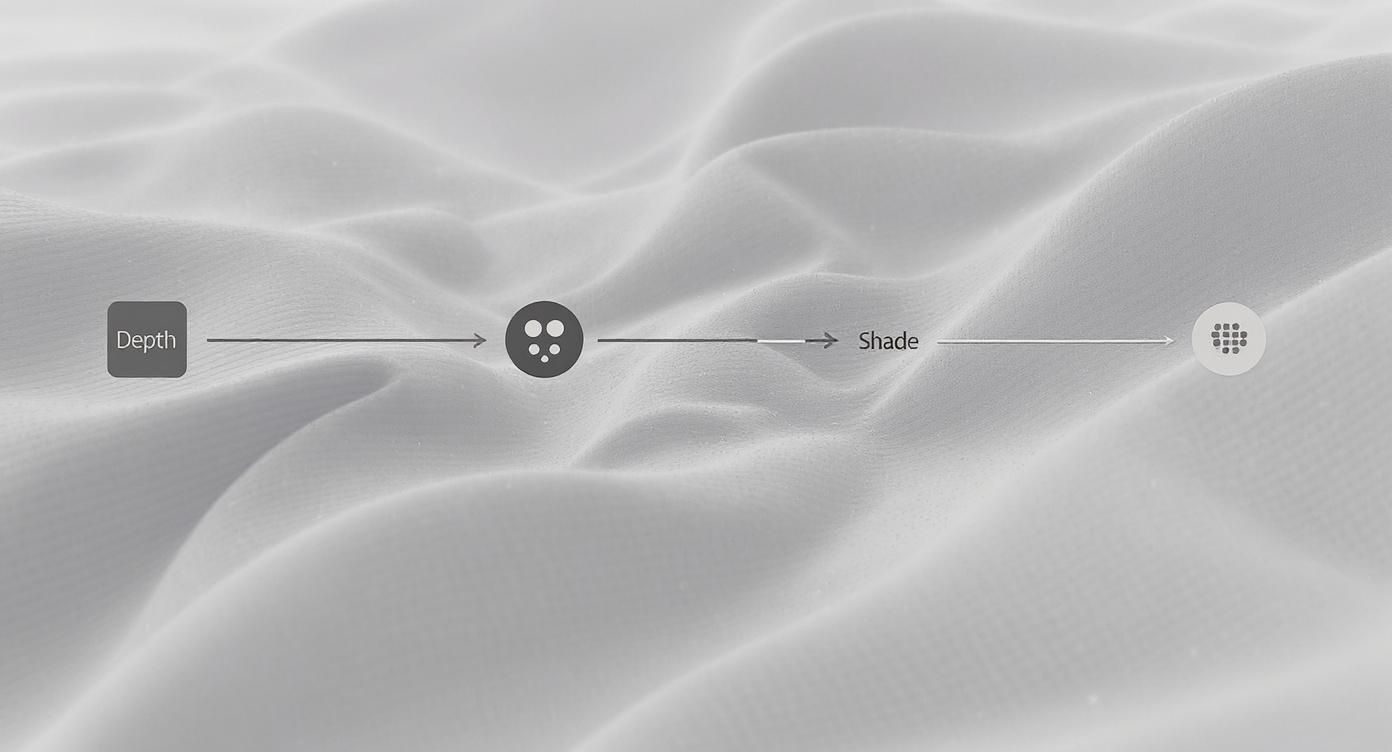
As you can see, getting it right means carefully balancing the depth, shade, and size for every single follicle replication.
The key takeaway is simple. One method provides an effective illusion of hair from a distance, while the other is an art form designed to be indistinguishable from real hair follicles, even up close.
A Clear Comparison
To help you see the difference more clearly, let's lay it all out side-by-side. This table highlights what to look for and what questions to ask when you're talking to a potential practitioner.
Comparison of SMP Application Philosophies
| Feature | Standard SMP Approach | Thread by Thread SMP Approach |
|---|---|---|
| Primary Goal | General scalp coverage and density | Hyper-realistic follicle replication |
| Hairline Design | Often sharp, defined, and uniform | Soft, feathered, and naturally imperfect |
| Density Creation | Uses uniform dots and a single shade | Builds layered, multi-tonal 3D effect |
| Final Look | An effective illusion of a buzz-cut | An undetectable replica of real hair |
Ultimately, knowing which philosophy your practitioner follows is crucial. It tells you everything about the kind of result you can expect and helps ensure you're choosing the right artist for the look you want to achieve.
Who Is the Ideal Candidate for This SMP Method?
The incredibly detailed nature of the thread by thread SMP technique makes it a fantastic solution, but it’s not necessarily the right fit for everyone. This method was developed for those who put one thing above all else: a completely natural and undetectable result. For some people, it's the only way to meet their high standards for realism.
If your main goal is subtlety rather than just simple coverage, then you're likely a perfect candidate. This approach goes far beyond just creating density; it’s all about the artistic details that make a hair tattoo blend perfectly with your features, ensuring the final look holds up even under the closest inspection.
Those Who Benefit Most
Certain types of hair loss and personal aesthetic goals are perfectly suited to the strengths of this hyper-realistic technique. While many people can get great results from different SMP styles, you'll find this particular method is especially effective if you see yourself in one of these situations.
-
Individuals Prioritising a Natural Look: This is the most important factor for men who are bald. If you’re worried about getting a harsh, "drawn-on" appearance and want a result that’s soft, textured, and truly looks like real hair follicles, this philosophy is for you.
-
People with Diffuse Thinning: When you still have a decent amount of your own hair but it’s thinning out all over, the key is blending. This method is brilliant at carefully placing impressions between existing hairs to build up a look of fullness without appearing artificial.
-
Clients Needing Soft, Age-Appropriate Hairlines: A sharp, aggressive hairline can be an obvious giveaway. The thread by thread technique is the gold standard for creating soft, feathered, and slightly imperfect hairlines that look completely natural for your age.
-
Camouflaging Hair Transplant Scars: Hiding FUT or FUE scars takes incredible skill. An artist needs to replicate the random, natural growth pattern of the surrounding hair to make the scar disappear. This detailed method is purpose-built for such a delicate job.
Ultimately, this method is for the discerning client who sees SMP not just as a procedure, but as a work of art. It’s for those who want to get their confidence back with a solution so refined, it remains their own secret.
Thinking about your own goals is the first step to figuring out if this advanced approach is right for you. For a broader look at who is generally a good match for this type of treatment, you can find more information in our overview of who can benefit from hair tattoos.
Protecting Your Investment and What to Expect
Taking the plunge with **thread by thread SMP** is an exciting decision. To make sure you’re absolutely thrilled with the outcome, it’s important to know what the journey ahead looks like, from the healing process right through to the long-term results.
So, what happens right after a session? You can expect your scalp to have some mild redness, a bit like a light sunburn. This is totally normal and usually settles down within 24 to 48 hours. The pigment impressions themselves will also look a little darker and sharper than their final form. Don't worry, this is part of the plan.
Over the next few weeks, your body’s natural healing kicks in. You'll notice the pigment begins to soften and settle, revealing a more subtle and natural shade. This settling phase is absolutely crucial; it's when those carefully placed follicle impressions blend perfectly with your existing hair, creating that incredibly realistic, textured appearance we're aiming for.
Ensuring Long-Term Success
While we talk about Scalp Micropigmentation as a permanent solution, its true lifespan really comes down to how well you look after it. I often tell my clients to think of it like a finely detailed tattoo. The artist's work is just the start—your aftercare is what keeps it looking sharp and fresh for years.
Your daily routine becomes the best defence for your new look. It's the simple, consistent habits that will preserve the crispness and colour of the pigment.
Here are the non-negotiables for great aftercare:
- Sun Protection: The sun is the number one enemy of SMP pigment. UV rays will cause it to fade over time, so make a high-SPF, non-greasy sunscreen or a good hat your best friend whenever you're outdoors.
- Moisturising: A hydrated scalp is a happy scalp. Keeping your skin moisturised prevents it from getting dry and flaky, which helps the pigment look its absolute best. A gentle, daily moisturiser is perfect for the job.
- Avoiding Harsh Products: Steer clear of any products with high alcohol content or harsh chemical exfoliants. These can strip the pigment and cause it to fade much faster than it should. Stick to gentle, approved shampoos and scalp products.
SMP is definitely a long-term solution, but it’s not completely 'set and forget'. To maintain that sharp, defined look, most of my clients come back for a quick touch-up every 4-6 years. Think of it as a small refresh to keep your results looking as good as new.
Sticking to a solid aftercare plan is the simplest way to make sure your results last. For a deeper dive, check out our guide on the 5 top tips to care for your scalp after SMP, which is packed with practical advice for long-term care.
How to Choose the Right SMP Artist

Let's be blunt: the success of your thread by thread SMP treatment is 100% dependent on the artist holding the needle. Their skill, training, and artistic instincts make all the difference. Picking the right person isn't just a casual suggestion; it's the most critical decision you'll make in this entire process. You’re not just buying a service—you're commissioning a piece of highly detailed art that you will wear every single day.
Your search should start and finish with one thing: their portfolio. A good artist’s portfolio is their entire resume, and you need to look at it with a critical eye. Go beyond the initial 'wow' and ask for high-resolution, sharp photos that let you zoom right in and see the details.
What to Demand from a Portfolio
When you're looking through an artist's past work, there are a few things that are completely non-negotiable. These are the small details that really separate a true master of the craft from someone who is just going through the motions. Any artist who is genuinely proud of their work will be more than happy to show you these specifics.
Here’s what your checklist should look like:
- Healed Results: Fresh SMP can look great, but it's often darker and sharper than the final result. The real proof of skill is what the treatment looks like after it has healed and settled into the skin. Always, always ask to see photos of healed work, taken at least a few weeks after the final session.
- Hairline Close-ups: A natural-looking hairline is the signature of a high-quality SMP job. You have to insist on seeing detailed close-ups. Does it look soft and appropriately broken, or is it a hard, straight line that screams 'tattoo'? The impressions should be subtly irregular, just like a real hairline.
- Seamless Blending: Ask to see how the artist blends the SMP into existing hair, particularly for clients with diffuse thinning. A great technician creates a transition so smooth and gradual that you honestly can't tell where the real hair stops and the SMP starts.
At My Transformation, we're all about total transparency. Our portfolio is deliberately built to showcase the hyper-realistic, healed results our clients actually live with—not just the bold look you see right after a session.
Don't forget to look for verified client reviews and proof of specialised training in advanced, artistic SMP techniques. Finding an artist who truly gets the thread by thread SMP philosophy means finding someone obsessed with creating undetectable realism. It’s the only choice for clients who simply refuse to compromise on quality.
Michael at My Transformation Perth has been trained in this new thread by thread technique, by Reanto Muramatsu in Brazil who is a master in this technique.
Got Questions About Thread by Thread SMP? We've Got Answers
It’s completely normal to have a few lingering questions, even after getting a good sense of how it all works. Let's dive into some of the most common things people ask about the thread by thread SMP technique.
Is This Technique More Painful?
This is a big one, but the short answer is no. A more detailed technique doesn't mean more pain. The sensation is pretty much the same as any other top-quality scalp micropigmentation treatment.
Most of our clients say it feels like a light, steady tapping and rate the discomfort as low as a 2 to 4 out of 10. A good practitioner knows how to keep you comfortable, no matter how intricate the work is.
How Many Sessions Will I Need?
Even though it’s incredibly detailed, the thread by thread approach still fits within the standard 1 to 2 sessions. This layering process is actually key to achieving that hyper-realistic depth.
- Sessions 1 & 2: This is where we lay the groundwork. We build the foundational density and map out the shape of your new hairline.
- Sessions 3: This follow-up appointment is all about refinement. We check the detail, blend and make sure everything blends seamlessly with your existing hair, and creates that subtle 3D effect with different tones.
We space these sessions about 30 days apart. This gives your scalp the perfect amount of time to heal and lets the pigment settle in, so we can see the true result before adding the next layer.
Does It Cost More Than Standard SMP?
The main factor driving the cost of any SMP is the size of the area being treated. That said, the thread by thread SMP philosophy demands a very high level of skill, artistry, and often more time in the chair to get those tiny details just right.
Because of this, you'll find that the elite artists who specialise in this kind of hyper-realistic work are often at the premium end of the market. You're not just paying for a procedure; you're investing in a superior, more natural-looking result that truly stands apart.
A common question is whether this can fix a bad SMP job, and the answer is a definite yes. A skilled artist can use the thread by thread method to work wonders on old, subpar treatments. It’s perfect for softening a harsh, "helmet-like" hairline or breaking up dense, unnatural-looking pigment. By layering in varied shades and strategically placed impressions, they can camouflage the old work and build a far more subtle and realistic finish over the top.
Ready to see how the My Transformation team can help you get your confidence back with a hair loss solution that looks completely real? We live and breathe the art of undetectable results. Learn more about our approach and book your free consultation at https://rightwing-health.info/a%3E.%3C/p%3E