

Thin Hair Shaved Head A Guide to Embracing the Look
If you’re dealing with thinning hair, the thought of shaving your head has probably crossed your mind. It’s a big step, but it’s less about giving up on your hair and more about taking back control. For a lot of people, a thin hair shaved head is a fresh start—a deliberate style choice that frees them from the daily grind of trying to hide hair loss. It's about owning your look, on your own terms.
Why Shaving Your Head Is a Powerful Choice
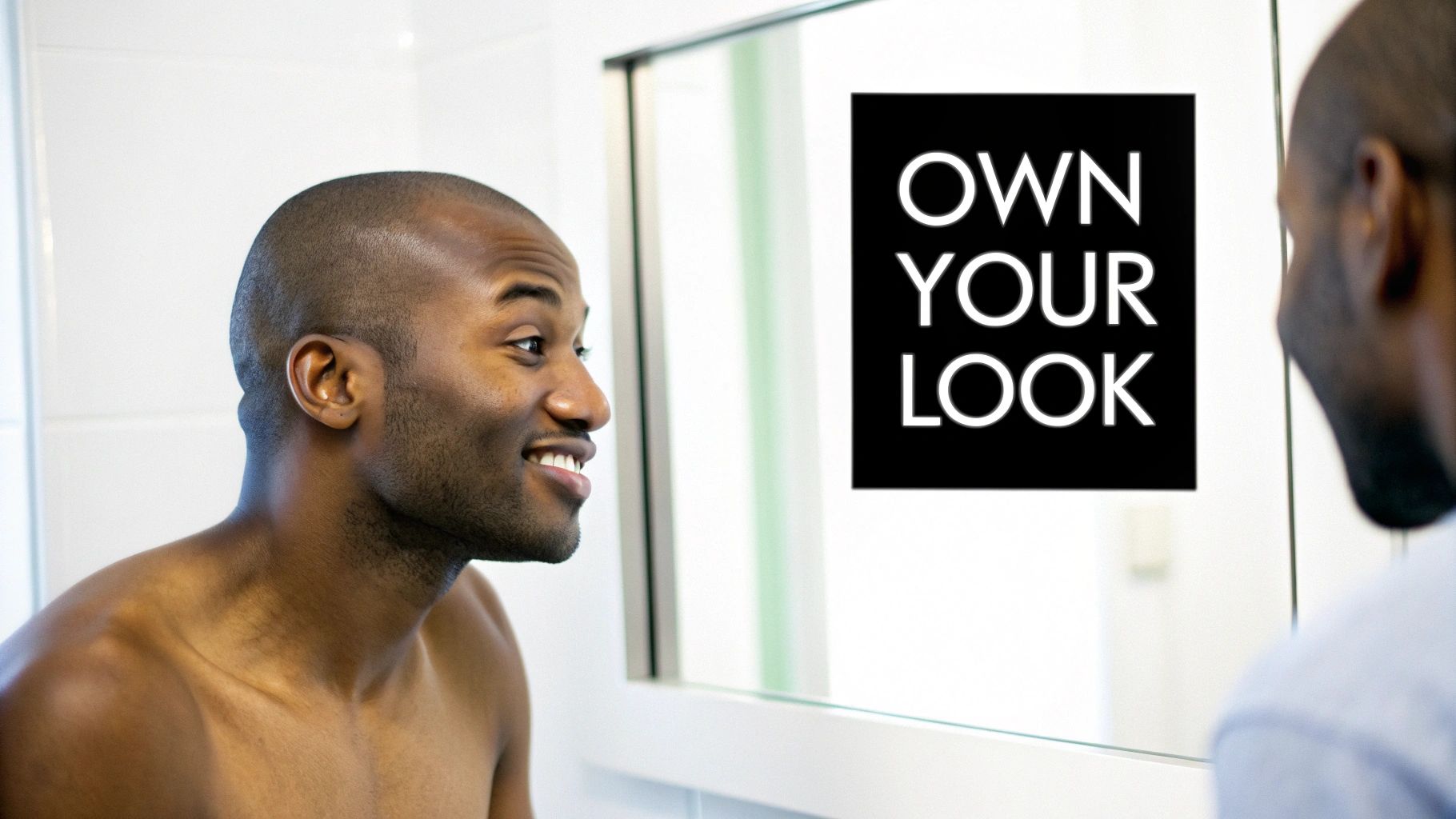
Deciding to buzz it all off is a deeply personal move. It’s a real turning point, shifting you from a defensive position—trying to hide or manage something that makes you self-conscious—to an offensive one where you define your own style. This isn't an act of surrender; it’s an act of empowerment.
The emotional toll of hair loss is no joke. You might find yourself spending way too long in front of the mirror, trying to arrange what you have to cover thinning spots. Or maybe you dread windy days and harsh overhead lighting. That constant, low-level anxiety chips away at your confidence. Taking the plunge and shaving your head gets rid of all those daily worries. The feeling is often one of pure liberation.
The Mental Shift From Concealing to Owning
The journey to this point often starts with trying every trick in the book. You’ve probably experimented with thickening powders, strategic haircuts, or even thought about more serious interventions. But for many, the realisation dawns that these are just band-aid solutions for a much deeper concern about appearance and control.
Shaving your head completely flips the script. Instead of your hair loss dictating how you feel, you’re the one calling the shots. This mental shift from reacting to acting is often the most rewarding part of the whole experience. You're accepting the reality of the situation and turning it into a bold, intentional look.
It’s amazing how much our hair impacts our self-perception. In fact, research shows that nearly 43% of people experiencing hair loss would rather have more hair than more money, which really underscores that deep psychological connection.
"I had allowed my hair to define what I thought of myself, and what I was able to do and not do. I was ready to let go of that... I was finally in the driver’s seat because I put myself there."
This gets to the heart of it perfectly. It's all about reclaiming your own story.
To help you weigh things up, here’s a straightforward look at the benefits and the things you’ll want to consider before you reach for the clippers.
Pros and Cons of Shaving Your Head with Thin Hair
| Benefit | Consideration |
|---|---|
| Ends the Stress: No more worrying about hiding thin spots or bad hair days. | Requires Upkeep: You'll need to shave every few days to keep it looking sharp. |
| Boosts Confidence: A shaved head is a deliberate, bold style that projects confidence. | Sun Exposure: Your scalp will be exposed, so sunscreen or a hat is essential. |
| Saves Time & Money: Forget expensive hair products and long grooming routines. | Initial Shock: It’s a big change, and it might take a little while to get used to your new look. |
| Looks Clean & Modern: A well-maintained shaved head is a timeless, masculine look. | Head Shape Worries: Some people feel anxious about their head shape, but it's rarely noticed by others. |
While there are a few things to keep in mind, the upsides—especially the mental freedom—are often what convince people to finally go for it.
Common Worries and How to Address Them
It’s completely normal to have some reservations. People often worry about the shape of their head, what their mates or colleagues will say, or whether they’ll regret it. These are valid concerns, but they’re usually much bigger in our heads than in reality.
- Head Shape: Honestly, almost everyone is a bit self-conscious about their head shape, but it’s something others rarely, if ever, notice. Once you rock the look with confidence, that becomes the first thing people see.
- Other People's Opinions: You might be surprised by how positive the reactions are. A clean-shaven head is widely seen as a strong, neat, and confident style. Any initial surprise from people around you will fade fast.
- Regret: Here's the best part—hair grows back. Shaving your head isn't a tattoo; it's not permanent. Think of it as a chance to try out a new look. If you decide it's not for you, you can always just grow it back out.
Ultimately, this choice is about what makes you feel good. If you're tired of fighting a losing battle with thinning hair, exploring the shaved head look could be the most freeing thing you do for yourself. For more insights on making the call, check out our guide on whether you should shave your head due to hair loss.
How to Prepare for Your First Head Shave
A great head shave doesn’t start with the razor—it starts with what you do before the razor even touches your skin. Getting the prep right is the difference between a smooth, clean result and a battle with nicks, razor burn, and irritation. Trust me, spending a few extra minutes here will save you a lot of grief later on, especially when you're new to the whole thin hair shaved head game.
Think of it this way: you wouldn't try to mow an overgrown lawn with a pair of scissors. The same logic applies to your head. The very first thing you need to do is get rid of the bulk. Grab a set of hair clippers (without a guard is best) and trim everything down as short as you possibly can. This stops the razor from getting clogged and yanking on longer hairs, which is a surefire way to get a patchy, painful shave.
Create the Perfect Canvas
With the long stuff gone, it’s time to focus on the skin. Your scalp has probably been hiding under a layer of hair for years, so it's not used to being exposed. It needs a little help to get ready for a blade.
This is where a gentle exfoliating scrub becomes your best friend. A quick scrub in the shower before you shave works wonders. It does two key things:
- It gets rid of any dead skin cells that can jam up your razor and lead to nasty ingrown hairs.
- It helps stand up those tiny, stubborn hairs, giving the blade a clean shot at cutting them right at the surface.
This one simple step makes a huge difference in how smoothly the razor glides over your scalp.
Soften and Hydrate Your Scalp
Now for the final, and arguably most important, part of the prep: heat and moisture. A hot shower is the ideal way to kick things off. The steam and warm water soften your skin and hair follicles, making them far more cooperative and easier to cut.
Taking just five minutes in a warm shower or applying a hot, damp towel to your head before you even pick up the razor will dramatically reduce your risk of razor burn and irritation. It’s the single most effective trick for achieving a comfortable shave.
Don't have time for a full shower? No worries. Just soak a face washer in hot water, wring it out, and press it against your scalp for a couple of minutes. This step gets your skin supple, hydrated, and perfectly primed for a smooth, irritation-free first shave.
The Definitive Guide to a Perfect Head Shave
Right, with your scalp all prepped, it’s time for the main event. Getting that smooth, barber-quality shave at home isn't about rushing through it; it’s all about a good technique and having the right gear. What kind of razor you use is a personal choice, and each has its pros and cons.
A modern cartridge razor—the kind you see with multiple blades—is pretty forgiving, making it a great starting point for beginners. On the other hand, a classic safety razor uses a single, very sharp blade. It takes a bit of practice, but many people find it gives a closer shave with less irritation once they get the hang of it. Whatever you pick, make sure the blade is fresh. A dull blade is the number one culprit behind nicks and razor burn.
Choosing Your Lather and Tools
Step away from the canned shaving foam. A quality shaving gel or cream is non-negotiable, as it creates a vital protective layer between the blade and your scalp. I always recommend looking for products with soothing ingredients like aloe vera to help keep your skin hydrated.
This simple graphic lays out the crucial prep work we just covered, which is your foundation for a great shave.
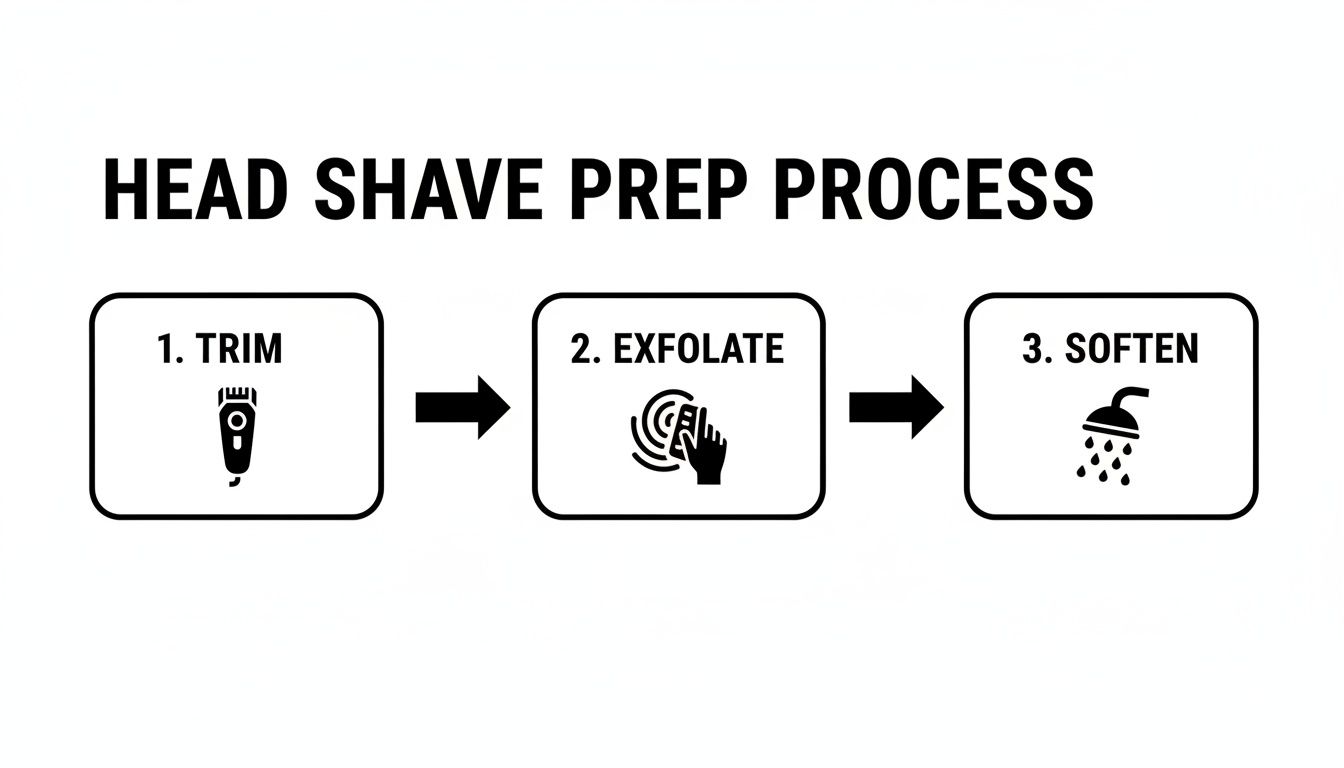
Nailing this three-part process is what allows the razor to glide effortlessly, stopping it from tugging at hairs and cutting down on skin irritation.
Mastering Your Shaving Technique
Apply a thin, even coat of your shaving gel over your entire head. Now, pick up your razor and start shaving with the grain. This just means shaving in the same direction your hair grows. If you only remember one thing, let it be this—it's the golden rule for preventing irritation and nasty ingrown hairs.
Use light, gentle strokes. You really don't need to press down hard; just let the weight of the razor do the heavy lifting. Be sure to rinse the blade often, say after every one or two strokes, to keep it from getting clogged. A razor full of hair and gel just won't cut effectively.
A mistake I see all the time is people trying to get a perfectly smooth, baby-bottom finish on the very first pass. Instead, just focus on a comfortable first shave going with the grain. If you want it closer, you can always re-lather and carefully shave across the grain for that extra-smooth finish.
Navigating Tricky Areas
Your scalp has its own unique landscape of bumps and curves, and some spots need a bit more care. Here’s my advice for tackling them:
- Behind the Ears: Use your free hand to pull the top of your ear down and forward. This tightens the skin behind it, creating a flatter, safer surface for the razor.
- Back of the Neck: A handheld mirror is your best mate here, but you can also learn to go by feel. Tuck your chin towards your chest to stretch the skin, then use short, deliberate downward strokes.
- Crown Whorl: The hair at the crown often grows in a spiral pattern. Take a moment to feel the direction of growth in this area and adjust your shaving direction to match it.
Once the shaving is done, a quick post-shave routine is absolutely essential for keeping your scalp in top condition. To see what comes next, check out our in-depth advice on choosing the best moisturiser for a shaved head. Following these steps turns a simple task into a satisfying ritual that leaves you with a flawless result, every single time.
Mastering Aftercare for a Healthy Shaved Head
So, you’ve done it. The shave is complete, and your head is smooth. But the job isn't quite finished yet. In my experience, a consistent aftercare routine is what truly separates a decent shaved head from a genuinely great one. An exposed scalp is sensitive territory and needs a completely different kind of care than skin that’s been hiding under hair.
Right after you’ve rinsed off the last of the shaving cream, give your scalp a good splash with cold water. It sounds simple, but this little trick helps to close up your pores, which goes a long way in cutting down redness and preventing any post-shave irritation. It’s a brisk, refreshing way to finish and gets your skin ready for what comes next.
Hydration and Protection Are Key
With your scalp now out in the open, it's a lot more vulnerable to dryness and the elements. This is where a quality, alcohol-free moisturiser becomes your best friend. Seriously, check the ingredients list—anything with alcohol will just dry out your skin, leading to that tight, flaky feeling nobody wants.
Slapping on some moisturiser every day, especially right after a shave, keeps the skin hydrated and supple. It not only feels a whole lot better but also creates a healthier canvas for your next shave. Think of it as essential maintenance for your scalp.
Here in Australia, sun protection isn't just a good idea; it's non-negotiable. Your scalp is now one of the most sun-exposed parts of your body, making it incredibly prone to sunburn and long-term damage.
A broad-spectrum, high-SPF sunscreen—at least SPF 30+, but SPF 50+ is even better—has to become a daily habit. Don't skip it. Put it on every morning, whether it's bright and sunny or grey and cloudy, and reapply if you've been swimming or working up a sweat.
Honestly, this is the single most important thing you can do to protect the health and look of your scalp for the long haul.
Maintaining a Smooth Scalp
Keeping your head looking sharp involves more than just fighting off stubble. Dead skin cells can build up, making your scalp look dull and, even worse, causing painful ingrown hairs. The fix for this is regular exfoliation.
Using a gentle exfoliating scrub once or twice a week is typically all you need. It does a few key things:
- It clears away dead skin cells, which helps prevent your pores from getting clogged.
- It helps lift any trapped hairs, dramatically cutting down the risk of getting those nasty ingrowns.
- It promotes a smoother surface, making your next shave much easier and closer.
By weaving these simple steps into your daily and weekly schedule, you'll make sure your thin hair shaved head looks its absolute best. A healthy, well-looked-after scalp is the real foundation of this confident style. If you're looking for more in-depth advice, especially if you’re exploring other options, you can learn more about scalp micropigmentation aftercare in our specialised guide.
Take Your Shaved Head to the Next Level with Scalp Micropigmentation
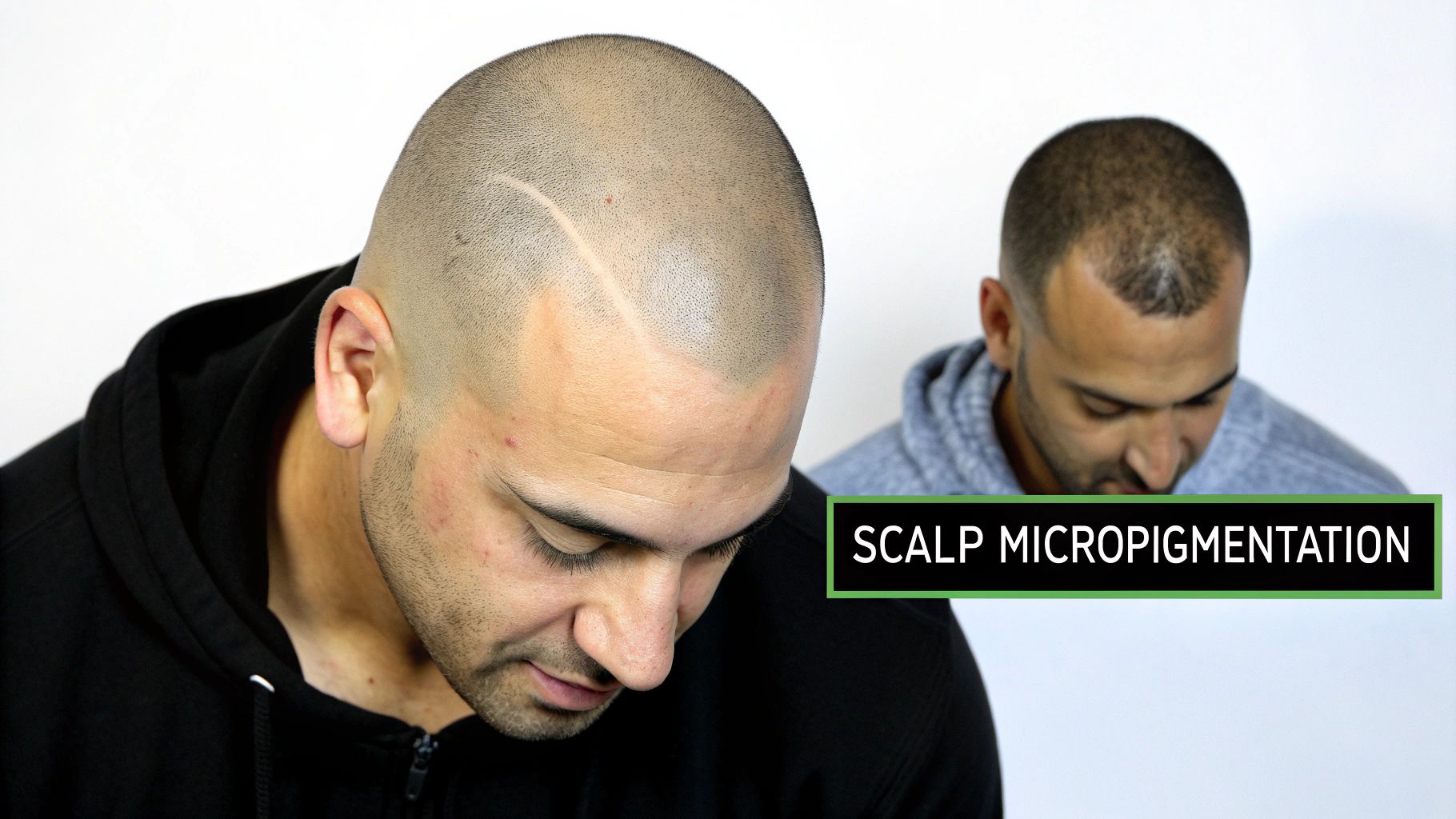
Shaving your head is a bold, confident statement. But what if you want to refine that look even further? There's a brilliant way to add density and crisp definition that really perfects the style. It’s called Scalp Micropigmentation (SMP), and it’s a highly specialised cosmetic procedure designed to create the illusion of a full head of hair that’s been purposefully buzzed short.
Don't mistake this for a standard tattoo. SMP uses very specific pigments and advanced techniques to replicate the look of thousands of tiny, individual hair follicles. For anyone with a thin hair shaved head, it’s a non-invasive way to achieve a clean, sharp, and incredibly low-maintenance aesthetic. This treatment is less about just covering bald spots and more about strategically framing your face to enhance your best features.
Rebuilding Density and Defining Your Look
One of the real game-changers with SMP is its power to restore a natural-looking hairline. A good practitioner won't just give you a cookie-cutter shape; they'll work with you to design a hairline that genuinely suits your facial structure and age. Whether you're after a soft, natural edge or a sharper, more defined line, the result is a subtle enhancement that sharpens your whole appearance.
It's not just about the hairline, though. SMP is fantastic for building up the impression of thickness across the entire scalp. For men and women dealing with diffuse thinning, the treatment cleverly reduces the contrast between the scalp and any remaining hair, which immediately makes what you have look fuller and denser.
This is a seriously relevant option in Australia, where male-pattern baldness is incredibly common. Local studies show it affects around 50% of Aussie men by the time they hit 50, and it accounts for over 90% of all hair loss cases in men here.
The Art and Science Behind SMP
It’s crucial to realise that great SMP is equal parts art and science. The procedure demands incredible precision, as a skilled technician meticulously places thousands of tiny pigment dots to build up layers of density. Think of it as being similar in its detailed application to a microrealism tattoo style.
The reasons for choosing SMP are pretty compelling:
- Super Low Maintenance: Once your initial sessions are done, there’s barely any upkeep needed.
- Instant Results: You'll see a noticeable difference right after your very first treatment.
- Effective Scar Camouflage: It’s an absolute lifesaver for hiding scars from old hair transplants or injuries.
SMP isn't just a temporary cover-up; it's a deliberate style choice. It gives you a clean, consistent, and sharp look every single day, putting you back in complete control of your appearance.
This technique offers a lasting solution without any of the daily fuss. If you're curious to learn more about the specifics, have a look at our detailed guide on what scalp micropigmentation is and how the whole process works.
Common Questions on Shaving Your Head for Thin Hair
Even after you've made the call to go for the thin hair shaved head look, it's natural to have a few questions rattling around. Getting some straight answers can make a world of difference, boosting your confidence as you get used to your new style. Let's clear up some of the usual suspects.
One of the biggest myths out there is that shaving your head will magically make your hair grow back thicker or faster. I’ve heard this one countless times, but it’s just not true. Shaving simply cuts the hair at the skin's surface; it doesn't touch the follicle buried underneath.
That coarse, prickly feeling you get as it grows back? That’s just because the hair now has a blunt tip from the razor. Once it grows out a bit, it’ll feel exactly the same as it always did. The underlying biology of your hair growth isn’t changed one bit.
How Often Should I Shave My Head?
Honestly, this comes down to personal preference, how fast your hair grows, and the exact look you’re after. There's no hard and fast rule, but here are the three most common routines I see:
- The Perfectly Smooth Look: For that fresh, clean finish, you'll likely need to shave every one to two days. This routine keeps any hint of stubble at bay.
- The 'Five O'Clock Shadow' Look: If you like a bit of subtle texture, shaving every three to four days is usually the sweet spot. It gives you a bit of that subtle, rugged stubble.
- The Relaxed Buzz: Happy with a super-short buzz cut? A once-a-week shave might be all you need to maintain it.
My advice is to play around with the timing. See what feels right for you, your schedule, and how your skin reacts.
Can SMP Help if I Don't Shave My Head?
Absolutely. While Scalp Micropigmentation is brilliant for creating that perfect shaved head look, it’s also an incredibly effective density treatment for people who want to keep their hair longer. I’ve seen it work wonders for both men and women dealing with diffuse thinning.
The technique involves carefully placing tiny pigment deposits between your existing hairs. This masterfully reduces the colour contrast between your scalp and your hair, creating a powerful illusion of fullness. It makes the hair you have look significantly thicker and denser. If you're curious, you can find out more by exploring the question, "Do you have to shave your head for Scalp Micropigmentation?" It really shows how versatile the treatment can be.
What Is the Best Way to Treat Sunburn on a Scalp?
First things first: prevention is a thousand times better than the cure. A high-SPF sunscreen (I always recommend SPF 50+) or a good hat needs to become a non-negotiable part of your daily life. But, slips happen. If you do get caught out and find yourself with a burnt scalp, you need to act fast.
The second you spot any redness, get out of the sun. Immediately. Apply a cool, damp cloth or a healthy amount of pure aloe vera gel to the area to soothe the burn and calm the inflammation.
Stay out of the sun completely until your scalp has healed. Drink plenty of water to stay hydrated from the inside out. And if the burn is severe or you notice any blistering, don't mess around—it's time to see a doctor. A healthy scalp is a happy scalp, ready for its next smooth shave.
At My Transformation, we're passionate about helping you find the perfect solution for your hair loss concerns. Whether you're embracing a shaved head or looking to enhance your current style with SMP, we’re here to guide you. Discover how we can help at https://rightwing-health.info/a%3E.%3C/p%3E