

Tattoo hair on bald head: SMP guide & costs in Australia
When you hear someone talking about a "hair tattoo on a bald head," they’re almost certainly referring to a technique called Scalp Micropigmentation, or SMP for short. This isn't your run-of-the-mill tattoo. It's a highly specialised cosmetic procedure where we use tiny pigment dots to replicate the look of natural hair follicles, creating a perfect illusion of a sharp, buzzed haircut.
Is a Hair Tattoo the Right Call for You?
Think of Scalp Micropigmentation as a powerful, non-surgical way to get your hairline—and your confidence—back. A lot of people get confused and think it's just like a regular tattoo, but the two are worlds apart. Instead of standard ink that goes deep into the skin, SMP uses specific pigments and ultra-fine micro-needles to place colour just into the upper layer of the dermis. The whole point is to mimic individual hair follicles, not to draw on solid lines or patches of colour.
Making that distinction is key. From my experience, great SMP is a true art form. It takes a seasoned practitioner to meticulously layer thousands of these tiny dots, gradually building up density to create a seamless, genuinely three-dimensional effect. It’s been a total game-changer for guys dealing with everything from male pattern baldness and alopecia to scars left behind by old hair transplants.
Evaluating Your Candidacy
So, who is this really for? SMP is incredibly versatile, but it shines brightest for those who are happy to rock a short, buzzed hairstyle.
It’s probably a fantastic fit for you if you're looking to:
- Build a strong, defined hairline on a completely bald head.
- Create the look of thicker, denser hair where it's started to thin out.
- Skillfully camouflage scars from accidents or previous surgeries.
- Find a low-maintenance solution that frees you from daily concealers or hair systems.
It’s crucial to go in with the right expectations. SMP doesn't actually grow hair; it masterfully creates the illusion of it. If you're wondering if you fit the bill, you can get a better idea by reading our guide on who can benefit from hair tattoos.
To give you a clearer picture, here’s a quick breakdown of what the process involves from start to finish.
SMP at a Glance: What to Expect
| Aspect | Description |
|---|---|
| Consultation | An initial chat to discuss your goals, assess your hair loss pattern, and map out a customised hairline design. |
| Initial Sessions | Typically 2-3 sessions, each lasting 2-4 hours, are needed to build the foundational density and colour. |
| Spacing | Sessions are spaced 10-20 days apart to allow the scalp to heal and the pigment to settle properly. |
| Pain Level | Most clients report a pain level of around 2-4 out of 10. It's more of a mild discomfort than sharp pain. |
| Final Result | The full, blended result is visible after the final session, creating a realistic shaved-head look. |
| Longevity | Results can last for 4-6 years before a touch-up might be needed to refresh the colour. |
This table should help you understand the commitment and process involved. It's a journey, but one that delivers incredible, long-lasting results.
The Australian SMP Scene
Here in Australia, getting a "tattoo hair on a bald head" has seriously taken off. Clinics are seeing a huge demand. From what we see, men with thinning hair or patches of baldness might need anywhere from two to eight sessions. For someone who is completely bald, you're usually looking at the higher end of that scale—around seven to eight sessions—to achieve that full, natural-looking coverage across the entire scalp.
The process is a commitment, both in terms of time and finances. A full treatment is a multi-session journey designed to build a natural-looking density layer by layer, ensuring the final result is indistinguishable from a real shaved head.
When you're weighing up if SMP is the right move, it's smart to put the cost into perspective with other cosmetic procedures. For example, looking at the average laser hair removal prices can give you a better financial benchmark for aesthetic treatments in general. At the end of the day, the decision comes down to your personal goals, your lifestyle, and your budget.
Your First SMP Consultation: What to Expect and What to Ask
Think of your first hair tattoo consultation not as a sales pitch, but as a strategy session for your new look. This is your chance to really connect with the artist, get a feel for the clinic, and make sure they're the right team to bring your vision to life. A real professional will make this a partnership, focusing on your goals above all else.
From the get-go, the conversation should be all about you. A good practitioner will want to look at a few key things to make sure you get the best possible result. They’ll assess your skin type, take a look at the condition of your scalp (is it dry, oily, or irritated?), and, most importantly, have a proper chat about the hairline you’re after.
What a Professional Looks For
An experienced SMP artist does more than just listen; they're studying the canvas they'll be working on. Here’s what a proper professional assessment should cover:
- Skin Tone and Undertones: They’ll carefully analyse your skin to create a custom pigment blend. The goal is for the impressions to heal into a soft, natural-looking grey that works perfectly with your complexion.
- Scalp Condition: Any issues like psoriasis, severe dandruff, or dermatitis need to be sorted out before treatment begins. A healthy scalp is the foundation for great pigment retention.
- Existing Hair Follicles: If you’ve got some hair left, they’ll look at its colour and how it’s distributed. This is crucial for creating a seamless blend between the tattoo and your real hair.
- Hairline Goals: You'll discuss the hairline you want, and they should provide honest, expert advice on what will look natural for your face shape and age gracefully with you.
Key Questions You Must Ask
To make sure you’re in good hands, you need to go in armed with your own questions. Don’t hold back—a quality artist will be happy to answer everything and wants you to feel completely comfortable. This is how you confirm their expertise and get a clear picture of the entire process.
A great SMP artist wants an educated client. They know that when you understand the process and feel confident in their ability, the entire experience is better for everyone involved. Clear communication is the foundation of a fantastic result.
Make sure you get answers to these essential points:
- Portfolio of Work: Don’t just ask to see their portfolio. Ask to see before-and-after photos of clients with a similar skin tone and level of hair loss to you.
- Pigment Details: Find out what kind of pigment they use. It should always be a stable, carbon-based pigment made specifically for scalp micropigmentation, not regular tattoo ink.
- Projected Sessions: Based on their assessment, they should give you a realistic estimate of how many sessions you’ll need. For a fully bald head, this is typically between three and four sessions.
- Transparent Costing: Ask for a detailed, all-inclusive quote for the complete treatment. You shouldn’t have to worry about hidden fees or surprise costs down the line.
Getting your head around the full treatment journey is vital. For a more detailed look at what happens from start to finish, check out our guide on the process of getting a hair tattoo. Your consultation is the perfect time to gather all the info, build trust, and take the next step with complete confidence.
How to Prepare Your Scalp for the Procedure
Getting a flawless hair tattoo isn’t something that just happens in the clinic chair; the groundwork for a great result starts at home, well before your first session. Think of it this way: your scalp is the canvas for your artist. The better the canvas, the sharper and more realistic the final artwork will look.
In the week leading up to your appointment, your entire focus should be on getting your scalp in prime condition. This means two things: keeping it hydrated and protecting it from any kind of damage. Your number one enemy here is the sun. A sunburnt scalp is an irritated, inflamed scalp, which is the last thing you want. It can cause more bleeding during the procedure and make it harder for the pigment to settle properly. So, make a hat your best friend.
This timeline breaks down the simple but vital steps for getting ready for your consultation and treatment. Stick to this plan, and you’ll be giving your artist the perfect surface to work on, which is key for a crisp, natural-looking hair tattoo.
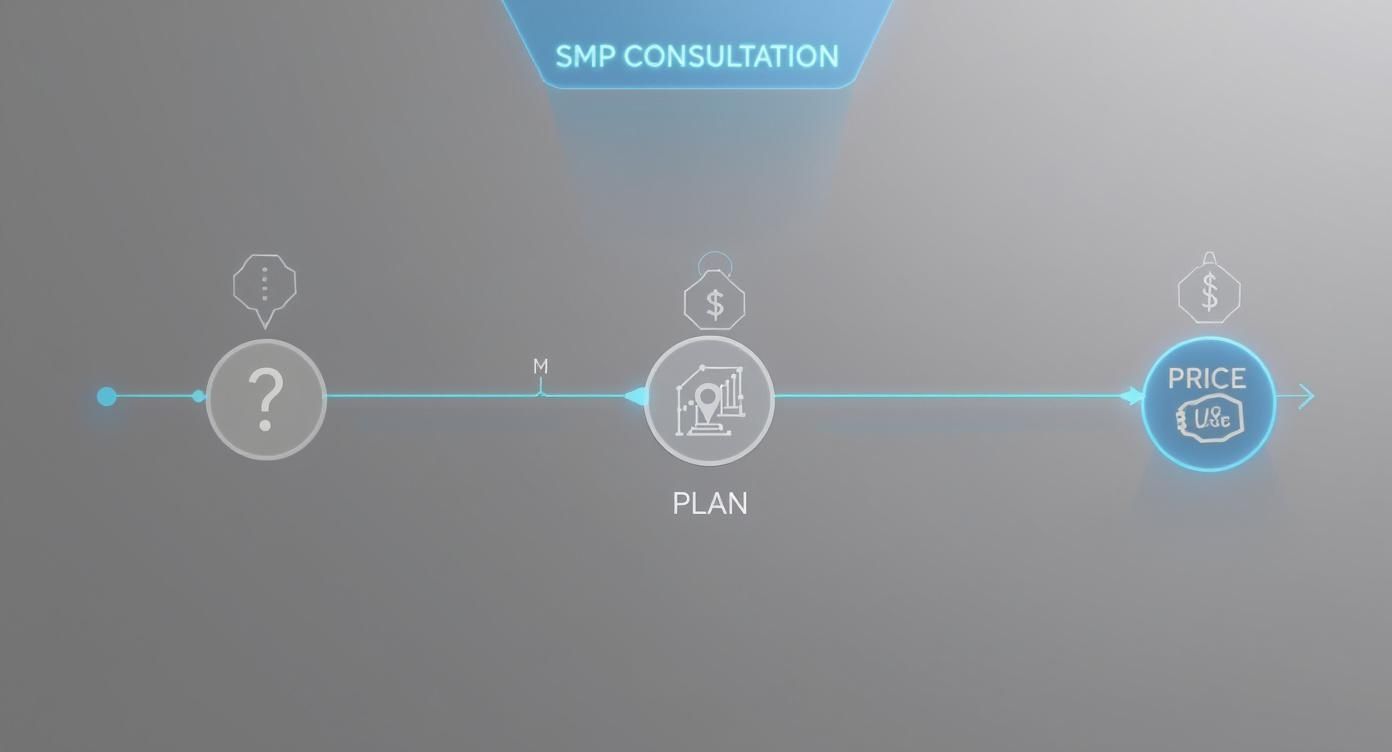
As you can see, a good SMP journey is built on a solid foundation of clear communication. It’s all about asking the right questions, mapping out a hairline you love, and getting a transparent quote. When you and your practitioner are on the same page from the start, you’re setting yourself up for success.
Your Scalp Prep Timeline
To make it easy, here's a simple timeline to follow. Trust me, putting in this little bit of effort beforehand makes a world of difference to the final outcome.
One Week Out:
- Start moisturising daily. Grab a good quality, non-greasy moisturiser and apply it to your scalp every single day. Skin that’s well-hydrated takes the pigment so much better than skin that’s dry and flaky.
- Stay out of the sun. I know I’ve already said it, but it’s that important. Keep your scalp completely covered any time you're outdoors. No exceptions.
- Gently exfoliate. A couple of times during the week, lightly exfoliate your scalp to slough off any dead skin cells. If you want the pigment to go in smoothly and evenly, it really helps to learn about properly exfoliating your skin as part of your routine.
48 Hours Before:
- Cut out certain products. You’ll want to stop using anything with alcohol in it, as it really dries out the skin. It's also a good idea to hold off on blood-thinning medications like aspirin or supplements like fish oil, but always check with your doctor first before stopping any prescribed medication.
Coming into your appointment with a healthy, prepped scalp is one of the best things you can do to ensure a fantastic result. It really helps to minimise discomfort and lets the artist place the pigment at the ideal depth, giving you those crisp, long-lasting impressions we’re after.
The Day of Your Session:
- Shave your head. On the morning of your appointment, give your head a close shave. This gives us a clean slate and helps blend the SMP seamlessly with any hair you still have.
- Have a decent meal. Don't come in on an empty stomach. These sessions can take a few hours, so eating a solid meal beforehand will keep your energy up and make the whole experience more comfortable.
For an even more detailed checklist, check out our complete guide on how to prepare for Scalp Micropigmentation treatment.
Alright, let's break down what actually happens when you're in the chair for your scalp micropigmentation session.
What Really Happens During an SMP Session
https://www.youtube.com/embed/bUsKG3U1Ep4
Once you’ve given the final nod on your new hairline, the real work begins. Forget what you know about traditional tattooing; this is a completely different ball game. Clients often describe the sensation as a light, consistent stippling motion across the scalp. It's not the aggressive drag of a body art tattoo at all.
What's happening is that a very fine needle, oscillating at about 100 to 150 times per second, is depositing tiny dots of specialised pigment just beneath the surface of your skin.
This isn't a simple "colouring in" job. A skilled practitioner meticulously places thousands of these microdots, building up density in layers. It's this careful layering that creates the illusion of depth and texture—the secret sauce for that hyper-realistic, 3D effect that looks like real hair follicles, even when someone's standing right next to you.
Building Density Layer by Layer
The magic of a truly convincing hair tattoo doesn't happen in one sitting. It's a gradual process, and for good reason. The result is built up over several sessions, with each appointment adding more depth and dimension than the last.
Your first session is all about laying the foundation. We'll establish the hairline and apply the initial layer of pigment to create a base level of coverage. Don't be surprised if your scalp is a little red afterwards and the dots look darker or more prominent than you expected. This is a normal part of the process.
The layering technique is what separates a great SMP result from an average one. By using slightly different shades of pigment and staggering the application over multiple sessions, we can mimic the subtle tonal variations of natural hair. This is how we avoid that flat, "helmet" look and achieve a finish that’s genuinely believable.
We'll schedule your next sessions about 10-20 days apart. This gives your scalp time to heal and the pigment to settle. In these follow-up appointments, we'll refine the work by adding more layers of dots, filling in any gaps, and really building up that seamless density across the entire scalp. This is where the look truly comes to life.
Session Length and What to Expect
Knowing the timeline is key to managing your expectations. A typical SMP session will take anywhere from 2 to 4 hours, really depending on the size of the area we're working on. Naturally, a full scalp treatment will take more time than just touching up a receding hairline.
This gradual, non-surgical approach is a major reason why SMP has become so popular. Let's face it, hair loss is incredibly common. Here in Australia, over 50% of men experience some form of it, and that number jumps to a staggering 85% by the time they hit 50. Men are looking for effective cosmetic solutions, and SMP delivers. If you're curious about the numbers, you can read more about hair loss trends in Australia.
By the time you've had your final session, that initial boldness of the pigment will have softened into a natural shade that perfectly matches your skin tone. The redness will have subsided, and you'll be left with the finished product: a clean, sharp, and incredibly realistic buzzed-hair look.
Your Guide to Aftercare and Long-Term Results
Getting your new hair tattoo is a massive moment, but the artist's work is only half the story. Now, it's over to you. Protecting that investment is where the real work begins, and proper aftercare is absolutely non-negotiable if you want sharp, realistic results that last.
Think of the first week as a critical healing window. Your main job is simply to protect your scalp from anything that could cause irritation.
The First Seven Days: The Foundation of Great Results
What you do—and more importantly, what you don't do—in this first week makes a huge difference. This is when the pigment is settling into the dermal layer of your scalp, and we need to give it the best possible environment to heal perfectly.
- Days 1-4 (The Hands-Off Period): The golden rule here is simple: leave it alone. Don't wash, scrub, or even touch your scalp. You’ll also need to avoid any activity that makes you sweat, so take a temporary break from the gym. And stay completely out of direct sunlight.
- Days 5-7 (Gentle Reintroduction): Okay, you can finally give your scalp a very light rinse. Use only lukewarm water—no shampoo or soap just yet. Keep your showers brief and gentle. Continue to dodge sweaty situations and stay sun-safe.
It’s completely normal to feel a bit of minor itching or see tiny scabs form as your scalp heals. Whatever you do, do not scratch or pick at them. I can't stress this enough. Picking at the scabs can literally pull the pigment out before it has a chance to settle, which can lead to a patchy, uneven finish. Just let them fall off naturally.
The success of your hair tattoo on a bald head depends just as much on your aftercare as it does on the artist’s skill. Following these guidelines is your ticket to ensuring the pigment heals crisply and holds its colour and definition for years to come.
Long-Term Maintenance for a Look That Lasts
Once you're past that initial healing phase, the game changes. Your focus now shifts from short-term healing to long-term preservation. And the number one enemy of your SMP? The sun.
Unprotected exposure to ultraviolet (UV) radiation is the fastest way to fade your treatment. Over time, the sun will break down the pigment, blurring those sharp, individual follicle impressions you paid for.
The single most important habit you can develop is using a high-SPF sunscreen every single day. I recommend finding a good matte-finish sunscreen with at least SPF 30+ and making it part of your morning routine, even on cloudy days. This one simple step will dramatically extend the life and vibrancy of your SMP.
When you do get back to washing your scalp properly, stick to gentle, sulphate-free shampoos. Harsher chemicals can be drying and, over the long haul, might subtly affect the pigment. For a complete rundown on keeping your look pristine, check out our detailed guide on scalp micropigmentation aftercare for more in-depth tips.
Even with the best care in the world, all SMP will soften gradually over the years. Most of my clients find they're ready for a quick touch-up session every 4-6 years. This just brings back the original depth and definition, keeping your hair tattoo looking sharp and fresh indefinitely.
Here’s a quick-reference table to help you navigate the aftercare process.
SMP Aftercare Timeline Dos and Don'ts
| Timeframe | What to Do | What to Avoid |
|---|---|---|
| Days 1-4 | Rest and let your scalp heal. | Touching, washing, or scrubbing the scalp. Sweating, intense exercise, saunas, and steam rooms. Direct sun exposure. |
| Days 5-7 | Lightly rinse with lukewarm water. Wear a loose, clean hat for brief sun exposure. | Using shampoo or soap. Long, hot showers. Scratching or picking at any scabs. |
| Week 2-4 | Wash gently with a sulphate-free shampoo. Start moisturising daily. Use SPF 30+ sunscreen. | Swimming in pools or the ocean. Exposing the scalp to prolonged direct sunlight. Abrasive exfoliants. |
| Long-Term | Make SPF 30+ a daily habit. Moisturise your scalp regularly. Schedule touch-ups every 4-6 years. | Forgetting sun protection. Using harsh, alcohol-based hair products on your scalp. |
Following this timeline really takes the guesswork out of it. A little diligence now pays off with a fantastic-looking result for years.
Common Questions About Hair Tattoos
Thinking about Scalp Micropigmentation (SMP) brings up a lot of questions. It's a big decision, after all, and you want to walk in feeling confident and fully clued-up. Let's break down some of the most common things people ask when considering a hair tattoo.
Does Getting a Hair Tattoo on a Bald Head Hurt?
This is easily the first question everyone asks, and the answer is usually a relief. Most of our clients are pleasantly surprised by how manageable it is. It’s nothing like the sharp, dragging sensation of a traditional body tattoo. Instead, SMP feels more like a light, almost electric, tapping on your scalp.
Your scalp has fewer nerve endings than, say, your ribs or chest, which helps a lot. Plus, any professional artist will start by applying a high-quality topical numbing cream to make sure you're comfortable.
On a pain scale from 1 to 10, most people put the feeling somewhere between a 2 and a 4. It's more of a minor annoyance than real pain.
How Is the Right Pigment Colour Chosen?
A true SMP specialist never just grabs a bottle of black ink. It’s a much more refined process than that. We use a specialised, carbon-based pigment that's carefully diluted to create a whole range of grey shades. This is absolutely vital for getting a result that looks natural.
During your initial consultation, we’ll custom-blend a shade that’s a perfect match for your skin tone and any existing hair follicles you might have. This detailed colour-matching is what makes the final look completely seamless and avoids that harsh, "obvious" look. The aim is for the pigment to settle into a soft, subtle shade that looks exactly like real stubble.
Will My Hair Tattoo Look Fake?
When it’s done by an experienced, skilled artist, the result is incredibly realistic. You’d have to be inches away and really scrutinising to notice anything. The secret to a believable hair tattoo is all in the technique. It's about layering thousands upon thousands of tiny microdots, using different shades and densities to build up the illusion of real texture and depth.
A natural-looking, age-appropriate hairline is the cornerstone of a great result. A skilled artist won't just give you a sharp, straight line; they'll design a hairline that suits your facial structure and looks right for your age, making sure it still looks fantastic years down the track.
Always, always ask to see an artist’s portfolio before you commit. Look specifically for clients with a similar skin tone and level of hair loss to you. It's the only way to really gauge their skill and see what's truly possible.
Can a Hair Tattoo Be Changed or Removed?
While SMP is designed to be a long-term solution, it's not set in stone for life. The pigment will naturally soften and lighten over many years, which is actually a good thing. It allows for future tweaks, like subtly adjusting the hairline as you get older.
And if you ever decide you want a change or to get rid of it completely, removal is definitely an option. You can find a complete rundown on how Scalp Micropigmentation can be removed in our dedicated guide.
What Is the Cost for a Full Head Hair Tattoo in Australia?
For a full scalp treatment in Australia, you should budget somewhere in the range of $2,500 to $4,500 AUD. The final figure can shift depending on a few things: the clinic's reputation, its location, and exactly how many sessions you'll need to get the density you're after.
Most guys need 3-4 sessions to complete the look. Any reputable clinic will give you a firm, all-inclusive quote right from the start, so there are no surprises.
At My Transformation, we're here to help you find the right path for dealing with hair loss. We believe in being upfront, honest, and delivering exceptional results that genuinely change lives. If you’re ready to get your confidence back, explore your options with us today at https://rightwing-health.info/a%3E.%3C/p%3E