

tattoo hair loss: SMP Guide to Hair Restoration
So, you've heard the term 'hair tattoo' and are wondering what it's all about? Let's clear things up. A hair tattoo, known professionally as Scalp Micropigmentation (SMP), is a highly advanced cosmetic procedure that masterfully creates the illusion of a full head of hair.
It's important to know this isn't your standard tattoo parlour ink on your head. Instead, it's a specialised technique developed from the ground up to be a modern, effective answer to hair loss.
The Modern Solution to Hair Loss
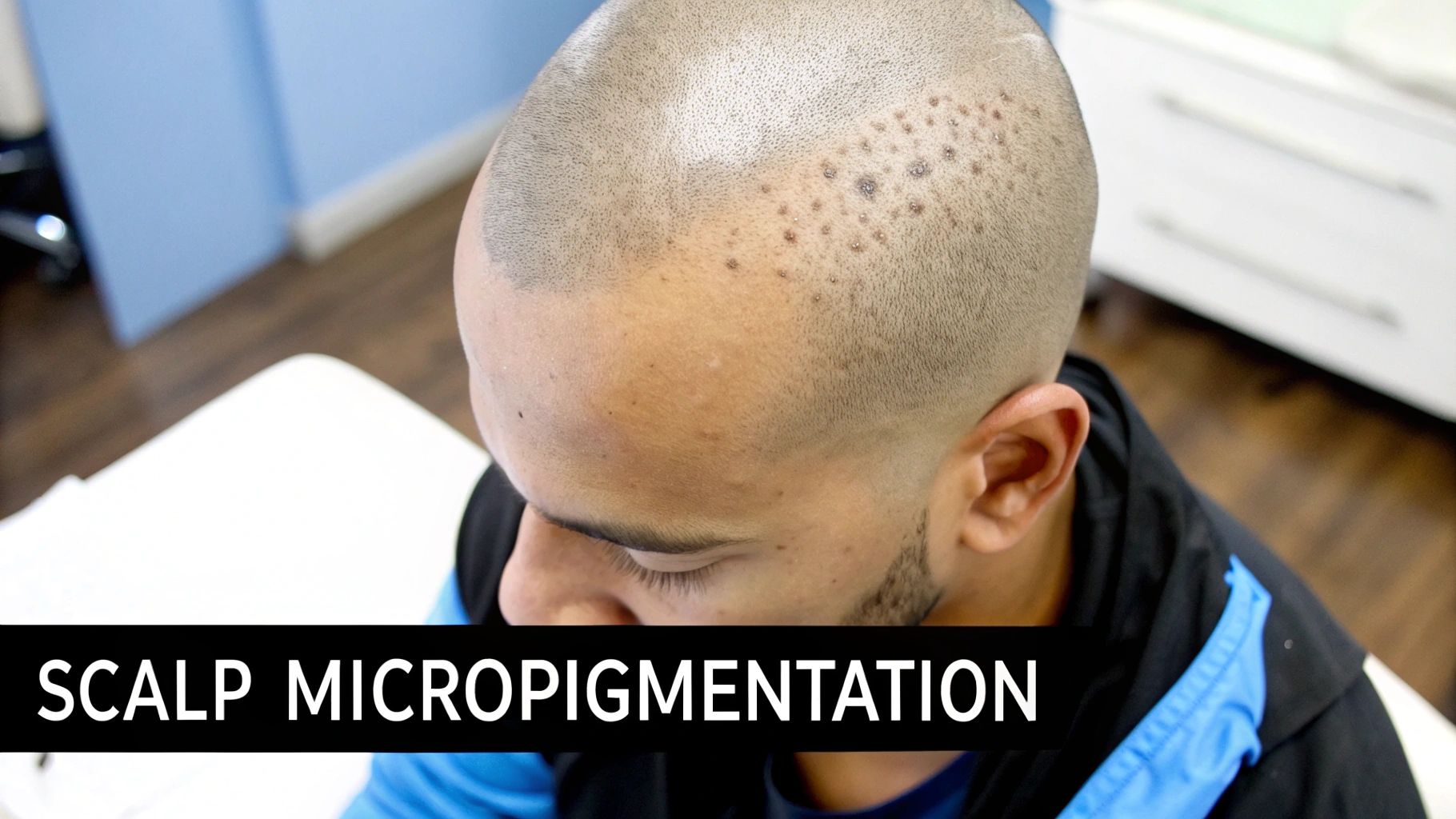
When people search for terms like "hair loss tattoo," what they're really looking for is Scalp Micropigmentation. This non-invasive treatment is quickly becoming a go-to choice in Australia for tackling everything from male pattern baldness and general thinning to concealing scars.
With hair loss affecting a huge number of Aussie men, SMP provides a practical and immediate cosmetic solution. You can find out more about the growth of scalp micropigmentation in Australia in our in-depth guide.
The popularity of SMP isn't just hype. It's now widely available across Australia's major cities, offering a real solution for the estimated 75% of men who notice some hair loss by the time they're 35.
Understanding The Key Differences
It's absolutely vital to get one thing straight: SMP is worlds apart from the body art tattoos you'd get at a typical studio. The equipment, pigments, and the entire application method are designed for a completely different outcome—creating a subtle, hyper-realistic illusion.
A great way to think about it is like this: a body artist uses a paintbrush to create a bold piece of art. An SMP practitioner, on the other hand, uses a precision tool to layer thousands of tiny, individual dots. The goal isn't to create a picture; it's to build a flawless illusion of hair density.
To really see the difference, a side-by-side comparison is the best way to understand what sets them apart.
Scalp Micropigmentation vs Traditional Tattoo
This table breaks down the core distinctions between a cosmetic hair tattoo and a standard body tattoo.
| Feature | Scalp Micropigmentation (SMP) | Traditional Body Tattoo |
|---|---|---|
| Purpose | To precisely replicate the look of natural hair follicles and restore density. | Decorative body art, created to be a visible image or pattern on the skin. |
| Pigment | Stable, carbon-based pigments that are formulated to hold their colour, not turn blue or green. | Standard tattoo inks in a huge range of colours that can fade or change hue over time. |
| Technique | A pointillism-style method, applying thousands of micro-dots to build a textured appearance. | Uses shading, lining, and colouring techniques to form solid designs and images. |
| Depth | Pigment is placed in the upper dermis of the scalp, a much shallower layer of skin. | Ink is injected deeper into the dermis, which is why it is bolder and more permanent. |
As you can see, while both involve putting pigment into the skin, the purpose, tools, and techniques are fundamentally different. SMP is a cosmetic procedure that demands a unique skill set focused entirely on natural-looking results.
How Scalp Micropigmentation Actually Works
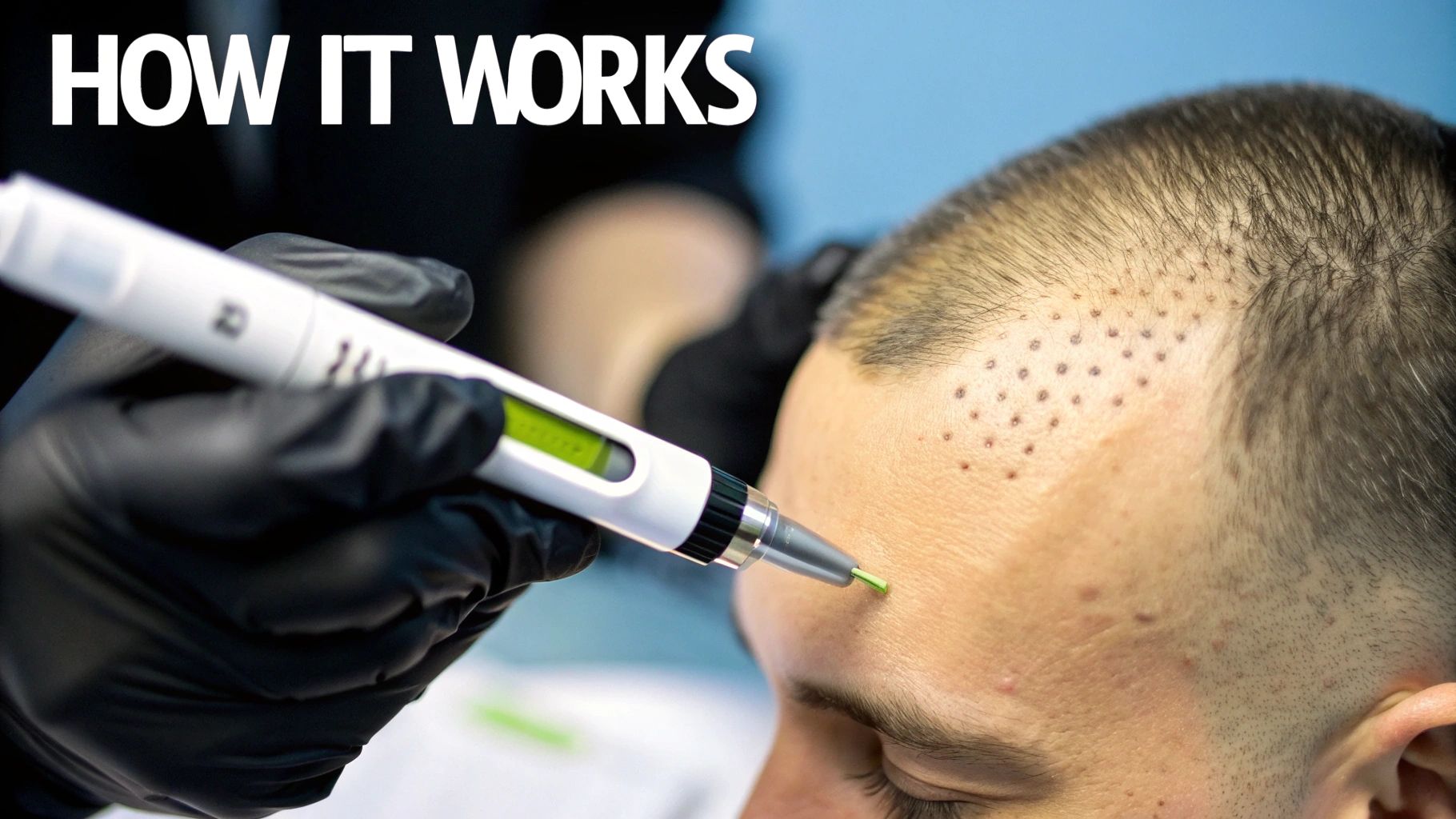
When you hear tattoo hair loss solution, your mind might jump to bold, dark body art. But it’s better to think of Scalp Micropigmentation (SMP) as a highly specialised form of pointillism for your head. Forget lines and shading; this is all about creating a subtle illusion of texture using thousands of tiny, layered dots.
An experienced practitioner uses a fine microneedle to deposit pigment into the upper dermis of the scalp. It's a much shallower layer than a regular tattoo, which is one of the secrets to getting a stable, natural-looking result that holds its shape.
The aim isn't to draw on strands of hair. Instead, the technique replicates the look of individual hair follicles. When these dots are layered over several sessions, they blend together to create the convincing appearance of a full head of hair, styled in a sharp buzz cut. For men and women with thinning hair, the same method works wonders by reducing the colour contrast between the scalp and existing hair, making it look much thicker and denser.
The Science Of The Pigment
The "ink" in SMP is nothing like what a tattoo artist uses. It's a specially formulated, carbon-based pigment developed specifically for stability on the scalp. This is a critical point because it neatly sidesteps the problems you sometimes see with old tattoos.
This custom pigment is designed to hold its colour without shifting over time. While some traditional tattoo inks can start to look blue or green as they age, SMP pigments are made to fade gracefully over many years, simply lightening to a softer version of their original shade.
Your artist will also meticulously match the pigment to your natural hair colour and skin tone. They’ll create a custom blend to ensure the final result looks totally natural with your features, avoiding that harsh, "pluggy" look.
The Artistry Of The Application
The real magic of SMP is in the practitioner's hands. A truly believable outcome depends on a whole range of factors, making this as much an art form as it is a technical procedure.
The real skill in SMP is creating organised chaos. Each dot is placed with intention, but the overall pattern must mimic the random, imperfect nature of a real human hairline. A perfectly straight, uniform hairline is a dead giveaway; a soft, feathered, and slightly varied one is what makes the result undetectable.
This incredibly detailed process involves a few key things:
- Layering for Density: Practitioners build up the look gradually over 2-4 sessions. This layering approach is essential for creating depth and avoiding a flat, artificial finish. It also gives you and the artist time to make small adjustments for the perfect outcome.
- Varying Dot Size and Angle: Just like real hair, the pigment dots are varied in size, angle, and depth. This micro-variation is what creates the texture and dimension that convinces the eye it's looking at a real buzz cut.
- Creating a Natural Hairline: This is the most important part. A skilled artist designs a hairline that suits your face shape, age, and style. It should be soft and slightly receded to look natural, not harsh or unnaturally low.
It’s a procedure that demands both precision and patience. For a deeper dive into the technique, our guide on how SMP works for hair loss breaks down every step. Ultimately, it’s this combination of specialised pigments and expert application that makes SMP such a powerful and realistic solution.
What Are the Real Benefits of a Hair Tattoo?
So, why is Scalp Micropigmentation, or tattoo hair loss treatment, becoming such a go-to solution? It really boils down to a mix of getting instant results, enjoying long-term simplicity, and getting a massive confidence kick. It's a genuinely practical alternative to the endless cycle of treatments or going under the knife.
Think about hair transplants—they come with serious recovery time. Or medications, which mean a daily commitment for results that can be hit-or-miss. SMP is different. You see a change right after your very first session. For anyone who's been fighting a slow, frustrating battle with hair loss for years, that speed is a game-changer.
The whole process is non-invasive. There are no scalpels, no stitches, and no long, drawn-out healing. You can literally walk out of the clinic and get right back to your routine with almost no downtime, which is a huge plus for anyone with a packed schedule.
Immediate Results and Lasting Value
One of the best things about a hair tattoo is the visual impact you get straight away. While the full, dense look is built up over a few sessions, you'll notice a real difference from day one. That instant gratification can feel incredibly powerful.
On top of that, SMP is incredibly low-maintenance. Once your sessions are done and everything's healed, you can forget about it. No special routines, no pricey shampoos, no daily creams. Your new look is just there, every single morning.
"Imagine just waking up and not having to worry about hair loss anymore. No more checking for thin patches in the mirror or stressing about the lighting. SMP gives you that freedom back—it takes the whole issue off your plate."
This simplicity makes it incredibly cost-effective in the long run. Yes, there's an upfront cost, but when you compare it to years of buying hair systems, paying for prescriptions, or funding expensive surgeries that might need more work later, SMP often works out to be the smarter financial choice.
Camouflage and a Newfound Confidence
Beyond just creating the illusion of a full head of hair, SMP has another brilliant trick up its sleeve: camouflage. It's fantastic for hiding scars on the scalp, whether they're from an old injury, an accident, or even from previous FUT or FUE hair transplant procedures.
A skilled practitioner can meticulously blend pigment into the scar tissue, making it blend right in with the surrounding tattooed 'follicles'. The scar virtually disappears. This ability to create a clean, uniform look can be liberating.
Ultimately, all these perks point to the one thing that matters most: restored confidence. Tackling hair loss isn't just about looks; it's about feeling good in your own skin. By offering a reliable and permanent solution, a hair tattoo lets people stop obsessing over their hair and get back to living their lives.
To get a better idea of the different people who have great success with this treatment, check out our guide on who can benefit from hair tattoos and see if it’s the right fit for you.
Is SMP an Effective Solution for Women?
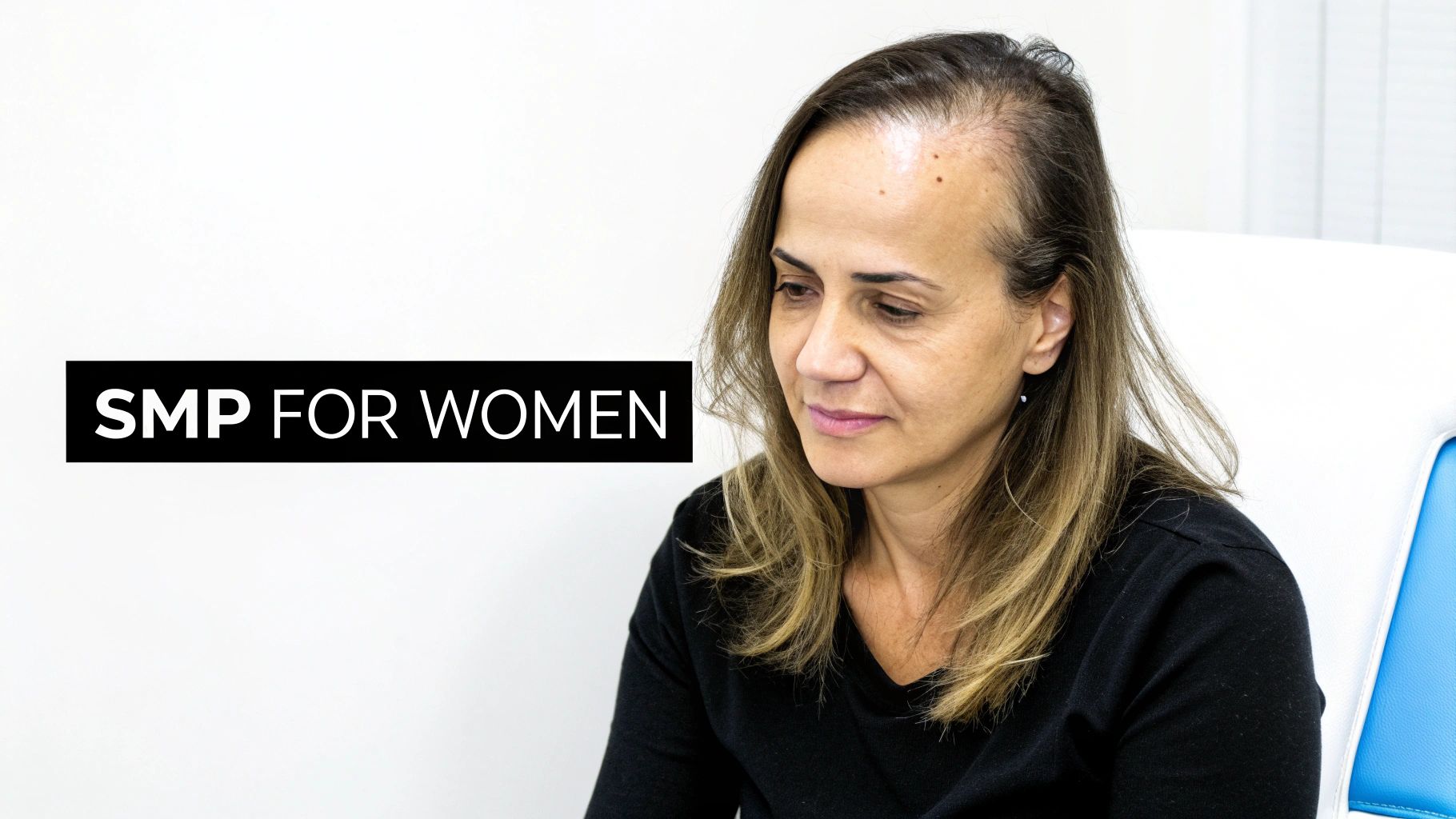
While the conversation around tattoo hair loss solutions often focuses on men, Scalp Micropigmentation is an incredibly powerful option for women, too. The way women experience hair loss is usually quite different from male pattern baldness, but SMP’s amazing versatility makes it a perfect fit for these unique challenges.
Most women don’t get a receding hairline or a bald spot. Instead, they typically deal with diffuse thinning, where hair density decreases all over the scalp. This often makes the parting line look wider and the scalp more noticeable, which can really knock your confidence.
This is exactly where SMP shines for women. The goal isn’t to create a "shaved head" look but to build up a subtle underlayer of pigment that expertly camouflages thinning spots.
How SMP Creates Fullness for Women
The best way to think of SMP for women is like adding a soft shadow to the scalp. A highly skilled practitioner meticulously places thousands of tiny pigment dots between your existing hair strands. This simple step makes a massive difference by reducing the stark contrast between your scalp and hair colour.
By closing that visual gap, the treatment creates a convincing illusion of density and fullness. Suddenly, the scalp isn't the first thing people see, making your hair look much thicker and healthier.
The change is subtle but profound. It’s not about overhauling your hairstyle. It’s about restoring the look of volume you used to have, giving you the freedom to wear your hair however you want without a second thought.
This technique offers a long-term, waterproof solution that blows temporary fixes out of the water. Forget about messy scalp powders or fibres that can clump up or run in the rain—SMP is a permanent camouflage that looks completely natural, no matter the situation.
Addressing the Unique Needs of Female Hair Loss
Female pattern hair loss is a reality for a huge number of Australian women, and it can start at any age. SMP provides a fantastic cosmetic solution that can work hand-in-hand with medical treatments to bring back that fuller look.
The entire process for women is customised to suit their specific hair colour and thinning pattern.
- Custom Pigment Matching: The pigment is expertly blended to match the colour of your natural hair roots, ensuring the result is seamless and undetectable.
- Targeted Density Building: The artist concentrates on the areas that need it most, like the parting, temples, or crown, to build up density right where you want it.
- Works with Long Hair: No, you don't have to shave your head! The whole procedure is done by carefully working through sections of your hair.
For so many women, this treatment is about more than just appearances—it’s about reclaiming a piece of themselves. The confidence boost that comes from no longer having to hide or worry about thinning hair is immense. To learn more, check out our in-depth article on how to treat women's hair loss with scalp micropigmentation.
Your Step-By-Step SMP Journey
Thinking about a tattoo hair loss solution like Scalp Micropigmentation can feel like a big leap, but once you understand the process, a lot of that uncertainty melts away. The whole thing is a carefully planned series of appointments, all designed to build up a perfectly natural result, layer by layer. It’s not a one-and-done deal; it's a true craft.
We break the entire journey down into manageable stages, so you're always comfortable and in the loop, from our first chat right through to looking after your new style for years to come. This methodical approach is the secret sauce to achieving a look that's not only realistic but also designed just for you.
Stage 1: The Initial Consultation
Everything kicks off with a detailed consultation. Honestly, this is probably the most important step because it sets the foundation for your entire treatment. This is our chance to sit down and talk about your hair loss history, what you're hoping to achieve, and any questions or concerns you might have.
I'll take a good look at your scalp, assess your skin tone, and see what we're working with in terms of your existing hair. This is also where the artistry begins. We'll design your ideal hairline together—something that looks age-appropriate and suits your facial structure. I'll even use a wax pencil to draw the proposed hairline right onto your scalp, so you can see exactly what to expect.
This design phase is all about teamwork. A good practitioner will never push a harsh, unnatural hairline on you. The goal is always a soft, subtly receded look that appears completely authentic.
Stage 2: The Treatment Sessions
The SMP treatment itself is usually completed over 2 to 4 separate sessions. Each one lasts about two to four hours, and we make sure to space them a week or two apart. This breathing room is crucial—it lets the pigment settle properly and gives your scalp time to heal. It’s this gradual layering that creates that undetectable illusion of hair density.
Here’s a breakdown of what happens in those sessions:
- First Session: Think of this as laying the groundwork. We'll use a lighter shade of pigment to create the initial scattering of follicles. This session maps out your new shape and hairline, setting the stage for the density we'll build later.
- Second and Third Sessions: This is where the real magic happens. In these follow-up appointments, we'll introduce darker pigments and strategically fill in the gaps between the first layer of dots. This layering process builds the depth and texture that makes it look like a full head of hair. Each session just adds another level of realism.
- Fourth Session (If Needed): Sometimes a final touch-up is needed to perfect the blend, add a bit more density in certain spots, or make any final tweaks to get the result looking absolutely flawless.
This multi-session approach is non-negotiable for a natural-looking outcome. It helps us avoid that flat, "helmet" look you can get when you try to cram too much into a single appointment. For a closer look at what each appointment is like, check out our complete guide on the process of getting a hair tattoo.
Stage 3: Aftercare and Long-Term Maintenance
After each session, you'll get some straightforward aftercare instructions to follow. It’s nothing complicated—mainly just avoiding heavy sweating, staying out of the sun, and not washing your scalp for a few days. This gives those tiny micro-dots the perfect chance to heal and settle in. The recovery is super quick, and most guys just have a little bit of redness for a day or two.
SMP is a long-lasting solution, but it’s technically semi-permanent. The specialised pigments we use are designed to fade very slowly over many years, without ever changing colour. To keep your look sharp, a quick touch-up session is usually a good idea every 4 to 6 years.
This minimal upkeep is what makes it such an easy, stress-free way to manage hair loss for the long haul.
To give you a clearer picture, here's how the entire journey typically unfolds.
Typical Scalp Micropigmentation Treatment Timeline
| Stage | Description | Typical Duration |
|---|---|---|
| Consultation | An in-depth discussion to assess your needs, design your hairline, and answer all your questions. A patch test is often performed. | 30-60 minutes |
| Session 1 | The foundational layer is applied. A lighter pigment is used to establish the hairline and initial coverage. | 2-4 hours |
| Healing Period | The scalp heals, and the pigment begins to settle. Aftercare instructions must be followed closely. | 7-14 days |
| Session 2 | More density and darker pigments are added. This session builds depth and creates a fuller look. | 2-4 hours |
| Healing Period | Another healing phase to allow the new layer of pigment to settle and blend with the first. | 7-14 days |
| Session 3 (and 4, if needed) | The final layers are added to perfect the blend, texture, and density for a completely natural result. | 2-3 hours |
| Full Healing | It takes about 30 days after the final session for the pigment to fully settle and reveal the final, long-term look. | ~30 days |
| Long-Term Care | Your SMP is now fully healed. You can enjoy your new look with minimal maintenance. A touch-up is recommended every 4-6 years. | Ongoing |
This structured timeline ensures we never rush the process, giving your scalp the time it needs to heal between sessions and allowing us to build up the most realistic result possible.
Common Misconceptions About Hair Tattoos
Deciding on any cosmetic procedure, especially one like a tattoo hair loss solution, naturally comes with a lot of questions. Let's be honest, the internet is swimming with myths and outdated info, making it hard to know what's true. It's time to clear the air and tackle some of the biggest worries people have.
Will It Look Fake?
This is probably the number one concern we hear: "Will it look obvious?" The fear of a fake-looking result almost always stems from seeing bad work done by an inexperienced practitioner. When done right, by a true artist, Scalp Micropigmentation is genuinely undetectable.
It's all in the details. A skilled technician doesn't just apply dots; they use a variety of impression sizes, build up density in layers, and design soft, feathered hairlines that are perfectly suited to your age and facial structure. It’s an art form where the entire goal is to be invisible.
Will The Colour Turn Blue?
Another huge worry is about the colour changing over time. We've all seen old body tattoos that have faded to a murky blue or green. This is a valid concern, but it's based on a complete misunderstanding of the pigments used in SMP.
Traditional tattoo inks are not what we use. SMP relies on specialised, carbon-based pigments formulated to be incredibly stable. They're designed to hold their true colour. Over many years, they will only lighten to a softer, more diluted version of the original shade—they will never, ever turn blue.
Does It Hurt Like A Real Tattoo?
It's a common question, and a crucial point to understand. While SMP involves needles, it’s not the same as getting a traditional tattoo on your arm or back. The experience is very different.
The pigment is placed in the upper dermis, a much shallower depth than in conventional tattooing. Because of this, the sensation is far less intense. Most people describe it as a light, consistent vibration or a minor irritation, not sharp pain.
In Australia, tattoo regret is a real phenomenon, with studies showing that about three in ten Australians regret at least one of their tattoos. This is often because traditional inks can blur or shift in colour. SMP is designed from the ground up to avoid these exact problems, ensuring a crisp, natural look that lasts. You can find more tattoo trends in Australia that highlight why this difference is so important.
Is The Result Permanent And Unchangeable?
While SMP is designed for longevity, it's best described as semi-permanent. And honestly, this is one of its biggest advantages. It gives you a flexibility that a traditional tattoo simply can't.
The specialised pigments are designed to fade gently over a period of 4-6 years. When that happens, a quick and simple touch-up session is all it takes to bring back the original colour and definition.
This infographic gives you a clear picture of the journey, from your first chat right through to aftercare.
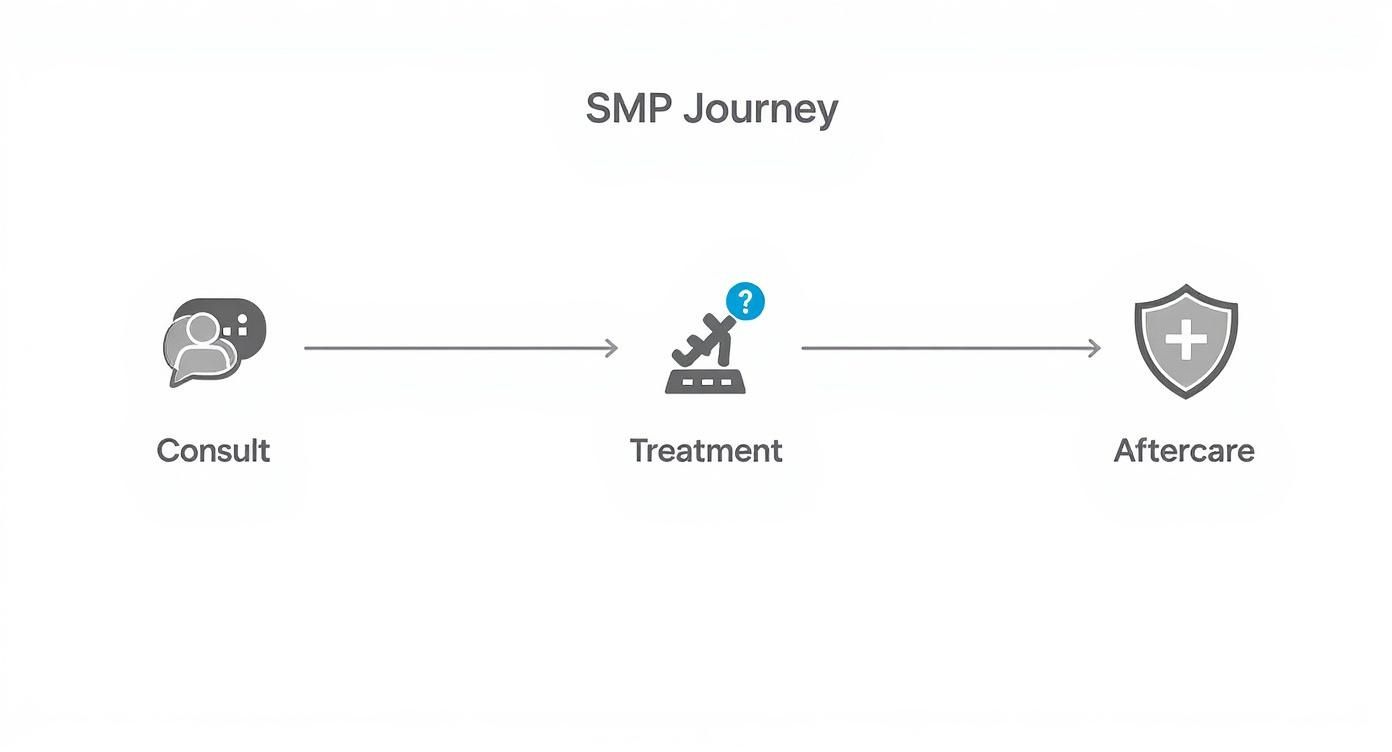
As you can see, the whole process is methodical and controlled. It’s built in stages to deliver a predictable result, making sure you feel confident and informed every step of the way.
The semi-permanent nature of SMP is actually one of its greatest strengths. It allows you to adapt the look as you age, adjusting the hairline or density during a touch-up to maintain a natural appearance over your lifetime.
Your Hair Tattoo Questions, Answered
Deciding to get a hair tattoo is a big step, so it’s only natural to have a few questions running through your mind. It’s one thing to understand how the process works, but it's another to know the practical details. I get it. Feeling confident and fully informed is the most important part of this journey.
To help you out, I've put together answers to some of the most common questions I hear from clients right here in Australia. Let's dive into the specifics, from cost to longevity, so you have all the facts.
How Much Does SMP Cost in Australia?
There’s no single price tag for Scalp Micropigmentation in Australia, as every client’s needs are different. Generally speaking, you can expect a full course of treatment to fall somewhere between $2,000 and $5,000. The final figure really comes down to the extent of your hair loss and the size of the area we need to cover.
A few things will shape your final quote:
- Your Level of Hair Loss: A bit of work on a receding hairline is a smaller job than creating a full look for someone with advanced balding.
- Scar Camouflage: Working pigment into scar tissue is a specialised skill that takes extra care and time, which can influence the cost.
- Desired Density: The fuller you want the final look to be, the more time and sessions it will take to build up the necessary layers of density.
Think of it as a one-off investment in a long-term fix. Sure, the upfront cost is more than a can of hair fibres, but it puts an end to those ongoing purchases and gives you a result that lasts for years.
How Long Does a Hair Tattoo Last?
Scalp Micropigmentation is designed to be a long-term, semi-permanent solution. We use specialised pigments that hold their colour, but they will naturally soften and lighten over a number of years. For most people, the results stay looking crisp and defined for 4 to 6 years before a touch-up is a good idea.
This gradual fading is actually a huge plus. It gives you flexibility. As the years go by, you can adapt the treatment to suit you. When you come in for a touch-up, we can make subtle changes to the hairline or density to make sure it always looks completely natural and right for your age.
Can SMP Be Removed?
Yes, it absolutely can. One of the best things about SMP is that it isn’t permanent in the same way a traditional tattoo is. If you ever decide you want a different look or want to reverse the procedure, the pigment can be safely removed with a specialised laser.
Unlike a regular body tattoo, SMP pigment is placed in the upper layer of the skin. This means the laser removal process is often much quicker and more straightforward, usually requiring fewer sessions to completely clear the pigment.
This gives you a great safety net, so you can go ahead with confidence knowing you’re not locked in forever.
Who Is the Ideal Candidate for SMP?
SMP is an incredibly versatile technique that works for so many different people struggling with hair loss. The ideal person for SMP is anyone looking for a cosmetic fix to create the look of thicker hair, rather than a medical treatment to physically regrow it.
You could be a perfect match if you:
- Love the sharp, clean style of a permanent buzz cut.
- Have thinning hair and just want to make it look denser and fuller.
- Need to conceal scars from an old hair transplant, surgery, or an accident.
- Are a woman dealing with diffuse thinning and want to make your scalp less visible.
At the end of the day, the only way to know for sure if a hair tattoo is the right path for you is to have a chat with a professional.
At My Transformation, I’m passionate about helping people find the right answer for their hair loss. If you think Scalp Micropigmentation could be the key to getting your confidence back, I’d love to talk you through it. You can learn more and book a consultation at https://rightwing-health.info/a%3E.%3C/p%3E