

Sunburn On Scalp Relief For Thinning Hair
That tight, stinging feeling after a day in the sun is a tell-tale sign your scalp is in trouble. A sunburnt scalp isn't just uncomfortable; it’s a clear signal of skin damage that needs immediate attention. You’ll usually notice redness, a burning itch, and eventually, peeling—especially where your hair is thinning or on a bald head.
Your First Aid Guide For A Sunburnt Scalp
We've all been there. Maybe you're a bloke in Perth enjoying a weekend barbie, you forgot your hat, and now the top of your head is screaming. It’s an all-too-common story here in Australia, where it's easy to get caught out.
In fact, recent data shows that 15% of Australian adults reported getting sunburnt over a single four-week period, which is a jump from previous years. It's a stark reminder of how easily it can happen. This is why knowing exactly what to do can make a massive difference in how quickly you heal and how much it hurts.
The first 24 hours after the burn are the most important. The goal is simple: cool the skin down, dial back the inflammation, and get some moisture back into the damaged area—all without making it worse.
Assess The Severity
First things first, have a proper look at your scalp. Is it just a bit red and tender, or can you see tiny blisters starting to form? A mild sunburn will feel warm, tight, and sore, looking a bit like a tomato.
Severe burns, on the other hand, often come with blistering, which means the damage has gone deeper. If you see widespread blistering, or you're feeling feverish, nauseous, or are in serious pain, it's time to stop the home remedies and see a doctor. Don't try to tough these symptoms out.
This chart is a great way to quickly figure out what you’re dealing with and what to do next.
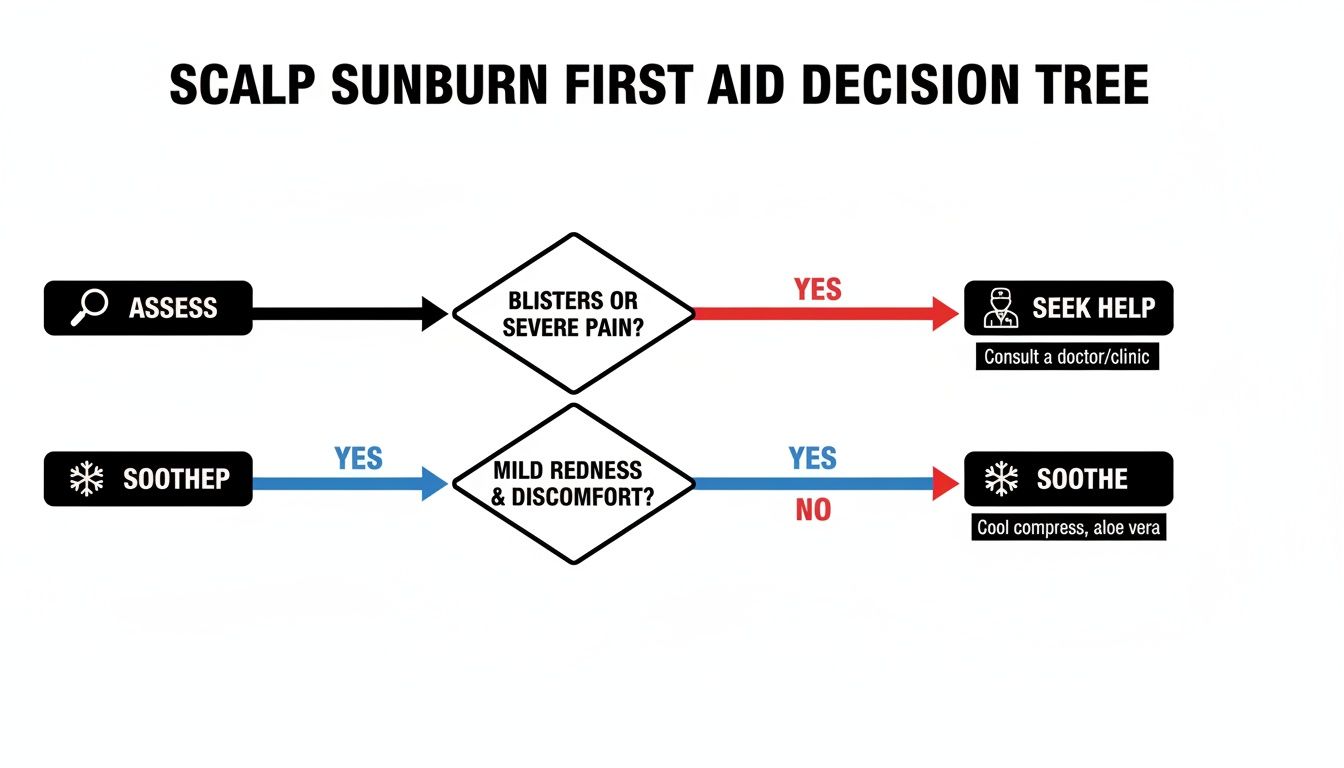
As you can see, a bit of redness is manageable at home, but the moment blisters or other serious symptoms appear, professional medical advice is the way to go.
Soothe And Hydrate Gently
Once you know what you're up against, it's time for some relief. A cool shower is your best friend here—let the water run gently over your head for a few minutes. Don't make it ice-cold, just cool enough to take the sting out. If a shower isn't an option, a clean washcloth soaked in cool water and held against the scalp works well too.
Crucial Tip: Never put ice directly onto a sunburn. The extreme cold can actually cause more damage to your already-vulnerable skin. Think gentle cooling, not a shock freeze.
After you've cooled the area, it's all about hydration. Pure aloe vera gel is the go-to for good reason; it's a natural anti-inflammatory that feels incredibly soothing. Apply it liberally, but be gentle.
As your scalp begins to heal and the inevitable peeling starts, keeping it moisturised is key to helping the skin recover. For long-term health, finding the best moisturiser for a bald head is a game-changer for maintaining a healthy skin barrier.
How To Heal A Sunburnt Scalp Without Causing Damage
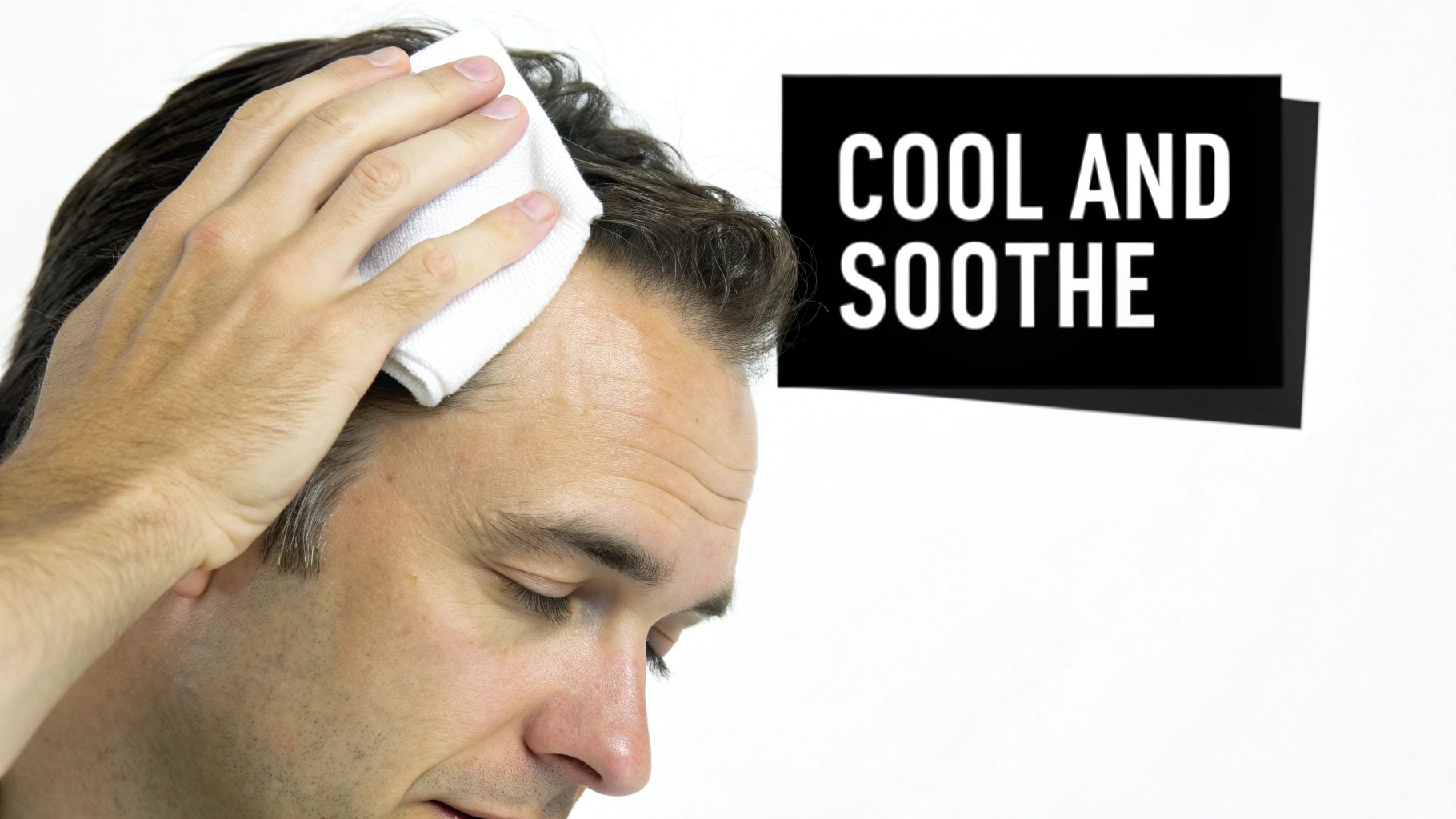
Once you've managed to get the initial sting out of your scalp, the job isn't quite done. The focus now pivots from first aid to proper healing. For the next few days, it's all about managing the discomfort, fighting the urge to scratch, and giving your skin what it needs to repair itself properly.
The main goal is to calm the inflammation and soothe the damaged skin. An over-the-counter anti-inflammatory like ibuprofen can be a real lifesaver in the first 24-48 hours, helping to take the edge off the pain and bring down any swelling. Just be sure to follow the dosage instructions on the packet.
Soothing Treatments And Gentle Haircare
For direct relief, you can't go past pure aloe vera gel. It’s a classic for a reason—it’s naturally anti-inflammatory and rehydrates the skin brilliantly without trapping in heat. Pro tip: keep the bottle in the fridge for an extra cooling kick when you apply it.
You'll also need to hit pause on your usual haircare routine. A sunburn on the scalp makes your skin incredibly sensitive, so gentle is the name of the game.
- Avoid Harsh Shampoos: Ditch any shampoos with sulphates, alcohol, or strong fragrances. These will only strip your skin of its natural oils and cause more irritation.
- Use Lukewarm Water: Hot water is the enemy of sunburn. Always use cool or lukewarm water when you wash your hair until it’s fully healed.
- Skip Styling Products: Gels, mousses, and hairsprays are loaded with chemicals and alcohol that will sting a burnt scalp and dry it out even more. It’s best to go au naturel for a bit.
- Pause Heat Styling: The hairdryer, straightener, and curling wand need to be benched. Direct heat will be painful and can seriously slow down the healing process.
Navigating The Peeling And Itching Phase
As your skin starts to recover, the dreaded peeling and itching will likely begin. This is a totally normal sign of healing, but how you manage it is crucial. Picking at flaky skin or scratching your scalp is a fast track to introducing bacteria, which can lead to infection or even scarring.
It’s incredibly tempting, but whatever you do, resist the urge to peel the skin. You risk tearing off skin that isn’t ready to come away, exposing the raw, delicate layer underneath to more damage.
Instead, keep applying your cool aloe vera or a gentle, fragrance-free moisturiser. This keeps the area hydrated, which helps manage the itch and allows the skin to shed naturally when it's good and ready. If the itching gets really bad, a cold compress can offer some temporary relief.
Staying well-hydrated is also a big part of the healing equation. Drinking plenty of water helps your skin repair itself from the inside out. For anyone with Scalp Micropigmentation, being extra careful during healing is non-negotiable to protect your investment. The principles of gentle care are very similar, and you can get a full rundown by reading about the scalp micropigmentation aftercare procedure.
To make things even clearer, here’s a quick guide on what to do—and what to avoid—while your scalp is on the mend.
Scalp Sunburn Healing Do's and Don'ts
| Do | Don't |
|---|---|
| Cool it down with cold compresses or cool showers. | Use hot water, which will only increase inflammation. |
| Apply pure aloe vera gel or a gentle, fragrance-free moisturiser. | Put on heavy, petroleum-based ointments that trap heat. |
| Take an over-the-counter anti-inflammatory like ibuprofen. | Pop any blisters that form, as this can lead to infection. |
| Drink plenty of water to help your skin rehydrate from within. | Scratch or peel flaking skin, no matter how tempting it is. |
| Wear a loose, soft hat if you absolutely must go outside. | Expose the sunburnt area to any more direct sunlight. |
Following these simple rules will help ensure your scalp heals quickly and without any complications, getting you back to feeling normal sooner.
Your Guide To Preventing Sunburn On Your Scalp
When it comes to a sunburn on scalp, the best treatment is, without a doubt, avoiding it altogether. It’s an old saying, but an ounce of prevention is truly worth a pound of cure—especially for the surprisingly sensitive skin on your head. Putting a simple, effective sun-safe routine in place is the secret to keeping your scalp healthy, whether you have a full head of hair, a bit of thinning, or a completely bald head.
It’s an all-too-common scenario. You head out for a day in the Aussie sun, only to come home with a scalp that’s throbbing and fiery red. The scalp is a sneaky spot for sunburn, particularly for men experiencing hair loss. According to the Australian Bureau of Statistics, during the 2023–24 summer, one in 14 Australians (that's about 6.9% of us) reported getting sunburnt in the week before being surveyed. In places where the daily UV index can hit a brutal 11-14, that exposed scalp is at serious risk.
Choosing The Right Scalp Sunscreen
Gone are the days of slathering goopy, greasy creams on your head that leave your hair looking like an oil slick. Thankfully, sunscreen technology has come a long way, and you can now find fantastic products designed specifically for your scalp.
- Powder Sunscreens: These are a game-changer for part lines and thinning patches. They usually come with a built-in brush, making application a mess-free breeze. As a bonus, they often help absorb a bit of oil on a hot day.
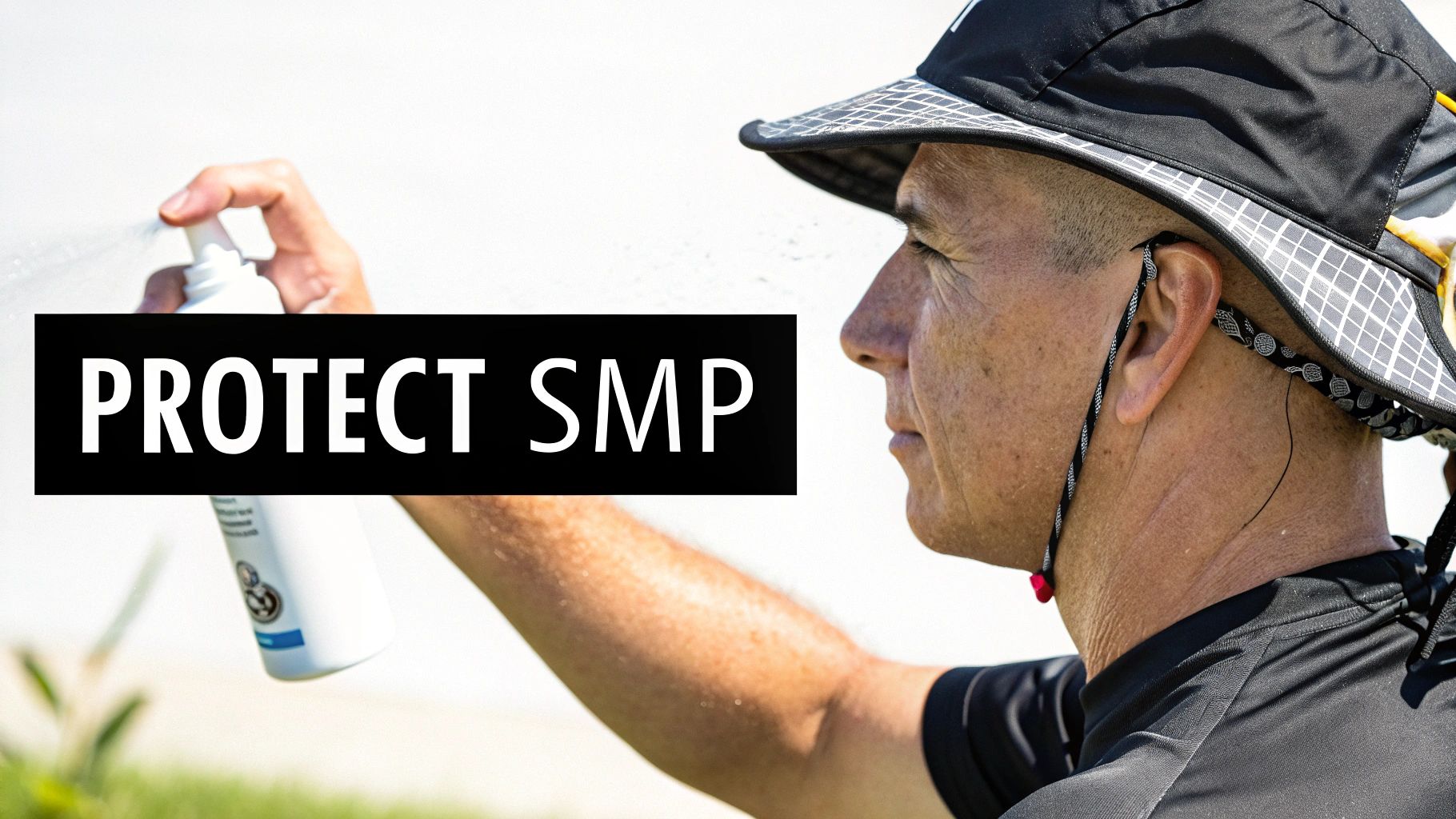
- Spray Sunscreens: Sprays are a quick and easy solution, especially for getting good coverage on a bald or closely shaved head. The key is to rub it in thoroughly after spraying to make sure you haven’t missed any spots.
- Lotions and Sticks: These are your best bet for completely bald heads or along the hairline where precision is needed. A stick gives you excellent control, while a lightweight, non-greasy lotion spreads easily over the entire scalp.
Expert Tip: Always reach for a broad-spectrum sunscreen with an SPF of at least 30+, though 50+ is even better. And remember, reapplication is crucial. Set a reminder to reapply every two hours, and more often if you've been swimming or sweating a lot.
Smart Sun Exposure Habits
Sunscreen is your most important tool, but it's only one part of a smart sun strategy. The daily habits you build can make a massive difference in preventing a painful sunburn on scalp.
Timing is everything. The sun’s UV rays are at their most potent between 10 a.m. and 4 p.m. If your schedule allows, try to plan outdoor activities like jogging, gardening, or walking the dog for the early morning or late afternoon. If you must be out during those peak hours, make finding shade a priority.
A good hat isn't just a style choice; it's your scalp's best mate. Look for one with a wide brim and a high Ultraviolet Protection Factor (UPF) rating. A UPF 50+ rating is the gold standard, blocking over 98% of UV rays.
This is absolutely vital for anyone who has had Scalp Micropigmentation (SMP), as UV exposure is the number one enemy of the pigment, causing it to fade over time. For more specific advice, you can read our guide on the top tips to care for your scalp after SMP. For some great general advice, you might also find these easy-to-follow tips to protect your skin from the sun useful.
Protecting Your Scalp Micropigmentation Investment
If you've gone through with Scalp Micropigmentation (SMP), you've invested in a fantastic solution for restoring the look of a full head of hair. Now, you need to protect that investment, and its number one enemy is the Aussie sun. Unprotected sun exposure is, without a doubt, the fastest way to watch your sharp, defined SMP results fade before their time.
Think of UV radiation as a slow-motion laser treatment for your scalp. It gradually breaks down the pigment particles over months and years. While it doesn't happen overnight, consistent sun exposure without protection will absolutely cause the pigment to lighten and lose that crisp, natural appearance, ultimately shortening the life of your treatment.
SMP-Safe Sun Protection Strategies
Safeguarding your SMP isn't just a good idea—it's non-negotiable if you want long-term success. The great news is that building a protective routine is pretty straightforward. You just need the right tools and habits.
Your most effective line of defence is a high-quality, broad-spectrum sunscreen. Aim for at least SPF 30+, but honestly, SPF 50+ is the gold standard for a treated scalp. My advice is to find a matte-finish product designed for the face or scalp. These formulas are far less greasy, won't leave a tell-tale shine on your head, and help maintain that natural, "nothing to see here" look of your SMP.
How you apply it matters, too.
- Be generous with it—don't just dab it on.
- Apply it a good 15-20 minutes before you head outside.
- Reapply it every two hours, or more often if you're swimming or sweating a lot.
And of course, a wide-brimmed hat is your best mate. It adds a crucial layer of physical protection, especially during those peak UV hours between 10 a.m. and 4 p.m.
Managing Sunburn on a Treated Scalp
Even the most careful of us can get caught out. If you end up with a sunburnt scalp after SMP, your immediate aftercare is critical to minimise any potential damage to the pigment. The inflammation from a bad burn can seriously affect how the pigment settles and looks in your skin.
If you find your scalp is red and sore, take these steps right away:
- Cool the area immediately. Use gentle, cool water from the shower or a cold compress. Never apply ice directly.
- Soothe the skin. Pure aloe vera gel is perfect for this. Steer clear of any heavy, petroleum-based ointments that can trap heat and make things worse.
- Hands off! Do not exfoliate, and resist the urge to pick or peel any flaky skin. You have to let it heal naturally to prevent pigment loss or, even worse, scarring.
A sunburn on a treated scalp can temporarily mess with the appearance of your SMP. You might notice it looks dull or uneven because of the skin's inflammatory response. Gentle, consistent aftercare is the key to helping it return to normal once the skin has healed.
As your skin recovers, it’s a good reminder to think about the long game. Understanding how a hair tattoo looks as you get older really drives home why diligent sun care is so important from day one. It's the best way to ensure your SMP stays looking sharp and realistic for years to come.
When a Sunburnt Scalp Needs Medical Attention
Most of the time, a sunburn on the scalp is something you can handle at home with a bit of aloe vera and a few cool compresses. It’s annoying, but it passes. However, it's absolutely crucial to know when that simple burn has crossed the line into something more serious.
Listening to your body is key. A standard sunburn is one thing, but sun poisoning is a different beast altogether. It’s a sign the burn is so severe it’s causing a reaction throughout your entire body, not just on your skin. That’s when you need to look beyond the redness for more worrying signs.
Identifying Serious Symptoms
Knowing the difference between discomfort and real danger is vital. You should get medical advice straight away if your scalp sunburn comes with any of these red flags:
- Extensive or Severe Blistering: A few tiny blisters are common, but if you see large, fluid-filled blisters covering a decent part of your scalp, that’s a sign of a second-degree burn.
- Intense, Unrelenting Pain: When standard, over-the-counter pain relief isn't even touching the sides and the pain is genuinely severe, the damage is likely deeper than you think.
- Signs of Infection: Be on the lookout for increased swelling, any pus or oozing from blisters, or red streaks spreading out from the burnt area. And whatever you do, never pop the blisters—that’s just an open invitation for infection.
A sunburn is more than skin deep. When you start experiencing symptoms like fever, chills, dizziness, or a headache, it's your body signalling that the damage is more widespread than you think. Don't try to tough it out.
When to See a Doctor Immediately
Some symptoms are non-negotiable. They are clear signals of sun poisoning or a severe reaction that needs a doctor's attention, not home remedies.
Don't hesitate to see a professional if you experience:
- Fever and chills
- Nausea or vomiting
- Confusion, dizziness, or fainting
- A severe headache that just won't quit
- Rapid pulse or rapid breathing
These signs suggest your body is in overdrive, struggling with inflammation and dehydration from the burn. If you have a burn that just isn’t healing right or feels particularly nasty, consulting an online dermatologist is a great way to get expert advice without leaving the house. Knowing when to ask for help is the first step to getting better.
Your Top Questions About Scalp Sunburn Answered
Even with the best advice, it's natural to have a few lingering questions when you're dealing with a painful, sunburnt scalp. Let's tackle some of the most common ones we hear, giving you the clear, practical answers you need.
Can A Sunburnt Scalp Actually Cause Hair Loss?
Yes, unfortunately, a nasty sunburn on your scalp can lead to temporary hair loss. The intense inflammation from the burn can send your hair follicles into a state of shock, pushing them into a resting phase called telogen effluvium.
When this happens, you might notice more hair falling out a few weeks after the initial burn. While this shedding is usually temporary and your hair should grow back once the skin heals, it’s a serious wake-up call about how much stress sun damage puts on your follicles.
Repeated sun exposure can cause more lasting harm over time, which is a real worry if you're already managing thinning hair. For more tips on this, check out our guide on how you can hide your scalp with thin hair.
How Long Does It Take For A Sunburnt Scalp To Heal?
The healing time for a sunburnt scalp really comes down to how bad the burn is. Patience and gentle care are your best friends here.
Here’s a rough timeline you can expect:
- A Mild Burn: If you’re just dealing with some redness and a bit of tenderness, you should start feeling much better within 3 to 5 days.
- A Moderate Burn: When peeling skin joins the party, you're looking at a healing time of about one week.
- A Severe Burn: Burns that cause blistering are more serious. These can easily take up to two weeks to heal properly.
The golden rule during this time is to resist the urge to pick or pull at any peeling skin. This can open the door to infection and even lead to scarring.
Whatever you do, don't try to speed up the peeling by scrubbing or pulling at the skin. Your body is forming a natural bandage while new skin develops underneath. Let it do its job.
Is Coconut Oil A Good Idea For A Sunburnt Scalp?
You’ll want to steer clear of coconut oil—or any heavy oil for that matter—on a fresh sunburn. For the first 24 to 48 hours, thick oils can actually trap heat against your skin, making the inflammation and pain feel even worse.
Your immediate goal should be to cool the area down. Reach for lightweight, cooling soothers like pure aloe vera gel instead. Once that initial heat has gone and the peeling starts, that's when something like coconut oil can be brilliant for moisturising the dry, flaky skin.
What’s The Best Kind Of Hat For Scalp Protection?
When it comes to sun protection, not all hats are built the same. For the most effective shield against scalp sunburn, you need to be a bit picky.
A wide-brimmed hat is your best bet—look for a brim that’s at least 7.5cm wide. This will give you proper coverage not just for your scalp, but also your face, ears, and the back of your neck.
Pay close attention to the fabric's Ultraviolet Protection Factor (UPF) rating. UPF 50+ is the gold standard, blocking over 98% of harmful UV radiation. Tightly woven fabrics will always beat out those loose, straw-style hats with visible gaps in the weave. And if you're planning an active day outside, you can't go wrong with a legionnaire-style hat that has a protective flap at the back.
At My Transformation, we know a healthy scalp is everything—whether you're protecting your natural hair or your SMP. See how we can help you at https://rightwing-health.info/a%3E.%3C/p%3E