

Scar Removal Tattoo Your Guide to Camouflaging Scars
When people talk about a scar removal tattoo, they're not talking about a magic wand that makes scars disappear. It’s more of a clever, highly specialised art form that uses tattooing techniques to either disguise a scar or turn it into something entirely new.
Hiding Scars With Ink: An Introduction
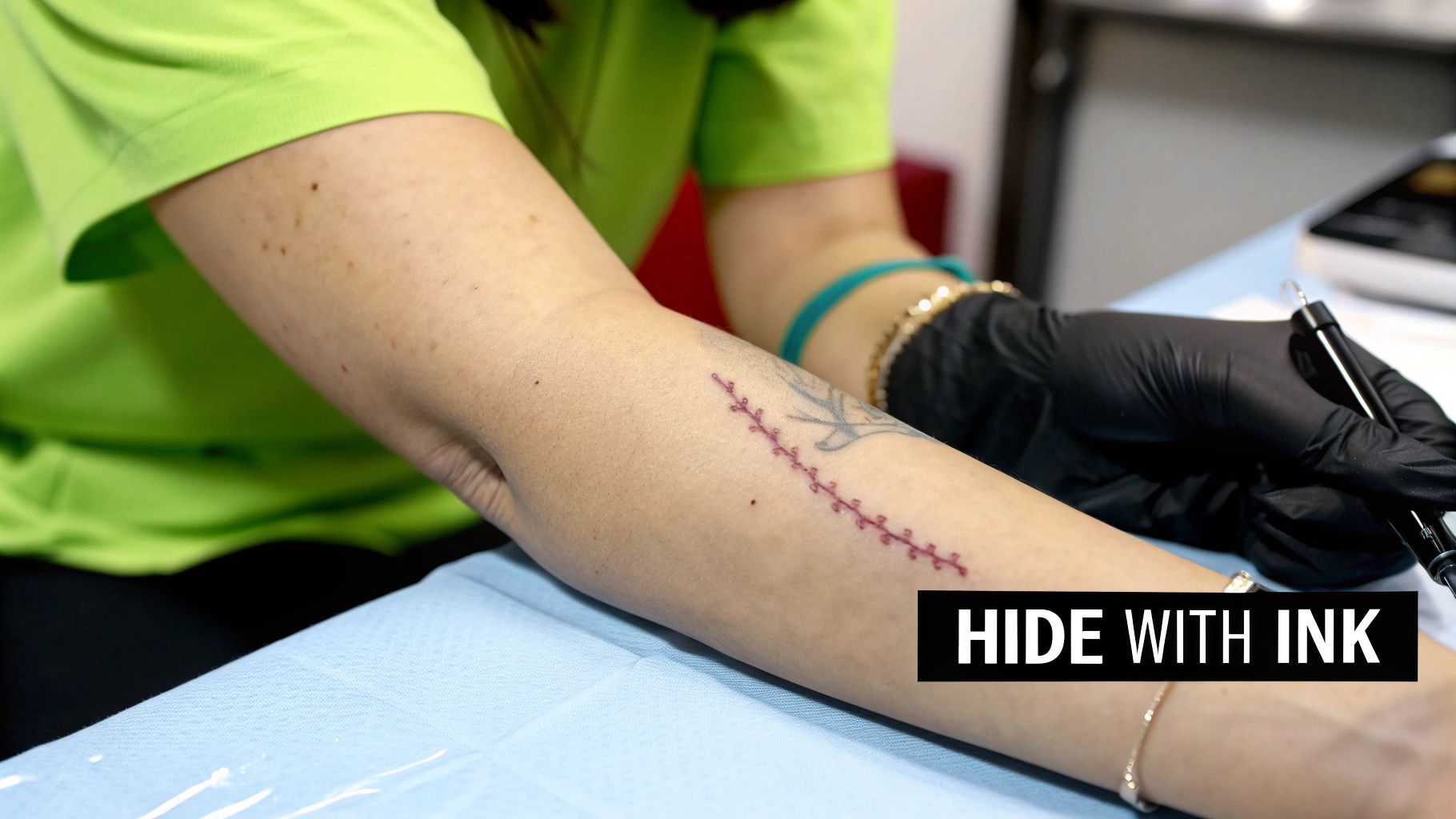
So, can a tattoo really make a scar vanish? Well, it's not quite that simple. This process isn't about erasing your history; it's about giving you the power to reframe it through artistry and skilled technique.
Essentially, you have two main roads you can go down to change how your scar looks. Each one offers a different way to feel more confident in your skin, turning something that might make you self-conscious into a feature you can feel good about. The right choice really comes down to what you want to achieve and the specifics of your scar.
The Two Main Approaches
First up is scar camouflage. The best way to think about this is like applying a permanent, expertly matched concealer. It’s a specialised form of paramedical tattooing where a technician carefully mixes skin-toned pigments to match your complexion perfectly. The whole idea is to get the scar to blend in so well with the surrounding skin that it just fades from view.
The other option is to use a decorative tattoo to cover the area. This approach doesn't just hide the scar—it makes it a part of a bigger piece of art. A skilled tattoo artist can design something that cleverly uses the scar's unique texture and shape, weaving it right into the artwork. It’s a powerful way to turn an old wound into a beautiful, meaningful statement.
Ultimately, the goal is to change how you feel about your scar. Whether you make it blend away or turn it into art, you’re taking back the narrative and making it your own.
A Specialised Solution for the Scalp
When it comes to scars on the scalp—often from hair transplant surgery (like FUT or FUE), injuries, or other procedures—there’s a brilliant solution called Scalp Micropigmentation (SMP). This technique is fantastic for concealing those scars and bringing back the look of a full head of hair.
SMP is different from a regular tattoo. It involves using tiny micro-needles to deposit specialised pigments as thousands of minuscule dots on the scalp. These dots perfectly mimic the appearance of real hair follicles, creating an illusion of density that blends seamlessly with your existing hair and covers the scar tissue.
If you're curious about the specifics, you can learn more about what Scalp Micropigmentation is and see how it works. In this guide, we'll explore all these options to help you see how art and technique can make a massive difference in restoring your confidence.
The Art and Science of Scar Camouflage
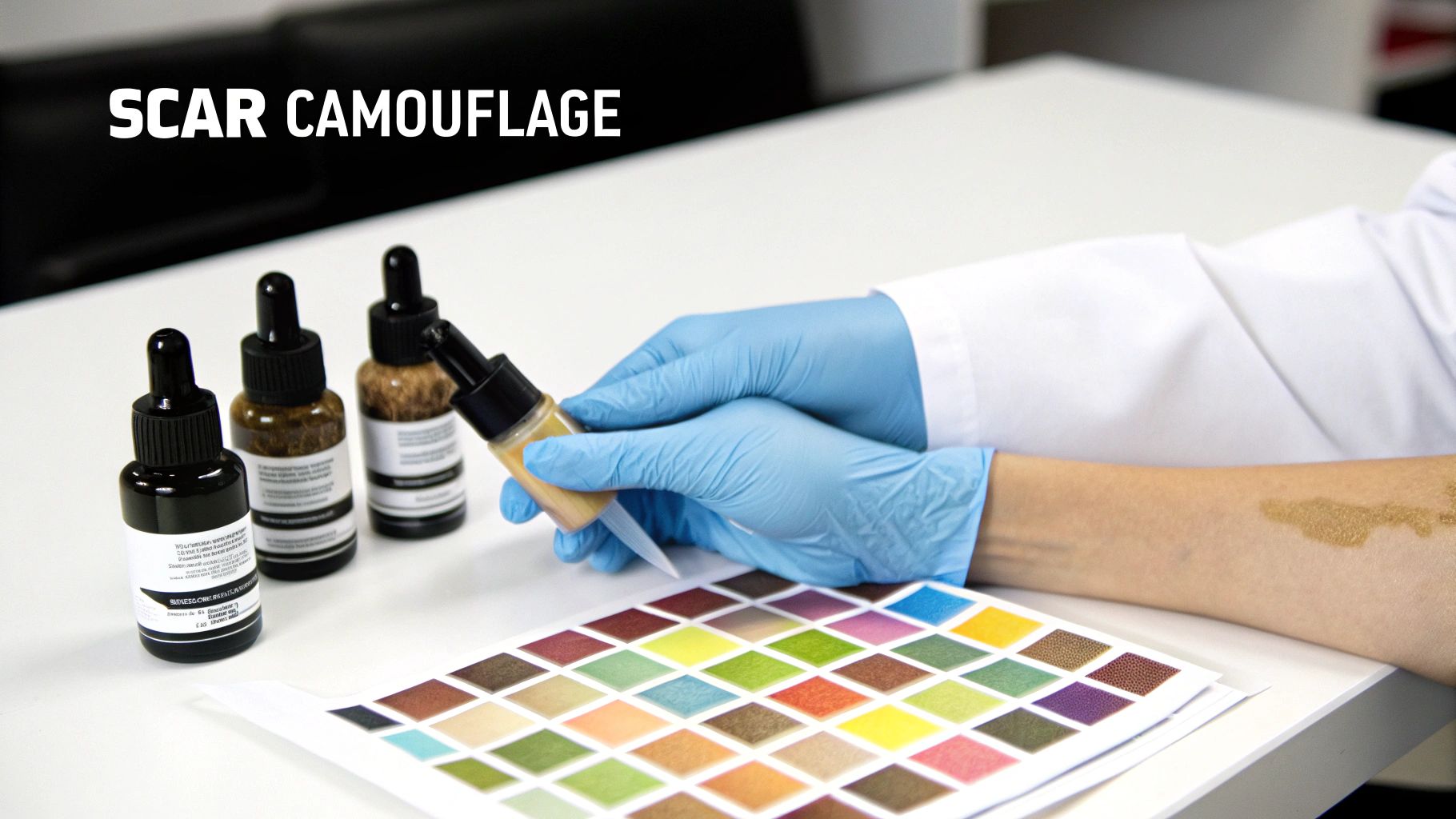
Scar camouflage is so much more than just tattooing over a blemish; it’s a sophisticated blend of artistry and skin science. Imagine a master artist restoring an old painting. They wouldn’t just slap a single colour over a crack. They’d painstakingly mix pigments to replicate the original hues and textures, making the damage seem to vanish.
That’s exactly the mindset of a skilled paramedical tattooist. They don't just grab a generic "skin tone" pigment. The whole process starts with a careful look at your skin, figuring out its unique tones and all the subtle undertones that make it yours.
Finding the Perfect Match
Your practitioner will meticulously custom-blend several pigments, creating a unique recipe that perfectly mirrors the skin around your scar. This isn't a one-size-fits-all job; it’s a bespoke process rooted in advanced colour theory, designed to help the scar fade into the background. A great first step is actually debunking myths on acne scarring and other scars to understand what's really going on with the skin.
This level of precision is why the initial consultation and a patch test are non-negotiable. During a patch test, the artist tattoos tiny, discreet dots of the mixed pigment near the scar. This gives you both a chance to see exactly how the colour heals and settles, ensuring the final result is as seamless as possible.
Which Scars Are Best for Camouflage?
Not every scar is a good candidate for this kind of work. The success of a scar removal tattoo really hinges on the scar's condition.
The best-case scenarios involve scars that are:
- Old Enough: The scar has to be completely healed, which usually means it's at least one to two years old. Tattooing a fresh scar is a no-go, as it's still changing on a cellular level.
- Lighter in Colour: Scars that are paler than your natural skin tone (hypopigmented) are ideal. Tattooing is brilliant at adding colour back into these areas.
- Smooth in Texture: The scar should be relatively flat. Pigment can do wonders for discolouration, but it can’t change the physical texture of the skin.
On the flip side, some scars just aren't suitable for tattooing and, in some cases, the process could even make things worse.
Important Note: Raised scars, like keloids or hypertrophic scars, are not suitable for camouflage. The trauma from the tattoo needle can actually trigger more scar tissue to form, making them even more prominent.
Scars that are still red, pink, or dark are also off the table because their colour hasn't stabilised yet. You absolutely have to wait until they've fully matured.
The Multi-Session Journey
Getting that perfect, natural blend is almost never a one-shot deal. Scar tissue is tricky; it doesn't take ink the same way healthy skin does. It often requires a very delicate, layered approach to build up colour in a way that looks completely real.
You should expect the process to take a few sessions, usually spaced several weeks apart to let the skin heal and the pigment settle in. Each appointment builds on the last, letting the technician fine-tune the colour and density. It’s this methodical process that ensures the final result is as invisible as possible. The concept of layering pigment is similar in scalp micropigmentation, which you can read about in our guide on how SMP works for hair loss. Understanding that this is a patient journey is key to setting realistic expectations and being truly happy with the outcome.
Scalp Micropigmentation for Head Scars
When it comes to scars on the scalp, often tucked away under your hair, Scalp Micropigmentation (SMP) is a game-changer. It's important to know this isn't your average body tattoo. SMP is a highly specialised cosmetic procedure, requiring unique tools like ultra-fine micro-needles and specific carbon-based pigments to get the job done right.
The artist meticulously tattoos thousands of tiny dots of pigment into the very top layer of your scalp. Each dot is expertly placed to mimic a natural hair follicle. When done by a skilled practitioner, this layered effect creates an incredible illusion of density, making scar tissue blend away seamlessly.
How SMP Hides Scalp Scars
SMP is particularly brilliant for covering up scars left behind by hair transplant surgeries. It works wonders on both the long, linear scars from Follicular Unit Transplantation (FUT) and the tiny, round scars common with Follicular Unit Extraction (FUE). Of course, it's also a fantastic solution for concealing scars from accidents or other surgeries on the head.
Think of the process as a journey, not a one-and-done appointment. It usually takes a few sessions, spaced a couple of weeks apart, to achieve the final look.
- The Initial Chat: First things first, you'll have a proper consultation. The practitioner will take a close look at your scar, your skin type, and your hair colour to map out a personalised plan for the most natural result.
- Layering the Pigment: Each session involves carefully layering more pigment to build up that illusion of density. This methodical approach is key to ensuring the colour and shading blend perfectly with your existing hair, so you can't tell where your hair ends and the scar begins.
- Creating a Natural Finish: The end goal is a look that either mimics a sharp, closely-shaved head or adds a sense of fullness to thinning spots. All the while, the scar itself becomes virtually invisible.
For anyone in Western Australia dealing with transplant scars or hair loss, SMP offers a powerful two-for-one benefit. It doesn't just hide the scar tissue; it restores the look of a fuller head of hair, which can be a massive confidence booster. You can dive deeper into how to conceal scars with scalp tattoos in our detailed guide.
The Bigger Picture in Australia
To really appreciate the value of precise pigment work like SMP, it helps to look at what’s happening in related fields. Take the Australian tattoo removal market, for example. It's expected to jump from $15 million in 2023 to a staggering $92.4 million by 2033.
This shows a huge demand for safe, advanced ways to alter skin appearance. Dermatology clinics lead the charge here, holding a 64.10% market share because they prioritise expert care and minimal scarring. This focus on preserving the skin’s integrity is exactly what SMP is all about—it creates an illusion without causing further damage. You can read more about the growing Australian tattoo market for more context.
A Real-World Example
Let’s put this into perspective. Imagine trying to camouflage a really obvious FUT scar. This type of surgery often leaves a long, linear scar across the back of the head, making shorter hairstyles a source of anxiety for many.
An SMP artist would start by mixing a pigment that’s a perfect match for the client's natural hair colour. Then, over two to four sessions, they would carefully place thousands of these tiny pigment dots inside the scar tissue and in the surrounding scalp. The pigment in the scar helps it match the skin tone, while the surrounding dots create a soft, feathered edge that completely erases the scar's hard line.
By the final session, that scar is no longer the focal point. Instead, the whole area just looks like a natural part of a full head of hair. Suddenly, the client has the freedom to cut their hair short without giving it a second thought. That’s the kind of life-changing result a well-executed SMP treatment can deliver.
Are You A Good Candidate for Scar Camouflage?
So, you’re thinking about scar camouflage. It’s a brilliant option for many people, but it’s not a one-size-fits-all solution. Figuring out if it’s the right move for you and your scar is the most critical first step. Think of your skin as a canvas – for the best result, the canvas needs to be properly prepped.
It's also important to set realistic expectations from the get-go. The goal here isn't to make the scar vanish into thin air. Instead, we're aiming for dramatic concealment. A successful scar removal tattoo makes the scar fade into the background so well that it's barely noticeable. Being honest about what's possible is the key to being thrilled with the outcome.
What Makes a Scar Ideal for Tattooing?
For a scar to be a great candidate for camouflage, it needs to tick a few boxes. These aren't just arbitrary rules; they exist to ensure the pigment settles correctly and the procedure doesn't do more harm than good.
An experienced practitioner will be looking for a scar that is:
- Properly Healed: This is non-negotiable. The scar should be at least one to two years old. All the pinkness or redness needs to have faded, and the underlying tissue must be completely settled.
- Flat and Smooth: Camouflage tattooing is a master of disguise when it comes to colour, but it can't change the physical texture of your skin. The flatter and smoother the scar, the more seamless the final result will be.
- Lighter Than Your Skin: Scars that are hypopigmented (meaning they're paler than the surrounding skin) are the perfect candidates. The entire process works by carefully depositing custom-blended pigment to add colour back in, bringing the scar's tone in line with the rest of your skin.
If you're dealing with a scar on your head, this quick decision aid can help you see if scalp micropigmentation might be a good fit.
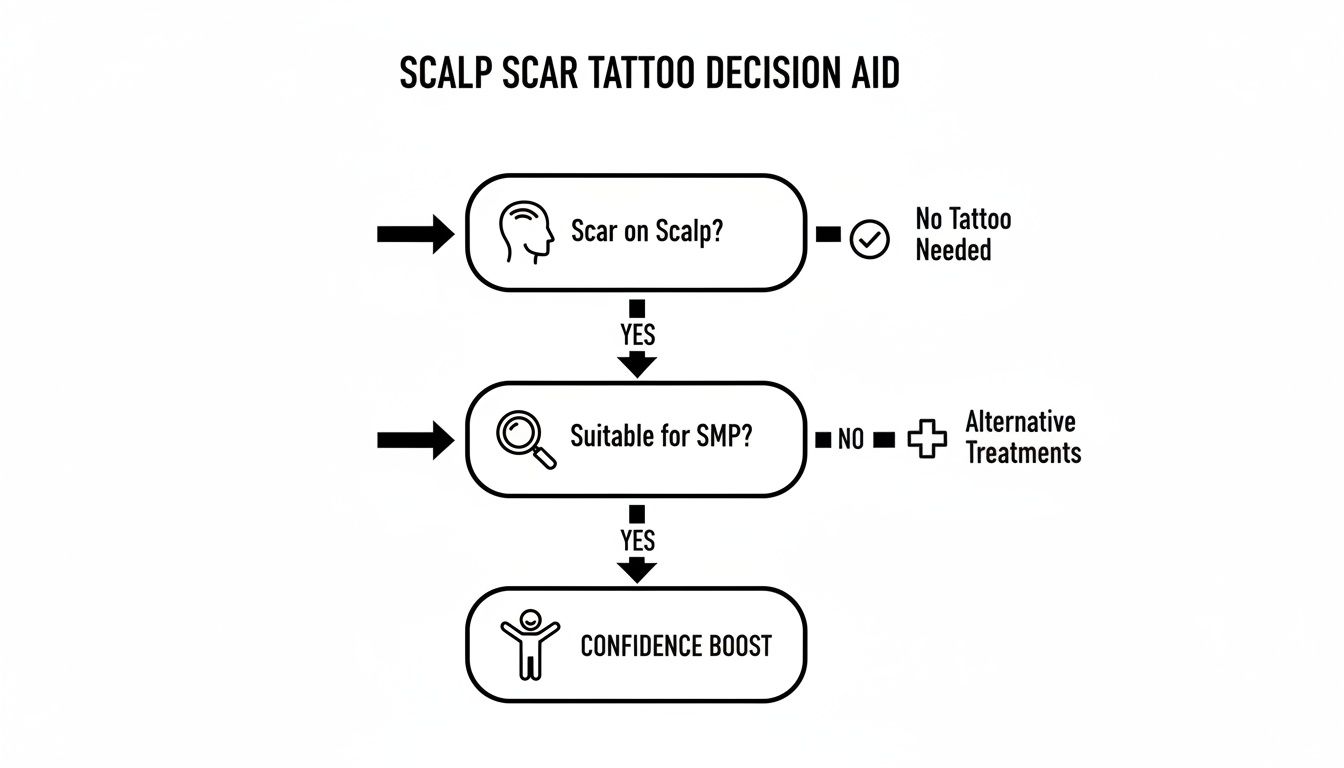
As the chart illustrates, the journey starts with having a scalp scar and moves through a quick assessment to see if SMP is the right path toward boosting your confidence.
When Scar Camouflage Is Off the Table
Just as important as knowing what works is understanding what doesn't. Trying to tattoo an unsuitable scar isn't just a waste of time and money; it can actually make things worse.
You might not be a suitable candidate if you have:
- A History of Keloid Scarring: Keloids are raised scars that have a tendency to grow well beyond the original injury site. The tattooing process involves creating tiny punctures in the skin, which can unfortunately trigger a keloid to grow even larger.
- Active Skin Conditions: If the scar or the skin around it is affected by eczema, psoriasis, or active dermatitis, the area can't be treated. You'll need to wait until the condition is fully resolved.
- Certain Medical Conditions: Any condition that impacts your immune system or your body's ability to heal can be a red flag. It's crucial to disclose your entire medical history to your practitioner.
- Dark or Red Scars: Hyperpigmented scars (darker than your skin) or those that are still red or purple aren't good candidates. Adding more pigment on top will likely just make them stand out even more.
It’s crucial to remember that a professional consultation is non-negotiable. An experienced practitioner will assess your scar in person to give you a definitive and safe recommendation.
To give you a clearer picture, I've put together a table that breaks down different scar types and their general suitability for camouflage.
Scar Suitability for Camouflage Tattooing
This table compares common scar types to help you understand which treatment might be most effective.
| Scar Type | Best Suited For Tattoo Camouflage? | Best Suited For SMP (on scalp)? | Potential Alternative Treatments |
|---|---|---|---|
| Atrophic (indented) | Sometimes, if shallow. | Yes, very effective. | Microneedling, Dermal Fillers |
| Hypopigmented (pale) | Yes, ideal candidate. | Yes, ideal candidate. | Laser Therapy (to stimulate pigment) |
| Hypertrophic (raised) | No, high risk. | No, high risk. | Silicone Sheets, Steroid Injections |
| Keloid (overgrown) | No, definite contraindication. | No, definite contraindication. | Surgical Revision, Cryotherapy |
| Burn Scars (contracture) | Case-by-case, requires expert review. | Case-by-case, texture is a key factor. | Skin Grafting, Physical Therapy |
Ultimately, every scar tells a unique story. While this guide gives you a solid foundation, only an in-person assessment with a skilled artist can determine the best course of action for you.
Exploring Other Avenues: Alternatives to Scar Tattooing
While tattooing is a fantastic way to camouflage a scar, it’s not the only tool in the shed. Think of it as one piece of a much larger puzzle. To make the best choice for your skin, it’s worth getting to know the full spectrum of options out there.
Sometimes, these other treatments are a complete solution on their own. Other times, they can actually be used to prep the skin, making it a better canvas for tattooing down the track. Let’s walk through some of the most effective and trusted alternatives, from high-tech procedures to simple at-home care.
Laser Therapy: Resurfacing and Rejuvenating
Laser therapy is one of the heavy hitters in the world of scar revision. It’s a clinical procedure that uses highly focused beams of light to remodel scar tissue from the inside out, tackling both colour and texture issues.
So, how does it work? It’s all about controlled energy. The laser can either gently remove the very top layer of scarred skin or, more commonly, send heat deep into the dermis to kickstart collagen production. This process is brilliant for reducing the redness in newer scars and can dramatically flatten those that are raised and lumpy (hypertrophic scars).
You’ll typically hear about two main types of lasers for this job:
- Ablative Lasers: These are the more intensive option. They essentially vaporise the outermost layer of skin, allowing smoother, fresh skin to heal in its place.
- Non-Ablative Lasers: This is a gentler approach. Instead of removing skin, it heats the tissue underneath the scar. This encourages the body to create new collagen, plumping and smoothing the area from within.
The technology here is seriously advanced. In Australia, the laser industry is a significant field—just look at laser tattoo removal, which was a $15 million market in 2023. The same sophisticated Q-switched and picosecond lasers used for shattering ink particles are often adapted for scar therapy. This really drives home how important it is to find a certified and experienced practitioner, especially in states like Western Australia where the industry is regulated for your safety.
Microneedling and Surgical Revision
Beyond lasers, a couple of other powerful techniques tackle scarring from different angles.
Microneedling, often called collagen induction therapy, is exactly what it sounds like. A specialised device with dozens of tiny, sterile needles creates microscopic punctures in the skin. This controlled micro-injury sends a signal to your body: "Time to heal!" The result is a surge in new collagen and elastin, which is incredibly effective for improving the texture of indented or atrophic scars, like those left behind by acne or chickenpox.
For scars that are particularly large, wide, or located in a high-movement area, surgical revision can be the best path forward. A plastic surgeon can actually excise the old scar tissue and meticulously re-stitch the incision. By using advanced suturing techniques, they can create a new, much finer and less noticeable scar.
It’s crucial to remember that these clinical treatments are only part of the story. How you care for your skin at home—especially keeping it hydrated and protected from the sun—makes a massive difference in the final result of any scar treatment.
Topical and Natural Options
Not every solution has to happen in a clinic. There are some excellent, accessible options you can use at home to support healing and improve how a scar looks over time.
Silicone sheets or gels are a tried-and-true, non-invasive treatment recommended by dermatologists for years. When you apply them consistently, they create a breathable, protective barrier over the scar. This locks in moisture, softens the tissue, and can help flatten raised scars while reducing redness.
Many people also explore natural remedies to support their skin's healing journey. For instance, some find success with things like using aloe vera on scars as a complementary treatment. While results will always vary from person to person, these approaches can be a gentle way to nurture the skin.
Aftercare, Healing, and What to Expect Long-Term
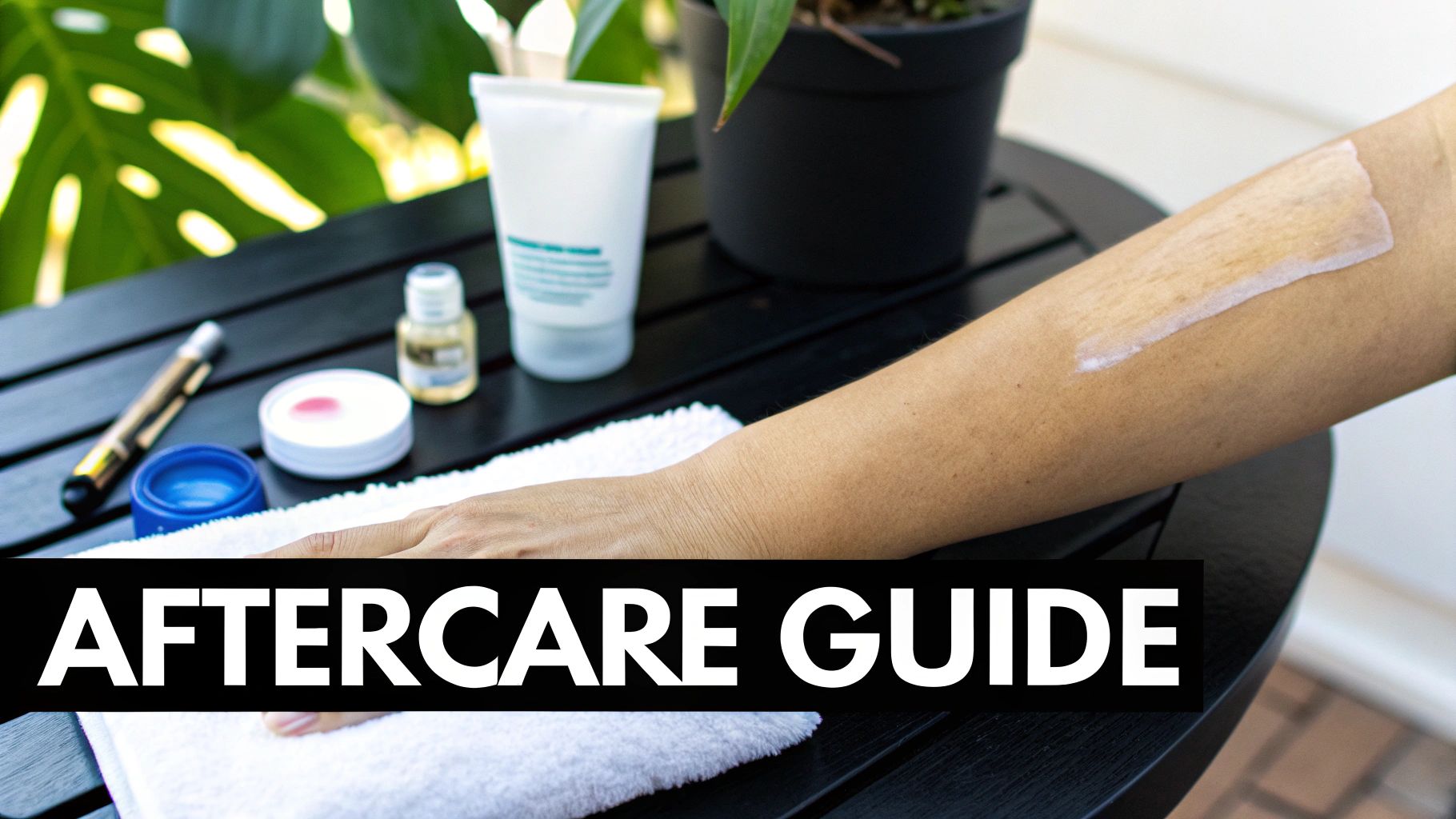
Starting a scar camouflage journey is more than just the procedure itself. It’s a process, and knowing what’s involved—from the very first chat to looking after your results years down the track—is the key to feeling confident and getting that seamless, natural look you’re after.
It all kicks off with a detailed consultation. This is where a specialist gets to know you and your scar, looking closely at its age, texture, and colour. More importantly, they’ll talk with you about your goals. From there, they’ll perform a patch test, trying out a few custom-mixed pigments on a small, hidden patch of skin. This step is non-negotiable; it ensures your skin is happy with the ink and shows exactly how the colours will heal.
Once you’ve landed on the perfect pigment blend, it’s time for the main event. Your artist will use highly specialised tattooing techniques to carefully deposit the pigment into the scar tissue. A topical numbing cream is usually applied beforehand to make sure you’re comfortable throughout.
The All-Important Healing Phase
The first two weeks post-procedure are absolutely critical. Think of it as protecting your investment—how you care for the area now will directly shape the final look of your scar removal tattoo. Your skin will be sensitive, and following your practitioner’s advice to the letter is the best way to avoid infection and help the pigment settle in beautifully.
You’ll be given a specific aftercare plan, but most will include these core rules:
- Clean Gently: Use a mild, fragrance-free soap. No scrubbing or harsh rubbing.
- Keep it Moisturised: Apply the recommended healing ointment to keep the skin hydrated and stop thick scabs from forming.
- Stay Dry: Steer clear of pools, saunas, and hot tubs. They’re a breeding ground for bacteria that can cause trouble.
- Block the Sun: This one’s a biggie. UV rays are the enemy of fresh pigment and will cause it to fade fast. Keep the area covered and out of direct sunlight.
If your treatment was on the scalp, the aftercare is a little different. For some extra guidance, check out our guide on the 5 top tips to care for your scalp after SMP.
A heads-up: the colour will look way too dark and bold right after the session. Don't panic! This is completely normal. It takes about four to six weeks for the pigment to fully settle into the skin and soften to its intended, natural-looking shade.
Long-Term Reality and Touch-Ups
Scar camouflage is often called a permanent solution, but it’s designed to fade subtly over time. Things like sun exposure, your body’s natural skin cell turnover, and your lifestyle all play a part in how long it lasts. On average, you can expect the results to look their best for three to seven years.
When you eventually notice the pigment lightening, there’s no need for a full do-over. A simple touch-up session, or "colour boost," is all it takes to refresh the pigments and bring the area back to life.
This idea of long-term maintenance is becoming more common across Australia’s cosmetic industry. Just look at the tattoo removal market, which was valued at $15.0 million in 2023 and is expected to hit $92.4 million by 2033. This growth shows a clear trend: people are actively managing their skin’s appearance over the long run, whether it's removing old ink or refreshing cosmetic enhancements.
Common Questions About Scar Tattooing
It’s completely normal to have a lot of questions when you’re thinking about scar camouflage or a decorative cover-up. Getting good, honest answers is the first step toward feeling confident and ready. Let's walk through some of the most frequent queries we hear, covering everything from the sensation to how long your results will last.
Does Tattooing a Scar Hurt More Than Normal Skin?
This is a big one, and the honest answer is: it can. Pain is always personal, but many people find that scar tissue feels more sensitive than regular skin. The nerve endings in the area have been altered, which can make them a bit more tender during the procedure.
The good news is that an experienced artist who specialises in scar removal tattoos knows exactly how to handle this. They use a much lighter touch and specific techniques to keep you comfortable. On top of that, we always apply a strong topical numbing cream before we start, which makes a massive difference and ensures the whole process is very manageable.
What’s the Cost of Scar Camouflage in Australia?
The price tag for scar camouflage really depends on the scar itself—its size, how complex it is, and where it is on your body. For a small, straightforward scar, you might be looking at a few hundred dollars to get the job done.
For more extensive or detailed work, the cost can go up into the thousands. A great example is Scalp Micropigmentation (SMP) for head scars, which typically runs anywhere from $800 to $3,000+ here in Australia. That price reflects the multiple sessions needed (usually two to four) to get that seamless, undetectable blend. The only real way to know for sure is to come in for a consultation where we can give you a precise quote.
Remember, this is a highly specialised skill. You're not just paying for ink; you're investing in the artist's expertise, premium pigments, and a custom treatment designed just for you.
How Long Will a Scar Camouflage Tattoo Last?
We consider the treatment permanent, but the specialised pigments we use are designed to fade gracefully over the years. The number one thing that affects how long it lasts is the sun. UV exposure is the fastest way to break down the pigment, so protecting it is key.
Your skin type and lifestyle also have a say in its longevity. Generally, you can expect the results to look their best for three to seven years. After that, a simple "colour boost" or touch-up session is all you’ll need to refresh the area and keep it looking perfect. If you ever do reconsider your options later on, it's worth knowing how scalp micropigmentation can be removed.
Can You Tattoo Over Any Kind of Scar?
Unfortunately, no. Not every scar is a good candidate for tattooing. For the best and safest outcome, we need the scar to be at least one to two years old, fairly flat, and lighter than your natural skin tone (what we call hypopigmented).
There are also some definite no-gos. We can't work on raised scars, like hypertrophic or keloid scars, because the tattooing process can actually make them worse by stimulating more scar tissue growth. Scars that are still very new, red, or dark also need to be left alone. This is why a professional consultation is so important—it’s the only way to know for sure if your scar can be treated safely and effectively.