

Scalp Tattoo for Thinning Hair: Achieve Natural Density
If you're dealing with thinning hair, you've likely heard of a procedure called a "scalp tattoo." This isn't your typical body art; it's a highly specialised, non-surgical treatment officially known as Scalp Micropigmentation (SMP).
At its core, SMP involves using tiny microneedles to deposit minuscule dots of pigment onto the scalp. The whole idea is to cleverly reduce the stark contrast between your hair colour and your scalp colour, which is what makes thinning so obvious. It’s a brilliant way to instantly create the look of a fuller, denser head of hair.
What Is a Scalp Tattoo
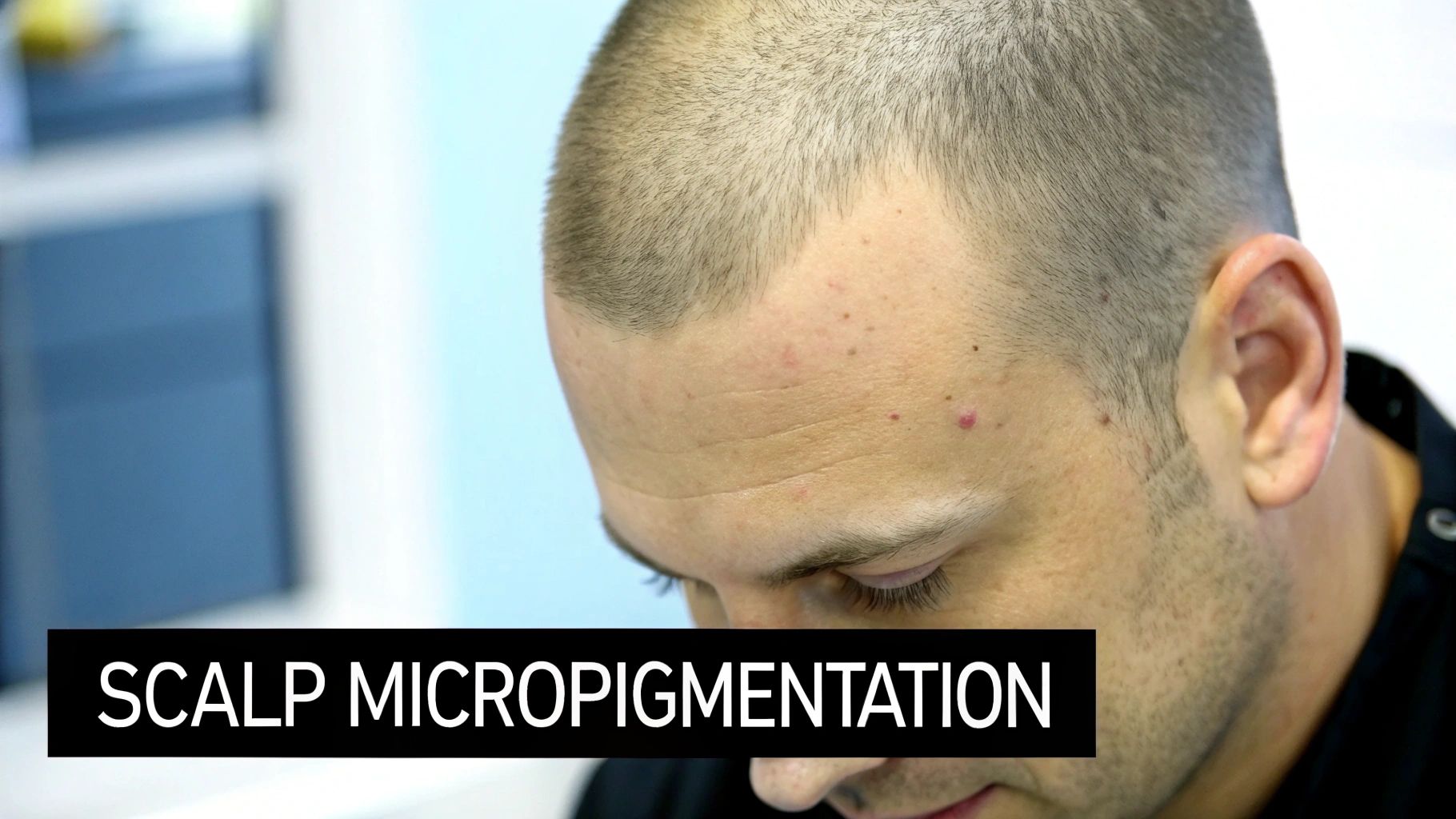
Let's clear up what "scalp tattoo" really means. Forget the bold lines and solid colours of traditional tattoos. SMP is a cosmetic technique that’s far more refined, almost like a form of artistic pointillism designed specifically for the scalp.
An experienced practitioner uses state-of-the-art equipment to place thousands of layered pigment dots into the upper layer of the skin. Each impression is meticulously placed to mimic the look of a natural, individual hair follicle.
The goal isn't to draw on hair, but to build up a soft shadow effect across the scalp. This technique masterfully conceals thinning patches, giving your existing hair a much denser and fuller appearance.
This process has become a real game-changer for people looking for a fast, non-invasive solution to hair loss. It doesn't involve any hair growth products or surgery, yet you walk out with a restored look of fullness right after your first session. It's an amazing option for anyone with a busy lifestyle who wants to see immediate results.
Considering that over 70% of men in Australia will face some form of hair loss by the time they hit 50, it's no surprise that practical solutions like SMP are in high demand. If you want to dive deeper, you can find out more about what is scalp micropigmentation on our detailed guide.
Why It Works So Well
The magic of a scalp tattoo for thinning hair is all in the execution. Rather than trying to regrow lost hair, it simply enhances the look of the hair you still have.
- Immediate Visual Impact: The treatment instantly adds a darker shade to the scalp, which dramatically reduces the noticeable contrast that highlights thinning areas.
- Custom Blended Pigments: The pigments are carefully mixed to perfectly match your unique hair and skin tone, making the final result incredibly natural and virtually undetectable.
- Long-Lasting Solution: Here in Perth's sunny climate, aftercare is crucial. Keeping your scalp out of direct sun and using a good SPF 30+ will prevent fading. With proper care, you'll only need a touch-up every 4-6 years.
How SMP Builds the Illusion of Density
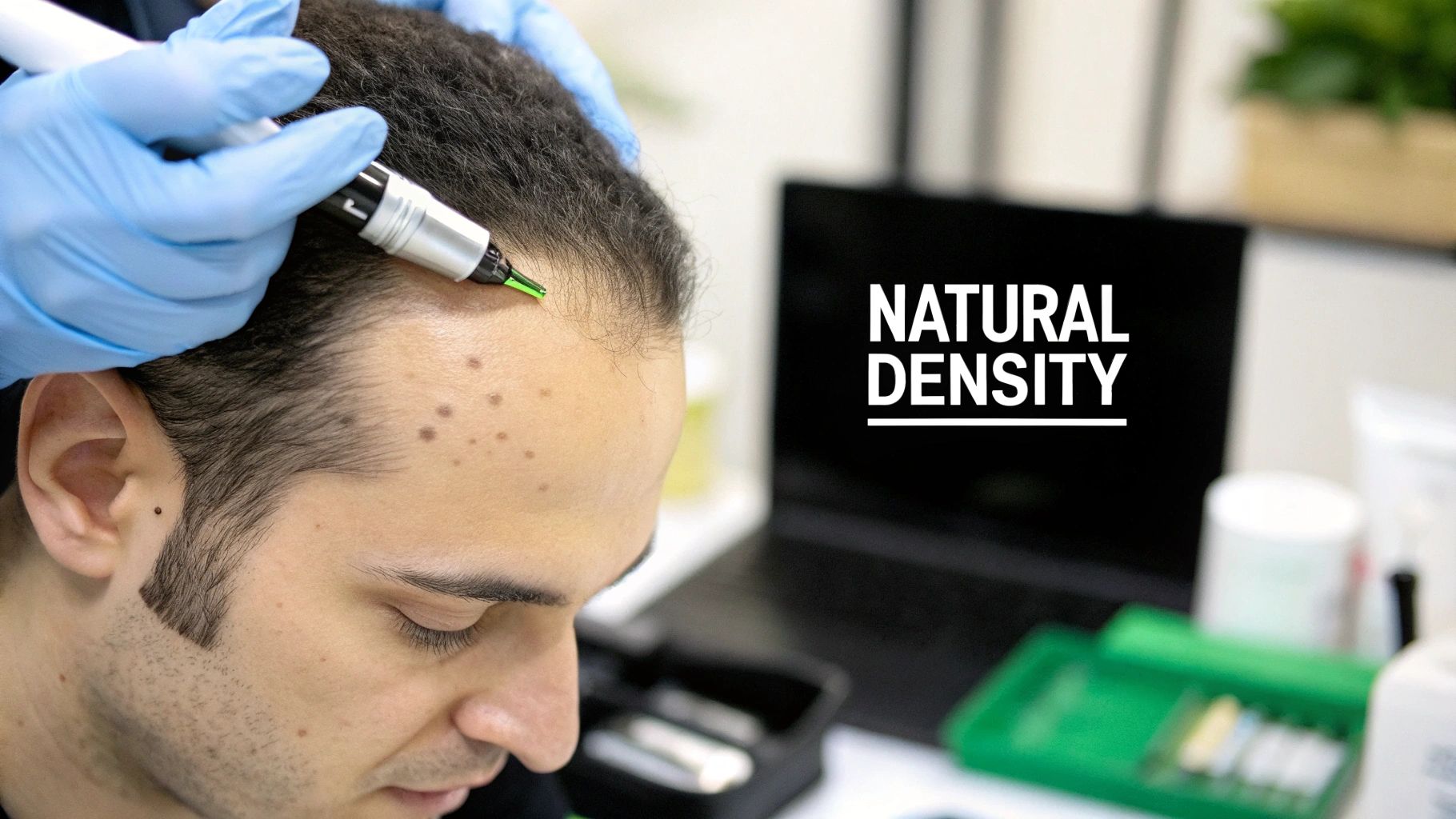
The real magic behind a scalp tattoo for thinning hair is its ability to create a convincing illusion of depth. It's not about drawing on fake hairs. Instead, it’s a highly skilled technique that replicates the look of thousands of tiny, individual hair follicles, which in turn makes your existing hair look worlds thicker.
This isn’t just a simple tattoo; it’s a detailed art form that requires a solid grasp of colour theory, precision, and an understanding of the scalp itself. Every single step is thought out to make sure the final result is natural and blends in perfectly.
The Foundation of a Natural Look
The secret to getting it right begins with the pigment. Long before a needle ever touches your skin, a skilled practitioner will custom-blend pigments to find the perfect shade for your unique hair colour and skin tone. This is far from a one-size-fits-all job; the colour has to complement your skin's undertones, otherwise it just won't look right.
With the perfect shade mixed, the practitioner uses specialised equipment to carefully deposit these pigments into the upper dermal layer of the scalp. The depth here is crucial. If it’s too shallow, the pigment will fade quickly. Too deep, and the dots can blur and spread, losing that crisp, follicle-like appearance.
The aim is to create something that looks like a permanent 'five o’clock shadow' on the scalp. This subtle stippling effect darkens the scalp, which massively reduces the contrast between your hair and skin, making thin areas look full again.
Building Density Dot by Dot
Creating that look of fullness is a gradual process, usually built up over two to four sessions. Think of it as a layering process, where each appointment adds another level of definition and density.
The placement of each dot is strategic. A great technician doesn't just randomly fill in a bald patch. They meticulously place every single pigment deposit to imitate the slightly irregular, natural pattern of real hair growth.
This careful, layered approach achieves a few things:
- Mimics Hair Follicles: Each tiny dot is a perfect imitation of a freshly shaven hair follicle just breaking through the scalp.
- Creates Visual Depth: By layering different shades or densities of the pigment, the treatment creates a 3D effect that tricks the eye into seeing more thickness.
- Camouflages Thinning: The pigment effectively masks the pale scalp showing through in sparse areas, like at the crown or along your parting.
The final result is a subtle but seriously effective change. Thinning patches are filled in, giving your overall hairstyle a much stronger and more solid foundation. To see how this all comes together, you can dive deeper into the thread-by-thread scalp micropigmentation process and see the artistry for yourself. It’s what turns sparse areas into a seamless, confident look.
Is a Scalp Tattoo the Right Choice for You?
So, you're wondering if a scalp tattoo is the right move for you. It's a big decision, and the answer really comes down to your unique situation and what you're hoping to achieve. Scalp Micropigmentation isn't a blunt instrument; think of it more like a fine-tipped pen. Its real magic is in its adaptability, whether you're dealing with overall thinning, a receding hairline, or even scars.
This isn't a one-size-fits-all solution. A good SMP artist customises their approach to create a subtle, natural enhancement that works with your existing hair. It’s all about creating the illusion of density, rebuilding a hairline that suits your face, or masterfully camouflaging imperfections.
Let's break down who typically gets the best results from SMP.
Ideal Candidates for Scalp Micropigmentation
SMP is a game-changer for some of the most common hair loss patterns. If any of these sound familiar, you might be the perfect candidate.
- Women with Diffuse Thinning: Many women experience thinning hair right across the scalp. This often makes the parting line look wider and the scalp more visible. SMP is brilliant for this; a skilled practitioner can add a soft shadow of pigment to reduce that stark contrast between your hair and scalp, giving an instant impression of thicker hair.
- Men with Thinning Crowns: That classic thinning spot at the back of the head? SMP can make it disappear. By carefully layering tiny pigment dots between the existing hairs, the artist builds up a look of natural density, making the crown appear full again.
- Individuals with Alopecia: For those with patchy hair loss from alopecia areata, SMP can be used to expertly fill in and blend the bare spots. For more extensive alopecia, it can even be used to recreate a complete, natural-looking hairline for a clean, buzzed look.
SMP’s versatility is its greatest asset. It can restore a soft, natural hairline, add density to thinning areas, or create the appearance of a full head of hair for someone who prefers a shaved-down look.
To give you a clearer picture, let's look at how SMP tackles different types of hair loss.
SMP Suitability for Different Hair Loss Types
| Hair Loss Type | How SMP Helps | Ideal Candidate Scenario |
|---|---|---|
| Diffuse Thinning | Creates a 'shadow' effect on the scalp, reducing the contrast between hair and skin to make hair appear fuller and denser. | A woman with thinning across the top of her scalp who wants to wear her hair down without the scalp showing through. |
| Receding Hairline | Rebuilds and redefines the hairline by adding pigment dots to frame the face, creating a sharper, more youthful look. | A man in the early stages of male pattern baldness who wants to restore a natural-looking, age-appropriate hairline. |
| Crown Balding | Fills in the thinning area at the crown by layering pigment deposits among existing hair follicles for a seamless, dense appearance. | Someone with a noticeable bald spot on the back of their head who wants it to look completely filled in. |
| Alopecia Areata | Camouflages patchy bald spots by matching the pigment to the surrounding hair, making the patches far less noticeable. | An individual with distinct, round patches of hair loss who wants to blend them in without daily cover-ups. |
| Total Hair Loss | Creates the look of a full head of hair with a 'buzz cut' or freshly shaved style by meticulously recreating an entire hairline and density. | Someone who has lost most or all of their hair and wants a clean, low-maintenance, and permanent shaved-head look. |
Ultimately, SMP is about restoring confidence by creating a look that feels right for you, no matter the specific pattern of your hair loss.
Camouflaging Scars and Enhancing Transplants
One of the most impressive uses for a scalp tattoo for thinning hair is covering up scars. Whether it’s from an old injury or a hair transplant surgery (especially the linear scars from FUT procedures), a scar on the scalp can be a real confidence-killer. SMP is incredibly effective at blending these scars into the surrounding scalp, making them practically invisible.
It also works hand-in-hand with hair transplants. Sometimes a transplant can restore hair, but you're left wishing for a bit more density. SMP is the perfect finishing touch. An artist can work between the transplanted follicles, adding pigment to create a much thicker and fuller look.
Of course, cosmetic solutions are just one part of the puzzle. It's always wise to support your hair from the inside out, and many people look to a comprehensive guide to vitamins for hair, skin, and nails to ensure they’re getting the right nutrients.
Finally, the condition of your scalp matters. The best results are seen on healthy skin. If you have active, severe acne, eczema, or psoriasis in the area you want treated, it could interfere with how the pigment settles. A good practitioner will always start with a thorough consultation to make sure your scalp is ready for the procedure.
Your Step-by-Step Scalp Micropigmentation Journey
So, you're thinking about getting a scalp tattoo for thinning hair? It's a big decision, and knowing exactly what’s involved can make all the difference. Let's walk through the process from start to finish so you know what to expect and can feel completely comfortable. The whole journey is designed around you, aiming for a result that looks incredibly natural and matches what you’re hoping for.
Everything kicks off with a proper chat—the consultation. This is probably the most important part of the whole thing. It’s where you’ll sit down with a practitioner to map out your goals, look at your specific hair loss pattern, and design a hairline that actually suits your face and age. Think of it as a strategy session for your new look.
The Treatment Sessions
The real magic happens over a series of sessions. You’re not going to get this done in one hit. We're talking two to four appointments, each lasting a couple of hours. This staged approach is deliberate; it allows us to build up the density slowly, creating layers just like real hair. Rushing it would just look fake.
Here’s a breakdown of how the appointments usually go:
- First Session: This is all about laying the groundwork. Your practitioner will apply the first layer of tiny pigment dots, establishing the framework of your new hairline and creating a subtle base of density. Your scalp might be a little red afterwards, but that usually settles down within 24 hours.
- Subsequent Sessions: These follow-up appointments, usually spaced about a week apart, are where the artistry comes in. The practitioner adds more layers of pigment, sometimes with a slightly darker shade, to build up that three-dimensional, "just-shaved" look. It’s this careful layering that makes the final result so convincing.
Most people find the sensation totally manageable, describing it as a light tapping or a bit of a buzz on the scalp. It's generally a lot less intense than a traditional tattoo.
This visual gives you a great idea of how the SMP process is tailored, whether you're looking to add density, hide scars, or rebuild a hairline from scratch.
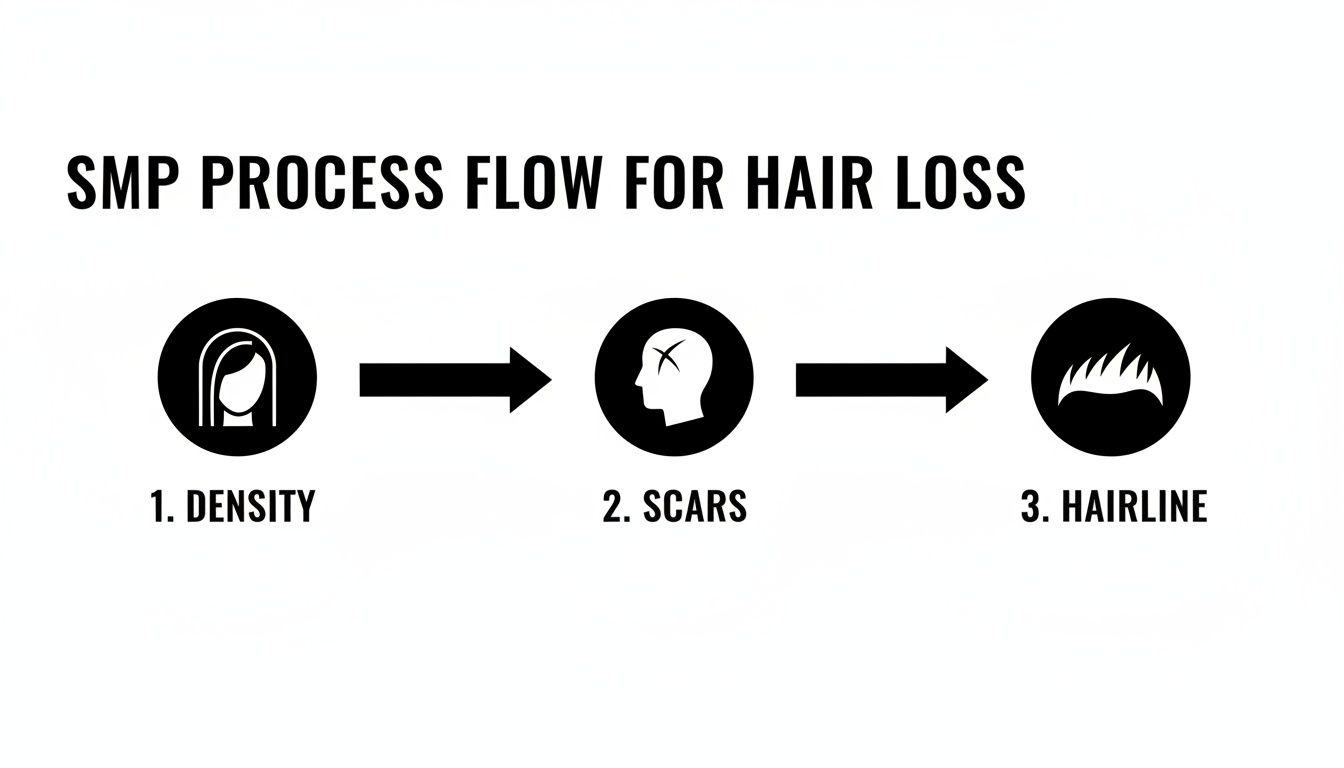
As you can see, it’s a versatile solution that can be customised for all sorts of hair loss scenarios.
Aftercare and Healing
Looking after your scalp post-treatment is crucial. Think of it as protecting your investment. For the first few days after each session, there are a few simple rules to follow that make a huge difference to the final outcome.
The main goal is to let the pigment settle into the skin properly, without anything getting in the way. This means no heavy sweating, staying out of the sun, and definitely not washing or scrubbing your head for at least four days.
Once you're past that initial healing window, you can get back to your normal routine. The pigment will continue to settle over the next few weeks, revealing the final, polished result. If you want a deeper dive into the specifics, have a look at our guide on what the process of getting a hair tattoo involves.
Here in Australia, leading practitioners find that with the right care—especially being smart about our harsh sun—the results can last a solid 4-6 years before you'd even think about a touch-up. The best part? There’s no scarring, and any redness is usually gone within hours, so you can get back to your life without any real downtime.
Breaking Down the Cost of SMP in Australia
Alright, let's talk numbers. One of the first questions on anyone's mind is, "What's this going to cost me?" And that's completely fair. When it comes to a scalp tattoo for thinning hair, it's helpful to think of it less as a one-off purchase and more as a long-term investment in how you look and feel.
Unlike buying something off the shelf, SMP doesn't have a universal price tag. The final cost is shaped entirely by your unique situation. Think of it like commissioning a custom suit—the price depends on the amount of material needed and the complexity of the tailoring.
Key Factors That Determine Your Price
The two biggest things that influence the final cost are the extent of your hair loss and the total area that needs treatment. To get a really accurate picture, practitioners use industry-standard guides to map it all out:
- The Norwood Scale is the go-to for assessing male pattern baldness.
- The Ludwig Scale helps classify female pattern thinning.
It makes sense when you think about it. Someone just looking to add a bit of density to their crown will naturally have a lower cost than someone needing a completely new hairline built from scratch and coverage across the entire top of their scalp. More area simply means more time, more pigment, and more sessions.
Simply put, the cost of SMP is a direct reflection of the work needed to create a seamless, natural-looking result that is unique to you. It's a tailored solution, not a one-size-fits-all procedure.
Typical Price Ranges in Australia
So, what can you actually expect to see on a quote? To give you a realistic ballpark figure, SMP treatments for thinning hair in Australia generally fall into these brackets, based on local clinic data:
- Mild Thinning (Norwood 1-2): If you're just looking to reinforce a hairline or add some light density, you're likely looking at a starting range of $500 - $1,200 AUD.
- Moderate Thinning (Norwood 3-5): This stage usually involves more significant work on the crown or larger thinning patches, with costs typically sitting between $1,500 - $2,500 AUD.
- Advanced Thinning (Norwood 6-7): For those needing extensive coverage across most of the scalp, the investment usually lands somewhere in the $2,200 - $3,200+ AUD range.
For a deeper dive into what these prices include, check out our complete guide on scalp micropigmentation cost in Australia.
When you stack this one-time investment against the ongoing cycle of buying medications, messy topical treatments, or the much higher price tag of a surgical transplant, SMP often stands out as the most sensible and permanent solution for getting that look of thicker, denser hair back.
Protecting Your Investment with Long Term Care
Your scalp micropigmentation is built to last, but a few simple habits are all it takes to keep it looking sharp and fresh for years. Think of your scalp tattoo as a serious investment in your confidence, and like any good investment, a little maintenance goes a long way.
The number one rule? Sun protection. The sun's UV rays are the biggest enemy of your pigment, and too much direct exposure will cause it to fade over time. This is especially true here under the harsh Australian sun.
Making sun protection a daily habit is the best insurance policy for your SMP. Slap on a high-SPF sunscreen (SPF 50+) or just wear a hat when you know you'll be outdoors. It's that simple, and it will keep your results looking crisp and defined for much, much longer.
Maintaining Pigment and Skin Health
Beyond just shielding it from the sun, keeping your scalp healthy is crucial for preserving your SMP. Healthy, hydrated skin doesn't just feel better—it helps maintain the sharp appearance of each tiny pigment dot.
Using a simple, light moisturiser every day prevents dryness and flaking, which keeps the skin supple. This small step helps the individual impressions stay clear and distinct, preventing them from blurring together over the years. For a deeper dive, check out our 5 top tips to care for your scalp after SMP to really nail down your routine.
Finally, it's worth remembering that touch-ups are a totally normal part of the SMP journey. Even with the best care, the pigment will naturally soften a little over several years. A quick touch-up session, usually every 4 to 6 years, is all that’s needed to bring back that fresh colour and vibrancy. It’s just a simple tune-up to ensure your scalp tattoo continues to give you that incredible look of density you paid for.
Got Questions About Scalp Tattoos? Let's Clear Things Up.
Thinking about scalp micropigmentation is a big step, and it’s completely normal to have a list of questions running through your mind. Getting the right information is crucial for feeling good about your decision, so let's tackle some of the most common things people want to know before getting a scalp tattoo for their thinning hair.
We'll walk through the details, giving you straight-up, honest answers so you know exactly what to expect.
Is Getting a Scalp Tattoo Painful?
Most people are surprised by how manageable it is. The feeling is often described as a light, consistent tapping on the skin—nowhere near as intense as getting a regular tattoo.
Some spots on the scalp can be a bit more sensitive than others, but your practitioner will apply a topical numbing cream to make sure you're comfortable from start to finish. Any slight tenderness you might feel usually disappears as soon as the session ends.
For any reputable clinic, your comfort is the top priority. The whole process is non-invasive, and the feeling afterwards is often compared to a very mild sunburn that fades within a day.
Will It Damage the Hair I Still Have?
Not at all. This is a big concern for many, but you can rest easy. The pigment is placed into the upper dermis of your scalp, which is a shallow layer well above your actual hair follicles.
This means the treatment is superficial and won't mess with your natural hair growth cycle one bit. In reality, SMP is designed to complement your existing hair, giving it a much fuller look without affecting its health.
- How long do the results last? SMP is considered a permanent solution. Over time, things like sun exposure and the skin's natural exfoliation process can cause the pigment to lighten slightly. A quick touch-up every 4-6 years is typically all it takes to bring it back to its original depth and vibrancy.
- Can I still shave my head? Absolutely. If your hair loss continues down the track and you choose to shave your head completely, the SMP treatment creates a flawless foundation for a clean, sharp buzz-cut look that looks 100% natural.
Ready to transform your look and regain your confidence? My Transformation specialises in creating natural, life-changing scalp micropigmentation results. Book your free consultation today at https://rightwing-health.info/a%3E.%3C/p%3E