

Scalp Micropigmentation Regrets And How To Avoid Them
Staring in the mirror, wondering if you'll end up with scalp micropigmentation regrets, is a completely normal part of the process. The good news? Regret rarely comes from the treatment itself. It almost always traces back to preventable issues like picking an inexperienced artist, having unrealistic expectations, or skimping on aftercare.
Knowing what can go wrong is the single best way to make sure everything goes right. It arms you with the knowledge to get a result you'll genuinely love for years.
Understanding Why SMP Regrets Happen
Scalp micropigmentation can be an incredible, confidence-boosting solution for hair loss, but like any specialised procedure, a great outcome isn't automatic. When things do go wrong, it's almost never a mystery. The cause can usually be pinpointed to a handful of critical, avoidable mistakes made right at the start.
Think of it like building a house. If the foundation is shaky, the whole structure will have problems. With SMP, your "foundation" is the research you do, the practitioner you choose, and the realistic expectations you set.
Most of the time, the biggest driver behind SMP regret is simply a lack of artist experience. Someone without a deep, practical understanding of different skin tones, correct pigment depth, and the art of designing a natural hairline can easily create a look that just feels... off.

The Most Common Pitfalls
So, what are the red flags to watch for? Several key factors often lead to a disappointing result, and they usually work in tandem, creating a perfect storm of dissatisfaction.
Here are the main reasons people experience regret:
- Inexperienced Practitioners: An artist without proper training might use the wrong technique, causing "blowouts" (blurry, oversized dots) or a colour that looks completely unnatural.
- Unrealistic Hairline Design: A hairline that's too sharp, sits too low, or doesn't match your age and facial structure is a classic rookie mistake and a huge source of regret.
- Incorrect Pigment Choice: Using the wrong shade or a low-quality ink is a recipe for disaster. This is what causes the pigment to fade into that dreaded blue or greenish tint over time.
- Poor Aftercare Adherence: The artist's work is only half the battle. If you don't follow the aftercare rules—like staying out of the sun and avoiding harsh shampoos—you can seriously compromise the final result and cause it to fade quickly.
To give you a clearer picture, here’s a quick summary of what to look for and how to steer clear of these common issues.
Common SMP Regrets And Prevention Strategies
| Cause of Regret | What It Looks Like | How to Prevent It |
|---|---|---|
| Inexperienced Artist | Dots are too large (blowouts), uneven density, unnatural patterns. | Thoroughly vet practitioners. Check their portfolio, read reviews, and ask for client testimonials. |
| Poor Hairline Design | A sharp "helmet" look, too straight, too low for your age, or asymmetrical. | Look for an artist who designs soft, natural, and age-appropriate hairlines. Insist on a collaborative design process. |
| Wrong Pigment Colour | The treatment turns a noticeable blue or green shade as it fades over the years. | Choose an artist who uses high-quality, carbon-based pigments and understands colour theory for your specific skin tone. |
| Neglecting Aftercare | Premature fading, patchy results, or skin irritation. | Follow the aftercare instructions perfectly. This means no sun, no sweat, and no harsh products for the recommended time. |
Ultimately, avoiding these problems comes down to being an informed and proactive client.
The journey to a fantastic SMP result begins long before you ever sit in the artist's chair. It starts with education, careful vetting, and a crystal-clear understanding of what the procedure can and can't do. Rushing this initial phase is the fastest way to get a result you might later regret.
When you know what to look for and understand the basics, you're in a much better position to make a confident choice. A great place to start is by learning more about what scalp micropigmentation is and how the whole process works.
The Root Causes Of A Bad Hair Tattoo
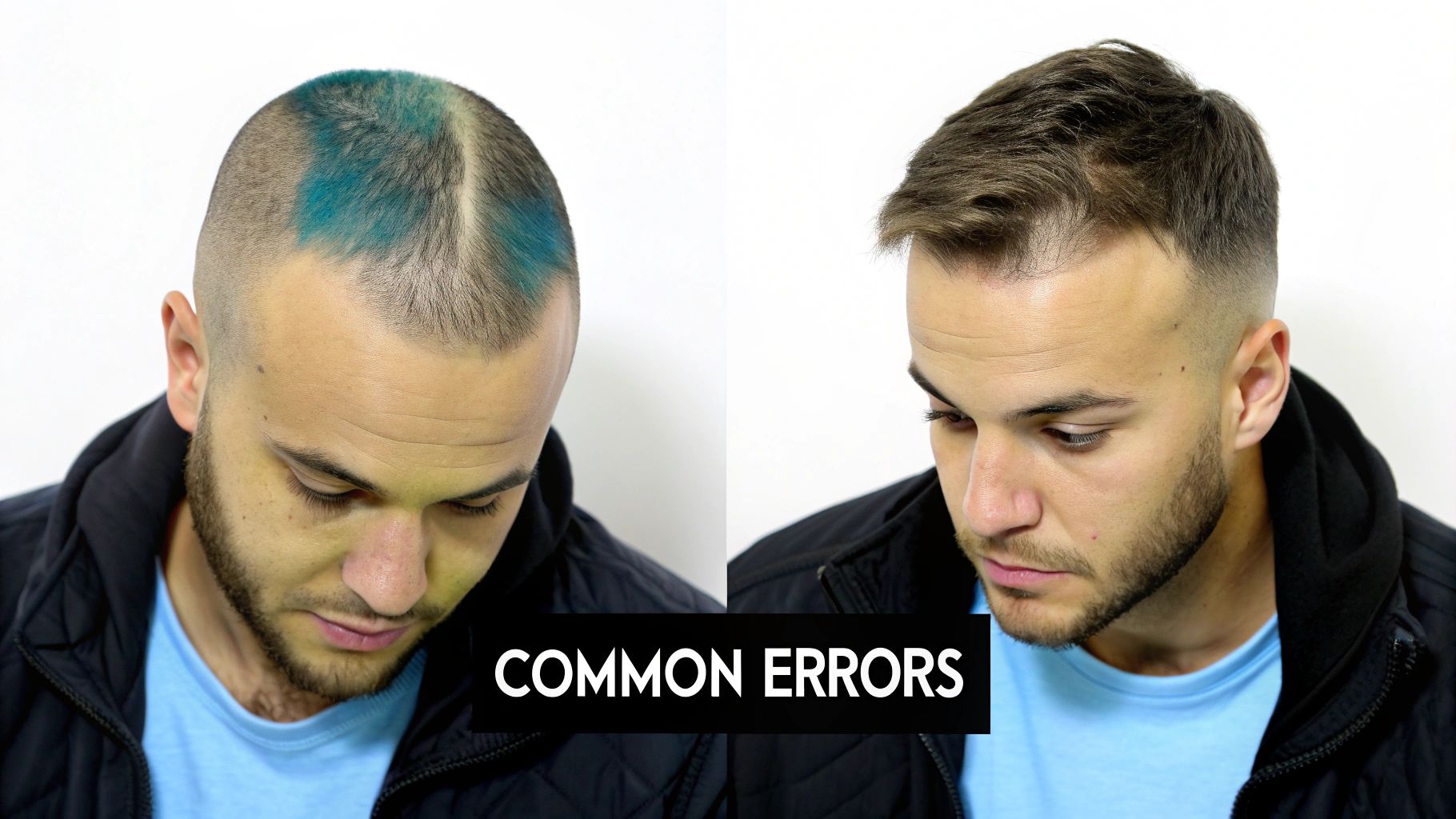
Ever wondered what separates a brilliant SMP result from a complete disaster? It's not just bad luck. When you see a "hair tattoo" that triggers instant regret, it's almost always down to a failure in technical skill, artistic vision, or often, a bit of both.
A truly great SMP treatment is a masterful blend of science and art. When that balance is off, the illusion of thousands of tiny hair follicles just falls apart. Instead of a natural-looking buzz cut, you’re left with something that looks exactly like what it is—a tattoo on your head. Let's dig into the common mistakes that lead to this kind of disappointment.
Unnatural Hairline Design
The hairline is everything. It's the first thing people see, the part that frames your face, and the most scrutinised element of any SMP treatment. Get the hairline wrong, and the whole look is compromised.
Here are the classic hairline mistakes I see all the time:
- Too Sharp or Straight: Real hairlines are never perfectly straight. They’re soft, with tiny imperfections. A ruler-straight edge is a dead giveaway that it’s not real and can create that dreaded "helmet" look.
- Too Low or Aggressive: It’s tempting to ask for the hairline you had as a teenager, but this rarely looks right on an adult face. A good artist designs an age-appropriate hairline that works with your facial structure now. We've got a great guide that explains more about how a hair tattoo should look as you get older.
- Ignoring Temple Transition: The way the hairline blends into the temples has to be subtle and natural. Sharp, 90-degree angles look completely fake and are a sure sign of an amateur.
Incorrect Pigment Depth and Blowouts
This is where the technical side really comes into play, separating the true specialists from regular tattooists. The skin on your scalp is incredibly unique, and the pigment must be placed in the perfect spot—the very top layer of the dermis, only about 2mm deep.
Think of it like this: take a felt-tip pen and gently dot a piece of paper. You get a crisp, perfect little circle. Now, press down hard and hold it there. The ink bleeds into the paper fibres, creating a big, fuzzy mess. That fuzzy mess is exactly what we call a "blowout" in SMP.
When the needle goes too deep, the pigment spreads out under the skin. Instead of creating thousands of tiny dots that look like hair follicles, you get large, blurry blobs that merge together. This is what creates that smudged, solid look.
This is a serious error that can only be fixed with laser removal and is a massive red flag pointing to an inexperienced or poorly trained practitioner.
Mismatched Colour and Unwanted Hues
Choosing the right pigment colour is way more than just matching your existing hair. A true expert has to analyse your skin's undertones to predict how the colour will look once it's healed and how it will age over the years.
The outcome everyone fears is the pigment turning an ugly shade of blue or green. This happens when an artist cuts corners and uses cheap, traditional tattoo inks. These aren't designed for the scalp and aren't stable, whereas proper SMP uses specialised, carbon-based pigments that are formulated to hold their tone as they naturally fade.
This is a huge issue in sunny climates. Here in Western Australia, for example, a regional survey showed that 12% of SMP clients reported regret, mostly because of the colour going wrong. Why? The pigment faded badly under our intense Aussie sun because many practitioners didn't account for the high local UV exposure.
A skilled artist will only use premium pigments, often mixing several shades to create a multi-tonal, 3D effect that perfectly complements your complexion. They're not just thinking about how it looks today; they're ensuring it looks natural for years to come.
How To Choose The Right SMP Practitioner
Picking your Scalp Micropigmentation practitioner is hands down the most critical decision you’ll make on this journey. It’s the single best way to avoid scalp micropigmentation regrets later on. Don't think of it like booking a haircut—treat it more like choosing a surgeon. Their skill, experience, and artistic eye will literally shape your final result.
A top-tier practitioner is part technician, part artist. They have the technical precision down pat, but they also have a deep understanding of what looks natural. They know that a hairline that suits one person's face shape and skin tone will look completely wrong on another. Rushing this decision or, worse, picking someone based on the cheapest quote is a one-way ticket to needing expensive corrections down the track.
Vetting The Artist And Their Portfolio
First things first, you need to put on your detective hat and really dig into their previous work. A slick website or a massive Instagram following doesn’t mean a thing if they can’t back it up with a solid portfolio of high-quality, real-world results. This is where you separate the true pros from the pretenders.
The portfolio is your key piece of evidence, but you need to know how to read it.
- Look for Healed Results: Fresh SMP always looks bold and sharp right after a session. The true test of skill is what it looks like weeks or months later, once the pigment has settled into the skin. If all you see are photos taken immediately after the procedure, that’s a massive red flag.
- Variety is Key: A great artist is proud to show off their work on all kinds of people. You want to see examples on different skin tones (from fair to olive to dark), a range of ages, and various patterns of hair loss. It proves they're versatile and not just a one-trick pony.
- Check for High-Quality Media: Look for crystal-clear, well-lit photos and videos. Blurry pictures or videos shot from across the room can easily hide sloppy work, like pigment blowouts or an unnatural-looking hairline.
Critical Questions For Your Consultation
The consultation is your time to interview the practitioner. Seriously, don't be shy. This is your chance to get all the answers you need to feel 100% confident. Any artist worth their salt will welcome your questions and answer them properly.
Come prepared with a list. Here are a few that should be at the very top:
- What specific training and certifications do you have in SMP? A general tattoo artist qualification just doesn't cut it; this is a highly specialised field.
- How many clients have you actually treated? Experience is everything. An artist who has done this hundreds of times has seen it all and knows how to handle different situations.
- Can I see healed photos of your work on someone with my skin tone and type of hair loss? This is the best way to get a realistic idea of what you can expect.
- What kind of pigment do you use? They should be using high-quality, carbon-based pigments made specifically for SMP. This is crucial to prevent the colour from fading to blue or green over time.
- What are your hygiene and sterilisation standards? Make sure they use single-use needles and follow strict health and safety protocols—no exceptions.
A confident and experienced artist will be an open book about their process, pigments, and past results. If they get defensive, give vague answers, or try to pressure you into booking on the spot, take that as a clear sign to walk away.
Data from Australian clinics really drives this point home. One report showed that a 50% jump in demand led to some clinics using unregulated pigments, causing bad fading and scalp irritation. To avoid becoming just another statistic, your research has to be thorough. For a deeper dive, you can explore reports on the Australian scalp micropigmentation services market. It also helps to have a broader understanding of the health and beauty industry landscape to put everything into context.
Finding the right person might take a bit of effort, but it’s an investment that will pay off for years to come. For more detailed advice, our guide on choosing the best scalp micropigmentation clinic near you can help you narrow down your search.
Setting Realistic Expectations for Your SMP Journey
One of the surest ways to end up with scalp micropigmentation regrets is starting with a skewed idea of what the treatment can actually achieve. When what you imagine in your head doesn't match the reality of the procedure, disappointment is almost guaranteed. So, let's get on the same page from the get-go.
Think of it this way: a brilliant artist can paint a hyper-realistic forest on a canvas, but you can't step into it and feel the bark on the trees. Scalp micropigmentation is the same kind of magic. It creates a masterful two-dimensional illusion of hair, but it's not a treatment that grows actual, three-dimensional hair strands.
This is a really important point to grasp. SMP is fantastic for creating the look of a sharp, closely-shaven head of hair. It's also a game-changer for adding the appearance of thickness to thinning hair. What it won't do is give you strands you can run your fingers through—the surface of your scalp will still feel smooth. Truly understanding this is the first and most critical step towards being happy with your final look.
Embrace the Process, Not the Quick Fix
You wouldn’t expect a masterpiece to be painted in an hour, and world-class SMP is no different. The most natural, undetectable results are always built up carefully over several sessions. This layering method is essential for a realistic outcome; there are no shortcuts.
Trying to cram the whole treatment into one marathon appointment is a massive red flag. That’s how you end up with a flat, 'helmet-head' look that screams unnatural. A multi-session approach is non-negotiable and allows your practitioner to:
- Lay the groundwork: The first session is all about establishing the foundational layer and mapping out your new hairline and shape.
- Build believable density: Later sessions add new layers of pigment, creating a subtle, multi-tonal, 3D effect that looks just like real, individual hair follicles.
- Nail the final details: The last session is for fine-tuning everything—perfecting the hairline, ensuring the blend is seamless, and making tiny adjustments once the pigment has settled.
If you walk in expecting a perfect, photo-ready result after just one session, you're setting yourself up for a letdown. Quality SMP is a marathon, not a sprint, typically needing 2-4 sessions spaced 10-14 days apart. This gap is crucial for healing and letting the pigment settle into your skin properly.
Understanding Fading and Long-Term Maintenance
Another common pitfall is being surprised that SMP isn't a "one and done" permanent solution—but honestly, that's a good thing. The specialised pigments used are designed to lighten very gradually over the years. This isn't a bug, it's a feature. It's designed to allow your look to adapt as you age.
It’s a bit like the paint on your house. After a few years under the harsh Aussie sun, it’s going to fade a bit and need a refresh. SMP is exactly the same. You should plan for a top-up session every 3-6 years to keep your look sharp and defined.
This slow, controlled fading prevents the pigment from looking harsh or out of place as your face matures and your remaining hair might start to go grey. It gives you control. Knowing from the start that SMP is a long-term commitment with occasional maintenance is the key to avoiding frustration down the track and making sure your investment looks fantastic for years to come.
How To Fix SMP You Already Regret
That sinking feeling when you realise your scalp micropigmentation isn't what you hoped for is tough, but a bad result is rarely a life sentence. It’s better to think of disappointing SMP not as a finished product, but as a rough draft that a true specialist can revise and perfect.
Whether the issue is a harsh hairline, an unnatural colour, or patchy density, there are effective ways to fix the work and get your confidence back. The first step is finding a practitioner who specialises in corrective procedures—this is a completely different skill set than working on a blank canvas. A great corrective artist is like a master restorer; they can analyse what went wrong and map out a precise plan to fix it. Whatever you do, don't go back to the original artist if you've lost trust in their ability.
Minor Adjustments and Colour Correction
For many people with SMP regrets, the problems are actually quite fixable with additive techniques, meaning we don't need to jump straight to removal. These corrections are often less invasive, less costly, and can deliver a huge improvement.
A skilled technician can easily address some of the most frequent complaints:
- Patchy or Uneven Density: If your SMP looks a bit sparse or inconsistent, an experienced artist can skillfully add more pigment impressions between the existing dots. This builds up the illusion of thickness for a much fuller, more uniform look.
- Unwanted Colour Tones: Has your SMP faded to an obvious blue or green? This usually happens when the artist uses low-quality pigment or goes too deep. A specialist can use advanced colour-correction theory, layering a modifying pigment over the top to neutralise those unwanted tones and bring the colour back to a natural, charcoal-grey shade.
- Poorly Designed Hairline: A hairline that’s too soft, faint, or just doesn't quite look right can often be strengthened and redefined. An artist can carefully build up the density to create a stronger frame for your face, making subtle tweaks that dramatically improve the overall shape.
When Removal Is the Best Option
Sometimes, though, an SMP job is too flawed for a simple touch-up to solve. If the pigment dots are too large (we call these "blowouts"), the hairline is way too low and aggressive, or the whole thing is excessively dark, trying to add more pigment will only make it worse.
In these situations, removal is the necessary first step before we can even think about starting fresh with a clean slate. The two main ways to do this are with laser or a saline solution.
This decision tree gives a good visual of the SMP process and what to expect—key points that are often missed when things go wrong.
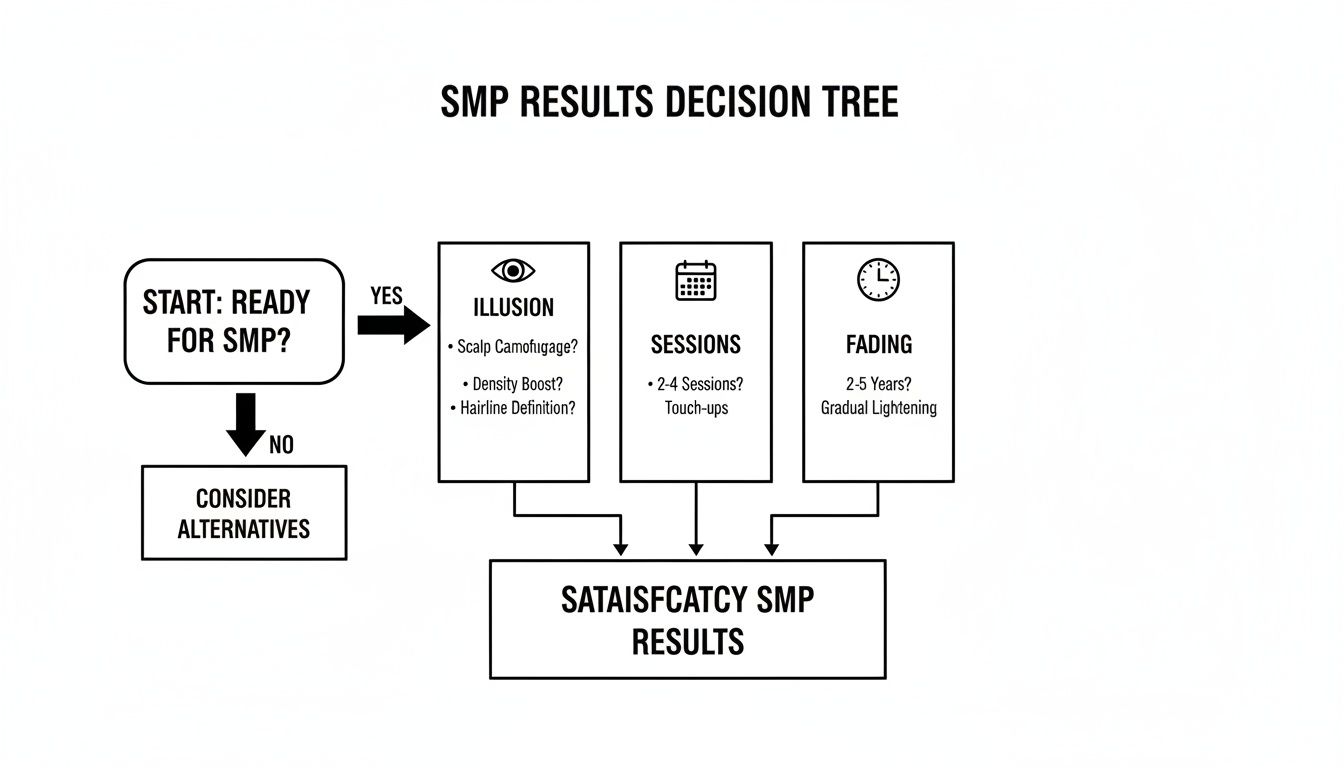
As you can see, a great result hinges on understanding the illusion, the multi-session process, and how it naturally fades over time. These are the exact things that are often overlooked in regrettable outcomes.
Comparing Removal Techniques: Laser Versus Saline
Laser removal is the most common and powerful choice for significant correction. It works by pulsing highly concentrated light energy into the skin, which shatters the pigment particles into tiny fragments. Your body’s immune system then gets to work, naturally flushing these particles away over the next few weeks.
Laser is the gold standard for lightening large, overly dark areas or completely removing a badly placed hairline. It almost always requires multiple sessions—usually 2-5 on average—to get the level of fading we need. Each session is spaced about six to eight weeks apart to give the skin plenty of time to heal.
Saline removal, on the other hand, is a much more delicate process. It involves tattooing a hypertonic saline solution into the skin right over the unwanted pigment. Through a process called osmosis, the solution helps lift the pigment up to the surface, where it gets pushed out of the skin as a scab forms and heals.
This technique is often the go-to for:
- Small, precise corrections where a laser might be too aggressive or imprecise.
- Emergency removal if it’s done within 48 hours of the initial bad procedure.
- Clients with skin tones that are more prone to hyperpigmentation from laser treatments.
Deciding between these options really needs professional guidance. For a deeper dive, you can learn more about if scalp micropigmentation can be removed and what the whole process involves. Ultimately, even big SMP regrets can be fixed, giving you a clear path back to a look you can feel great about.
Protecting Your Investment And Preventing Future Regret
Getting a brilliant scalp micropigmentation result is a huge win, but the job isn’t done the moment you walk out of the clinic. The real key to preventing future scalp micropigmentation regrets lies in long-term care. It helps to think of your SMP as a serious investment; you need to maintain it properly to protect its value and keep it looking sharp.
Without a solid aftercare routine, even the most masterfully done SMP can fade too quickly or lose that crisp, defined look. This isn't about being precious; it’s just about building a few simple habits that will pay off for years. The two biggest things you have control over are sun exposure and the health of your scalp.
Sun Protection Is Non-Negotiable
The sun is, without a doubt, the number one enemy of SMP pigment. UV radiation breaks down the pigment in your skin, causing it to lighten and lose its definition over time—much like how the sun fades the paint on a car. In a sun-soaked place like Western Australia, protecting your scalp isn’t just a good idea, it's essential.
Letting your scalp get constant, unprotected sun exposure is the fastest way to a faded, blurry result.
Protecting your scalp from the sun is the single most effective thing you can do to prolong the life and quality of your SMP. A few seconds of prevention each day will save you from needing frequent and costly touch-ups down the road.
To keep your investment safe, sun protection needs to become a daily habit.
- Use a high-SPF sunscreen: Every single day, even on cloudy ones, apply a broad-spectrum, matte-finish sunscreen of at least SPF 50+. Look for mineral-based formulas with zinc oxide or titanium dioxide, as they provide a great physical barrier.
- Wear a hat: If you're going to be outside for a while, a hat is your best friend. It gives you a direct physical shield from the harsh rays.
Maintain Scalp Health For Pigment Integrity
A healthy scalp is the perfect canvas for SMP. When your skin is hydrated and nourished, it helps lock in the pigment and keeps every single dot looking its best. On the flip side, dry and flaky skin can make the treatment look dull and even speed up the fading process.
The solution is simple: moisturise. Use a light, non-comedogenic moisturiser (meaning it won’t clog your pores) on your scalp every day, especially after you shower. This keeps the skin from drying out and helps the pigment stay vibrant.
Just as important is knowing what not to use. Some skincare products have harsh ingredients that can actively harm your SMP. Steer clear of any scalp products with high amounts of alcohol, which is incredibly drying. You’ll also want to avoid chemical exfoliants like glycolic or salicylic acids, as these are designed to increase skin cell turnover and will make your pigment fade faster.
Scheduling Your Future Touch-Ups
Even if you do everything right, all scalp micropigmentation will gradually soften and lighten over the years. That’s a totally normal and expected part of the journey. To keep your look fresh and defined, you’ll need to schedule touch-ups every so often.
Most clients find they need a refresh session every 3 to 6 years. Of course, this can change depending on your skin type, lifestyle, and just how good you are with that sunscreen. Knowing this from the start helps manage your expectations for the long haul. You can get a more detailed breakdown by reading our guide on how often to expect hairline tattoo touch-ups. A proactive approach to maintenance is what keeps your SMP looking seamless for a decade or more.
Frequently Asked Questions About SMP Regrets
It's only natural to have a few last-minute questions before you commit to scalp micropigmentation. In fact, it’s a good sign—it means you’re thinking things through properly. Here, we tackle some of the most common worries we hear, giving you the clear, honest answers you need to feel completely confident in your decision.
Will My SMP Turn Blue Or Green Over Time?
This is probably the number one fear for anyone considering SMP, and it's totally understandable. We've all seen old body tattoos that have turned a strange shade of blue or green over the years. But here's the good news: with modern SMP, that's not something you should have to worry about, provided you go to the right artist.
That dreaded discolouration comes from one thing: the wrong ink. It happens when an inexperienced technician uses cheap, traditional tattoo inks instead of the specialised pigments designed for SMP. Proper SMP artists use high-quality, carbon-based pigments that are incredibly stable. These are formulated to hold their colour and, over many, many years, simply fade to a lighter version of the original shade—not turn into a completely different colour.
The key takeaway is this: colour change is a pigment problem, not an SMP problem. A true expert will be proud to show you the premium, stable pigments they work with to guarantee your results look natural for the long haul.
Is It Possible To Fix A Bad SMP Hairline?
Yes, absolutely. While it’s incredibly frustrating to end up with a hairline you’re not happy with, you are definitely not stuck with it forever. In most situations, a poorly designed hairline can be massively improved or even completely redone.
If the hairline is too low, too sharp, or just looks like a helmet, the most common solution is targeted laser removal. A specialist can use a laser to carefully break down just the unwanted pigment, allowing them to lift a low hairline or soften harsh edges. After the skin has healed, a skilled corrective artist can go back in and create a new hairline that's natural, soft, and perfectly suited to your face.
On the other hand, if the issue is that the hairline is too weak or undefined, the fix is often simpler. A good artist can often work with what's already there, strategically adding density and definition to build a stronger, more realistic frame for your face. This kind of corrective work is a real art form, so make sure you find a practitioner with a proven track record in fixing other people's mistakes.
What If I Change My Mind About The Shaved Look Later?
That's a smart question to ask. Tastes change over time, and it’s good to know you have an exit strategy. One of the best things about SMP is its semi-permanent nature; you aren't locked into this look for the rest of your life if you don't want to be.
If you ever decide you're done with the shaved-head style, the entire treatment can be safely and completely removed. This is usually done with a few sessions of laser removal. The laser shatters the pigment into tiny particles, which your body’s immune system then naturally flushes away, returning your scalp to how it was before.
There's another, more passive option too: just let it fade. As the years go by and your natural hair begins to grey, you might decide to stop getting your regular touch-ups. Without that maintenance, the pigment will slowly and gradually lighten, eventually fading away so softly that it doesn't create a stark contrast with your changing hair. This built-in flexibility means you always have control over your appearance.
At My Transformation, Michael is dedicated to providing world-class scalp micropigmentation results that you'll love for years, not regret. Book your free consultation today to start your journey with an expert you can trust. Learn more at https://rightwing-health.info/a%3E.%3C/p%3E