

Scalp Micropigmentation for Hair Density Guide
If you're dealing with thinning hair, you know how frustrating it can be when you start to see more scalp than you used to. Scalp micropigmentation (SMP) for hair density is a brilliant, non-surgical way to tackle this. It's a highly skilled cosmetic tattooing method that creates a convincing illusion of thicker, fuller hair, effectively camouflaging thinning spots and giving your confidence a real boost.
Your Guide to Fuller Hair with SMP
Seeing more of your scalp peeking through your hair is a common concern for so many people, regardless of gender. It can often feel like there are very few good options out there. Sure, there are hair transplants and medications, but a lot of us are looking for something less invasive, more immediate, and frankly, more reliable. This is exactly where the artistry of scalp micropigmentation for hair density shines.
Imagine an artist using a technique called stippling—creating an image with tiny, intricate dots—to add shadow and depth to a drawing. SMP works on the same principle, but your scalp is the canvas. A specialist meticulously places thousands of minuscule pigment dots amongst your existing hairs.
The key here is that SMP doesn't actually grow new hair. What it does, with incredible skill, is darken the scalp to create a subtle shadow effect. This clever visual trick makes the base of your hair seem much fuller and thicker, giving you back the look of a healthy, dense head of hair.
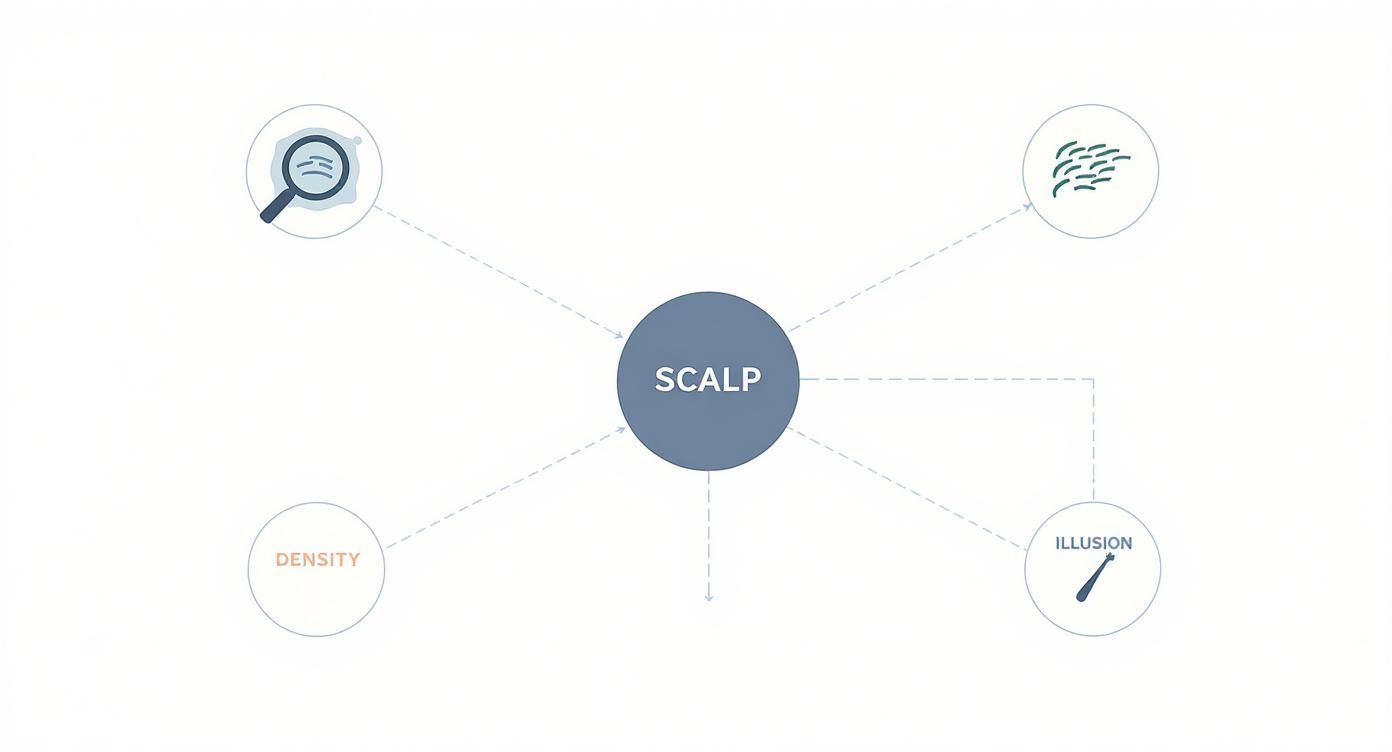
The Core Principles of SMP for Density
The real magic of scalp micropigmentation for hair density is its ability to build a completely natural-looking illusion. It’s not about painting your scalp; it's a delicate process of layering pigment to perfectly replicate the appearance of individual hair follicles. The concept is straightforward, but the execution demands a huge amount of skill and precision.
For a deeper dive into how it all works, our detailed guide on what scalp micropigmentation is has you covered.
This treatment is a fantastic option for a wide range of people, including:
- Women experiencing diffuse thinning, which often happens across the top and crown.
- Men in the earlier stages of hair loss who want to add density without shaving their head.
- Anyone with scars from hair transplants who wants to conceal them effectively.
- Those looking to boost the results of a hair transplant by adding density underneath.
We've put together a quick table to highlight the main advantages of using SMP for this purpose.
Key Benefits of SMP for Density
| Benefit | Description |
|---|---|
| Immediate Results | You'll see a noticeable difference in perceived density right after your first session. |
| Non-Invasive | There's no surgery, no incisions, and minimal downtime involved. |
| Long-Lasting | The results can last for years with proper care before a touch-up might be needed. |
| Natural Appearance | When done by a skilled artist, the results are undetectable and blend seamlessly. |
| Confidence Boost | It restores the look of a full head of hair, which can have a massive impact on self-esteem. |
Ultimately, SMP for density is about restoring the look you want without the need for invasive procedures.
Here at My Transformation, we specialise in adapting this technique to the unique hair loss patterns we see every day in Australia, guaranteeing a result that looks authentic to you. We're here to walk you through every step, from how the process works to what you can realistically expect.
How SMP Creates the Illusion of Density
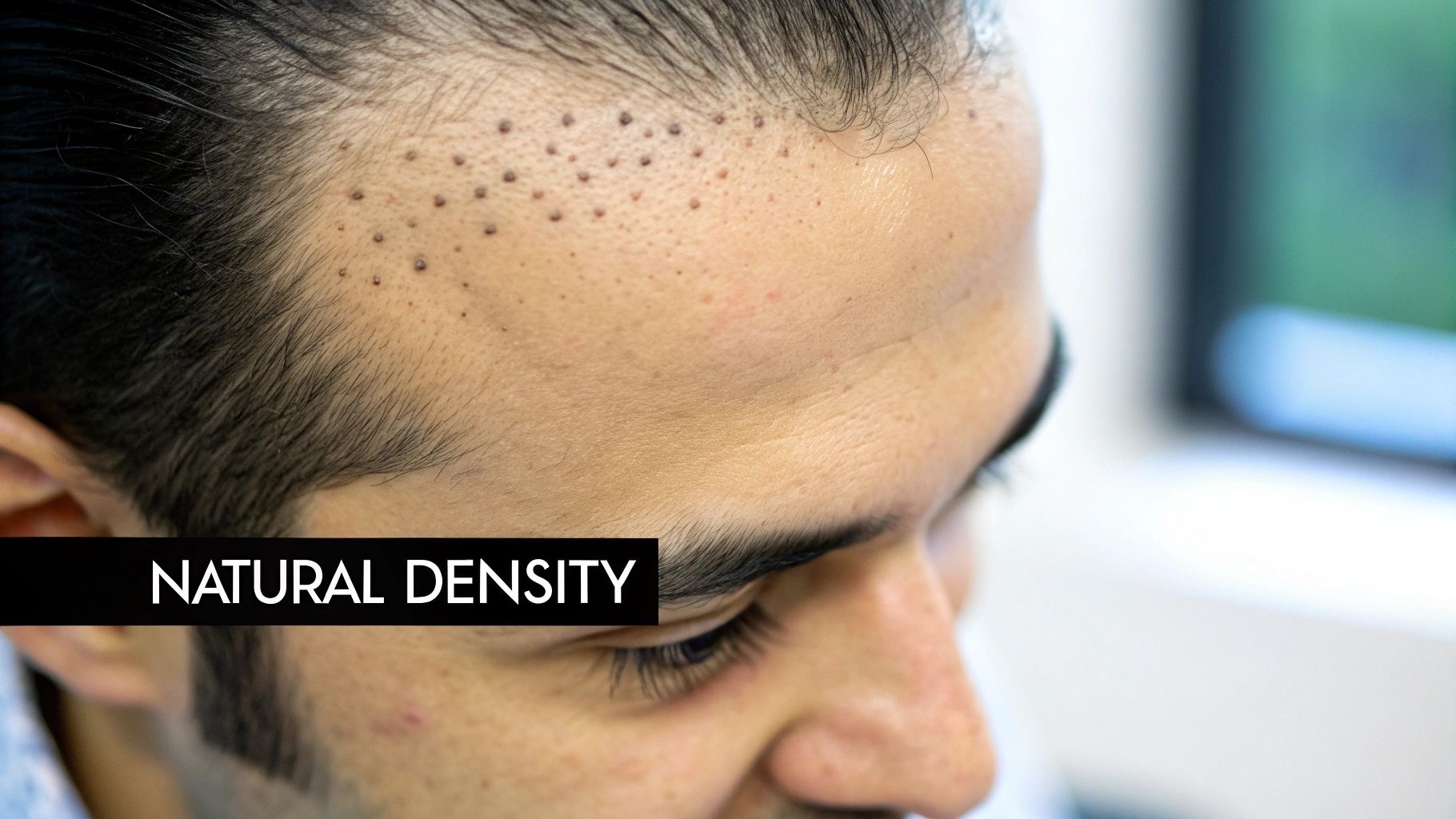
Scalp micropigmentation for hair density isn't just a tattoo; it’s a brilliant fusion of artistry and precise technique. At its core, the principle is elegantly simple: it’s all about reducing the colour contrast between your scalp and your hair. When hair starts to thin, more of your lighter-coloured scalp peeks through, and that's what makes the thinning so obvious.
SMP tackles this head-on. A skilled technician uses a specialised tool with micro-fine needles to deposit thousands of tiny pigment dots into the upper layer of your scalp. Each and every dot is a perfect imitation of a single hair follicle.
The end game? A subtle shadow effect that blankets the scalp. This "shadow" darkens the skin just enough to make the base of your existing hair look much fuller and more substantial. It’s a clever visual trick, adding a new layer of depth that fools the eye into seeing thicker hair, effectively masking any thinning spots and getting rid of that shiny scalp look for good.
The Artistry Behind the Technique
Getting a result that looks completely natural is far more complex than just poking dots into the skin. It’s a craft that demands a solid understanding of hair growth patterns, colour theory, and the unique landscape of the scalp. We build up the look of density gradually over two to four sessions.
Think of it like an artist painting a masterpiece. The first session lays down the foundational layer of pigment, setting the stage. In the following sessions, we add more layers to build up texture, depth, and a truly three-dimensional appearance. This careful, methodical process is what prevents the final look from ever appearing flat or fake. Every single impression is placed with purpose, blending flawlessly with your real hair.
The magic really happens in the details—perfectly matching the pigment to your hair and skin tone, carefully varying the size and spacing of the dots, and creating a soft, feathered hairline that just melts into your existing hair. This is not a one-size-fits-all job; it’s a completely customised treatment, designed for you.
Specialised Pigments and Tools
One of the biggest questions we get is, "Is SMP just a normal tattoo?" The answer is a hard no, and the key differences are in the gear and the ink.
- Custom Pigments: We use specially formulated pigments that are made to hold their colour without fading or blurring. Unlike standard tattoo inks that can take on a blue or green tinge over time, these carbon-based pigments are designed to simply fade to a lighter shade of their original colour, keeping things looking natural for years.
- Precision Needles: The needles we use are significantly finer than those used for body art. This allows our technicians to create tiny, crisp follicular impressions that are virtually indistinguishable from your own hair follicles.
- Targeted Depth: Pigment is placed in the upper dermis, which is much shallower than a traditional tattoo. This specific depth is crucial—it stops the pigment from spreading out and creating an unnatural, "blotchy" look.
For a deeper dive into what makes this procedure so unique, check out our article that breaks down the process thread-by-thread for scalp micropigmentation. It’ll give you a fantastic sense of the precision involved.
Adapting to Different Hair Loss Patterns
The real beauty of scalp micropigmentation for hair density is how flexible it is. We tailor the approach to your specific pattern of hair loss, because what works for a receding hairline on a man is totally different from what’s needed for diffuse thinning in a woman.
For women, who often see thinning first along their part line or across the top of their head, the focus is on meticulously filling in the gaps between existing hairs. The aim is to create that subtle shadowing effect, which makes the part look narrower and the hair all over appear thicker and healthier.
For men who still have a decent amount of hair but are dealing with a thinning crown or a receding hairline, we concentrate on building up density. We seamlessly blend the treated areas with the stronger hair, restoring a powerful frame to the face and creating a more youthful look without any need to shave it all off.
Who Is an Ideal Candidate for SMP Density Treatment?
Figuring out if scalp micropigmentation for hair density is the right move for you really comes down to a few things: your specific type of hair loss, what you hope to achieve, and the health of your scalp. SMP isn't a catch-all solution; it's a specialised art form best suited for certain people who want the look of thicker hair without going under the knife.
The good news? A whole lot of people can get fantastic results. It’s an incredibly effective option for both men and women who just want to add a bit of visual oomph back to their existing hair.
The Perfect Profile for Density SMP
Most of the time, the best candidates are people who still have a decent amount of hair but are bothered by how thin it's become. They're not after the 'shaved head' look; they simply want to get back that appearance of fullness they used to have.
You might be a great candidate if any of these sound familiar:
- Men with Diffuse Thinning: You’ve still got hair everywhere, but it’s noticeably losing its bulk, especially on the crown or at the front. SMP is perfect for shading in those gaps and making the contrast between your scalp and hair less obvious.
- Women Experiencing General Thinning: Many women first notice their part line getting wider or find they can see more scalp under bright lights. SMP for density is brilliant at camouflaging this common type of hair loss.
- Individuals in Early Hair Loss Stages: If you’ve only just started to see your hair thin, SMP can be a great proactive step. It helps you maintain a look of fullness and stay ahead of the game.
- Post-Hair Transplant Patients: A hair transplant doesn't always deliver the thickness people hope for. SMP is the ideal finishing touch to add visual density and really perfect the surgical result.
Here in Australia, scalp micropigmentation has become a go-to non-surgical answer for thinning hair. We're seeing more and more men with male pattern baldness and women with alopecia coming through our doors. In fact, women are the fastest-growing group asking for this treatment, as they love the subtle, natural-looking density SMP creates.
When SMP Might Not Be the Best Fit
As versatile as SMP is, it isn't the perfect solution for absolutely everyone. It's really important to understand its limitations to set realistic expectations and make sure you're choosing the right path for your situation.
For example, some scalp conditions can get in the way of the treatment and affect the final look. We always advise waiting until any issues are fully cleared up before starting.
SMP may not be suitable if you have active, severe scalp conditions like psoriasis, eczema, or folliculitis in the treatment area. The inflammation can affect how the pigment settles and heals, potentially leading to a patchy result.
Matching the pigment to your hair colour also takes a huge amount of skill, especially for lighter shades.
- Very Light Blonde or White Hair: It can be done, but getting a natural blend with extremely light hair is tricky. It demands an artist with specific experience in mixing and applying ultra-light pigments so they don't look too dark or out of place.
- Desire for New Hair Growth: This is a big one. It's crucial to remember that SMP is a cosmetic illusion of density. It doesn't grow hair, nor does it stop hair loss from progressing.
Ultimately, being a good candidate is all about making sure what the treatment can do lines up with what you want. To dig a little deeper into this, you can learn more about who can benefit from hair tattoos in our detailed guide. The absolute best way forward is to chat with an experienced practitioner who can give you a proper, personalised assessment and help you decide if SMP for density is the right choice for you.
Your SMP Journey from Consultation to Final Result
https://www.youtube.com/embed/CT5fxdTUtMI
Starting your scalp micropigmentation journey is an exciting step, and knowing what to expect can make all the difference. The whole experience is carefully planned out to ensure you're comfortable and safe, leading to a gradual transformation that looks incredibly natural. It all kicks off not with a needle, but with a simple, honest conversation.
Let's walk through the entire process, from that first chat with a specialist to the moment you see your final, fuller-looking hair.
The Initial Consultation: Your Strategic Blueprint
Your journey begins with a thorough, no-obligation consultation. This first meeting is easily the most important part of the process because it sets the foundation for your entire treatment. During this chat, an SMP specialist will sit down with you to understand your goals, have a close look at your specific hair loss pattern, and check the condition of your scalp and existing hair.
This isn't just a quick meet-and-greet; it’s a deep dive into creating a plan that's just for you.
- Getting on the Same Page: You'll talk about the exact look you’re going for. Are you after a subtle fill to add a bit of thickness, or do you want a more noticeable boost in perceived density?
- Designing Your Hairline: The specialist will work with you to sketch out a soft, natural-looking hairline that perfectly frames your face and suits your age.
- Finding the Perfect Match: They’ll carefully analyse your natural hair colour and skin tone to select the ideal blend of pigments.
- Mapping Out the Sessions: You’ll get a clear plan that outlines how many sessions you’ll likely need—usually somewhere between two to four—to get the job done right.
This consultation is also your time to ask absolutely anything and build a good rapport with your practitioner. A reputable clinic will make sure you feel completely informed and confident before you decide to move forward.
The Treatment Sessions: Building Density Layer by Layer
Once you're happy with the plan, it’s time for the treatment itself. Scalp micropigmentation for hair density isn't a one-and-done procedure. It's a series of sessions, with each one building on the last. This layering technique is the secret sauce to creating a realistic, three-dimensional illusion of fullness.
Here’s a breakdown of what happens during each visit:
-
The Foundation (Session 1): The first session is all about laying the groundwork. Your practitioner will apply a lighter shade of pigment across the thinning areas. This creates a base that instantly makes your scalp less visible and sets the stage for the density we'll build in the next appointments.
-
Building the Density (Sessions 2-3): Your follow-up sessions, typically scheduled about 10-14 days apart, are where the real magic happens. The practitioner carefully adds more layers of pigment, often using slightly darker shades to create shadow, depth, and texture. Each tiny dot is strategically placed to look just like a natural hair follicle, meticulously filling in the gaps.
-
The Finishing Touches (Session 3 or 4): The final session is all about perfection. This is where your practitioner fine-tunes everything, making small adjustments to the hairline, colour, and overall density to ensure the result is flawless and completely undetectable.
So, what does it feel like? Most people describe it as a light, consistent prickling sensation. Everyone's pain tolerance is different, of course, but the vast majority of our clients find it very manageable. The gradual, multi-session approach is the key to a great result. For an even closer look, our guide on the process of getting a hair tattoo breaks it down even further.
The Final Reveal and Long-Term Results
After your final session and a bit of healing time, you'll see the full effect of your SMP treatment. The harsh contrast between your hair and scalp will be gone, replaced by a powerful illusion of thickness and density. It's why so many people capture powerful before and after photos—to truly appreciate the change from start to finish.
The best part? The results are immediate and built to last. With the right aftercare, especially protecting your scalp from the sun, your new look can last for years before you might need a simple touch-up to keep it looking sharp. This journey isn't just about changing your appearance; it’s about restoring confidence with a solution that looks and feels like the real you.
Aftercare and Long-Term Maintenance Tips
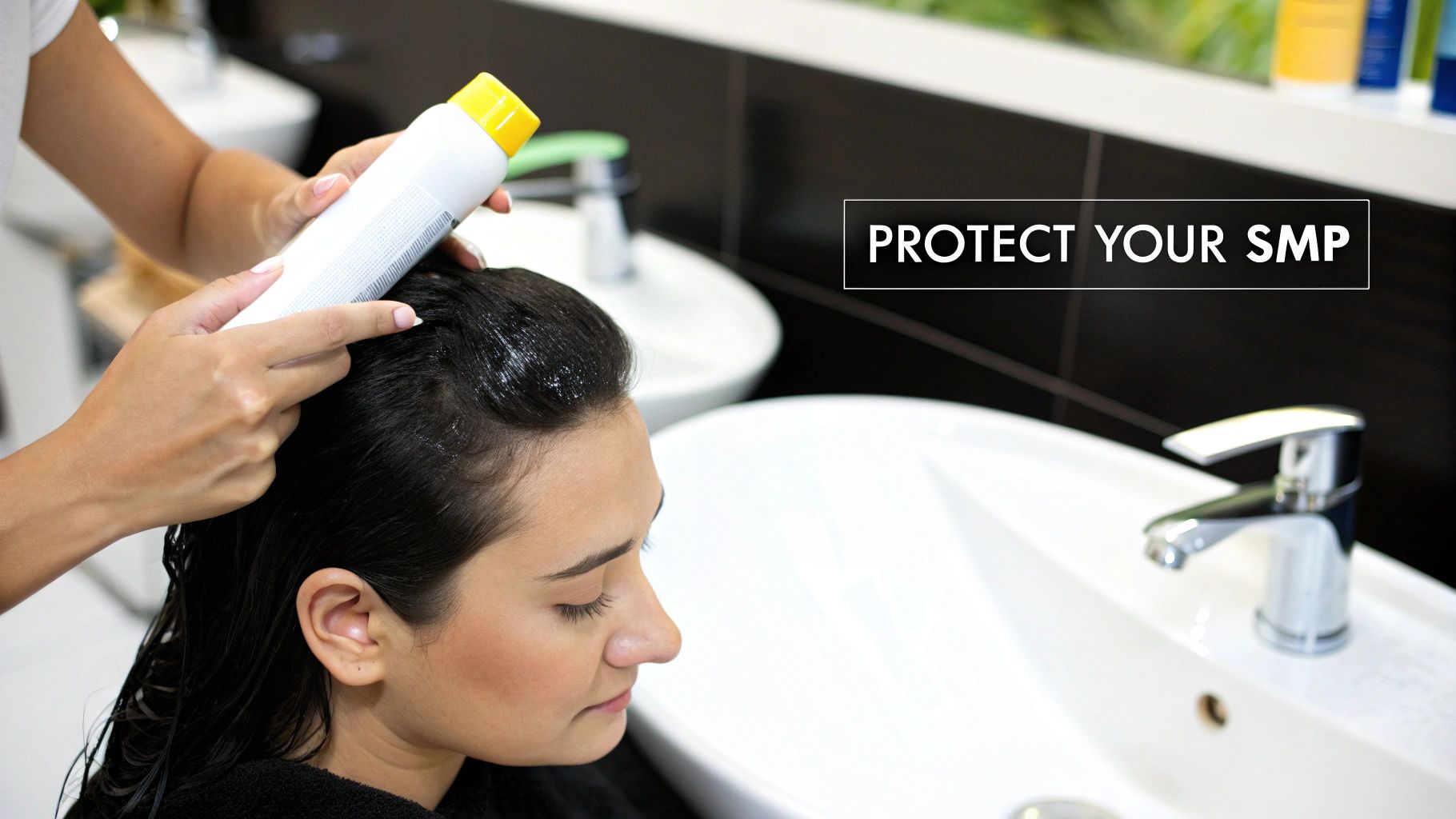
You’ve invested in SMP to get that fuller, denser look back, and that’s a fantastic step. But to make sure those results stay sharp and natural for the long haul, what you do after the treatment is just as important as the procedure itself. Think of it as protecting your investment.
The aftercare isn’t complicated. It really boils down to two stages: the crucial healing period immediately after your sessions, and the simple, ongoing habits that will keep your new look pristine. Nailing these guidelines is the key to preserving the pigment and keeping your scalp in top condition.
Your Initial Healing Phase: What to Expect
The first few days post-treatment are absolutely critical. Your scalp has just received thousands of tiny pigment deposits, and they need time to settle in and heal perfectly without being disturbed. The rules here are strict, but they're not difficult—and they make all the difference to your final result.
For the first four to five days after each session, you need to be really careful.
- Keep It Dry: Don't wash your head or even let the shower stream run over it. Any moisture is a no-go for now.
- No Heavy Sweating: This means putting the gym, saunas, and any intense cardio on hold. Sweat can push the pigment out before it has a chance to set.
- Don’t Shave: Avoid taking a razor to the treated area. You don’t want to cause any irritation or scrape the healing dots.
- Hands Off: As tempting as it might be, don't touch, scratch, or pick at your scalp while it’s healing.
Following these steps ensures every single pigment deposit heals into a crisp, defined dot that mimics a real hair follicle. Skipping them can cause the dots to heal soft or blurry, undermining the illusion of density we’ve worked so hard to create.
Long-Term Care for Lasting Results
Once everything is fully healed, looking after your SMP is incredibly straightforward. It pretty much comes down to one thing: shielding your scalp from the sun. UV radiation is the biggest culprit when it comes to fading any kind of pigment in the skin, including SMP.
To keep your SMP looking fresh for years, just build these simple habits into your daily life:
- Sunscreen is Your Best Mate: Every time you head outside, apply a high-SPF sunscreen (SPF 30+ or higher) to your scalp. A good matte-finish sunscreen is perfect because it won't leave your head looking shiny.
- Wear a Hat: If you know you'll be in the sun for a long time, a hat provides the best possible physical barrier against those damaging UV rays.
- Moisturise Your Scalp: A healthy, hydrated scalp holds pigment better. Using a light, non-greasy moisturiser daily will prevent dryness and flaking, which can affect how the pigment looks.
In Australia, the demand for SMP has grown massively, with treatments typically costing between AUD 2,000 and AUD 4,000. So, good aftercare isn't just about looking good; it’s about protecting a significant financial and personal investment.
Even with the best care in the world, your SMP will naturally soften a little over the years. Most of our clients find they need a quick touch-up session every 4-6 years to bring back that original sharpness and depth. It’s a simple way to keep your results looking their absolute best. For a deeper dive, take a look at our guide on the top 5 tips to care for your scalp after SMP.
How to Choose the Right SMP Clinic in Australia

Let's be blunt: the success of your scalp micropigmentation treatment rests almost entirely on the skill of your practitioner. Choosing the right clinic isn't just a box to tick; it's the single most critical decision you'll make. A great artist will give you a natural, undetectable result. An inexperienced one can leave you with a problem that’s difficult and costly to fix.
As SMP has become more popular across Australia, clinics have popped up everywhere, but the quality varies wildly. It's on you to become an educated client, armed with a clear checklist to make sure you're putting your scalp in safe, highly capable hands.
Your Essential Clinic Checklist
Before you even think about booking a session, you need to do your homework. Any clinic worth its salt will be transparent, open, and more than happy to show off its credentials and results.
Here’s what you absolutely must look for:
- View Extensive Portfolios: Don't settle for one or two glamour shots. You need to see a wide range of before-and-after photos, specifically for scalp micropigmentation for hair density. Look for high-resolution images and videos of clients who have similar hair loss and skin tones to you.
- Verify Certifications: Is the practitioner properly trained and certified in scalp micropigmentation? Ask where they trained and how long they've been doing this. Don’t be shy about it.
- Read Authentic Client Reviews: Dig for genuine reviews on independent sites like Google. You're looking for detailed feedback that talks about the whole experience – the artist's professionalism, the clinic's atmosphere, and, most importantly, how happy they were with the final density results.
The Importance of the In-Person Consultation
A portfolio can only tell you half the story. The real test is the in-person consultation. This is your opportunity to get a feel for the clinic’s professionalism, hygiene standards, and whether you click with the artist. It should be a proper conversation, not a one-way sales pitch.
A consultation is an assessment, not a sales meeting. The practitioner should be managing your expectations, explaining the process in plain English, and mapping out a treatment plan that’s built just for you. This is your time to ask every single question you can think of.
While you're there, look around. Is the place clean? Organised? Professional? Do they use sterile, single-use needles? Always trust your gut. If something feels off, it probably is, and that's your cue to walk away.
At My Transformation, we hold ourselves to the highest standards because we know what's at stake. We believe in total transparency and are dedicated to achieving the most natural-looking hair density for our clients in Australia. We invite you to book a free, no-obligation consultation to see our work firsthand, meet our specialists, and find out how we can help you get your confidence back.
Your SMP for Density Questions, Answered
Deciding on scalp micropigmentation is a big step, and it's only natural to have questions floating around in your head. We get it. To make sure you have all the facts, we’ve put together some straight-to-the-point answers to the questions we hear most often from people just like you.
Our whole aim is to make you feel confident and fully informed about the treatment's safety, how long it lasts, and just how versatile it is. Let's tackle some of the big ones.
How Painful Is the Scalp Micropigmentation Procedure?
This is usually the first thing people want to know, and the good news is, it’s much more comfortable than you probably imagine. Most of our clients tell us it feels like a light, consistent prickling or a minor irritation—definitely not outright pain. It’s a world away from the intensity of a traditional body tattoo.
If you were to put it on a pain scale of 1 to 10, the vast majority of people land somewhere between a 2 and a 4. Of course, everyone’s tolerance is a bit different, and certain spots on the scalp, like the temples, can be a little more sensitive. A good practitioner works with precision and speed, keeping any discomfort to a minimum.
Will SMP for Density Damage My Existing Hair?
This is a crucial question, but let me put your mind at ease. When done correctly by a trained professional, scalp micropigmentation will not harm your existing hair follicles or get in the way of future hair growth. The pigment is placed in the upper dermis of the scalp, which is much higher up than where your hair follicle roots are anchored.
The whole technique is designed to work with your existing hair, not against it. The ultra-fine needles are so precise they navigate between follicles without ever interfering with them. Think of SMP as a purely cosmetic touch-up that complements the hair you already have.
How Long Do the Results of Scalp Micropigmentation Last?
Scalp micropigmentation is what we call a semi-permanent solution. If you look after it properly, you can expect your results to look brilliant for years to come. Generally, the treatment holds its sharp, defined look for 4 to 6 years before a touch-up might be on the cards.
Over time, things like sun exposure and the skin's natural renewal process will cause the pigment to soften and lighten a bit. But this isn't like a regular tattoo that might turn blue or green. The specialised pigments we use are designed to fade gracefully into a lighter shade of the original colour. A quick touch-up session every few years is all that’s needed to bring back that original depth and keep things looking fresh.
Can SMP Be Performed on Coloured or Grey Hair?
Absolutely. Scalp micropigmentation is incredibly adaptable and works just as well on any hair colour, whether it’s dyed, bleached, grey, or white. The secret isn't in matching the colour of your hair strands.
Instead, the artist matches the pigment to the colour of your hair at the root, taking your skin tone into account. This creates a subtle shadow on the scalp that blends in perfectly, no matter your hair colour. For clients with grey hair, we use carefully diluted grey-scale pigments to create a soft, natural-looking shadow that looks completely authentic. The result is an illusion of fullness that just works.
Ready to see how My Transformation can help you get that look of fuller, denser hair? We’re here to answer every last question and guide you on the path to feeling your best.