

Micro Pigmentation On Scalp The Complete Guide
You’ve probably heard it called a hair tattoo, but scalp micropigmentation (or SMP) is so much more than that. It's a highly sophisticated, non-invasive treatment that cleverly mimics the look of real hair follicles. By placing tiny, layered dots of pigment onto the scalp, we can create the look of a sharp, full buzz cut or add the illusion of density to thinning hair.
It’s a game-changer for anyone wanting a lasting solution to hair loss.
The Art and Science of a Modern Hair Loss Solution
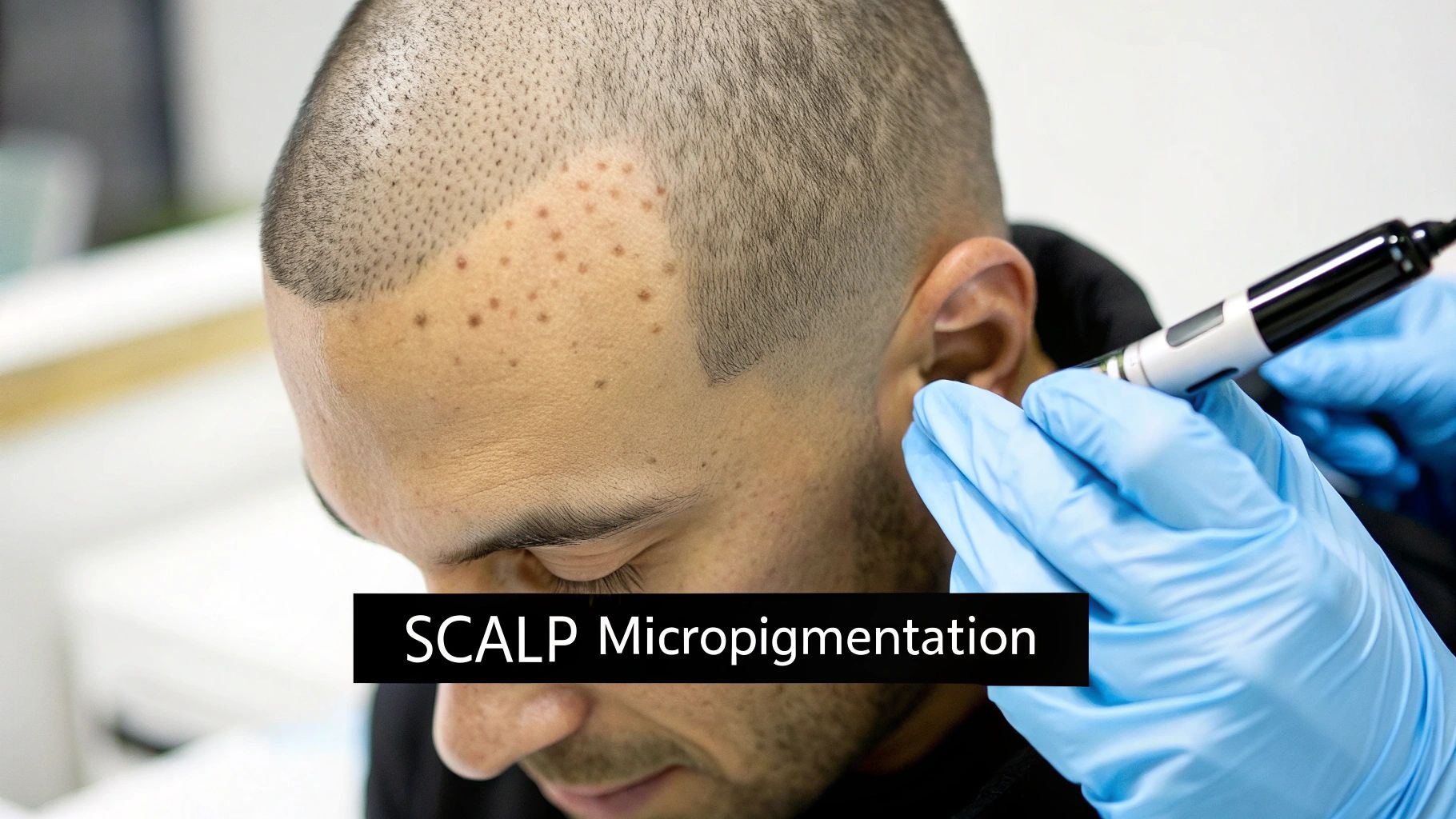
Think of an artist creating a detailed picture purely out of tiny dots—a technique called stippling. SMP works on a very similar principle. This isn't your standard tattoo; it’s a specialised cosmetic procedure that demands incredible precision.
Using state-of-the-art equipment and purpose-made pigments, a skilled practitioner carefully deposits thousands of micro-dots into the upper layer of the scalp’s skin. Every single dot is strategically placed, with varying shades and depths, to blend perfectly with your natural hair colour and skin tone. The final result is an incredibly realistic illusion of hair.
Who Benefits from This Technique?
One of the best things about micro pigmentation on scalp is just how versatile it is. It’s an effective solution for all sorts of people and hair loss situations.
Here are a few of the most common applications:
- Creating a Buzz Cut: For men dealing with advanced balding or a receding hairline, SMP can restore a strong, clean-shaven look.
- Adding Density: If you’re a man or woman experiencing general thinning, SMP works wonders to reduce the contrast between your hair and scalp, making your hair look instantly thicker.
- Camouflaging Scars: It’s an incredible tool for concealing scars from past hair transplant surgeries (both FUE and FUT), accidents, or other injuries.
At its core, scalp micropigmentation is about restoring confidence. It's an aesthetic solution that empowers people by giving them back the look of a natural hairline or fuller hair without surgery or ongoing medication.
A Proven and Growing Solution
SMP isn't just a fleeting trend; its popularity is built on real, satisfying results. The industry has seen a massive surge since 2020, with interest growing steadily year on year, both here in Australia and around the world.
The numbers speak for themselves. SMP boasts an exceptionally high client retention rate, with an impressive 82% of clients returning for touch-ups over a five-year period. This shows just how effective and valuable people find the treatment in the long run. If you'd like to see how established clinics operate, you can explore the services offered by a professional Zurich Hair Pigmentation clinic. This wide acceptance confirms SMP as a reliable, mainstream choice for managing hair loss.
Who Is a Good Candidate for Scalp Micropigmentation?
Scalp micropigmentation is an incredibly versatile solution, and honestly, it’s a game-changer for so many people dealing with hair loss. This isn't some cookie-cutter fix; it's a genuine art form tailored to what you need. The best candidates are simply people looking for a non-surgical way to get the look of more hair, whether that means crafting a whole new hairline or just adding a bit of density.
The great thing is, it works for almost every stage of hair loss—from those first frustrating signs of thinning all the way to total baldness. Let's break down who SMP helps the most, so you can see if it clicks with your own situation.
Men with Receding Hairlines or Baldness
This is the classic case for SMP, and where it truly works wonders. For countless guys, male pattern baldness is a real knock to their confidence. As the hairline starts to creep back and the crown thins out, you run out of ways to style it, and it can feel like you're constantly trying to cover things up.
SMP gives these men a fantastic way out. Instead of dealing with toupees or going under the knife, they can rock a sharp, clean-shaven buzz-cut look. A skilled artist can meticulously recreate a completely natural-looking hairline that perfectly frames the face, easily taking years off your appearance. The final result is a sharp, deliberate style that looks like you chose it—not like you're settling for it.
Scalp micropigmentation lets men take back control. You stop fighting a battle you can't win and instead embrace a timeless, confident style that’s incredibly low-maintenance.
Women Experiencing Hair Thinning
Hair loss for women often looks a bit different. It’s usually more of a diffuse thinning all over, or the parting line becomes noticeably wider, making the scalp show through. This creates a real lack of volume that can be so frustrating and difficult to disguise.
For women dealing with this, micro pigmentation on scalp is a brilliant way to create the illusion of thickness. It doesn't interfere with your existing hair at all. Instead, the practitioner carefully adds pigment to the scalp between the hairs. This simple step darkens the skin, immediately reducing that harsh contrast between your hair and scalp. The effect is immediate: your hair looks fuller, denser, and that wide parting suddenly looks much narrower.
You can dive deeper into who can benefit from hair tattoos in our detailed guide on the topic.
Camouflaging Scars on the Scalp
Covering up scars is another area where SMP is a total hero. Scars on the scalp can come from old injuries, but a huge number of our clients come to us with scars left over from hair transplant surgeries. Both FUT (the "strip" method) and FUE procedures can leave visible scarring that really limits how short you can cut your hair.
A good SMP artist can make these scars practically disappear. By carefully placing tiny pigment deposits into the tough scar tissue and blending them seamlessly into the surrounding hair, the scar becomes almost impossible to spot. It’s all about masking that lighter, smoother scar tissue so it matches everything else. This gives people the freedom to finally wear their hair short without a second thought. It's often the perfect finishing touch after a hair transplant, bridging the gap to get that flawless final look.
Adding Density to Thinning Hair
You don't have to be completely bald to benefit from SMP. Many people just have areas where their hair is thinning out, creating a see-through effect. It might be the crown, the temples, or all over. For these individuals, SMP works as an incredible densification treatment.
Think of it like a permanent concealer. By adding pigment to the scalp underneath the existing hair, you eliminate the contrast that makes hair look thin. The result is an instant visual boost in fullness. It’s an ideal solution for people in the earlier stages of hair loss who aren't ready for a shaved look but just want their hair to appear thicker and healthier.
Alopecia Sufferers
Alopecia can be unpredictable and emotionally taxing, causing patchy hair loss (Alopecia Areata) or even complete hair loss on the scalp (Alopecia Totalis). SMP offers a stable and reliable solution that gives back a sense of control and normalcy.
For patchy hair loss, practitioners can fill in the bald spots to blend them with the surrounding hair. For those with total hair loss, a full SMP treatment can recreate an entire hairline and the appearance of a full head of shaved hair. It provides a consistent look that isn't dependent on the unpredictable nature of the condition, offering a massive boost to self-esteem.
Enhancing Beard and Moustache Fullness
It’s not just about the hair on your head! Many men struggle with patchy or uneven beards and moustaches. Just like on the scalp, micropigmentation can be used on the face to fill in sparse areas, define the beard line, and create a fuller, more uniform look.
This technique is incredibly precise, mimicking the look of natural stubble. It’s perfect for strengthening a weak jawline or simply achieving that perfectly groomed beard you’ve always wanted.
Deciding on a hair loss solution can feel overwhelming with all the options out there. To help you see where Scalp Micropigmentation fits in, here’s a quick breakdown of how it tackles different concerns compared to other common treatments.
Is SMP the Right Hair Loss Solution for You?
| Hair Loss Concern | How Scalp Micropigmentation Helps | Alternative Treatment Considerations |
|---|---|---|
| Receding Hairline/Baldness | Creates a new, natural-looking hairline for a clean buzz-cut style. It's non-invasive and provides immediate results. | Hair Transplants: A surgical option that moves follicles. It’s more expensive, invasive, and results take months to show. |
| General Thinning/Low Density | Reduces scalp visibility by adding pigment between existing hairs, making hair appear instantly thicker and fuller. | Topical Treatments (e.g., Minoxidil): Can slow loss and promote some growth, but requires daily, ongoing use to maintain results. |
| Scalp Scars (FUT/FUE) | Expertly camouflages scar tissue by blending pigment with surrounding hair, making scars virtually invisible. | Laser Scar Removal: Can improve texture but may not restore pigment. Multiple sessions are often needed with varied results. |
| Alopecia Areata (Patchy Loss) | Fills in bald patches to create a uniform appearance, offering a stable solution for unpredictable hair loss. | Corticosteroid Injections: A medical treatment to stimulate regrowth in patches, but it doesn't prevent new patches from forming. |
| Patchy Beard Growth | Fills in gaps in facial hair, defines the beard line, and creates the look of thicker, more consistent stubble. | Beard Growth Serums: Similar to hair loss topicals, results can be inconsistent and require long-term commitment. |
Ultimately, the right choice depends on your specific goals, lifestyle, and the nature of your hair loss. SMP stands out for its reliability, immediate visual impact, and low maintenance, offering a powerful cosmetic solution where other treatments might fall short.
Your SMP Procedure from Consultation to Completion
Thinking about micro pigmentation on the scalp isn't just about the final result; it's a carefully planned journey you take with your artist. It’s not a one-and-done deal. Instead, we build up the look over a few sessions, making sure every detail is right and you feel completely comfortable from start to finish. The whole thing kicks off with the most crucial part: a proper chat during the initial consultation.
This first meeting is all about you. It's a relaxed conversation, not a high-pressure sales pitch. We'll talk about what you're hoping for, look at your hair loss, and figure out the best approach for your skin type and hair colour. This is where we start sketching out a game plan that’s built just for you.
Designing Your Perfect Look
The consultation is where the creative magic happens. Working together, we’ll nail down the specifics of your new look.
- Hairline Design: This is a hands-on process. We’ll actually draw a few hairline options right on your scalp. You get to see what a softer, more natural edge looks like compared to a sharper, more defined style. We'll keep adjusting it until we find the one that fits your face and your personal style perfectly.
- Pigment Selection: We custom-blend pigments to get an exact match for your existing hair and skin tone. A good artist knows how pigment settles and heals, so we choose a shade that will look completely natural once it's all done.
- Treatment Mapping: You’ll get a clear plan of what to expect. We'll outline how many sessions you'll likely need (usually 2-4), how long each will take, and the overall timeline for your transformation.
This initial planning stage is all about teamwork and making sure you’re 100% on board with the vision before we even pick up a needle. If you want a deeper dive into what goes on, check out our article on the full process of getting a hair tattoo.
Your First SMP Session: The Foundation
Your first treatment is where we lay the groundwork. After we confirm the hairline design one last time, your artist will start applying the first layer of tiny pigment dots. This is often the longest session because we’re carefully establishing the overall shape and creating a light, even base across the whole area.
Think of it like a painter’s first coat on a canvas. The goal isn’t to create the final, dense look just yet. It's about putting down a solid foundation that we can build on. You’ll walk out with a noticeable but subtle new look—the first real step in your transformation. Most people say the discomfort is minimal, maybe a 2 out of 10 at most.
Building Density in Subsequent Sessions
The secret to truly realistic SMP is layering. Your second and third sessions, which are usually scheduled 10-14 days apart, are all about building up that illusion of density and adding fine detail.
In these follow-up appointments, we’ll add thousands more impressions, carefully placing them between the dots from the first session. We might even use slightly different shades of pigment to create texture and a 3D effect that looks just like real, individual hair follicles. This is where the look really comes alive as we perfect the blend into any existing hair and sharpen up the hairline for a seamless finish.
As you can see below, SMP is an incredibly versatile solution for many common hair loss concerns.
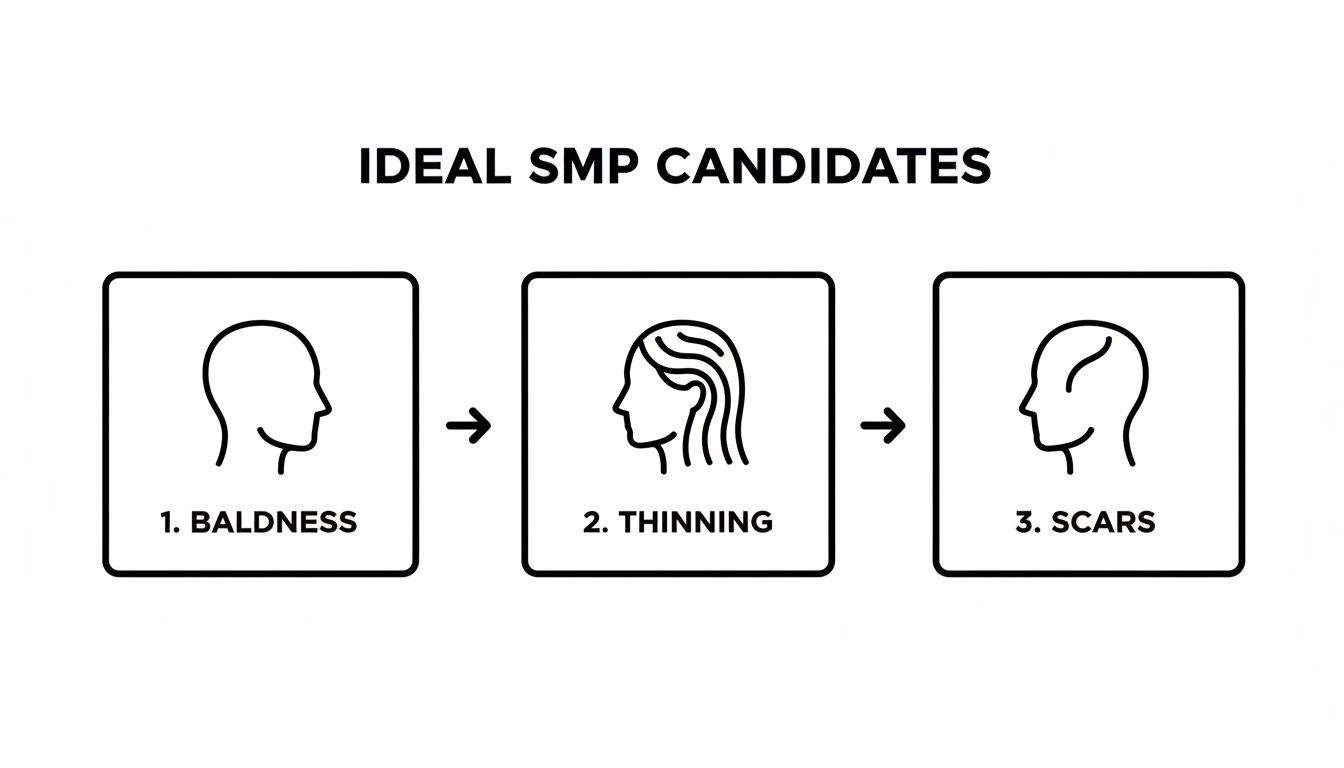
Each of these situations requires a slightly different technique during the sessions to get the most natural-looking result possible.
The entire SMP process is intentionally gradual. By building the density over multiple sessions, the result settles in naturally, allowing for minor adjustments along the way and ensuring the final look is flawlessly integrated with your features.
This patient, methodical approach is what guarantees the final outcome isn't just realistic, but is perfectly suited to you, giving you a look you can wear with total confidence.
Aftercare, Recovery, and Long-Term Maintenance
Think of your new scalp micropigmentation as a serious investment—not just in your appearance, but in your confidence. And like any good investment, it pays to protect it. The brilliant thing about SMP is that it's incredibly low-maintenance, but getting the aftercare right from day one is absolutely crucial for locking in those perfect results.
The healing process itself is pretty straightforward. If you've ever wondered how to look after your new tattoo, you've already got a great head start, as the core principles are very similar. It's all about letting the pigment settle and the skin heal cleanly.
Immediate Aftercare: The First Four Days
These first few days are the most important part of the entire healing journey. Your only job is to keep the area clean, dry, and free from irritation. You’ll probably notice a bit of redness on your scalp, which is totally normal and should fade within 24-48 hours.
For the first four days, stick to these simple rules without exception:
- Keep it dry. That means no washing your head, no swimming, and definitely no saunas or steam rooms.
- Avoid heavy sweating. It’s the perfect excuse to skip the gym or any intense exercise for a few days.
- Hands off! Your scalp might get a little itchy as it starts to heal, but resist the urge to touch, pick, or scratch. This can pull the pigment right out.
- Stay out of the sun. If you have to go outside, wear a loose-fitting hat to shield your scalp.
Want a more detailed breakdown? Check out our complete day-by-day scalp micropigmentation healing timeline guide.
Short-Term Care and Building Long-Term Habits
Once you've cleared that initial four-day hurdle, you can start reintroducing your normal routine. On day five, you can give your scalp a gentle wash using just water. After a week, you can start applying a light, fragrance-free moisturiser to keep the skin from getting dry.
After your final session has completely healed, looking after your SMP is a breeze. It really all comes down to one thing: sun protection. The sun's UV rays are the number one enemy of any pigment, causing it to fade over time.
Protecting your scalp from the sun is the single most important thing you can do to preserve the vibrancy and clarity of your micropigmentation on the scalp for years to come.
Getting into the habit of applying a high-SPF sunscreen (SPF 30+ or higher) or just throwing on a hat before you head outdoors will make a massive difference. It's a tiny step that keeps your results looking crisp and defined.
With the right care, your SMP will look incredible for years. Most people find they only need a quick touch-up session every 3 to 6 years to freshen up the colour. This simple upkeep is what makes SMP such a lasting and brilliantly hassle-free solution for hair loss.
How to Choose a Skilled SMP Practitioner
 Let's be blunt: the final look of your micro pigmentation on scalp treatment comes down to one thing—the person holding the machine. Their skill, experience, and artistic eye will make or break your result. This is easily the most critical decision you'll make in the entire process. A great practitioner delivers a flawless, life-changing result; a poor one can leave you needing expensive and stressful correction work.
It's easy to feel a bit lost when you start looking around, but knowing what to look for will help you pick a true expert. This isn't about finding the cheapest deal or the clinic with the slickest marketing. It’s about verifying genuine expertise.
Look Beyond the Fresh Photos
Here’s a little industry secret: every SMP treatment looks amazing the second it’s finished. The real test? How it looks weeks, months, or even years down the track. When you're checking out a practitioner’s work, your focus has to be on their portfolio of fully healed results.
Here’s what you need to be looking for:
- Healed Results: Always ask for photos of clients taken at least a month after their final session. This is the only way to see how the pigment has settled and to judge the artist’s true skill.
- Diverse Clientele: A top-tier practitioner should have a gallery showcasing a wide range of people. You want to see their work on different skin tones, age groups, and various types of hair loss.
- Natural Hairlines: The hairline is the signature of any SMP artist. It needs to be soft and subtle, not a harsh, ruler-straight line. A skilled artist crafts a hairline that perfectly suits your age and face shape.
- Seamless Blending: For those with thinning hair, the SMP needs to blend perfectly with what you’ve got. You shouldn’t be able to tell where the pigment ends and your real hair begins.
The Consultation Is Your Interview
Think of the initial consultation as your chance to interview the artist, not just get a price. It’s a two-way street. You get to see if they’re professional, knowledgeable, and genuinely invested in helping you. A quality artist is transparent, patient, and focuses on your goals, not on pressuring you into a sale.
Your consultation should feel like a collaborative design session. A great practitioner listens intently to your desired outcome and provides expert guidance on what is realistically achievable to create a look that is both natural and sustainable.
Use this time to ask the hard questions. Pay attention to how they answer. Do they sound confident and experienced? Do they take the time to explain things clearly, without rushing you?
Key Questions for Your Practitioner
When you sit down for your chat, go in prepared. Here are a few non-negotiable questions to ask:
- "Can I see your training and certifications?" A true professional will have no problem showing you their qualifications from reputable institutions.
- "What kind of pigments and equipment do you use?" They should be using specialised SMP pigments and modern equipment designed specifically for the scalp. No shortcuts.
- "How do you ensure hygiene and safety?" The clinic should follow strict health protocols, using single-use needles and keeping everything sterile. This is non-negotiable.
- "Are you fully insured?" Proper insurance is the hallmark of a legitimate, professional business. It protects both you and the practitioner.
Taking the time to do this background check is crucial for finding the best scalp micropigmentation clinic near you.
The demand for skilled practitioners is growing fast. The global micropigmentation market is booming, not just for cosmetics but for helping people manage alopecia and camouflage scars. Australia's high standards for clinic hygiene and safety place it at the forefront of this field, cementing SMP as a recognised treatment. You can learn more about the therapeutic and psychological benefits driving this growth.
For those who see the artistry in this work and want to make a difference, professional training pathways are available. My Transformation offers comprehensive training for individuals in Western Australia looking to master the craft of scalp micropigmentation and build a rewarding career helping others get their confidence back. Whether you're choosing an artist or a training provider, getting it right is the first step toward a successful transformation.
Answering Your Key Questions About SMP
Deciding on scalp micropigmentation is a big step, and it’s only natural to have a head full of questions. From wondering what it feels like to figuring out the cost, you want to be completely sure before you commit. This section is here to give you straight, honest answers to the questions we hear every single day.
Think of this as our chat over a cuppa, where we get right to the point and give you the clarity you need to make the best decision for you.
Does Scalp Micropigmentation Hurt?
This is easily the number one question, and the answer usually puts people at ease. For the vast majority of our clients, SMP is not what you’d call painful. Most describe it as a light, consistent tapping or a mild buzzing sensation—a bit annoying, but definitely tolerable.
On a pain scale where 10 is the worst, most people rate SMP at a 2 or 3 out of 10.
Of course, everyone’s pain threshold is different. You might find some spots, like the temples or the very front of the hairline, are a touch more sensitive than, say, the crown. But it’s crucial to remember this isn't a traditional tattoo. The specialised needles we use are incredibly fine, and they only work in the very top layer of the skin, making it far less invasive. A good practitioner works with a light hand to keep you comfortable from start to finish.
How Much Does SMP Cost in Australia?
The investment for micro pigmentation on scalp in Australia generally falls somewhere between $1,200 and $4,000. It’s a pretty broad range because the final cost is completely tailored to you and your specific situation. This isn't a one-price-fits-all service.
A few key things will shape the final price:
- The Extent of Hair Loss: Someone needing a full scalp treatment for significant balding will naturally need more time and pigment than someone just adding a bit of density to their crown or covering a small scar.
- The Complexity of the Work: Crafting a soft, natural-looking hairline or seamlessly blending the treatment into longer, thinning hair requires a serious level of artistry and time, which can influence the cost.
- The Number of Sessions: Most clients need between two and four sessions to build up the perfect density and achieve that hyper-realistic finish. Your final quote will cover this entire multi-session process.
When you come in for a consultation, we’ll take a proper look at your scalp, chat about the look you’re going for, and then give you a precise, all-inclusive quote. No surprises.
Will SMP Look Fake or Turn Blue?
This is a totally valid concern, especially if you’ve seen bad tattoos or old-school cosmetic work. The short answer is: absolutely not. When SMP is done correctly, it will not look fake and will never turn blue. The magic is in the specialised tools and, most importantly, the pigments.
SMP pigments are nothing like tattoo ink. They are carbon-based and specifically designed to heal into the skin as a soft, neutral, grey-toned dot that perfectly mimics the look of a natural hair follicle. They have zero of the colourants that cause traditional tattoos to break down into those dreaded blue or green hues over time.
An experienced artist is also a master of illusion. They know exactly how to match the pigment to your skin tone and existing hair, creating a soft, staggered hairline that avoids any harsh, doll-like lines. The treatment is built up gradually over several sessions, which is how we achieve a result that is incredibly subtle and undetectable.
Can Scalp Micropigmentation Be Removed?
Yes, it can. While we consider SMP a permanent solution to hair loss, we understand that life changes, and it's good to know you have options. The best and most common way to remove SMP is with a laser.
The process is very similar to standard laser tattoo removal. A specialised laser targets the pigment, breaking the particles down so your body’s own immune system can naturally flush them away.
The good news is that because SMP pigment is placed much more shallowly in the skin than traditional tattoo ink, it’s often much easier and quicker to remove. It usually only takes a few laser sessions to either fade it significantly or clear it completely. If you're curious about the specifics, you can learn more by reading our detailed article on whether SMP can be removed.
Are you ready to stop worrying about hair loss and start feeling great about how you look? The answers you're searching for are just a conversation away. At My Transformation, we’re here to walk you through every aspect of scalp micropigmentation so you can make a choice you feel genuinely good about.