

Head Tattoo for Hair Loss Explained
When you hear someone talk about a 'head tattoo for hair loss', they're referring to a highly specialised cosmetic procedure known as Scalp Micropigmentation, or SMP for short. It's a clever, non-surgical way to tackle hair loss by using micro-needles to place tiny dots of pigment into the scalp.
The end result? It masterfully creates the illusion of a full head of hair, styled in a sharp buzz-cut. The technique is also fantastic for restoring receded hairlines and adding a look of natural density to thinning patches.
What Is a Head Tattoo for Hair Loss
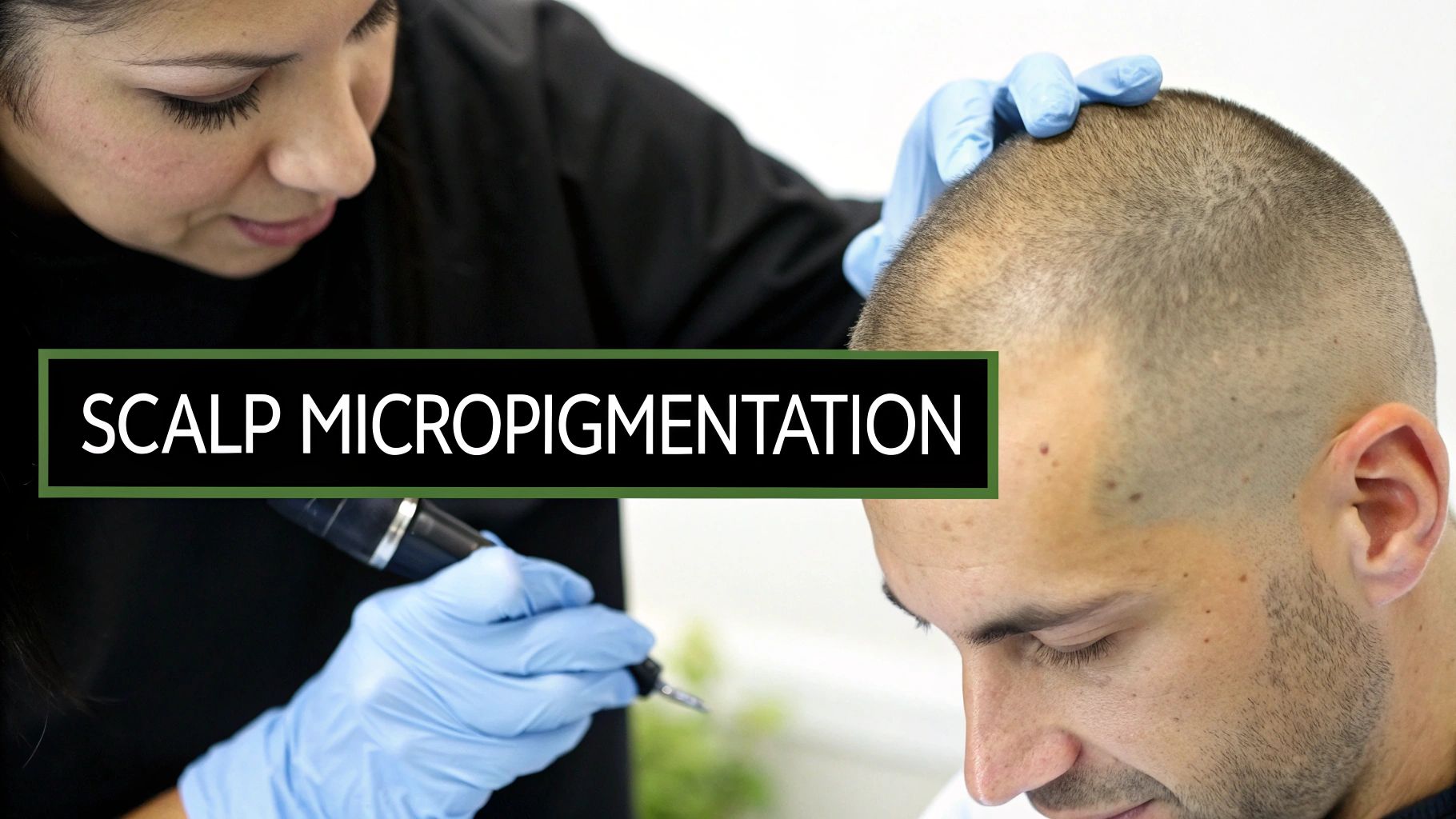
The term "head tattoo" can be a bit misleading. Your mind probably pictures traditional body art, but SMP is in a league of its own. It's less about making a bold artistic statement and more about meticulous, subtle enhancement. Think of it as a form of pointillism for your scalp, where a skilled practitioner uses state-of-the-art equipment to place thousands of layered dots, each one perfectly mimicking a natural hair follicle.
This procedure offers a sophisticated answer to hair loss that doesn't involve surgery or ongoing medication. The whole point is to achieve a seamless, natural look that's virtually undetectable to the naked eye. It’s become an incredibly popular choice for both men and women who want to reclaim the appearance of a strong hairline or denser hair.
The Key Differences From Body Art Tattoos
It's really important to understand that SMP and a regular tattoo are worlds apart. Yes, they both involve placing pigment in the skin, but that's where the similarities end. The equipment, techniques, pigments, and—most importantly—the final goal are completely different. These distinctions are what ensure the result looks like real hair, not just a patch of ink.
Here's a quick rundown of what sets them apart:
- Needle Depth: SMP pigments are placed in the upper dermis of the skin, which is much shallower than a traditional tattoo. This precision is key; it stops the pigment from spreading over time and looking blurry.
- Pigment Type: The pigments used for SMP are specifically formulated to match natural hair colours. They're also designed to resist changing colour, unlike standard tattoo inks which can often fade to a bluish or greenish tint.
- Technique and Tools: Practitioners use incredibly fine, single-use needles to create impressions the size of an actual hair follicle. This is a far cry from the larger needle configurations used for lining and shading in body art. You can learn more about the specifics of what scalp micropigmentation is in our detailed guide.
Scalp Micropigmentation vs Traditional Tattoo
To make it even clearer, let's compare them side-by-side. While both are forms of tattooing, their application and purpose couldn't be more different.
| Feature | Scalp Micropigmentation (SMP) | Traditional Body Tattoo |
|---|---|---|
| Purpose | To replicate hair follicles and create the illusion of density. | Artistic expression, decoration, and symbolism. |
| Needle Size | Micro-fine needles (often single-point) for precision dots. | Various needle groupings for lines, shading, and colouring. |
| Pigment Depth | Upper dermis (approx. 2mm deep) to prevent spreading. | Deeper into the dermis for longevity and boldness. |
| Ink/Pigment | Specially formulated, carbon-based pigment that resists colour change. | Wide range of coloured inks that can fade over time. |
| Technique | Pointillism; layering tiny dots to build up density. | Lining, shading, packing, and colouring techniques. |
| Pain Level | Generally considered less painful; mild to moderate discomfort. | Can be significantly more painful, depending on the location. |
| Longevity | Semi-permanent; requires touch-ups every 3-6 years. | Permanent, though colours may fade and lines may blur. |
As you can see, SMP is a highly specialised craft focused entirely on creating a natural and realistic cosmetic effect.
Scalp Micropigmentation is all about subtlety and realism. Every single dot is strategically placed to build up density and recreate a hairline that perfectly suits your facial structure, giving you a clean, well-maintained look.
Here in Australia, the demand for genuine hair loss solutions is booming. The hair loss treatment market was valued at USD 133.84 million in 2024 and is on track to more than double by 2033. This surge shows a clear shift towards non-invasive options like SMP, which has gained serious traction for its immediate and impressive visual results.
Real-World Benefits of Scalp Micropigmentation
Opting for a head tattoo, or Scalp Micropigmentation (SMP), is about much more than just tweaking your appearance. It’s really about getting back the control and confidence that hair loss can so easily chip away at. The most immediate and satisfying benefit is that psychological lift you feel when you look in the mirror and see a sharp, natural-looking hairline again.
This isn’t just about looks; it's about reclaiming a piece of yourself. Many people find this new self-assurance spills over into their social and professional lives, finally freeing them from the constant self-consciousness that often comes with thinning hair.
A Non-Invasive and Scar-Free Solution
Unlike surgical hair transplants, SMP is a completely non-invasive procedure. There are no scalpels, no stitches, and no long, painful recovery. You can pretty much walk out of the clinic and get right back to your routine with almost no downtime.
This is a huge plus for anyone looking for a serious solution without the risks and recovery time of surgery. Better yet, SMP leaves no scars. In fact, it’s a brilliant way to camouflage existing scars from past hair transplant procedures, blending what was once a noticeable imperfection seamlessly into your new look.
The real beauty of SMP lies in its simplicity and effectiveness. It provides a permanent cosmetic solution that allows you to live without worry—you can swim, exercise, and go about your day without the fear of a hairpiece shifting or concealer running.
This is a particularly big deal here in Australia, where an active, outdoor lifestyle is the norm. It's a widespread issue, too. Studies show that about 50% of Australian men experience some form of male-pattern baldness by age 50, and that number jumps to a staggering 80% by age 70. Our high UV exposure often doesn’t help, which makes a low-maintenance solution like SMP all the more attractive.
Lasting Results with Minimal Fuss
Once your SMP sessions are done, the day-to-day maintenance is refreshingly simple. You can say goodbye to messy hair fibres, expensive hair systems, and the daily grind of medications. Your look is just… there. Always ready.
The results are built to last, usually looking great for several years before you might need a simple touch-up to refresh the colour. This makes a head tattoo for hair loss an incredibly practical and cost-effective choice for the long haul.
Here’s a quick rundown of the low-maintenance routine:
- Keep it moisturised: A basic daily moisturiser is all you need to keep your scalp healthy and the pigment looking sharp.
- Protect from the sun: Using a high-SPF sunscreen on your scalp is the most important thing you can do to prevent the pigment from fading.
- Maintain the length: If you have some remaining hair, keeping it buzzed short ensures a perfect, seamless blend with the SMP.
Choosing SMP means you’re picking a solution that fits your lifestyle, not one that forces you to change it. To get a deeper dive into all the advantages, you might want to check out our article exploring the benefits of getting a scalp tattoo.
Is a Head Tattoo for Hair Loss Right for You?
Scalp Micropigmentation is a game-changer for many, but it's not a one-size-fits-all solution. Figuring out if you’re a good candidate is the most critical first step before you even think about booking a session. Getting this right from the start means you’ll end up with a result that meets your expectations and gives you that real confidence boost you're after.
This is about more than just covering up baldness. It’s an art form that needs the right canvas. Things like your specific type of hair loss, your skin condition, and even your lifestyle play a huge part in whether SMP will deliver that seamless, hyper-realistic look you want.
Who Makes a Great Candidate for SMP?
Some people are practically made for this treatment. While SMP is incredibly versatile, it truly shines in a few key scenarios.
You're likely a perfect fit if you fall into one of these categories:
- Men with Pattern Baldness: Got a receding hairline or thinning on the crown? If you’re happy to rock a sharp, buzzed look, SMP is your best friend. It masterfully recreates the appearance of a full head of shaven hair follicles.
- Anyone with Thinning Hair: Both men and women with diffuse thinning can see incredible results. By tattooing tiny 'follicles' across the scalp, SMP reduces the stark contrast between your hair and skin, making what you have look much thicker and fuller.
- People with Scalp Scars: Scars from old injuries or hair transplant surgeries (both FUT and FUE) can be a real knock to your confidence. SMP is brilliant at camouflaging them, making the scar tissue blend right in with the surrounding hair.
- Those with Alopecia Areata: For the patchy hair loss that comes with alopecia areata, SMP can be used to fill in those bald areas, creating a consistent, even look across the entire scalp.
When SMP Might Not Be the Best Move
Just as important is knowing when to pump the brakes. SMP isn't recommended if you have certain active scalp conditions, mainly because inflammation can mess with how the pigment heals and settles into the skin.
Candidacy isn’t just about hair loss—it's about the health of your scalp. A professional consultation is non-negotiable to check your skin and make sure you're set up for a great, long-lasting result.
It’s best to hold off on a head tattoo if you're dealing with any of these:
- Severe, active psoriasis or eczema on your scalp.
- A history of developing keloid scars.
- Widespread or significant active acne in the treatment area.
While SMP has often been seen as a solution for men, it's becoming incredibly popular with women. In fact, women represent the fastest-growing group seeking alopecia treatments, with the market projected to grow by 10.78% each year from 2024 to 2032. This surge shows a real demand from women looking for effective ways to add density and combat diffuse thinning. You can dive deeper into the trends in the Australian alopecia treatment market to see how the industry is evolving.
Your Scalp Micropigmentation Journey Step by Step
Deciding to get a head tattoo for hair loss can feel like a huge decision, but the actual process is surprisingly straightforward and collaborative. It's not a one-and-done deal; think of it more as a project we build together over several sessions. This gradual approach is key to achieving a truly natural look, allowing us to build up the colour and density in layers, just like real hair.
Each appointment has a specific purpose, with every layer of pigment adding more depth and realism than the last. It's a bit like an artist creating a detailed painting. The first session sketches out the foundation, and the next few add the subtle shading and intricate details that make the final result pop. This multi-session method ensures the finished look is perfectly blended and hyper-realistic.
The Initial Consultation and Design
Everything kicks off with a detailed consultation. Honestly, this is the most critical part of the entire journey. It's where you and your practitioner get on the same page and map out your new look. We’ll talk about what you want to achieve, the kind of hairline you’re after—maybe something sharp and defined or a softer, more mature look—and the overall density you’re aiming for.
A good practitioner will then grab a wax pencil and draw your proposed new hairline directly onto your scalp. This is a game-changer, as you get to see exactly what it will look like before a single drop of pigment is applied. It’s a completely collaborative part of the process, and your feedback is vital to creating a style that complements your face and fits who you are.
This infographic breaks down the simple but crucial checks that need to happen before we start.
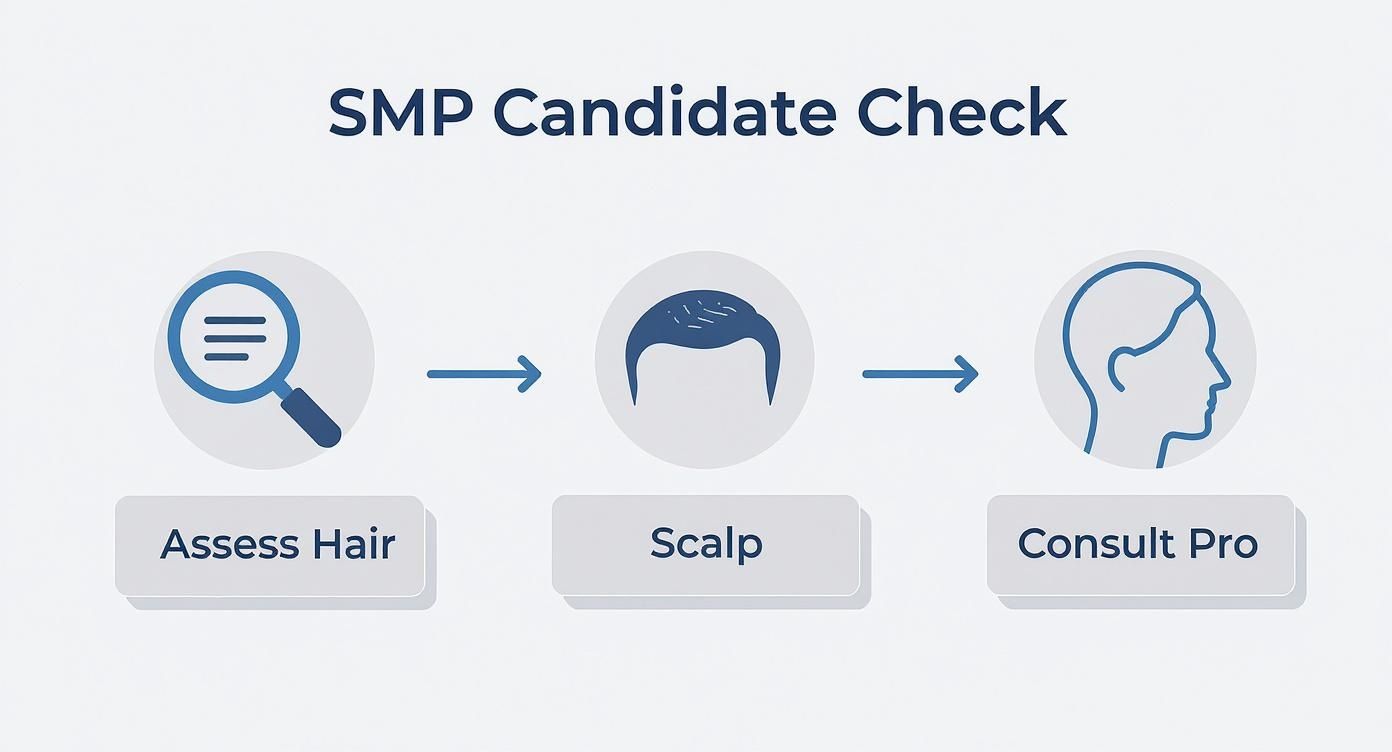
Making sure we've properly assessed your hair, scalp health, and goals is the first step towards a great outcome.
Your First and Second Sessions
The first session is all about laying the groundwork. Your practitioner will select a lighter shade of pigment to create the first layer of tiny follicle replications across the entire area. This appointment usually takes between 2-4 hours and sets the shape of your new hairline while establishing a base level of coverage. You’ll walk out already seeing a big difference, but the real illusion of density comes later.
About a week later, you’ll be back for round two. This is where we really start to build the density. Using a slightly darker pigment, your artist will add thousands more tiny dots, carefully placing them between the impressions from the first session. This layering technique is what tricks the eye into seeing a full, thick head of hair.
To give you a clearer idea, the SMP process is typically spread out over a few weeks. Each session builds on the last, allowing for healing and gradual pigment development.
Typical SMP Treatment Timeline
| Session | Primary Goal | Typical Duration |
|---|---|---|
| One | Establish the foundational layer, create the hairline, and set the shape. | 2-4 hours |
| Two | Add density and a darker shade of pigment to create a fuller appearance. | 2-4 hours |
| Three | Perfect the blend, add fine details, and make any final colour adjustments. | 1-3 hours |
This structured timeline ensures the pigment has time to settle between sessions, leading to a much more authentic and lasting result.
Your SMP journey is a partnership between you and your artist. Clear communication during the design phase and patience through the multi-session process are the keys to achieving a result that restores not just your hairline, but your confidence.
The Finalising Touches and Aftercare
Your third session (and sometimes a fourth, if needed) is all about perfection. This is where the artist adds the finishing touches, seamlessly blending the treatment into any existing hair and making sure the colour is spot-on. It's this final stage that makes your new look appear completely natural from every angle.
Once everything is done, the initial aftercare is simple but so important. You’ll need to avoid washing your scalp or doing any heavy, sweaty exercise for a few days. This gives the pigment the time it needs to settle in properly. For a deeper dive into the whole procedure, you can check out our guide on what’s the process of getting a hair tattoo. By following these proven steps, you’re on the right path to a fantastic, long-term solution for hair loss.
Protecting Your Investment After Treatment
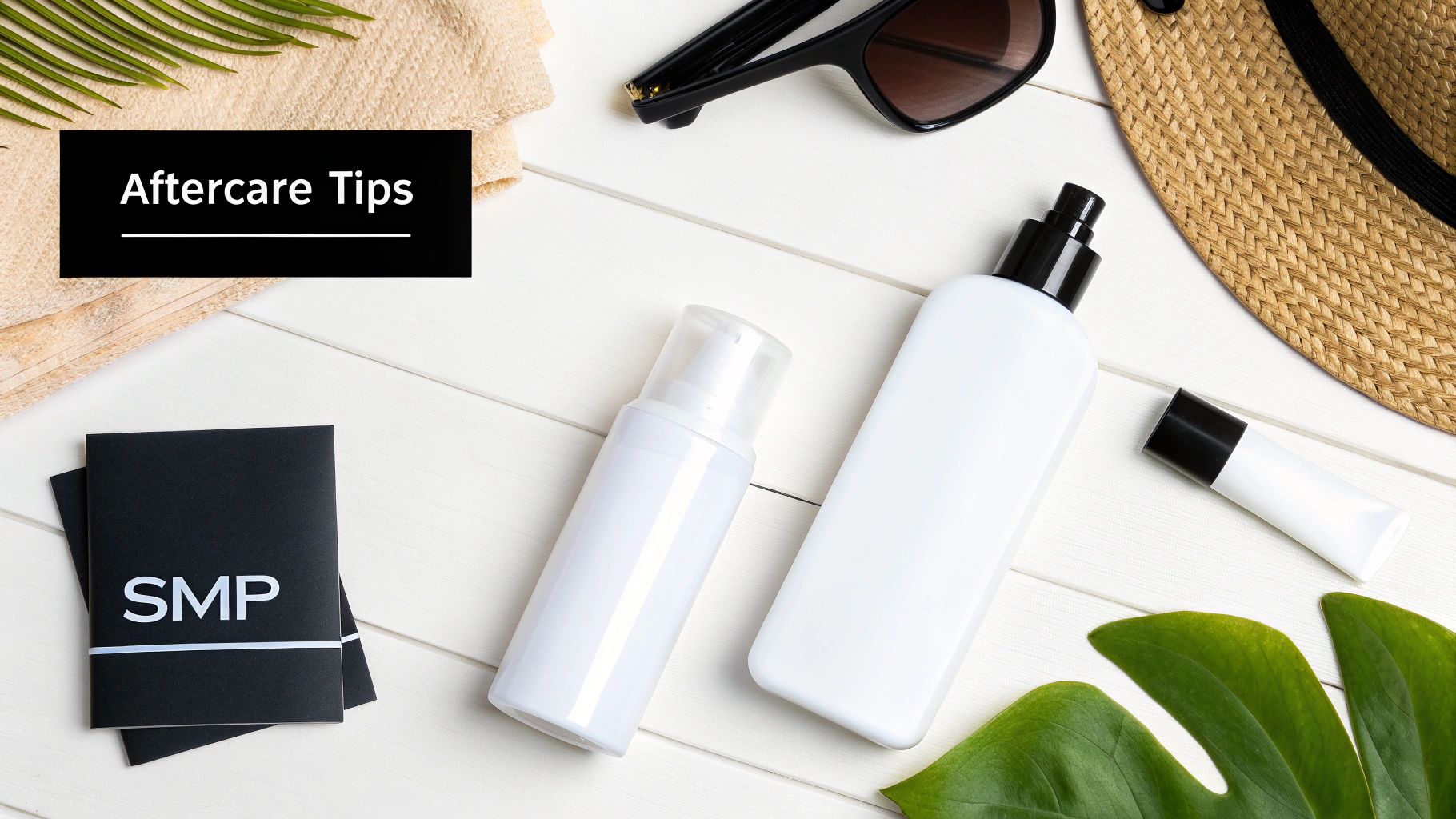
Once your final scalp micropigmentation session is in the books, the focus pivots to protecting your new look. Think of your fresh scalp tattoo like a masterpiece painting; that initial healing period is absolutely crucial for letting the pigment settle perfectly. It’s what ensures the final result looks sharp and defined for years to come.
Proper aftercare really isn't complicated, but it's the key to getting the best possible outcome. The first few days are especially important as the tiny micro-wounds heal and the pigment locks into place. A few simple rules will make all the difference, preventing any issues and keeping the colour true.
Immediate Aftercare: The First Four Days
The golden rule for the first four days following each treatment is simple: keep your scalp completely dry and don't do anything that makes you sweat heavily. This is when your scalp is at its most vulnerable, so a little caution goes a long way.
Here’s a quick checklist to stick to:
- Keep it Dry: Don't wash your head or let the shower water run over it. If you swim, you'll need to take a break. Moisture can mess with the healing and cause the pigment to settle unevenly.
- No Heavy Sweating: This means holding off on intense gym sessions, saunas, and steam rooms. Sweat can actually push the pigment out of the skin before it has a chance to set properly.
- Stay Out of the Sun: Your healing scalp is sensitive to direct sunlight. If you have to be outdoors, wear a loose-fitting hat to shield it from harsh UV rays.
Following these steps is what allows each tiny dot to heal crisply, creating that incredibly realistic hair follicle effect we're aiming for.
Aftercare isn't just a suggestion; it's a vital part of the treatment process. The effort you put in during that first week directly influences how great your scalp tattoo will look for the next several years.
Long-Term Maintenance for Lasting Results
Once you're past that initial healing window, looking after your head tattoo is incredibly easy. Long-term care is less about strict rules and more about building a couple of simple, healthy habits to keep the pigment looking fresh.
Your two biggest priorities will be sun protection and moisturising. The sun's UV rays are the number one enemy of any pigment, causing it to fade over time. To fight this, make a high-SPF sunscreen (SPF 30+ or higher) a non-negotiable part of your daily routine—especially in the strong Australian sun.
Keeping your scalp well-moisturised is just as important. It prevents dryness and flaking, which helps the pigment appear richer and more defined. A quality, non-greasy daily moisturiser is perfect for the job. For a more detailed guide, check out our 5 top tips to care for your scalp after SMP. These simple practices will safeguard your investment, ensuring your results stay sharp and impressive for years to come.
How Much Do Head Tattoos Cost in Australia?
So, you're thinking about a head tattoo for hair loss, and one of the first things on your mind is probably the price tag. It's a fair question. In Australia, a complete Scalp Micropigmentation (SMP) treatment is an investment in your confidence, and you can generally expect the cost to be somewhere between $1,200 and $4,500.
That's a pretty wide range, I know. But there's a good reason for it: SMP isn't a one-size-fits-all product. The final price is completely tailored to you, your level of hair loss, and the result you're after.
What Goes Into the Final Price?
A few key things will determine the final quote you receive from a clinic. Understanding these factors helps make sense of why the pricing is so specific to each person.
Your final cost will ultimately come down to:
- Your Level of Hair Loss: This is the biggest piece of the puzzle. Someone just looking to sharpen up their hairline will need far less work than a person who needs full coverage across the entire scalp. More area means more time, more pigment, and a higher cost.
- Scar Camouflage: Do you have any scars you want to hide? Whether they're from an old injury or a previous hair transplant surgery, working on scar tissue is a delicate process. It takes a specialised technique and extra time to blend it seamlessly, which can add to the total cost.
- The Artist's Experience: You'll find that highly skilled artists with a proven track record and a brilliant portfolio often charge more. And honestly, they should. You're paying for their expertise, which is absolutely critical for getting that hyper-realistic, natural look that won't have people guessing.
It's easy to get drawn in by a low price, but try to think of SMP as a long-term investment. Choosing a practitioner based on their skill and experience, rather than just finding the cheapest deal, is the best way to guarantee a safe, quality result you'll be proud of for years to come.
Remember, unlike hair systems that need replacing or medications you have to keep buying, SMP is typically a one-off cost with very little maintenance. When you look at it that way, it often makes more financial sense in the long run.
For a deeper dive into what to expect, check out our full guide on scalp micropigmentation cost in Australia. It'll help you budget properly and understand all the details.
Got More Questions About Head Tattoos?
It's completely normal to still have a few questions floating around, even after you've learned about the process. Deciding on a head tattoo for hair loss is a big step, and you want to be 100% sure before you move forward. Let's tackle some of the most common queries we get asked every day.
These are often the final, practical things people want to know before committing, so let's get right into them.
So, Does Scalp Micropigmentation Actually Hurt?
This is, without a doubt, the number one question we hear. The short answer is that it's more uncomfortable than painful. Most of our clients put the sensation at a 2 or 3 out of 10 on the pain scale. Because the needles are so fine and only just break the surface of the skin, it’s a world away from the feeling of a traditional tattoo.
The sensation is often described as a light, constant tapping or even a bit of a mild irritation. Sure, some spots like the temples might be a touch more sensitive, but the feeling is very manageable for the whole session.
Here’s a good way to think about it: if a normal tattoo is like a persistent bee sting, SMP is more like having an electric shaver pressed firmly against your scalp. It’s a strange feeling, but not what most people would call painful.
How Long Does a Head Tattoo Last?
While scalp micropigmentation is considered permanent, you'll find the pigment does lighten gradually over the years. You can expect the results to look sharp and fresh for about 4 to 6 years before you'll want to pop in for a quick touch-up. This just brings back that original depth and definition.
A few things can affect how long it lasts:
- Sun Exposure: This is the biggest one. Regular, unprotected time in the sun will cause the pigment to fade faster.
- Your Skin Type: People with particularly oily skin might find the pigment softens a bit quicker.
- Lifestyle: Your own immune system and general health also play a part in how your body holds the pigment.
A quick top-up session every few years is all it takes to keep your results looking perfect.
What if I Change My Mind? Can It Be Removed?
Absolutely. If you decide down the track that it's no longer for you, a head tattoo for hair loss can be removed. The go-to method is laser removal, which is very effective. Since the pigment isn't placed as deeply as traditional tattoo ink, it usually takes fewer laser sessions to clear it completely.
This gives you great peace of mind, knowing there’s a safe and proven exit strategy if your style or preferences ever change.
Ready to see how a head tattoo could be the answer for you? At My Transformation, Michael is committed to helping you find the ideal solution for your hair loss. Book your free consultation today and take the first step towards renewed confidence.