

Hair Transplant Healing Timeline: What to Expect from Day 1 to Final Results
The first two weeks after your hair transplant are without a doubt the most crucial period. This is where you lay the foundation for your entire result. It’s all about immediate aftercare, managing the expected swelling and redness, and most importantly, protecting those delicate new grafts. Honestly, how well you look after yourself now directly impacts the success of the whole procedure.
The First Two Weeks: Your Foundation for Growth
Think of this early recovery phase like preparing fertile soil before planting a seed. The attention and care you give your scalp now will determine the survival rate of each follicle and, ultimately, how good your final result looks. This is the most delicate stage of the entire hair transplant healing timeline.
Your journey starts the moment you walk out of the clinic. Your scalp will feel tender, and you'll see tiny red dots in both the donor and recipient areas. Following your surgeon's aftercare instructions to the letter isn't just a suggestion—it's essential.
This visual timeline gives you a great overview of the key milestones you can expect as your body kicks into healing mode.
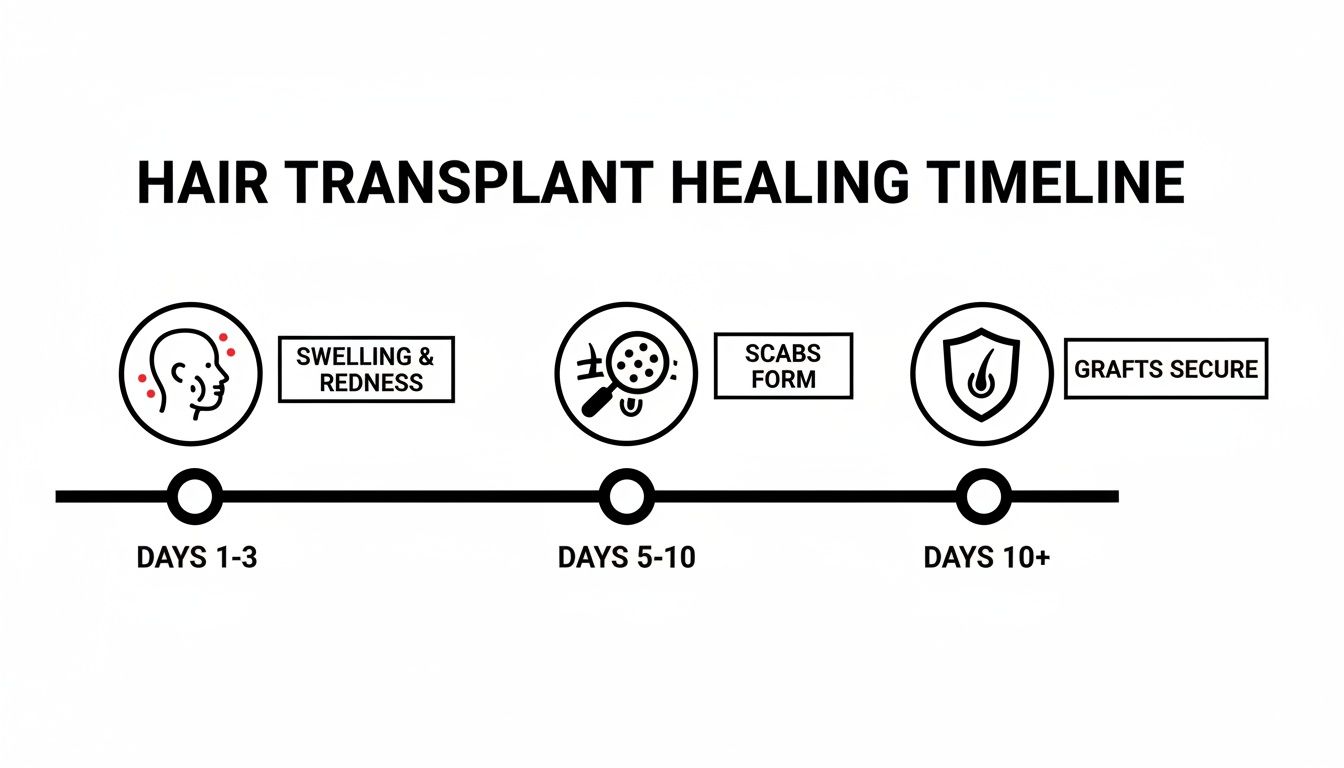
As you can see, the initial swelling and redness are quickly followed by scabbing. While it might not look pretty, this is actually a fantastic sign that the grafts are beginning to anchor themselves in their new home.
Immediate Post-Op Healing At A Glance (Days 1-14)
To give you a clearer picture, here’s a quick summary of what to expect day-by-day during this initial fortnight.
| Timeframe | What to Expect | Key Aftercare Step |
|---|---|---|
| Days 1-3 | Swelling (can move to the forehead), redness, tenderness. | Sleep with your head elevated on pillows to reduce swelling. |
| Days 2-4 | Tiny scabs or crusts form around each graft. Itching may begin. | Do not scratch, pick, or touch the scabs. Resist the urge! |
| Days 5-7 | Grafts start to feel more secure. Scabs begin to soften. | Begin the gentle washing routine as instructed by your clinic. |
| Days 10-14 | Most scabs will have fallen off. Redness fades to a light pink. | Continue gentle washing and avoid any strenuous activity. |
Navigating these first two weeks carefully is your main priority for setting up a successful long-term result.
What to Expect Day By Day
In the first 24 to 72 hours, swelling is public enemy number one. It often starts on your scalp but can migrate down to your forehead and even around your eyes. This is just a normal inflammatory response from your body and usually peaks around day three before it starts to go down. Sleeping with your head propped up is your best defence.
You’ll also notice redness in both the donor and recipient areas, which looks a bit like a mild sunburn. Again, this is completely normal and shows good blood flow is reaching the area to help it heal.
From day two to four, you'll see tiny crusts or scabs forming around each individual transplanted hair. This is a great sign; it’s the body’s natural way of protecting the new grafts as they heal. This is also when the itching can start. It’s a sign of healing, but whatever you do, do not scratch or pick at the scabs.
Your number one job during this first week is to protect the grafts from being knocked out. This means no direct pressure, sleeping carefully, and following the very specific washing instructions your clinician gave you.
The Turning Point: Grafts Securing
Around days five to seven, you’ll hit a bit of a turning point. The scabs will start to soften and fall off on their own, usually during your gentle washes. By now, the transplanted grafts are becoming much more stable and are far less likely to be accidentally dislodged.
By the end of the second week, around day 10 to 14, most, if not all, of the scabs should be gone. This will reveal the short transplanted hairs sitting underneath. The redness will have faded significantly, though you might still have a slight pinkish tinge for a few more weeks. The donor area will be healing up nicely too, with your existing hair starting to cover the tiny extraction points.
If you want to dive deeper into this phase, we have a detailed guide covering hair transplant recovery that you might find helpful. At this stage, you’ve made it through the most fragile part of your healing journey. Well done.
The Quiet Phase: What to Expect When The New Hairs Fall Out
You’ve made it through the first couple of weeks, the scabs are gone, and you’re starting to get used to the look of your newly transplanted hair. Then, something happens that can feel pretty alarming—those tiny hairs start to fall out.
This is what we call “shock loss,” and while it sounds scary, it's a completely normal, temporary, and even necessary part of the process.
This shedding usually kicks in around week two and can last for several weeks. Seeing your new hair disappear can be disheartening, but trust me, it’s not a sign that the transplant has failed. It’s actually a sign that everything is right on track.
So, Why Does Shock Loss Happen?
Think of it this way: each transplanted hair follicle is like a small tree that's just been moved to a new garden. The process of being uprooted and replanted is a shock to its system. In response, the follicle goes into a temporary dormant state to focus all its energy on establishing a new blood supply and settling into its new home.
As the follicle goes dormant, it sheds the existing hair shaft. The key thing to remember is that only the hair is falling out. The precious follicle—the part that actually grows the hair—is safe and sound beneath your scalp, gearing up for its new growth cycle.
This shedding is simply the follicle hitting the reset button. It’s clearing out the old to make way for a brand-new, stronger, and permanent hair to grow in its place.
This is all part of a natural process. If you want to dive deeper into the science behind it, our article on the hair growth cycle is a great resource.
What This "Quiet Phase" Looks and Feels Like
While shock loss is different for everyone, there are a few things you can generally expect during this time. Knowing what's coming helps you stay patient and trust the journey.
Here’s a quick rundown of what to expect:
- When It Starts: Shedding typically begins between weeks 2 and 4 and often peaks around the 6 to 8-week mark.
- How It Looks: Your recipient area will likely look quite thin again, sometimes even thinner than it did before your procedure. Don’t panic; this is temporary.
- How Much You'll Shed: Some people lose almost all the transplanted hairs, while others only notice minor shedding. Both scenarios are perfectly normal.
During this period, your scalp is still busy healing. Any lingering redness will continue to fade, and the donor area will be well on its way to recovery. Your existing hair will grow back to cover the extraction sites, making them virtually invisible.
This stage is really a waiting game. It might not look like much is happening on the surface, but underneath, your follicles are working hard to prepare for the next big phase. This quiet period is just setting the stage for the real growth that’s about to begin.
Witnessing The First Sprouts Of New Hair
After a few months of what feels like a whole lot of waiting, we finally get to the good part. This is the stage where your patience really starts to pay off, and you see the first exciting signs that your procedure was a success.
Right around the three to four-month mark, you'll begin to spot the very first sprouts of new hair pushing their way through the scalp. Don't be surprised if they look a little underwhelming at first; they're often super fine, almost like baby hair, and can come in a bit wiry or uneven. This is completely normal.
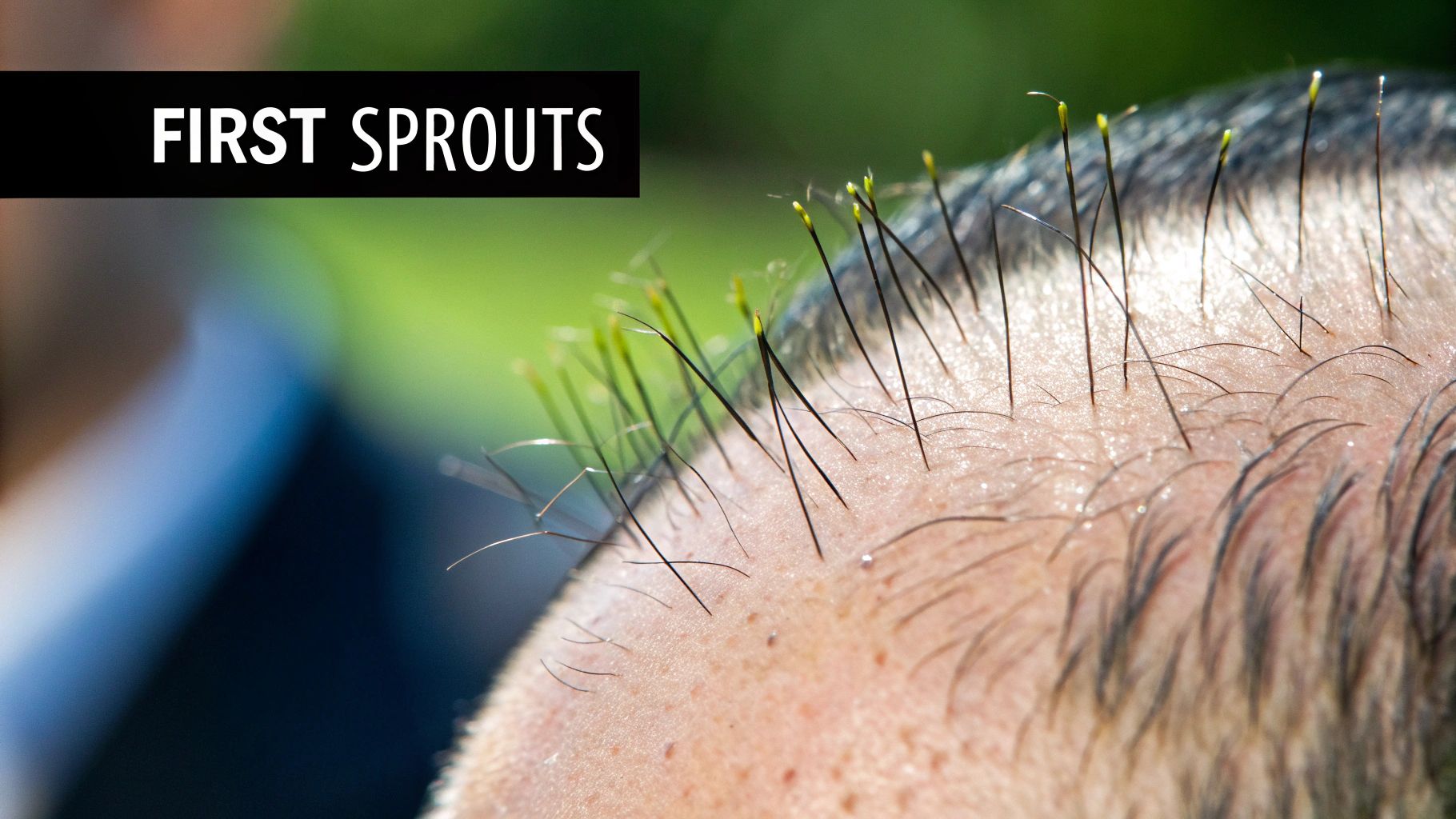
I always tell my clients to think of it like planting a new lawn from seed. The first shoots of grass are always a bit delicate and sparse. It takes time for them to thicken up and grow into a lush, full turf. Your new hair is on the exact same journey.
Understanding The Initial Growth Phase
So, what's happening under the skin? By now, those transplanted follicles have settled into their new home, established a healthy blood supply, and have finally woken up from their resting phase. They're now kicking into the anagen (growth) phase and getting down to the business of producing brand new, permanent hair.
Everyone’s experience is slightly different, but you can generally expect a few things during this early growth spurt:
- Fine and Thin Texture: Your first hairs will probably be much softer and thinner than your existing native hair. They'll gain thickness over the coming months.
- Patchy Emergence: The growth won't be a uniform wave across your scalp. Some follicles are early birds, while others take a little longer to get going, which can look patchy at first.
- Potential for Folliculitis: As these new hairs break through the skin, you might notice some small, pimple-like bumps. This is usually just a bit of folliculitis (inflammation of the hair follicle) and typically clears up on its own.
This stage is all about small victories. You won't have dramatic density just yet, but seeing those first sprouts is the proof you've been waiting for—the transplant worked, and your follicles are alive and well. Even though it feels slow, you could see approximately 20-30% of your final result by the end of month four.
The moment you spot those first few hairs is the definitive sign that the dormant "shedding" phase is officially over. It’s when your patience starts turning into genuine excitement for what's ahead.
How to Nurture Your New Hair Sprouts
Looking after these new arrivals is pretty straightforward, but it's crucial for encouraging strong, healthy growth. Your scalp is much more robust now than it was in the first few weeks, but a gentle touch is still the best policy. Just stick to your clinic's advice—usually gentle washing and steering clear of harsh chemicals or intense heat styling.
Protecting your scalp from the sun is also non-negotiable. The new skin in the recipient area is still quite sensitive, and a sunburn can easily damage the follicles and slow down your progress. A loose, comfortable hat is your best friend when you're spending time outdoors.
This whole period is about nurturing what has started and having faith that more follicles will soon join the party. The journey from these first wispy hairs to a full, dense result is a gradual one, but the most dramatic changes are now just around the corner.
While a hair transplant relies on this natural regrowth process, it's useful to see how it stacks up against other options. You can learn more about how a FUE hair transplant differs from SMP in our detailed guide.
Building Density And Seeing Real Transformation
After months of waiting, this is the phase you've been dreaming of. The first few months of growth are encouraging, but this is where the magic really happens. Those initial fine, wispy hairs start to mature, kicking off a period of incredible visual change. This is when you finally see the tangible results you've been holding out for.
From about month seven, the growth rate really picks up speed. If the first sprouts were the opening act, this is the headliner. You'll start to see a serious improvement in coverage as more follicles wake up and join the party, while the hairs that are already there get stronger and longer.
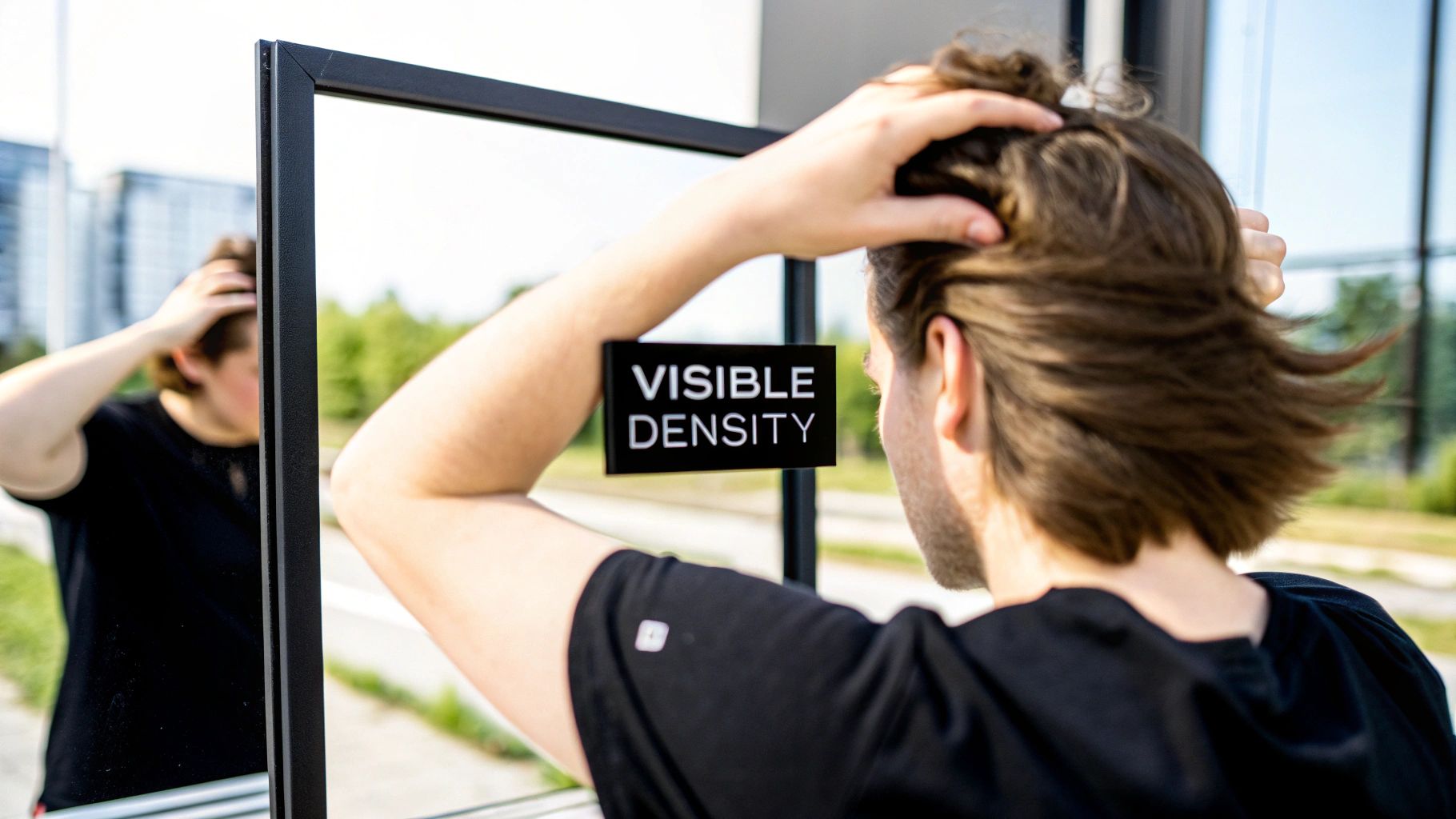
Honestly, this is when looking in the mirror starts to get exciting again. The slightly patchy look from the early months begins to fill in, giving way to a much more uniform and dense appearance. For the first time, you can actually start thinking about styling your new hair with some real confidence.
The Maturation Of Your New Hair
A critical part of this stage is the maturation of the hair shafts themselves. The first hairs to pop through are often thin and a bit weak—like pioneers testing the waters. Over the next several months, they are joined and replaced by much more robust, healthy hairs.
Think of it like a forest. The first growth is like thin saplings, but as they cycle through their natural phases, they mature into strong, sturdy trees. This change in the calibre of each hair is what creates that powerful illusion of density and fullness.
You'll notice a few key changes as the hair matures:
- Increased Thickness: Each individual strand of hair will become noticeably thicker and stronger, which massively contributes to the overall sense of volume.
- Improved Texture: If your new hair felt a bit wiry or kinky at first, it will start to soften. The goal is for it to eventually match the texture and feel of your original hair.
- Darker Colour: As the hair shaft thickens, its colour deepens, allowing it to blend in perfectly with the surrounding hair.
This progressive thickening is what it’s all about. A single thick, healthy hair can provide the same visual coverage as several very fine ones. It’s why your results can seem to improve exponentially during these months, even if the total number of active follicles isn't changing as dramatically.
By the twelve-month mark, most people are looking at about 80-90% of their final result. This is a huge milestone. The outcome is now clear, and any changes from here on out are more like icing on the cake rather than fundamental growth.
Styling Your Hair And Getting Your First Haircut
As your hair gets longer and thicker, you’ll finally get the green light to properly style it. For many, this is a moment they’ve been anticipating for years. That said, it pays to be a little strategic with your first few haircuts to really make the most of your new look.
Tips for Your First Post-Transplant Haircut:
- Wait for Sufficient Length: Don't be in a rush to get to the barber. Give your new hair time to grow long enough to be properly styled, which also allows more of the slower-growing follicles to catch up.
- Talk to Your Stylist: Be open with your barber or stylist and let them know you've had a transplant. A good stylist can recommend a cut that enhances the look of density and works with any slight texture differences between your new and native hair.
- Consider a Softer Style: For the first few cuts, a style that doesn't need harsh products or create a lot of tension on the scalp is a great idea. A scissor cut is often a better choice than using clippers right down to the scalp on the recipient area.
This phase is incredibly rewarding. All the patience and careful aftercare you put in during the early days of the hair transplant healing timeline finally pay off. You can start to truly enjoy the freedom and confidence that comes with having your hair back.
The Final Result And Long-Term Hair Care
Hitting the twelve-month mark is a massive milestone in your hair transplant journey. For most people, it feels like crossing the finish line of a marathon you’ve been running with incredible patience. You’ve navigated the delicate early weeks, pushed through the shedding phase, and watched excitedly as new growth started to fill in. But the journey isn't quite over; it's just entering its final, rewarding stage.
You’ll be seeing about 80-90% of your final result at the one-year point, but the last bit of maturation can take another six months. Think of this period, from month 12 to 18, as the final polish on a piece of art. The most dramatic growth is behind you, but subtle improvements are still happening.
During this time, each individual hair shaft continues to thicken and strengthen. Hairs that might have started out a little fine or wiry will settle down, gaining more substance and matching the texture of your original hair. This final thickening process adds a surprising amount of visual density, making the result look even richer and fuller.
Appreciating The Full Transformation
By the 18-month mark, you’re looking at the complete, finished product. The transplanted follicles are now fully mature, growing and resting in cycles just like the rest of your hair. Your hairline should look completely natural and the density will be at its peak.
Just as importantly, your donor area should be fully healed. If you had an FUE procedure, the tiny extraction points will be virtually impossible to spot, even with short hair. That seamless integration is the sign of a great procedure and careful aftercare. Now is the time to really step back and appreciate the incredible, life-changing outcome you’ve worked for.
This final phase is less about new growth and more about the quality of the hair you already have. It’s the subtle maturation from good to great, ensuring every single graft contributes its maximum potential to your overall look.
This is also when you can truly enjoy the freedom your new hair gives you. You can cut it, style it, and treat it exactly like the rest of your hair because, well, it is your own natural, permanent hair.
Protecting Your Investment For The Future
A hair transplant is a huge investment in yourself, so protecting it for the long haul is key. While the transplanted hair is permanent (it's not susceptible to the hormones that cause genetic hair loss), your original, non-transplanted hair might still be vulnerable.
To keep your results looking fantastic for years, you’ll need a sustainable long-term care strategy.
Key Long-Term Hair Care Strategies:
- Medical Therapies: Your clinician will likely recommend sticking with proven treatments like Finasteride or Minoxidil. These don’t affect your new hair, but they work to protect your existing native hair from thinning further, which is crucial for maintaining overall density.
- A Gentle Hair Care Routine: Try to avoid harsh, sulphate-heavy shampoos that can strip your hair and scalp of natural oils. Instead, go for nourishing, gentle products that support good scalp health—it’s the foundation for healthy hair.
- Healthy Lifestyle: It sounds cliché, but it’s true. A balanced diet full of vitamins and minerals, keeping stress in check, and getting enough sleep all have a direct impact on the health of your hair. You’re supporting it from the inside out.
- Sun Protection: Your scalp is skin, and it needs protection from UV rays. Wearing a hat or using a scalp-friendly sunscreen is a simple habit that prevents sun damage, which can weaken hair over time.
By building these simple habits into your life, you’re not just looking after your transplant; you’re creating a plan for lifelong hair health. It’s the best way to ensure the result you love at 18 months stays with you for decades to come.
Hair Transplant Healing Vs SMP Recovery
So, you’re weighing up your hair loss options. One of the biggest factors in your decision will be the recovery time, and this is where a hair transplant and Scalp Micropigmentation (SMP) are worlds apart.
A hair transplant is a genuine surgical procedure, and the hair transplant healing timeline is a long-haul commitment. It's a biological process. We're talking about weeks of careful aftercare, an often-alarming shedding phase, and then months of patiently waiting for those new hairs to finally grow. Think of it like planting a new lawn from seed—it takes time, patience, and the right conditions before you see a lush, final result.
On the other hand, SMP is a cosmetic treatment. Since it’s non-surgical, the healing is much more like getting a high-quality tattoo. There are no grafts to worry about, no deep tissue trauma, and you’re not waiting for anything to grow. The result is almost immediate.
Healing Timeline Comparison: Hair Transplant vs. SMP
To really get a feel for the difference, let’s put the two recovery journeys side-by-side. Seeing the timelines contrasted like this often makes the right choice for your lifestyle much clearer.
| Recovery Aspect | Hair Transplant | Scalp Micropigmentation (SMP) |
|---|---|---|
| Initial Downtime | 7-14 days of pretty obvious redness, swelling, and scabbing. | 2-4 days of mild redness, almost like a light sunburn. |
| Activity Limits | No intense exercise or heavy sweating for at least four weeks to protect the new grafts. | You can usually get back to light exercise after just 4-5 days. |
| Final Result Time | You're looking at 12-18 months before you see the full, mature result. | The final look is locked in after your last session, usually within a month. |
| Ongoing Process | It's one major procedure followed by a very long, natural growth cycle. | It takes 2-4 sessions, spaced a couple of weeks apart, to build up the perfect density. |
The key takeaway here is pretty clear. A hair transplant is a biological investment requiring a serious commitment to a long healing and growth process. SMP, in contrast, is a cosmetic solution that delivers a predictable result with a fast and straightforward recovery.
Ultimately, the best choice really boils down to what you prioritise. Are you willing to wait over a year for your own hair to grow back, or do you prefer the immediate, low-maintenance illusion of a full head of hair?
If you’re leaning towards the faster option, it's worth understanding exactly what's involved. You can dive deeper into the Scalp Micropigmentation healing timeline in our detailed guide.
Common Questions About The Healing Timeline
Going through the hair transplant healing process naturally brings up a lot of questions. Knowing what to expect can really set your mind at ease and help you feel in control of your recovery. Let's tackle some of the most common queries we hear from our patients.
Resuming Normal Exercise
One of the first things people ask is when they can get back to their fitness routine. It's a great question. Most clinics, including ours, will tell you to avoid any strenuous exercise, heavy lifting, or anything that makes you sweat heavily for at least four weeks.
This isn't just a suggestion; it’s a crucial step to protect the newly placed grafts. They are incredibly delicate at this stage, and too much exertion can dislodge them or increase the risk of infection. You can usually ease back into lighter activities after about 10-14 days, but always get the green light from your surgeon first.
Dealing With Scalp Numbness
Feeling some numbness in the transplanted or donor areas? Don't panic. This is completely normal and very common. During the procedure, tiny nerve endings in the scalp are temporarily disrupted.
Sensation will gradually come back as these nerves heal and reconnect, which can take anywhere from a few weeks to several months. Most people find that feeling fully returns within 6 to 12 months.
It's worth remembering that everyone heals at their own pace. While these timelines are a fantastic guide, your own recovery journey will be unique. Patience really is your best friend here.
Recognising Warning Signs
While infections are rare when you follow the aftercare instructions properly, it’s smart to know what to look out for. If you notice any redness that’s getting worse, pain that won't go away, a warm feeling on your scalp, or see any pus or discharge, you need to contact your clinic straight away.
These are potential signs of an infection that needs immediate attention. For a deeper dive into what's normal and what's not, our guide to understanding hair transplant scar healing is a great resource.
For clinics aiming to provide round-the-clock answers to these common patient questions, tools like AI-powered patient education voice agents can offer consistent and immediate support for post-procedure care inquiries.
At My Transformation, we're committed to guiding you through every step of your hair loss solution journey. Explore our services and see how we can help you regain your confidence at https://rightwing-health.info/a%3E.%3C/p%3E