

Hair Line Tattoo Guide to SMP Costs and Results
You've probably heard people talk about a "hair line tattoo," but what they’re really referring to is a highly advanced cosmetic procedure called Scalp Micropigmentation, or SMP for short. It's a non-surgical treatment that masterfully replicates the look of real hair follicles using tiny, layered dots of pigment.
The result? It creates a convincing illusion of a full, closely-shaved head of hair. It can also be used to add the appearance of density to thinning areas, offering a fantastic way to restore a natural-looking hairline.
What Exactly is a Hair Line Tattoo?
When you hear "tattoo," it's easy to imagine a solid block of ink like you'd see in traditional body art. But scalp micropigmentation is a world away from that. Think of it more like an intricate form of pointillism, where a skilled artist uses a specialised micro-needle to place thousands of tiny pigment dots into the upper layer of your scalp.
These dots aren't just randomly applied. They're strategically layered over several sessions to build up a natural-looking depth and create a subtle, three-dimensional effect. It's not a flat, drawn-on line—it's a textured illusion that perfectly mimics the look of individual hair follicles.
This technique has become a go-to solution for hair loss concealment in Australia and beyond. With male pattern baldness affecting around 75% of men by age 35 and a staggering 85% by age 50, SMP offers a semi-permanent camouflage that typically lasts for three to seven years before needing a simple touch-up.
Who is a Good Fit for SMP?
One of the best things about SMP is just how versatile it is. It works brilliantly for a huge range of hair loss situations, making it a great option for almost anyone looking to get their confidence back.
You might be the perfect candidate if you're dealing with:
- Receding Hairlines: SMP is a game-changer for rebuilding a hairline. A skilled artist can create anything from a sharp, crisp edge to a softer, more natural-looking frame for your face.
- Crown Balding: That thinning spot at the back of your head can be a real confidence-killer. SMP fills in the area, reducing the contrast between your scalp and hair, making the thinning almost impossible to spot.
- Overall Thinning: For many men and women, hair loss isn't about bald spots but a general, all-over thinning. SMP adds a 'shadow' effect across the scalp, which makes your existing hair look instantly thicker and fuller.
- Alopecia Management: People with alopecia areata often deal with patchy hair loss. SMP can camouflage these areas beautifully, creating a consistent look across the entire scalp.
- Scar Camouflage: The procedure is also fantastic for hiding scars. Whether from old hair transplant surgeries (both FUT and FUE), injuries, or other procedures, SMP can blend them seamlessly into the surrounding 'hair'.
By creating the illusion of density, SMP offers a powerful, low-maintenance way to manage hair loss without daily concealers or invasive surgery. For a deeper dive into the specifics of this treatment, check out our guide on what scalp micropigmentation is.
Your Step-by-Step SMP Procedure Explainer
Jumping into Scalp Micropigmentation isn't like walking into a tattoo parlour on a whim. It’s a carefully planned process, with every step designed to build up to a result so natural that it's completely undetectable. And it doesn't start with a needle—it starts with a conversation.
The Critical First Step: Consultation and Design
Honestly, the initial consultation is the most important part of the whole journey. This is where you and your practitioner really get on the same page and design your ideal look. You'll chat about your goals, run through your medical history, and pinpoint exactly what you want to achieve with your hair line tattoo.
From there, the artist will work with you to sketch out a new hairline. This is far from a one-size-fits-all job. A true expert considers your face shape, your age, and your personal style to create a hairline that looks right on you, whether that's soft and natural or sharp and defined. We also custom-blend pigment shades to perfectly match your remaining hair and skin tone, making sure everything looks seamless.
The First Treatment: Laying the Foundation
Once you've locked in the design, it's time for your first session. Think of this as laying the groundwork. The practitioner will apply the very first layer of thousands upon thousands of tiny pigmented dots across the treatment area.
This initial session is all about establishing the basic shape of your new hairline and creating the base layer of "follicles." It won’t look finished yet, and that's completely intentional. The aim here is to create a light, foundational pass that we can build on in the next appointments. A typical first session usually takes between two to four hours, depending on how large the area is.
This diagram shows how the micro-needles work, creating tiny impressions that come together to create the illusion of a full hairline.
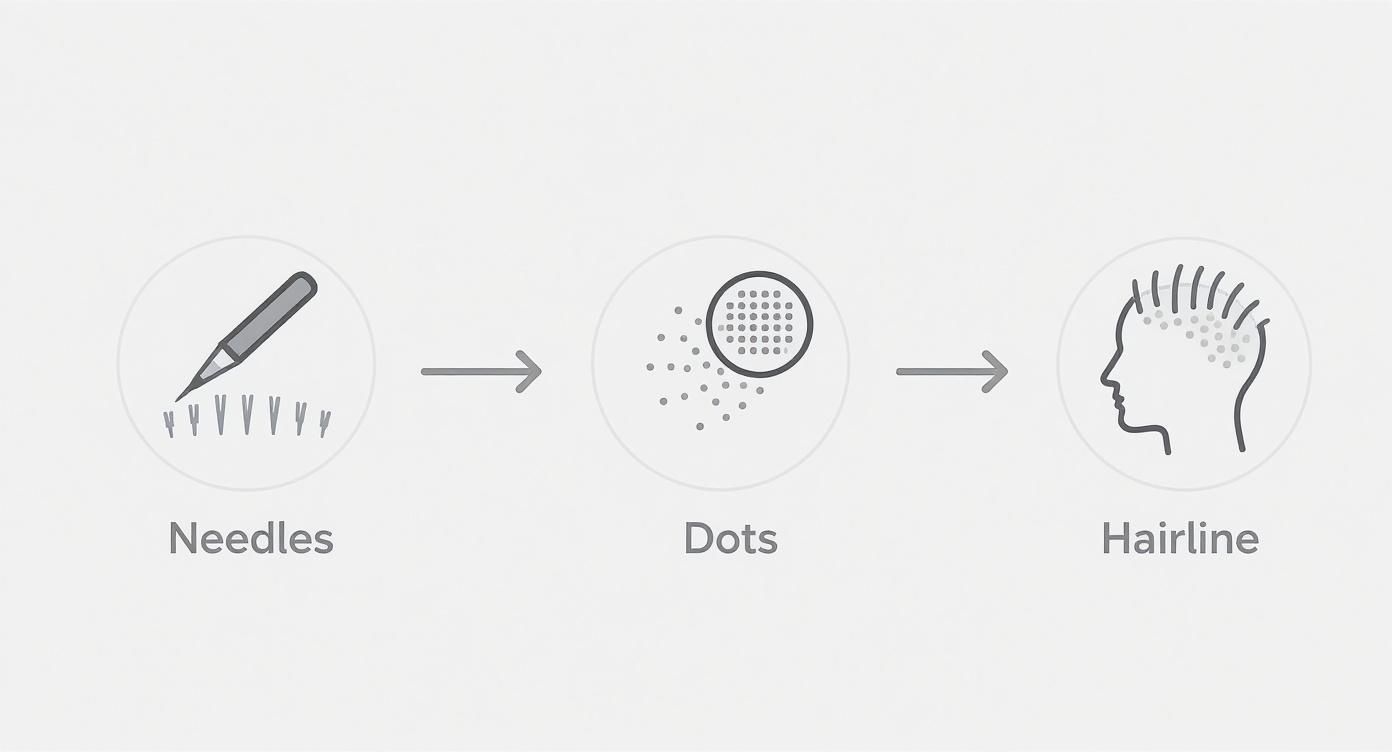
It's a great visual for understanding that SMP is a meticulous art form. We’re building a realistic effect through precision and careful layering, not just colouring in an area.
Subsequent Sessions: Building Realistic Density
The real magic happens in the follow-up sessions, which are usually scheduled 10-14 days apart. This multi-session approach is non-negotiable if you want a top-quality result. It gives the pigment from the last session time to settle properly and lets your scalp heal.
In your second and third sessions, the artist gets strategic, adding more layers of pigment to build up density. They’ll often use slightly different shades and vary the dot sizes to create a three-dimensional, textured look that mimics the natural variation of real hair. This careful layering is what fools the eye and creates that incredible illusion of depth.
The multi-session process is crucial. Trying to cram it all into one long appointment would lead to pigment migration, creating a solid, helmet-like look. Patience truly ensures perfection.
So, does it hurt? That's a question we get all the time. Most clients describe the feeling as a light, consistent tapping, rating it around a 2 out of 10 on the pain scale. It's generally a lot less intense than a regular tattoo because the specialised needles only penetrate the very upper layer of the skin.
By the time you're done with your final session, all those meticulously placed layers merge into a seamless result that’s impossible to tell apart from a real, closely-shaved head of hair. If you want to dive even deeper, you can learn more about the process of getting a hair tattoo in our dedicated guide. Knowing exactly what to expect at each stage really helps you prepare for the transformation.
Comparing SMP with Other Hair Loss Solutions
Choosing the right way to tackle hair loss can feel like a maze. There are so many options out there, all promising the world. The hair line tattoo, or Scalp Micropigmentation, is a seriously impressive option, but it's crucial to see how it fits in with the more traditional methods.
To make the best choice for you, you need to weigh up the pros and cons based on your own goals, lifestyle, and budget. Let's pit SMP against two of the biggest players: hair transplant surgery and ongoing medications. This will give you a clear picture of where SMP shines.
SMP vs Hair Transplants: A Battle of Illusion and Reality
A hair transplant is a full-blown surgical procedure. It involves taking real hair follicles from a part of your scalp where hair is still thick (usually the back) and implanting them into thinning or bald spots. SMP, on the other hand, doesn't grow a single hair. It’s all about creating an incredibly realistic illusion of tiny hair follicles using specialised pigment. This one difference changes everything about the process.
Key Differences to Consider:
- Invasiveness: A hair transplant is surgery, plain and simple. It means incisions, anaesthesia, and a proper recovery period. SMP is non-surgical; we use micro-needles that only just break the surface of the skin. Think minimal discomfort and pretty much no downtime.
- Guaranteed Results: The success of a hair transplant hinges on how many of those transplanted follicles actually survive and grow, which is never a 100% guarantee. With SMP, the result is guaranteed. You see exactly what you're getting as the artist carefully applies the pigment.
- Cost: This is a big one. In Australia, a hair transplant can set you back anywhere from $10,000 to $30,000. It's a massive financial commitment. A full SMP treatment is a fraction of that, usually falling between $1,200 and $4,000.
- Time to See Results: After a transplant, you're in for a long wait – it can take 6-12 months for the new hair to grow in and show the final result. With SMP, the change is instant. You'll walk out of your first session with a new hairline, and the complete look is finalised in just a few weeks.
A hair transplant tries to restore real hair, which is great if you want to wear your hair long. SMP gives you the perfect look of a sharp, full buzz-cut or adds visual density to thinning longer hair. It's an immediate and reliable aesthetic fix without the risks and waiting game of surgery.
For a more detailed breakdown, we’ve put together an in-depth guide. You can find more information in our article on how SMP compares to other hair restoration methods.
SMP vs Topical and Oral Medications
Another well-trodden path is using medications like topical minoxidil or oral finasteride. These are designed to slow down hair loss and sometimes even encourage new growth. They can work for some, but they’re a world away from the permanent solution that a hair line tattoo offers.
The real difference here comes down to commitment versus finality. Medications demand a lifelong daily routine to keep seeing any benefit. The moment you stop, your hair loss usually picks up right where it left off, and any hair you might have regained is lost.
SMP, however, is a semi-permanent fix. Once you've finished your 2-4 sessions, you're done. No more daily applications or repeat prescriptions. The only maintenance you'll need is a quick touch-up every 3-7 years to keep the colour looking sharp.
On top of that, medications can bring a list of potential side effects that many people just aren't willing to risk. SMP is a cosmetic treatment with very few risks—the most common being a bit of redness on the scalp right after a session. It’s a clean, straightforward way to deal with the look of hair loss without putting chemicals into your body.
Hair Loss Solution Comparison: SMP vs Hair Transplants vs Medication
Making a decision can be tough, so here’s a simple table to lay it all out. It compares the key factors side-by-side to help you see the trade-offs at a glance.
| Feature | Hair Line Tattoo (SMP) | Hair Transplant | Topical/Oral Medication |
|---|---|---|---|
| Result Type | Illusion of a full 'buzz-cut' or added density | Growth of real, longer hair | Slows hair loss, potential for regrowth |
| Invasiveness | Non-surgical, minimal discomfort | Surgical procedure with anaesthesia | Non-invasive (topical) or pill (oral) |
| Time to Results | Immediate, finalised in weeks | 6-12 months to see full results | 3-6 months to see initial changes |
| Guarantee | 100% guaranteed visual result | Dependent on follicle survival rate | Results vary and are not guaranteed |
| Cost | $1,200 - $4,000 (full treatment) | $10,000 - $30,000+ | Ongoing monthly cost for life |
| Maintenance | Touch-up every 3-7 years | Potential for future procedures | Daily application/intake required |
| Side Effects | Temporary redness, minimal risk | Scarring, infection, failed grafts | Potential for systemic side effects |
Ultimately, the choice depends on what you're looking for. If you value guaranteed, immediate results without surgery or a lifetime of medication, SMP is an incredibly powerful and effective solution.
Healing and Long-Term Aftercare for Your SMP
Getting the perfect hair line tattoo isn’t over the moment you leave the clinic. What you do over the next few weeks is just as vital as the artist’s work itself. Think of it like a new investment—the right aftercare protects it, ensuring the pigment settles in perfectly for that crisp, natural look you’re after.
The healing process is pretty straightforward, but you’ll need to be disciplined. Your scalp has just been through a cosmetic procedure involving thousands of tiny micro-wounds. Your body immediately gets to work healing, and your job is to give it the best possible environment to do that without messing with the delicate pigment deposits. This initial period really sets the tone for how long your SMP will last.
The First Few Days are Critical
After each session, expect your scalp to be a little red and tender. That's totally normal. For the first four days, the main goal is to keep moisture and irritation at bay so they don’t interfere with the pigment.
Your Immediate Aftercare Checklist:
- Avoid All Moisture: This is a big one. Don’t wash your head, don't let the shower stream hit it, and try not to get caught in the rain. Water can literally flush out the new pigment before it has a chance to set.
- No Sweating: You'll have to skip the gym, saunas, and any other heavy activity that makes you sweat. Sweat contains salt, which is a natural enemy of fresh pigment and can cause it to fade or look patchy.
- Keep Your Hands Off: It’s tempting to touch your new hairline, but you absolutely have to resist. No scratching, picking, or rubbing. This helps prevent infection and stops you from accidentally pulling out the tiny scabs that need to heal on their own.
- Stay Out of the Sun: Fresh pigment and UV rays do not mix. If you have to be outside, wear a loose-fitting hat. Avoid tight beanies or caps that might rub against your scalp.
If you want a more detailed look at what to expect, we've put together a full scalp micropigmentation healing timeline that breaks it all down.
Long-Term Maintenance for Lasting Results
Once your final session is fully healed—usually around the 10-day mark—your aftercare routine gets a whole lot easier. The focus shifts from healing to preservation. With a couple of simple daily habits, you can keep your SMP looking sharp and defined for years to come.
The undisputed champion of long-term care is sun protection. UV radiation is the main reason pigments fade over time.
Just as sunlight can fade a traditional tattoo, it will do the same to your SMP. Making a high-SPF, non-greasy sunscreen a part of your daily routine is the single best thing you can do to protect your investment.
Get into the habit of applying a sunscreen of SPF 30+ or higher to your scalp every day, even on cloudy ones. Keeping your scalp moisturised is also a great idea; it keeps the skin healthy and the pigment looking its best. A simple, fragrance-free moisturiser applied daily is all you need.
It’s also important to remember that some fading is normal. Over the years, your hair line tattoo will naturally soften and lighten a bit. This doesn't mean anything went wrong—it's just part of the process. Most clients come back for a touch-up session every 3 to 7 years to bring back that original depth and colour. It’s all part of a planned maintenance schedule to keep your look perfect for the long haul.
How to Find a Qualified SMP Practitioner in Australia
Choosing the right person for your hair line tattoo is, without a doubt, the single most important decision you'll make. The final result—whether it looks incredibly real or tragically fake—comes down entirely to the skill of the artist holding the needle. You're not looking for a general tattooist; you need a specialist who lives and breathes the unique art of scalp micropigmentation.
This isn't the time to bargain hunt. A truly great practitioner is part technician, part artist. They have the precision to place thousands of tiny dots perfectly and the creative eye to design a hairline that suits your face, creating a seamless, undetectable finish. It's this blend of skills that separates the masters from the rest.

Analyse Their Portfolio and Past Work
Think of an artist's portfolio as their visual resume, and you need to be the toughest critic. Don't just give it a quick scroll. Look for high-quality photos and, even better, videos of healed work. Anyone can make a freshly done scalp look good, but the real artistry shows weeks later once the skin has settled.
Get specific with your review. Do they have examples of clients with a similar skin tone, hair colour, and pattern of hair loss to yours? A top-tier practitioner will have a gallery showcasing their range—from soft, feathered hairlines to sharp, defined ones. The blending should be so good you can't tell where the treatment ends and any existing hair begins.
Verify Specialised Training and Equipment
Scalp Micropigmentation is its own unique discipline. A standard tattoo licence just doesn't cut it. Your practitioner must have dedicated certifications in SMP, proving they've been trained in the specific techniques, hygiene protocols, and pigment depths required for the delicate skin on the scalp.
They also need to be using the right tools for the job. This includes:
- SMP-Specific Pigments: These are carbon-based and formulated to hold their shape and colour. Unlike standard tattoo inks, they won't fade to a weird blue or green over time.
- Micro-Needles: The needles used for SMP are significantly finer than those for body tattoos. This is crucial for creating tiny dots that look like hair follicles, not big, unnatural blotches.
A true professional will be open and proud of their training, certifications, and the materials they use. If they get defensive or vague when you ask, that's a major red flag.
Read Genuine Client Reviews and Testimonials
A polished portfolio shows you the artist's best work, but genuine client reviews tell you the whole story. Dive into independent platforms like Google or social media to get unfiltered feedback, not just the glowing testimonials they've hand-picked for their website.
These reviews often contain the details that matter: was the artist professional? Was the studio spotless? How was their communication during the whole process? Seeing a track record of happy clients is one of the best ways to feel confident in your choice. In fact, listening to what others have experienced is often the first step in finding the best scalp micropigmentation clinic near you.
Key Red Flags to Watch Out For
As you do your research, keep your eyes peeled for warning signs that suggest a lack of experience or professionalism. Walk away from any practitioner who:
- Claims they can get the job done in one single session.
- Uses regular tattoo ink instead of specialised SMP pigment.
- Puts you under pressure to book immediately or offers a deal that feels too good to be true.
- Doesn't have a solid portfolio of high-resolution, healed results.
Cosmetic procedures are becoming more mainstream in Australia, and SMP is a perfect example. Interestingly, 40% of Australians got their first tattoo at age 26 or older, and 10% were in their mid-40s or later, as reported in these Australian tattoo statistics. This shows a mature audience turning to treatments like SMP to address age-related concerns like hair loss. Your chosen practitioner should reflect this level of seriousness and professionalism.
Why Cosmetic Tattoos Are Gaining Popularity
Let's be honest, cosmetic enhancements aren't the whispered secret they once were. These days, especially here in Australia, people are openly choosing smart, effective treatments to feel more confident and comfortable in their own skin. The rise of the hair line tattoo is a perfect example of this shift.
We're seeing a definite move away from major surgeries. People are looking for practical, non-surgical answers that fit a busy lifestyle. They want real results, but without the lengthy downtime, hefty price tag, or risks that often come with going under the knife. This is exactly why the entire cosmetic tattoo industry, from microbladed brows to lip blushing, has taken off.
A Growing Market for Confidence
Scalp micropigmentation has found its place right in the middle of this movement. It’s no longer viewed as some extreme procedure, but as a genuinely clever solution for dealing with hair loss head-on. As the industry grows, practitioners need to know how to connect with the right people. If you're in the business, learning how to increase brand awareness is a must.
This isn't just a feeling; the numbers tell the same story. The Australian tattoo market was valued at $37.16 million and is expected to climb to a massive $109.38 million by 2034. Cosmetic tattoos, including SMP, are a huge driver of that growth, showing that people are really embracing these kinds of semi-permanent enhancements. You can dive deeper into these findings on the Australian tattoo market if you're interested.
When you see scalp micropigmentation as part of this broader cultural trend, you realise it's just a practical choice being made by thousands of everyday Aussies who want to look and feel their best.
This isn't for one type of person. It's for everyone, from the tradie on-site to the professional in the office, who wants a reliable, long-term fix for hair loss. It’s about taking back control of your appearance, and the confidence that comes with it is something you carry into every part of your life.
Got Questions About Hair Line Tattoos? We've Got Answers.
It's completely normal to have a few lingering questions, even after getting your head around the basics. Deciding on a hair line tattoo is a big step, and you want to be 100% sure before you dive in. We get it.
To help you out, we’ve put together answers to the most common questions we hear from our clients right here in Australia. No fluff, just straight-up answers to help you move forward with confidence.
How Much Does a Hair Line Tattoo Cost in Australia?
The price of Scalp Micropigmentation really comes down to the extent of your hair loss. For someone just needing to touch up a slightly receding hairline, you could be looking at around $1,200. If you're after full coverage for a more advanced stage of hair loss, the investment might be closer to $4,000, sometimes a bit more.
A few things will influence your final quote:
- The total surface area we need to cover.
- How many sessions it'll take to build up that perfect, dense look.
- The experience and reputation of your artist (this is one area you don't want to skimp on!).
Any good clinic will have you in for a free chat first. This lets them take a proper look at your scalp and give you a precise quote, no strings attached. While it’s an investment, it’s worth remembering that SMP is a fraction of the cost of a surgical hair transplant.
Can SMP Be Removed if I Change My Mind?
Yes, it can. This is a huge plus for SMP and something that gives a lot of people peace of mind. Unlike a traditional tattoo that goes deep, SMP isn't forever. If you ever change your mind or want to adjust your look years down the line, it can be removed with a specialised laser.
The whole process is usually faster and takes fewer sessions than removing a normal tattoo. Why? Because the SMP pigment sits in the upper layer of your skin, making it much easier for the laser to break it down. Still, it’s an extra cost and process, which is why we put so much effort into getting the hairline design perfect from day one.
Will My Hair Line Tattoo Look Fake or Unnatural?
When it’s done right by a true professional, an SMP treatment is undetectable. The difference between a great result and a bad one comes down entirely to the skill and artistry of the practitioner. A real expert would never give you a solid, "drawn-on" helmet look.
A world-class SMP artist uses multiple shades of pigment to build 3D depth, designs soft and slightly imperfect hairlines that mimic natural growth patterns, and blends the treatment seamlessly into any remaining hair. The goal is to create an illusion so convincing that it looks like real hair follicles, not a tattoo.
Is SMP an Effective Solution for Women?
Absolutely. While you often hear about SMP for male pattern baldness, it's an incredible solution for women experiencing hair loss, and its popularity is soaring. The approach is just a little different.
For our female clients, we’re almost never creating a "shaved head" look. Instead, we use SMP to subtly add density. By carefully tattooing pigment between existing hairs, we reduce the noticeable contrast between the hair and the scalp. This creates a shadow effect that makes the hair look instantly thicker and fuller, especially along a widening part or at the crown. It’s a game-changer for restoring confidence, without the hassle of daily concealer powders or invasive surgery.
Ready to explore how a hair line tattoo could work for you? At My Transformation, Michael is dedicated to helping you find the perfect solution for your hair loss. Book a consultation today and take the first step towards renewed confidence.