

Does Dandruff Cause Hair Loss? Unpacking The Truth
Let's get straight to the point: dandruff itself doesn't make your hair fall out. It's not a direct cause of hair loss. The real issue is the intense, persistent itch that comes with it. That itch leads to scratching, and it's the scratching that can damage your hair follicles and cause temporary shedding. Understanding this indirect link is the key.
Unpacking the Link Between Dandruff and Hair Loss
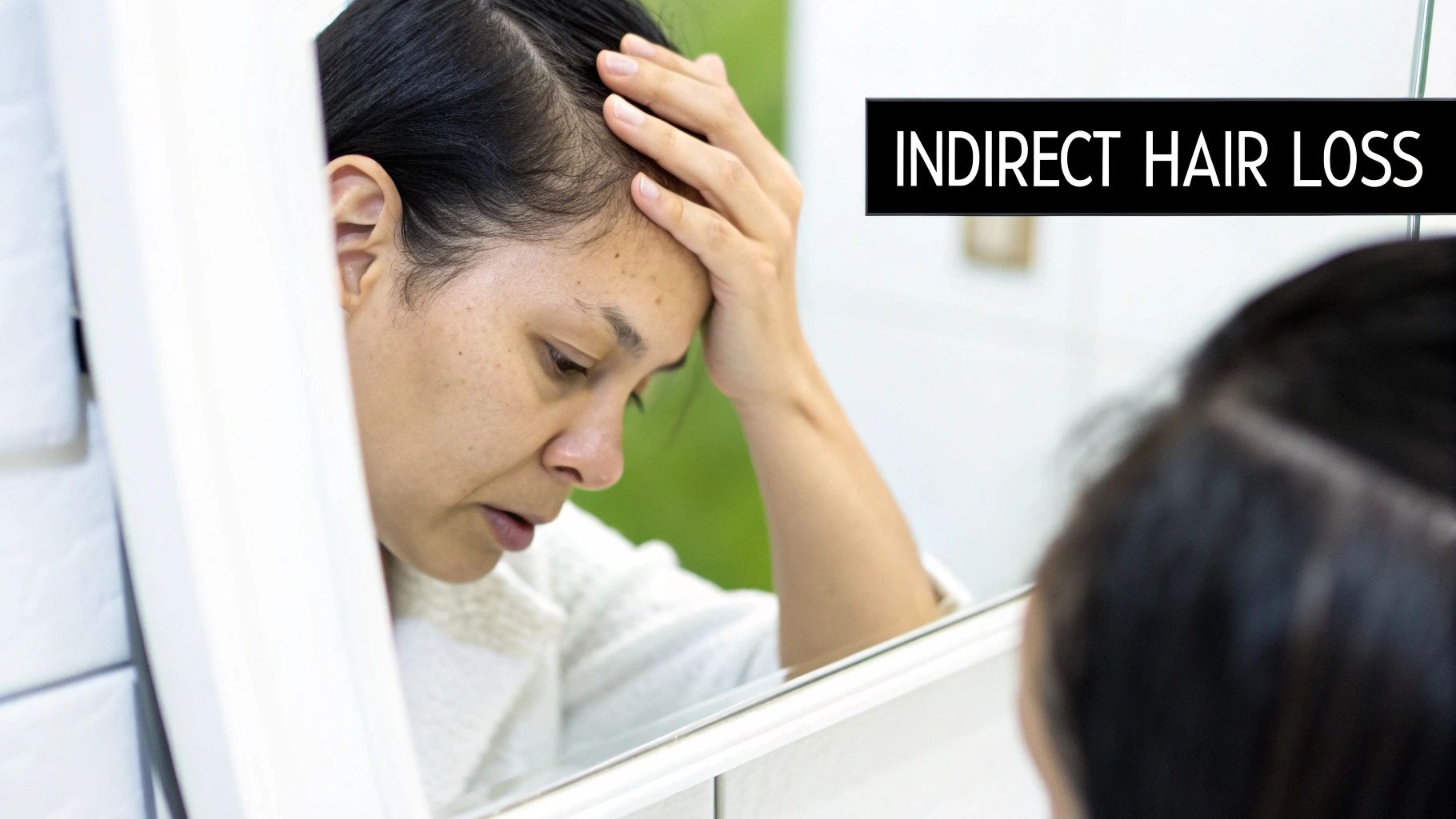
It’s a common story. You see more hair in the shower drain or on your brush, look at the white flakes on your shoulders, and connect the dots. It’s an easy conclusion to jump to, but the real culprit isn't the flakes themselves—it's your body's reaction to the underlying irritation.
Think of your scalp like a garden. Dandruff is like an overgrowth of harmless weeds. The weeds themselves aren't killing your flowers (your hair). The damage comes from the constant, aggressive raking you do to get rid of them. That's your scratching. All that friction can easily uproot healthy flowers and damage their roots, leaving your garden looking a bit sparse.
The Itch-Scratch Cycle Explained
The number one symptom of a bad case of dandruff is an intense itch, known clinically as pruritus. This is your scalp’s alarm bell, signalling that it’s inflamed and unhappy. When you scratch, you get a moment of relief, but it comes at a price.
This creates a vicious feedback loop called the itch-scratch cycle:
- Inflammation: An imbalance on your scalp skin triggers irritation.
- Itching: The inflammation causes a persistent, sometimes maddening, itch.
- Scratching: You scratch to satisfy the itch, which feels good for a second.
- Damage: Your fingernails and the friction traumatise the skin and hair follicles.
- More Inflammation: This physical damage makes the inflammation worse, which leads to even more itching.
Breaking this cycle is the most important step in stopping dandruff-related hair shedding. The hair that falls out from scratching is either breaking off or being pulled from the follicle too soon.
The crucial takeaway is that dandruff-induced hair loss is almost always temporary and reversible. Once the scalp condition is managed and the scratching stops, the hair follicles can recover and resume their normal growth patterns.
To put it simply, dandruff's impact is indirect. It sets the stage for damage, but it doesn't do the damage itself.
Dandruff and Hair Loss: Direct vs Indirect Effects
This quick table breaks down the relationship between dandruff, its symptoms, and hair shedding.
| Factor | Direct Impact on Hair Follicles | Indirect Contribution to Hair Shedding |
|---|---|---|
| Dandruff Flakes | None. The flakes are just dead skin cells. | Can contribute to scalp build-up, but doesn't directly cause shedding. |
| Scalp Itchiness | None. The sensation of itching doesn't harm follicles. | Triggers the urge to scratch, which is the primary source of damage. |
| Aggressive Scratching | None. Dandruff itself is a scalp condition. | Physically weakens and dislodges hair, leading to breakage and temporary loss. |
| Underlying Inflammation | Can create an unhealthy environment for hair growth. | Worsens the itch, fuelling the destructive itch-scratch cycle. |
As you can see, the direct cause of hair loss isn't the dandruff, but the mechanical stress from scratching.
Is All Hair Loss the Same?
It’s really important to separate this kind of shedding from other, more permanent types of hair loss. Conditions like male pattern baldness, for instance, are driven by genetics and hormones that gradually shrink the hair follicles.
While a bad case of dandruff can definitely make the scalp environment worse for someone already dealing with genetic thinning, it's not the root cause. If you'd like to dive deeper, you can learn more about what causes male pattern baldness in our detailed guide.
Ultimately, getting to the bottom of the scalp imbalance is the only way to stop the itch, protect your follicles, and let your hair grow properly. The good news is that getting dandruff under control is very achievable with the right strategy.
What’s Really Going On Up There?
To get to the bottom of the dandruff-hair loss connection, we need to zoom in on what’s actually happening on your scalp. It’s not just a simple case of dry skin; dandruff is a sign that your scalp’s delicate ecosystem is out of whack, and a tiny microbe is at the centre of the drama.
Meet Malassezia globosa, a yeast-like fungus that lives on just about every adult scalp. Normally, it's a harmless resident, quietly feeding on the natural oils (sebum) our scalps produce. As it digests these oils, it leaves behind a byproduct called oleic acid.
For a lot of us, this whole process flies completely under the radar. But for about half the population, the scalp is highly sensitive to oleic acid. This sensitivity kicks off an immune response, almost like an allergic reaction, which is where the inflammation and irritation begin.
When Your Immune System Overreacts
You can think of your scalp’s immune response like an overeager security guard. In a balanced scalp, Malassezia is just another face in the crowd, and the guard pays it no mind. But on a dandruff-prone scalp, that same guard mistakes the oleic acid for a serious threat and sounds the alarm.
This "all-hands-on-deck" defence forces the scalp to crank up its skin cell production into overdrive. Normally, your skin cells take a leisurely month to mature and shed. With dandruff, this entire cycle is crunched down to just a few days.
Because everything is so rushed, the new cells don’t have time to mature properly. Instead of shedding invisibly, they clump together with oil, forming those familiar white or yellowish flakes we call dandruff. The inflammation behind this frantic process is also what triggers that persistent, maddening itch.
It's this one-two punch of inflammation and itching that spells trouble for your hair. The constant irritation weakens your scalp's natural defences, and scratching the itch can physically damage your hair follicles, disrupting their ability to grow hair properly. You can learn more about the different phases of the hair growth cycle in our detailed guide.
Key Insight: Dandruff isn't a sign of poor hygiene. It's an inflammatory reaction to a fungus that's a normal part of your scalp's microbiome. This reaction—not the fungus itself—is what leads to flakes and itching that can contribute to hair shedding.
Why Me and Not Them?
So, why do some people get a flaky, itchy scalp while others don't? Researchers are still connecting all the dots, but we know a few key factors can tip the scales.
- Genetic Predisposition: It can simply run in the family. Some people are just born with a more reactive scalp.
- Hormonal Changes: Big shifts in hormones can ramp up oil production, creating a feast for Malassezia.
- Stress Levels: Chronic stress can throw your immune system out of balance, making it harder to keep the scalp environment in check.
- Underlying Skin Conditions: Sometimes, dandruff is a symptom of a more severe inflammatory condition, like seborrheic dermatitis.
This is an incredibly common issue. Here in Australia, it’s estimated that about 50% of people will experience dandruff at some point. And while dandruff doesn't directly cause hair to fall out, the intense itching and inflammation it causes can certainly lead to temporary shedding. When you're constantly scratching, you’re physically damaging the hair follicles, which can weaken the hair and cause it to break or fall out prematurely.
Ultimately, getting dandruff under control is all about restoring that natural balance to your scalp. By calming the inflammation and managing the Malassezia population, you can stop the itch, clear the flakes, and give your hair the healthy foundation it needs to thrive.
How Itching and Inflammation Lead to Hair Shedding
So, we know the flakes themselves aren't the direct culprits, but how exactly does an irritated scalp lead to finding more hair on your pillow? It's essentially a two-pronged attack on your follicles, involving physical damage from your own hands and a more subtle biological assault from within.
The most obvious link is the mechanical damage from scratching. That relentless itchiness from dandruff is hard to ignore, and scratching can bring instant relief. But that temporary fix comes at a cost to your scalp and hair.
Your fingernails, even when they’re kept short, can be surprisingly harsh. They can traumatise the delicate skin and, more importantly, the hair follicles themselves. This constant friction can weaken the hair shaft, causing it to snap mid-strand. In many cases, it can physically yank hairs right out of their follicles, leading to shedding you can definitely notice.
The Impact of Chronic Inflammation
Beyond the obvious physical damage, there's a quieter battle happening just beneath the surface of your skin. The chronic inflammation—your body's ongoing reaction to the Malassezia fungus—creates a pretty hostile environment for healthy hair growth.
Think of it like this: you wouldn't expect a prize-winning rose bush to flourish in soil that's constantly being churned up and is starved of nutrients. It might hang on, but it certainly won't thrive. It’s the same for your hair follicles. When they’re stuck in an inflamed, stressed-out scalp, they just can't function at their best.
This biological stress can throw the entire hair growth cycle out of whack. The simple chain reaction below shows how this inflammatory state gets started.
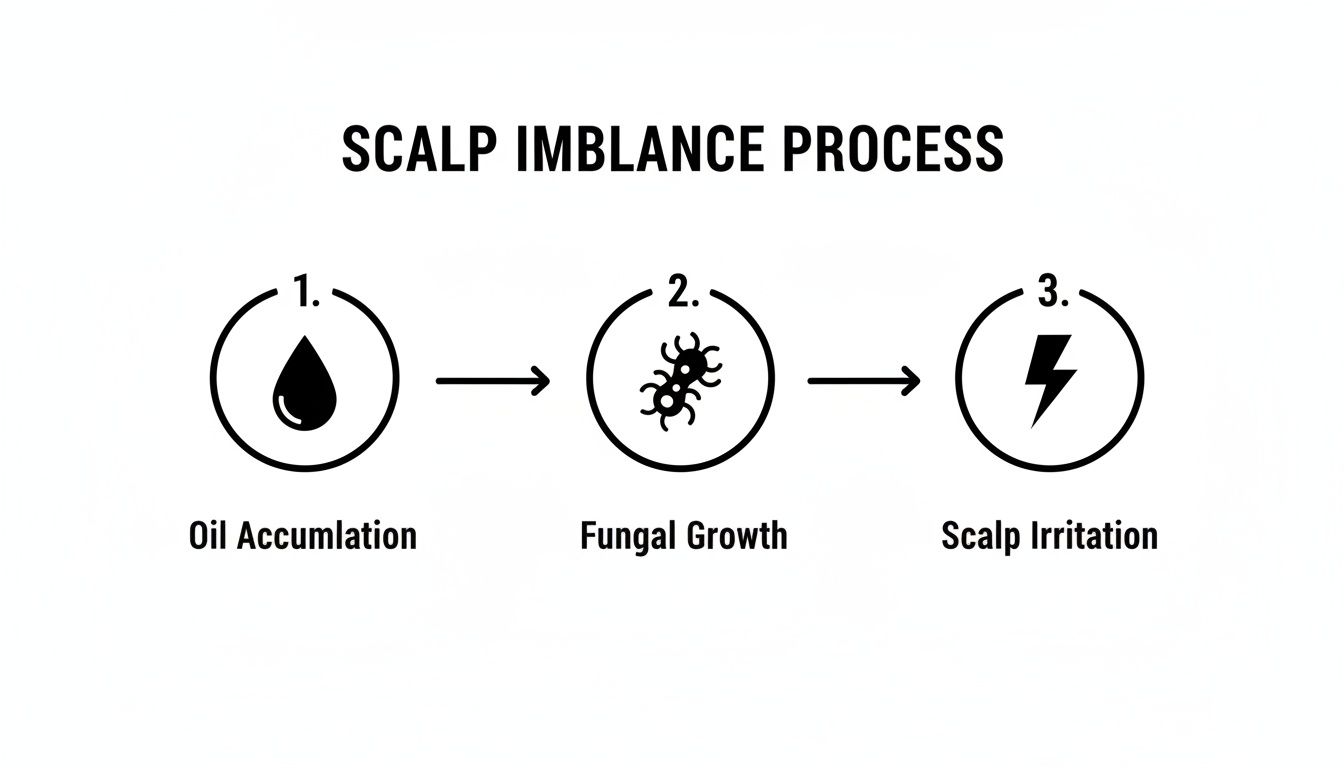
It all kicks off with excess oil on the scalp, which becomes a feast for the fungus. This leads to the irritation that fuels that destructive itch-scratch cycle.
When Follicles Enter 'Shed Mode' Early
One of the most significant consequences of all this scalp stress is a condition called telogen effluvium. This is a type of temporary hair shedding where a huge number of follicles get pushed into the resting (telogen) phase of the hair cycle way too early.
Imagine each of your hair follicles has a built-in 'eject' button. On a normal day, only about 5-10% of your hairs are in this shedding phase at any one time. But when a major stressor hits—like the constant inflammation from severe dandruff—a much larger chunk of follicles can hit that eject button all at once.
This triggers a sudden, very noticeable increase in hair shedding that usually appears a few months after the problem started. The good news is the hair isn't permanently gone, but this accelerated shedding can cause quite a bit of temporary thinning and anxiety.
Thankfully, this kind of hair loss is almost always reversible once you get the underlying cause under control. If you think other factors might be at play, our guide on stress-related hair loss offers some extra insights.
What Does This Damage Look Like?
The combined force of scratching and inflammation shows up in several ways, drawing a clear line between a troubled scalp and thinning hair.
- Hair Breakage: You might start seeing shorter, snapped-off hairs mixed in with the full-length ones you shed. This is a tell-tale sign of the physical friction from scratching.
- Increased Daily Shedding: Finding way more than the usual 50-100 hairs in your brush or shower drain is a classic symptom of telogen effluvium.
- Reduced Hair Quality: Hairs trying to grow from an inflamed scalp can emerge weaker or thinner, which contributes to a less dense look over time.
- Scalp Soreness and Redness: If your scalp is visibly red or feels tender to the touch, that’s a clear sign of the inflammation that’s disrupting your follicles.
At the end of the day, your scalp is the foundation for your hair. An unhealthy, itchy, and inflamed scalp simply can’t provide the right environment for strong, robust hair growth. By understanding that both scratching and inflammation are to blame, you can start to tackle the problem from both sides and protect your hair from this temporary shedding.
When Dandruff Makes Existing Hair Loss Worse
For the millions of people already navigating genetic hair thinning like male or female pattern baldness, getting dandruff can feel like pouring petrol on a fire. It’s important to be clear: dandruff doesn't cause these genetic conditions. But an inflamed, itchy, and unhealthy scalp can absolutely speed them up.
Think of your scalp as the soil for your hair. If that soil is constantly irritated and under attack, it’s not going to be a great place for growing strong, healthy hair. This is especially true for hair follicles that are already weakened by genetic predispositions.
The Problem of an Inflamed Scalp
An irritated scalp is a stressed scalp. This constant state of low-grade inflammation can seriously disrupt the natural hair growth cycle. It can even accelerate miniaturisation—the key process behind genetic hair loss where follicles shrink over time, producing thinner and shorter hairs until they eventually give up.
When dandruff joins the party, the chronic inflammation it brings adds another layer of stress. This creates an even more hostile environment for those already vulnerable follicles, potentially pushing them into a faster decline.
In Australia, the impact of hair loss is huge. Male pattern hair loss affects a staggering 80% of men by age 80, while female pattern thinning impacts 12% of women under 30 and 40% by age 50. While dandruff isn't the direct cause, its inflammatory effects can induce a temporary shedding phase known as telogen effluvium, pushing daily hair fall well beyond the normal 50-100 strands. You can explore more about these Australian statistics on hair loss patterns.
Why Scalp Health Is Your First Defence
This is exactly why looking after your scalp health is non-negotiable if you want to hold onto the hair you have. Getting dandruff under control isn't just about getting rid of flakes; it's a critical part of any serious hair retention strategy.
By treating the dandruff, you’re actually achieving a few key goals that directly support your hair:
- Reduce Inflammation: A calmer scalp means a healthier environment for your hair follicles to do their job properly.
- Stop the Itch-Scratch Cycle: No more itch means no more scratching, which prevents the physical breakage and trauma that can pull out hair.
- Support the Growth Cycle: A balanced, happy scalp is far better at sustaining a normal hair growth cycle without any inflammatory interruptions.
If you’re already tackling a condition like androgenetic alopecia, think of dandruff treatment as laying the groundwork. It ensures your scalp isn't actively working against your efforts to maintain your hair. If you think something more complex is going on, it's always best to see a professional. You can learn more about finding the right support in our guide on how to find a hair specialist for alopecia.
Looking Beyond the Scalp
When you're dealing with hair loss, especially with dandruff in the mix, it’s also a good idea to look at other potential factors. Your overall health has a massive influence on your hair. For example, knowing your normal ferritin range can help rule out low iron stores, which can cause shedding that only gets worse with scalp issues.
Ultimately, a healthy scalp is the foundation for healthy hair. By actively managing dandruff, you remove a major roadblock that could be making your hair loss worse. This proactive step gives any other treatments you're using a much better chance to work and gives your hair the best possible environment to thrive.
Proven Ways to Treat Dandruff and Protect Your Hair
Alright, now that we’ve untangled the link between dandruff and hair loss, it’s time to get proactive. The goal here is simple: get your scalp back to a healthy, balanced state. That's how you'll stop the itch, clear the flakes, and give your hair the solid foundation it needs to thrive.
The good news? Most of the time, dandruff can be managed really well with treatments you can find at your local chemist.
Your first line of defence is a good medicated shampoo. These aren't just for cleaning your hair; they're packed with active ingredients designed to go after the root causes of dandruff. Think of them as targeted treatments for your scalp, working to control the Malassezia fungus and calm the inflammation that kicks off that frustrating itch-scratch cycle.
Choosing Your Over-the-Counter Arsenal
When you're standing in the shampoo aisle, it’s all about reading the label for the right active ingredients. Different compounds work in slightly different ways, so sometimes, alternating between a couple of different shampoos can give you the best results.
Here are the heavy hitters to look for:
- Ketoconazole: This is a powerful antifungal that directly tackles the Malassezia fungus, bringing its population back under control so your scalp can calm down.
- Selenium Sulfide: This ingredient is a fantastic multi-tasker. It slows down how quickly your skin cells turn over while also fighting the fungus.
- Zinc Pyrithione: A very common and reliable choice, zinc pyrithione has both antifungal and antibacterial properties that help restore your scalp's natural balance.
- Salicylic Acid: Think of this as a gentle chemical exfoliant. It helps to loosen and wash away the existing scale and flake build-up, clearing the way for other active ingredients to get to the skin.
For these to work properly, you need to follow the instructions. Most medicated shampoos need to be left on your scalp for 3-5 minutes before rinsing. This gives the active ingredients enough time to do their job.
Simple Lifestyle Habits for a Healthier Scalp
While shampoos do the heavy lifting, a few small tweaks to your routine can make a huge difference in keeping dandruff from coming back.
Managing stress is a big one. When you're chronically stressed, it can throw your immune system and hormones out of whack, making your scalp more vulnerable to flare-ups. Things like exercise, mindfulness, or even just taking a few short breaks during your day can genuinely help.
Your diet plays a part, too. Getting enough zinc, B vitamins, and healthy fats helps support healthy skin from the inside out. On the flip side, diets high in sugar and processed foods can sometimes fuel inflammation.
Don't underestimate the power of consistency. Sticking with a treatment plan, even after symptoms improve, is key to keeping dandruff under control and preventing its return. This ensures your scalp remains a healthy foundation for hair growth.
If you’re exploring every angle to protect your hair, you might also look into supplements like Folisin for hair loss support. A multi-pronged approach is often the smartest strategy.
When to See a Doctor
For most people, over-the-counter products work wonders. But if you’ve been using them consistently for a few weeks without seeing much improvement, it might be time to bring in a professional.
You should definitely book an appointment with a doctor or dermatologist if you're experiencing:
- Persistent Itching: The itch is severe and just won’t quit, even with medicated shampoos.
- Intense Redness or Sores: Your scalp is very red, swollen, or you’ve developed open sores from scratching.
- Stubborn Flakes: The flaking is really heavy, with thick, greasy, or yellowish scales.
- Significant Hair Loss: You’ve noticed a sudden or alarming amount of hair shedding that’s worrying you.
A doctor can figure out if something more serious is going on, like a severe case of seborrheic dermatitis or scalp psoriasis. They can also prescribe much stronger shampoos, lotions, or even oral medications that will give you the targeted treatment you need to finally find relief.
Restoring Density and Confidence with Scalp Micropigmentation
So, you’ve finally got your dandruff under control. That’s a huge win. But you might still be looking in the mirror, worried about the visible thinning left behind by all that inflammation and scratching. While treating your scalp condition stops any more damage, it doesn't instantly reverse the loss of density. This is where Scalp Micropigmentation (SMP) comes in as a brilliant, immediate solution.
Think of SMP as a cosmetic helping hand that gives you back your confidence while your hair and scalp continue to heal. It's a non-surgical procedure that creates the look of thicker, fuller hair, letting you feel like yourself again without the long wait for regrowth.
At its core, SMP is a highly specialised cosmetic tattoo for the scalp. An expert practitioner uses fine microneedles to place tiny dots of pigment into the skin’s upper layer. These dots are meticulously applied to look just like real hair follicles, blending in perfectly with your existing hair.
The Art of Creating Natural-Looking Density
The real genius of SMP is how subtle it is. It isn't growing new hair; it's expertly camouflaging the contrast between your scalp and your hair, which is what makes thinning so noticeable. By carefully layering thousands of these tiny follicle impressions, an SMP artist can achieve incredible results:
- Mask Thinning Patches: It's fantastic for covering up those areas where the scalp shows through, like at the crown or along a parting.
- Redefine Hairlines: If your hairline has thinned out or started to recede, SMP can restore the appearance of a stronger, more defined frame for your face.
- Add Visual Fullness: For people with all-over diffuse thinning, SMP creates a subtle 'shadow' on the scalp, which makes your entire head of hair look denser and more robust.
This makes it the perfect way to deal with the thinning that was exacerbated by a bad bout of dandruff. You get an instant visual improvement, which can be a huge relief while you wait for your hair's natural growth cycle to get back on track.
Scalp Micropigmentation is not a treatment for dandruff or hair loss itself. Instead, it’s a cosmetic solution that addresses the appearance of thinning, providing a significant confidence boost after the underlying scalp issues have been resolved.
Is SMP the Right Step for You?
If you've managed to sort out your dandruff but you're still not happy with your hair's current density, SMP could be exactly what you're looking for. It's an incredibly versatile solution that works for all sorts of hair loss stages, and it's suitable for both men and women with any skin tone or hair colour.
The whole process is minimally invasive, has no real downtime, and the results can last for years with just a little bit of care. It perfectly bridges the gap between treating the medical issue (the dandruff) and getting the aesthetic result you want. By restoring the look of a full head of hair, SMP helps you finally move on from the stress that often comes with hair loss.
To get a clearer picture of how it all works, you can learn more about what Scalp Micropigmentation is and see if it feels right for you. At the end of the day, it's all about taking back control and feeling great about the way you look.
Common Questions About Dandruff and Hair Loss
When you're dealing with a flaky, itchy scalp and notice more hair shedding than usual, it's natural to have a lot of questions. Getting clear answers is the first step towards feeling in control and finding a solution that works. Let's tackle some of the most common queries we hear.
Will My Hair Grow Back After Dandruff Hair Loss?
The short answer is yes, in almost all cases. Hair loss from dandruff is completely temporary because it’s a side effect of the scalp's condition, not a permanent problem with the hair follicles themselves.
The real culprits are the inflammation and the physical stress from all that scratching. Once you get the dandruff under control and stop the itch-scratch cycle, your follicles get a chance to recover and return to their normal growth pattern.
How Can I Tell If My Hair Loss Is From Dandruff or Something Else?
This is a crucial question, as knowing the cause determines the right treatment. There are a few key differences to look out for.
- Dandruff-Related Shedding: This usually goes hand-in-hand with an intensely itchy scalp, visible white or yellow flakes, and patches of redness. The hair loss tends to be diffuse—a general shedding all over, rather than in a specific spot.
- Genetic Hair Loss: This type of loss, like male or female pattern baldness, follows a predictable script. For men, it’s often a receding hairline or thinning on the crown. For women, it’s typically a widening part. It's a much slower, more gradual process that happens over years.
A good rule of thumb: if you’re seeing a distinct pattern of thinning but don’t have much itching or flaking, you’re likely looking at something like androgenetic alopecia. Dandruff can certainly aggravate it, but it isn’t the root cause.
Does Cutting My Hair Short Help With Dandruff?
Cutting your hair short won’t cure dandruff—the problem is with your scalp, not your hair. That said, it can make a real difference in managing the condition.
Shorter hair makes it much easier to apply medicated shampoos and treatments directly to the skin where they're needed most. It also helps reduce the build-up of oils and styling products that can sometimes make a flaky situation worse.