

Cost of scalp micropigmentation: Pricing insights and value
The average cost of scalp micropigmentation in Australia typically ranges from $1,200 to over $4,000, and this really comes down to the extent of your hair loss. Think of it like getting a custom tattoo – the final price reflects the size of the area and the intricate detail needed to create a natural, seamless finish.
Your Guide to the Average Cost of Scalp Micropigmentation
When you first look into scalp micropigmentation (SMP), one of the first things you'll probably wonder is, "How much is this going to set me back?" Unlike buying something off the shelf, SMP is a highly personalised treatment. The final cost is a direct reflection of the time, skill, and resources required to address your unique hair loss pattern.
The main idea behind SMP pricing is pretty straightforward: the more scalp that needs coverage, the more the treatment will cost. Someone just looking to sharpen up a slightly receding hairline will get a much lower quote than someone needing full coverage for extensive baldness.
Breaking Down the General Costs in Australia
To give you a clearer idea, it helps to see how the cost lines up with different levels of hair loss. SMP has become a really popular and accessible solution across Australia, and the pricing is usually structured to match how much work is involved.
Here’s a general breakdown of what you might expect to invest:
- Mild Hair Loss (e.g., tidying up the hairline): These treatments often start from around $1,200 AUD.
- Moderate Hair Loss (e.g., thinning at the crown and hairline): This typically lands in the $1,500 to $2,500 AUD ballpark.
- Advanced Hair Loss (e.g., full scalp coverage): For more comprehensive work, you could be looking at $2,200 to over $4,000 AUD.
Keep in mind that these are just estimates for a full course of treatment, which almost always involves a few sessions to get it perfect. When you look at the whole picture, the total investment usually falls somewhere between $1,050 and $4,000, all depending on your specific needs.
Visualising the Cost with the Norwood Scale
To keep things consistent when assessing male pattern baldness, practitioners often use what’s called the Norwood Scale. It’s basically a visual chart that classifies the different stages of hair loss, which makes it much easier to estimate the amount of work required and, in turn, the final price.
A proper consultation is where a technician can assess your hair loss against a standard like the Norwood Scale. This allows them to give you a precise, transparent quote based on the surface area and density you need. It takes all the guesswork out of the equation.
If you want to dive deeper into how it all works, our guide on what scalp micropigmentation is explains the process from start to finish.
The table below gives you a quick snapshot of how pricing often corresponds to the different stages of hair loss.
Estimated SMP Cost in Australia by Hair Loss Level
This table provides a quick overview of the typical cost ranges for scalp micropigmentation treatments based on the extent of hair loss.
| Hair Loss Level | Norwood Scale (Approx.) | Estimated Cost Range (AUD) |
|---|---|---|
| Minor Hairline Work | Stage 2-3 | $1,200 - $1,800 |
| Crown and Hairline | Stage 3-4 | $1,800 - $2,800 |
| Significant Thinning | Stage 5-6 | $2,500 - $3,500 |
| Full Scalp Coverage | Stage 7 | $3,200 - $4,000+ |
This structured approach means you’re only paying for the coverage you actually need. At the end of the day, a one-on-one consultation is the only way to get a firm quote tailored to your head shape, skin type, and the exact look you’re going for.
What Goes Into the Final Price of SMP?

So, why does the cost of scalp micropigmentation vary so much? It's because SMP is never an off-the-shelf product. It’s a completely custom treatment, and you are the canvas. The quote you get is a direct reflection of the meticulous work needed to create a result that looks unbelievably real, just for you.
Think of it like commissioning a piece of art. A painter wouldn't charge the same for a small sketch as they would for a huge, detailed mural. An SMP artist has to assess several key things before they can give you a fair price that matches the time, skill, and pigment your unique situation calls for. Let’s get into what really shapes that final number.
Your Level of Hair Loss and the Treatment Area
This is the big one. The single biggest factor driving the cost is how much hair loss you have, which dictates the size of the area we need to work on. It’s simple maths, really: a larger canvas requires more time, more precision, and more pigment.
To keep things consistent, most clinics use the Norwood Scale to classify male pattern baldness. It’s essentially a roadmap of hair loss, starting from a slightly receding hairline (Stage 2) and going all the way to extensive hair loss across the entire scalp (Stage 7).
- A smaller job, like filling in the temples or a small spot on the crown, is naturally going to be more affordable because it’s less time-intensive.
- A full-scalp treatment for someone at a Norwood 7 stage is the most comprehensive work we do, so it sits at the top end of the price range.
If you’re curious where you might land, have a look at our guide on what is the Norwood Scale. It’s a great way to get a ballpark idea of the scope of your treatment before you even step into a clinic.
The Density and Hairstyle You're After
Beyond just the size of the area, the look you want to achieve is a massive part of the equation. SMP isn't just about adding colour to the scalp; it's about painstakingly creating the illusion of thousands of tiny, 3D hair follicles.
Someone with fair skin and light hair might only need a soft, subtle fill to blend everything together. On the other hand, a client with a darker skin tone who wants that sharp, defined hairline and a dense buzz-cut look will need thousands more pigment impressions placed incredibly close together. That level of density takes a serious amount of time and an expert hand.
A soft, broken hairline is a completely different ball game compared to a crisp, razor-sharp edge with maximum density. The more detailed and packed-in you want the final result to be, the more it will influence the overall cost.
Your Scalp Condition and Any Scarring
The canvas itself is another critical piece of the puzzle. A smooth, healthy scalp is perfect to work on, but many of our clients come to us specifically to hide imperfections, which requires a whole other level of skill.
Here are a few things that can affect the price:
- Scar Tissue: Covering up scars from old hair transplants (both FUT "strip" scars and FUE "dot" scars), accidents, or surgeries is something we do all the time. Scar tissue behaves very differently from healthy skin—it can absorb pigment unevenly and needs an experienced artist to blend it perfectly.
- Skin Conditions: Things like psoriasis, heavy dandruff, or acne can make the process more complex. We might need an extra session or two to ensure the pigment settles perfectly and the result is flawless.
This is exactly why a proper, in-person consultation is non-negotiable. A good technician will take a close look at your scalp, flag anything that might need special attention, and adjust the plan and quote accordingly.
The Technician’s Skill and Experience
Last but certainly not least, the expertise of your artist is a huge part of the cost. It can be tempting to shop around for the cheapest deal, but with SMP, you absolutely get what you pay for. A top-tier artist with years under their belt and a portfolio full of natural, undetectable results is going to charge more.
That higher price reflects their massive investment in advanced training, premium equipment, and the best pigments on the market. If you want some perspective, it’s a bit like understanding the costs and pricing factors for search engine optimisation—expertise and scope are what determine the true value of the service.
Leading clinics often have clear pricing that reflects their high standards. For instance, some of Australia’s best might price a full coverage treatment at around $1,050 AUD per session, with a standard three-session treatment totalling about $3,150 AUD. More specialised work, like scar camouflage, might be a bit higher—say, $1,200 AUD per session—because of the advanced skill set it demands.
What’s Actually Included in Your SMP Package?
When you decide to go ahead with scalp micropigmentation, you’re not just paying for a few hours in a chair. A professional provider rolls everything you need into one comprehensive package, ensuring you get a seamless, natural-looking result that lasts. Knowing what's included is the key to understanding the real cost of scalp micropigmentation and avoiding any nasty surprises.
Think of it like getting a custom suit tailored. The price isn't just for the fabric; it covers the initial measurements, multiple fittings, the expert craftsmanship, and any final tweaks needed to get that perfect fit. A quality SMP package is no different—it's an all-inclusive journey from your first chat to your final, finished look.
The Initial Consultation and Game Plan
It all kicks off with an in-depth consultation. This is much more than a quick chat; it's a strategic planning session. A skilled technician will take a close look at your level of hair loss, your skin type, and what you’re hoping to achieve. From there, they'll map out a personalised treatment plan, help you design a hairline that suits your face, and mix the perfect pigment shade to match your existing hair and skin tone.
This first meeting is all about transparency. Your artist should lay out exactly how many sessions they expect you'll need and what the all-in price covers. It’s the perfect time to ask every question you have and get comfortable with the person you’re trusting with your new look.
The Treatment Sessions Themselves
Proper SMP is never a one-and-done deal. Your quote should cover a full course of treatment, which usually means two to four sessions, spaced a couple of weeks apart. This deliberate, multi-session approach is what allows the artist to build up a truly realistic and layered illusion of density.
Here’s a typical breakdown of how it unfolds:
- Session 1: The Foundation. This is where the artist lays down the groundwork. They’ll establish the basic shape of your new hairline and create a light, foundational layer of impressions across the entire treatment area.
- Sessions 2 & 3: Building Density. This is where the real magic happens. In these follow-up appointments, the technician adds thousands more tiny impressions, carefully building up layers of pigment to create that convincing look of thick, full hair. It’s this layering that gives SMP its incredible 3D effect.
- The Final Touch-Up. The last session is all about perfection. The artist will go over the entire area, touching up any spots that may have healed a bit lighter and making final adjustments to ensure the colour, density, and hairline are flawless.
A reputable clinic will always give you a single price for the complete treatment plan needed to get you to the finish line. Be cautious of anyone charging per session—it can hide the true total cost and often ends up being more expensive.
Top-Quality Materials and Equipment
A good chunk of what you’re paying for goes towards your safety and the quality of the final result. Any professional SMP package will guarantee the use of sterile, single-use needles for every single client, completely removing any risk of cross-contamination.
The pigment quality is just as crucial. The best clinics use stable, carbon-based pigments specifically formulated for SMP. These won't fade unevenly or, worse, turn blue or green over time. Using these premium materials is non-negotiable for achieving a fantastic result that stands the test of time.
Aftercare Guidance and Ongoing Support
The service doesn't stop once you leave after your final session. A complete SMP package always comes with clear, detailed instructions on how to look after your scalp for proper healing and the best long-term results. Many top clinics will even send you home with a starter aftercare kit.
To get a head start, you can check out our comprehensive guide to scalp micropigmentation aftercare to learn how to protect your investment. This ongoing support means you have all the tools and knowledge you need to keep your new look sharp for years to come.
Comparing SMP Costs with Other Hair Loss Solutions
When you're looking into the cost of scalp micropigmentation, it’s easy to get focused on the initial number. But to really understand its value, you need to see how it stacks up against the other options out there. It’s not just about the upfront price; it’s about the long-term financial and lifestyle commitment that comes with each choice.
Let's break down how SMP compares to hair transplants, medications, and hair systems. Think of it as a long-term investment analysis for your confidence and your wallet.
Hair Transplant Surgery
Hair transplant surgery, whether it’s Follicular Unit Extraction (FUE) or Follicular Unit Transplantation (FUT), is often pitched as the gold standard for hair restoration. The procedure involves surgically relocating healthy hair follicles from a dense area of your scalp to the parts that are thinning or bald.
There’s no getting around it—this is a significant financial undertaking. Here in Australia, a hair transplant can easily cost anywhere from $10,000 to $30,000, and sometimes even more, depending on how many grafts you need. It's also not always a one-shot deal. If your natural hair loss continues, you might find yourself needing a second surgery down the track, which means another huge expense.
Scalp micropigmentation provides a permanent cosmetic fix for a fraction of what surgery costs. While a transplant moves actual hair, SMP masterfully creates the look of dense hair follicles, delivering a predictable and immediate visual result.
Ongoing Medication Regimens
Another popular path is using medications like topical Minoxidil (often known as Rogaine) or the oral tablet Finasteride (Propecia). These are designed to slow hair loss and sometimes even encourage a bit of regrowth. Their non-invasive nature and low initial cost make them seem pretty appealing.
But those costs are a slow burn because they never stop. A monthly supply of these medications will run you between $50 and $100 AUD. That might not sound like a lot, but over ten years, you've spent $6,000 to $12,000 on something that only works as long as you keep paying for it. The minute you stop, any ground you’ve gained is usually lost.
Hair Systems and Toupees
Hair systems, which are essentially high-tech toupees, offer an instant, non-surgical head of hair. Modern systems can look incredibly realistic, but they come with a high-maintenance lifestyle and a hefty long-term price tag. A quality system alone can cost $1,000 to $3,000 just to get started.
The real cost, however, is in the relentless upkeep. These systems need to be professionally removed, cleaned, and re-bonded every few weeks, and that service costs hundreds of dollars each time. On top of that, the hairpiece itself wears out and needs to be replaced every year or two. Annually, you could easily be spending $2,000 to $4,000 on maintenance alone, making it one of the most expensive ongoing solutions.
For a closer look at these differences, you can find out more about how SMP stacks up against other hair restoration methods in our more detailed guide.
This flowchart gives you a clear picture of the complete SMP journey, which is all covered in a single package price.
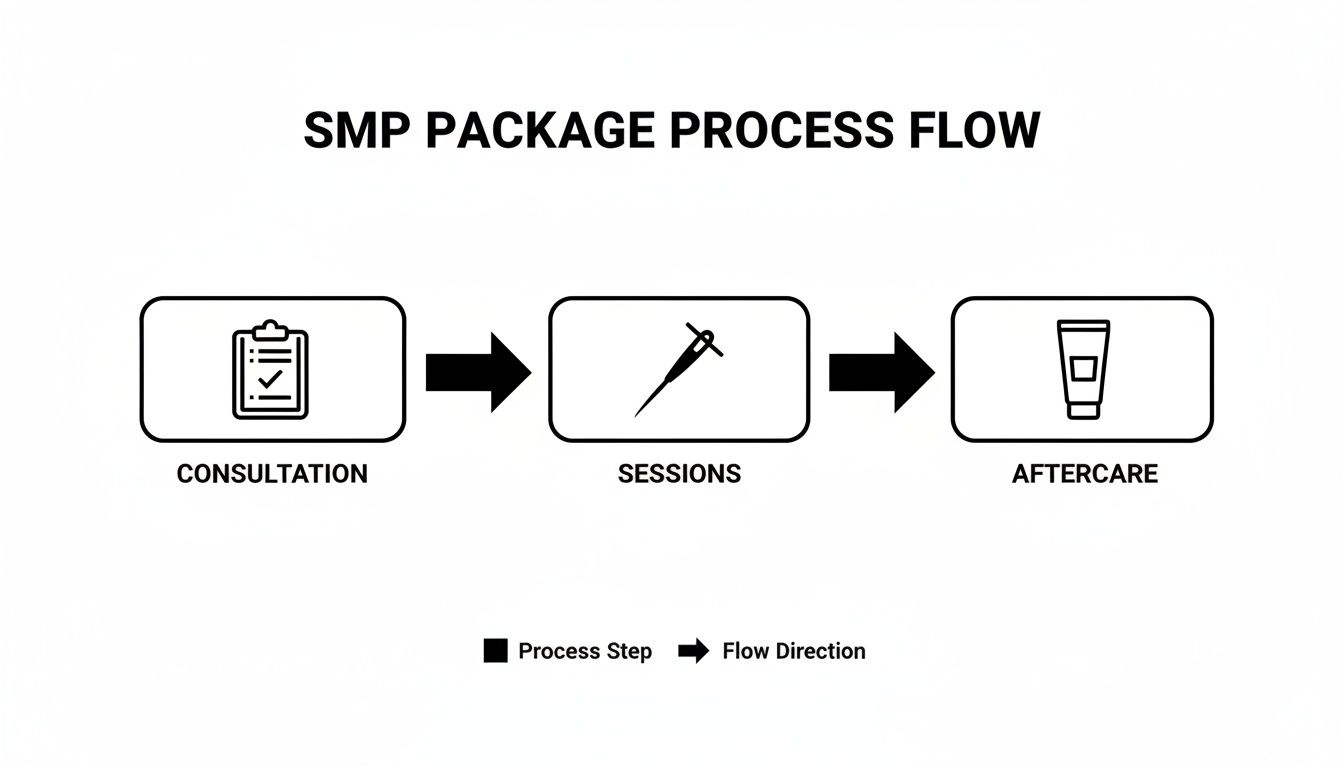
Unlike the endless cycle of payments required by other treatments, this process shows how SMP is a complete, permanent solution from start to finish.
A Clear Comparison of Long-Term Value
When you lay out the numbers side-by-side, the financial sense behind SMP becomes crystal clear. It offers a permanent result with almost no ongoing costs, save for a minor touch-up session every four to six years at a fraction of the original price.
This table really puts the long-term commitments into perspective.
Cost and Commitment Comparison of Hair Loss Treatments
| Treatment | Initial Cost (AUD) | Annual Maintenance Cost (AUD) | Longevity & Permanence |
|---|---|---|---|
| Scalp Micropigmentation | $1,200 - $4,000+ | $0 (touch-ups every 4-6 years) | Permanent with minor touch-ups |
| Hair Transplant Surgery | $10,000 - $30,000+ | $0 (but may need future surgery) | Permanent (but doesn't stop future loss) |
| Medications (Minoxidil/Finasteride) | ~$100 | $600 - $1,200 | Temporary (results reverse if stopped) |
| Hair Systems (Toupees) | $1,000 - $3,000 | $2,000 - $4,000 | Temporary (requires constant replacement) |
At the end of the day, SMP truly stands out as an incredibly cost-effective choice. It lets you break free from the cycle of monthly bills and high-maintenance routines, giving you a reliable, set-and-forget solution that restores your confidence without becoming a long-term financial burden.
So, Will My Insurance Cover My SMP Treatment?
It’s a question that comes up a lot when people are budgeting for scalp micropigmentation: can health insurance help with the cost? The short answer, unfortunately, is almost certainly no. It’s best to go into this knowing that SMP is an out-of-pocket investment.
The reason is pretty straightforward. Here in Australia, Medicare and private health funds draw a very clear line in the sand between procedures that are medically necessary and those that are purely cosmetic. As life-changing as SMP can be for your confidence, it falls into that second category.
The Cosmetic vs. Medical Divide
At its core, insurance exists to cover treatments that manage or cure a medical condition. While hair loss can sometimes be a symptom of a health problem, the hair loss itself isn't generally considered a medical issue that needs treatment.
Because scalp micropigmentation addresses the appearance of a full head of hair, rather than treating the biological reason for the loss, it’s classed in the same way as cosmetic tattooing or professional teeth whitening. It’s a personal choice to enhance your appearance, not a medical imperative, and that’s the key distinction for insurers.
A good way to think about it is like getting glasses. Your insurance helps pay for prescription lenses because they correct a diagnosed vision problem. It won't chip in for a pair of non-prescription, purely fashion frames. SMP is seen through a similar lens—it’s a fantastic cosmetic solution, but not a medical necessity.
Are There Any Exceptions to the Rule?
Look, you can never say never, but exceptions are incredibly rare. If hair loss is a direct result of a diagnosed medical condition like alopecia or a side effect of a treatment like chemotherapy, there's a very slim possibility you could argue for a partial rebate.
Be warned, though—this is usually a long and complicated process. You’d need to build a strong case that the treatment is vital for your psychological well-being, and even then, there are no guarantees. For the vast majority of us looking at SMP for standard male or female pattern baldness, it’s just not a pathway.
Making the Investment Work for You
Knowing that insurance is off the table, good clinics understand that you need flexible ways to manage the cost. You don't always have to find the full amount in one lump sum.
Most reputable artists and clinics will offer a couple of solid options:
- Payment Plans: This is a common approach where you can split the total cost across your treatment sessions. It breaks the investment down into more manageable chunks.
- Third-Party Financing: Some clinics have partnerships with companies that specialise in financing for cosmetic procedures. These work a bit like a personal loan, letting you pay off the treatment through smaller monthly instalments.
If you do look into financing, just make sure you read all the details. Get a clear picture of the interest rates and repayment terms so you know it fits your budget. The whole point of SMP is to walk away feeling fantastic, not to add any financial stress to your life.
How to Choose a Provider That Delivers Real Value

When you're looking at the cost of scalp micropigmentation, it’s all too easy to start hunting for the lowest price. But this isn't like buying a new gadget; it's a long-term investment in your appearance and how you feel about yourself. The cheapest quote rarely translates to the best value.
In fact, a botched job can end up costing you far more in laser removal and correction down the track.
True value comes from finding a skilled, reputable artist who delivers a natural, undetectable result that lasts. The most important thing you can do is shift your focus from price to quality. A top-tier artist gives you peace of mind and an outcome you’ll be proud of for years to come.
Vetting Your Potential Artist and Clinic
Choosing the right provider takes a bit of homework, but trust me, it’s the most critical part of the process. You need to look past the price tag and really dig into the artist's work and reputation. A great technician will be transparent and proud to show you everything you need to feel confident in their ability.
Here’s a practical checklist to help you size up potential SMP artists:
- Examine Their Portfolio: Look for a big gallery of high-resolution, unedited photos and videos. Pay close attention to the detail in their work—especially healed results, not just photos taken right after a session.
- Check for Consistency: Does their work look amazing every single time? A top artist will have a solid track record of excellent results across lots of different clients.
- Seek Out Similar Cases: Try to find clients with a similar skin tone, hair colour, and level of hair loss to you. This gives you the clearest picture of what they can achieve for your specific situation.
The Power of Genuine Reviews and Testimonials
A provider's online reputation says a lot. When you're picking an SMP clinic, it's worth reading up on the importance of customer reviews, as they give you a real window into a clinic's commitment to quality and client satisfaction.
Look for detailed, authentic reviews on independent sites like Google or Facebook. Be wary of reviews that are vague or a bit too glowing. Real clients usually talk about the whole experience—from the first chat to the artist’s professionalism and, of course, the final result.
An experienced and ethical artist invests heavily in their training, uses premium pigments, and maintains impeccable hygiene standards. This commitment to quality is reflected in their pricing but is essential for a safe, predictable, and aesthetically pleasing result.
At the end of the day, investing in a skilled practitioner is the only way to guarantee a result you’ll love. It’s the best way to avoid the high physical and financial cost of a bad procedure. Finding the best scalp micropigmentation clinic near you that ticks all these boxes is how you ensure your investment truly pays off.
Your SMP Cost Questions Answered
When you're considering SMP, the price is obviously a big part of the decision. Let's tackle some of the most common questions that pop up about the costs involved.
How Many SMP Sessions Will I Need?
Most people need between 2 to 4 sessions to achieve that seamless, natural look we're all after. Any professional quote you receive should cover the entire treatment from beginning to end, not just a single appointment. Think of it like painting a masterpiece: the first session lays down the crucial foundation, and the following ones build up the density and intricate detail that make the result truly undetectable.
A word of caution: be wary of clinics that only price per session without offering a complete package. This approach can often end up costing you more in the long run when you find out you need more work than initially quoted.
Are Touch-Ups Expensive and How Often Are They Needed?
Scalp micropigmentation is designed to last a long, long time. Over the years, you'll naturally see some slight fading, which is usually down to things like sun exposure and your skin’s own renewal process.
Most clients find they come back for a quick touch-up session every 4 to 6 years just to keep things looking sharp. These appointments are way shorter and much cheaper than the initial treatment, typically costing only a fraction of the original price.
Can I Get a Discount for a Smaller Area?
Of course. The price of your SMP treatment is tied directly to the amount of work required. If you only need a smaller area treated, the cost will be significantly lower.
We often perform treatments that are more targeted, such as:
- Rebuilding a receding hairline
- Adding density to a thinning crown
- Camouflaging a scar from a hair transplant or injury
These smaller jobs are much more affordable than a full-head treatment. The only way to get a firm, personalised quote is to have a chat with a technician who can properly assess what you need.
Ready to find out what a personalised SMP treatment would cost for you? My Transformation is here to give you a clear, no-obligation quote and answer all your questions. Learn more and book your free consultation at https://rightwing-health.info/a%3E.%3C/p%3E