

Finding the Best Shampoo for Hair Loss That Actually Works
When you're on the hunt for a shampoo to help with hair loss, it’s best to think of it as a support system, not an outright cure. The really effective ones are packed with science-backed ingredients, like ketoconazole to tackle scalp inflammation, caffeine to give follicles a kick-start, or DHT blockers such as saw palmetto.
Essentially, these shampoos are all about creating the perfect environment for the hair you already have to stick around and stay healthy. They're not a magic potion for regrowth, but they can make a real difference.
What a Hair Loss Shampoo Can Realistically Do
Before you spend your hard-earned money, it's crucial to get your expectations in check. A good hair loss shampoo is a fantastic first line of defence, but knowing its limits is the key to not being disappointed. They aren't designed to bring back hair on a completely bald scalp; their job is to improve the health and strength of the hair you've still got.
Think of your scalp like a garden. The right shampoo is like premium soil and fertiliser. It clears out all the gunk (like excess oil and product buildup), nourishes the roots, and makes the whole area a much better place for things to grow. It can definitely help a struggling garden look fuller and healthier, but it can’t sprout new seeds where the soil is completely bare.
A Look at Hair Loss in Australia
This is a big deal for a lot of us down under. In Australia, male pattern baldness affects a staggering 40.8% of men, making us one of the top countries in the world for hair loss. It’s not just a bloke's issue, either. Female pattern hair loss impacts 12% of women aged 20-29, and that figure jumps to 40% by the time they hit 50.
This common concern has created a huge market for treatments and products. You can dive deeper into the growing Australian hair loss treatment industry on imarcgroup.com.
The main goals of a specialised shampoo are to slow down shedding, strengthen the hair you have, and get your scalp in top condition. Nailing these can make your hair look and feel much fuller.
So, what are these shampoos actually doing when you lather up?
- Improving the Scalp Environment: They give your scalp a deep clean, getting rid of follicle-clogging sebum and calming down the kind of inflammation that can make hair fall out.
- Strengthening Hair: Many are loaded with ingredients like biotin and keratin, which help fortify the hair shaft. This means less breakage and hair that feels thicker to the touch.
- Slowing Down Shedding: Some ingredients can help keep your hair in its growth phase for longer, which means you'll notice less of it in the shower drain over time.
For anyone dealing with significant thinning or bald patches, these shampoos are a great supporting player. They work alongside more direct solutions like Scalp Micropigmentation (SMP), which offers a brilliant aesthetic fix by creating the look of a full head of shaved hair.
Decoding the Ingredients That Power Effective Shampoos
Staring at a wall of shampoos in the hair care aisle can be overwhelming, with every bottle promising the world. But to find a shampoo that genuinely helps with hair loss, you need to turn the bottle around and look past the flashy marketing. The real magic is in the ingredients list.
Think of a good hair loss shampoo as a well-oiled team. Each ingredient has a specific role, working together to create the best possible environment for your hair to thrive. You wouldn't ask a painter to fix your plumbing, and the same principle applies here. Different ingredients target different causes of hair thinning, from hormonal factors to scalp inflammation.
The Follicle Bodyguards: DHT Blockers
For a huge number of people, especially men, the main driver behind genetic hair loss is a hormone called Dihydrotestosterone, or DHT. It’s a bit of a bully—it latches onto your hair follicles, causing them to shrink over time until they eventually stop producing hair. DHT blockers are your follicle's personal security detail.
Their job is to run interference, preventing DHT from getting a foothold and damaging the follicles. This not only helps you hold onto the hair you have but can also significantly slow down the thinning process.
- Ketoconazole: You'll often find this in anti-dandruff shampoos. It’s a fantastic all-rounder, known for its anti-inflammatory properties and its ability to act as a mild DHT blocker. It tackles two problems at once.
- Saw Palmetto: This natural, plant-based extract is widely believed to inhibit the enzyme that turns testosterone into DHT. It offers a more botanical way to protect your follicles from hormonal damage.
The Wake-Up Call: Scalp Stimulants
Sometimes, the issue isn't that your follicles are gone, but that they've become dormant or sluggish. This is where scalp stimulants come in. They act like a strong shot of espresso for your scalp, jolting those lazy follicles back into an active growth phase.
They do this by boosting blood circulation right at the scalp's surface. Think of it like opening up the highways to your hair roots. This increased blood flow rushes more oxygen and vital nutrients to where they're needed most, creating an energised foundation for stronger, healthier hair to grow.
The Peacekeepers: Anti-Inflammatories and Nutrients
Inflammation is the silent enemy of healthy hair. An itchy, red, or irritated scalp is a stressed-out scalp, and stress is the last thing your hair follicles need. Anti-inflammatory ingredients work to calm everything down, creating a peaceful, stable environment for hair growth.
On top of that, your hair itself needs the right building blocks. Shampoos fortified with essential nutrients help to repair and strengthen the hair shaft from the inside out. This reduces the kind of breakage that can make thinning hair look even worse.
- Caffeine: More than just a morning pick-me-up, caffeine applied topically is a brilliant stimulant that can help improve blood flow directly to the scalp.
- Biotin (Vitamin B7): This is a non-negotiable for hair health. Biotin is a core component in producing keratin, which is the very protein your hair is made of.
- Niacin (Vitamin B3): Another B vitamin that's a champion for circulation, niacin supports the health of blood cells, ensuring your follicles get a steady supply of nutrients.
To give you a clearer picture, I've put together a table that breaks down these key players.
Key Active Ingredients in Hair Loss Shampoos
| Ingredient | How It Works | Best For |
|---|---|---|
| Ketoconazole | Acts as an anti-inflammatory and mild DHT blocker, reducing scalp irritation and hormonal impact on follicles. | Androgenetic alopecia (male/female pattern baldness), and hair loss associated with dandruff or scalp inflammation. |
| Saw Palmetto | A natural plant extract believed to inhibit the 5-alpha-reductase enzyme, which converts testosterone to DHT. | Hormonal hair loss, particularly early-stage androgenetic alopecia. A good natural alternative. |
| Caffeine | Stimulates blood flow to the scalp, delivering more oxygen and nutrients to hair follicles and prolonging the growth phase. | General hair thinning and anyone looking to boost hair vitality and growth rate. |
| Biotin (B7) | An essential vitamin for keratin production, the protein that makes up hair, skin, and nails. Strengthens the hair shaft. | Brittle hair, breakage, and hair loss related to nutritional deficiencies. |
| Niacin (B3) | Improves scalp circulation and helps rebuild the keratin structure of the hair, reducing brittleness. | Thinning hair and improving overall hair density and strength. |
Choosing a shampoo with a strategic mix of these ingredients gives you a multi-pronged attack against hair loss.
This concept map helps to visualise how a specialised shampoo fits into a broader strategy for tackling hair loss.
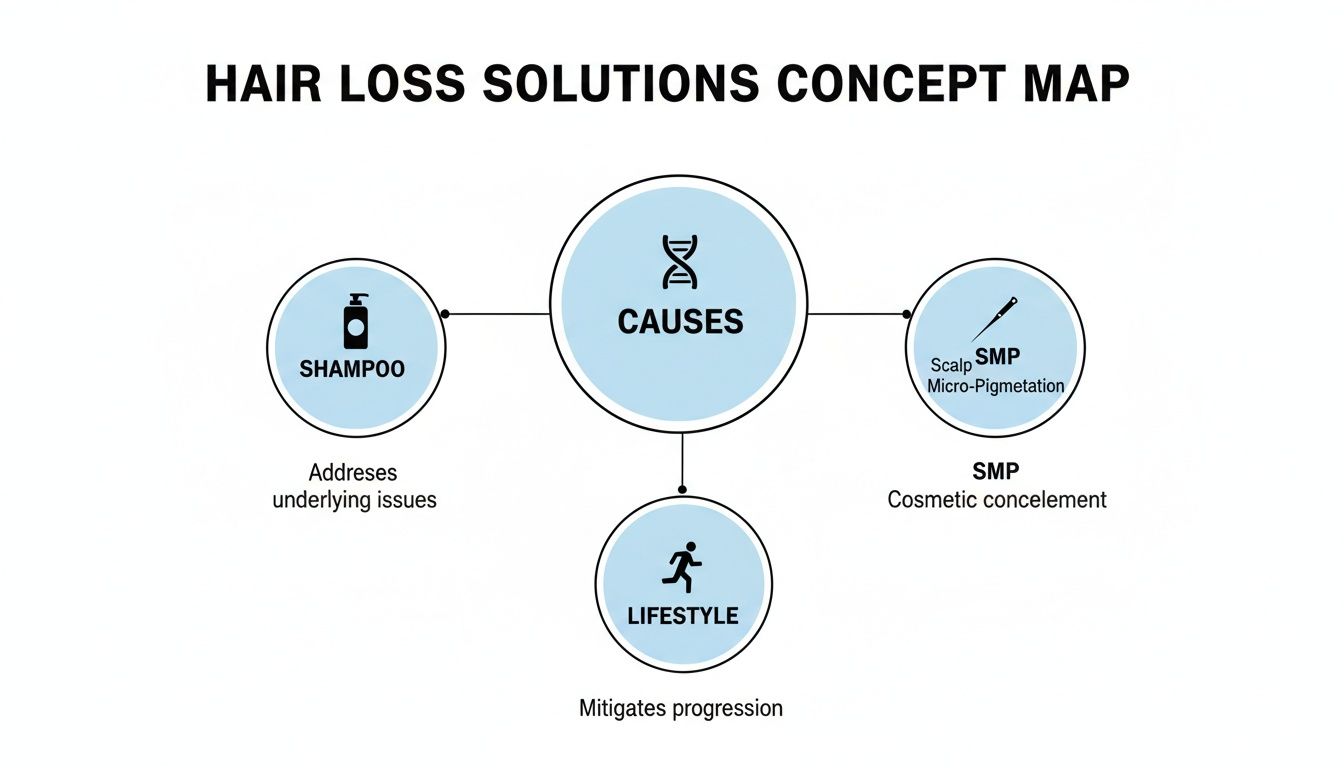
As the map illustrates, shampoos are a crucial tool, but they deliver the best results when combined with healthy lifestyle choices and, when needed, advanced solutions like SMP. When you're looking at products, don't forget the power of soothing, natural components. For instance, exploring aloe vera's hydrating benefits for hair can be a game-changer for maintaining scalp health.
For a deeper dive into product selection, our guide on finding the best products for thinning hair has you covered. By learning to read the label and understand what these ingredients actually do, you can finally choose a shampoo that is built on science, not just promises.
How to Match a Shampoo to Your Scalp and Hair Type
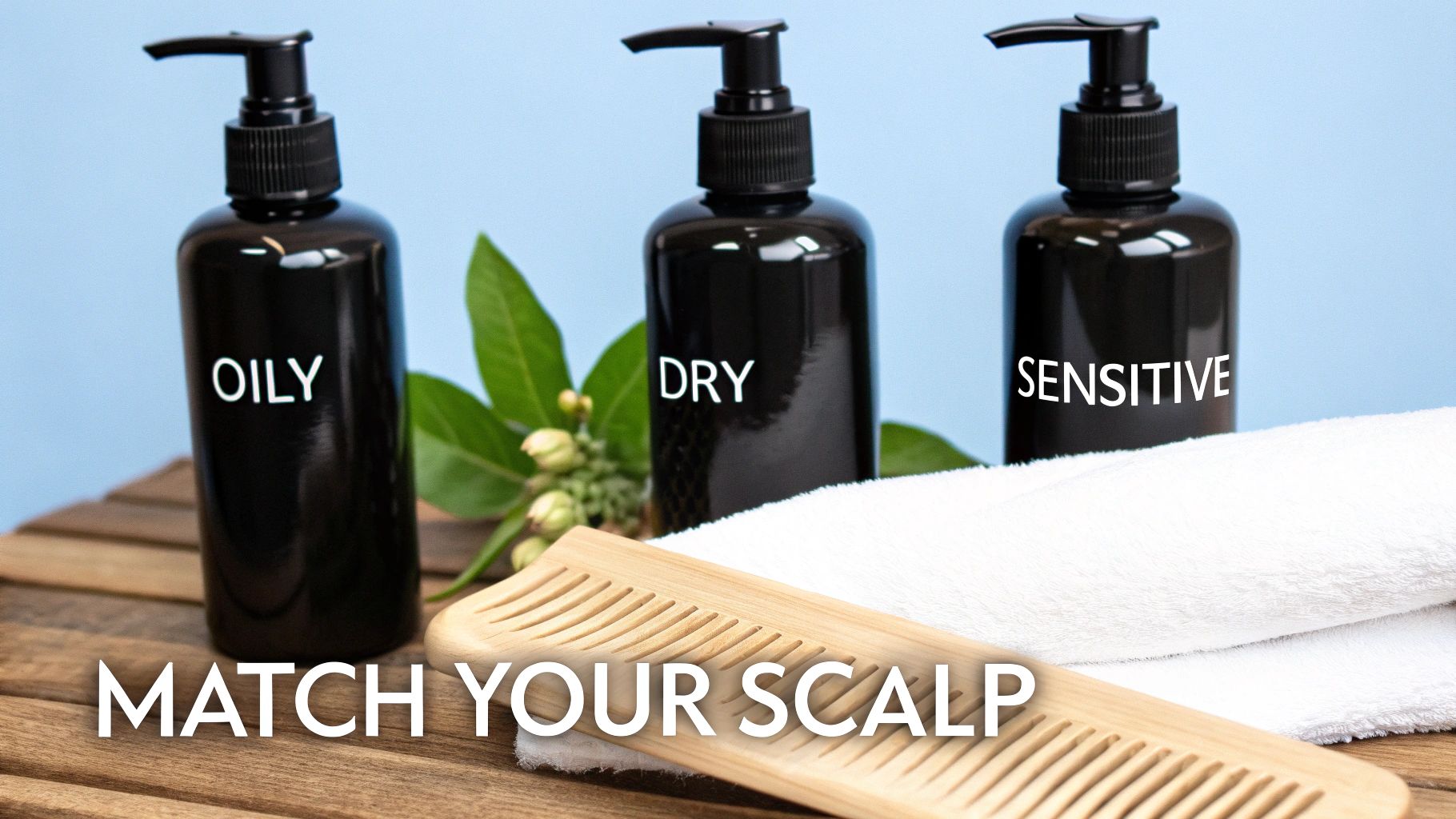
Choosing the right shampoo for hair loss isn't just about looking for a few hero ingredients. The actual base formula of the shampoo creates the environment your scalp lives in day-to-day, so getting that match right is absolutely fundamental to seeing any real, lasting results.
Think of it like this: you wouldn't put a high-performance engine in a car with cheap, mismatched tyres and expect it to handle well. In the same way, a shampoo packed with brilliant active ingredients but built on the wrong base for your scalp can completely sabotage your efforts, or even make matters worse.
Oily and Inflammation-Prone Scalps
If your scalp gets greasy quickly or you're prone to redness and irritation, your main job is to cleanse properly without adding fuel to the fire. That excess oil, called sebum, can easily clog hair follicles and create a breeding ground for problems that stifle healthy hair growth.
The best approach here is a shampoo with gentle clarifying abilities. You want something that gets a handle on oil production without stripping your scalp bare. Overly harsh cleansers can trigger a frustrating rebound effect, causing your scalp to pump out even more oil to compensate for the dryness. If you want to dive deeper into related issues, you can learn more about if dandruff can cause hair loss in our detailed guide.
Dry Scalps and Brittle Hair
On the other end of the spectrum, if your scalp constantly feels tight and your hair is brittle, your focus needs to be on moisture and gentle cleansing. Many off-the-shelf shampoos contain aggressive detergents that mercilessly strip away the natural oils protecting both your scalp and hair.
This is where sulfate-free shampoos are a game-changer. They do a great job of cleaning your hair and scalp without that harsh, stripping effect, which helps lock in precious moisture and reduce the risk of breakage. When your hair is already thinning, preventing further breakage is a big win.
Your scalp type determines the cleansing strength you need, while your hair type dictates the level of conditioning required. The best hair loss shampoos find the perfect balance between the two.
Understanding the Australian Market
Australia's hair care market is enormous, valued at US$1.07 billion, which means the shelves are flooded with options. But for the 90% of hair loss cases stemming from genetic male-pattern alopecia, a standard cosmetic shampoo simply won't cut it.
While proven treatments like minoxidil can slow thinning for about 60-70% of users and finasteride can slash DHT by up to 70%, these are long-term commitments. This is precisely why choosing a supportive, well-formulated shampoo isn't just a small detail—it's a critical piece of the puzzle.
Harmful Ingredients and Habits to Avoid at All Costs
Knowing what to look for in a good shampoo is only half the battle. Just as important is knowing what to steer clear of, because many popular products are packed with ingredients that can actually make your hair loss worse.
Think of your scalp as a garden. You wouldn't pour harsh chemicals all over the soil and expect healthy plants to grow, would you? The same logic applies here. The best shampoo for thinning hair isn't just about what's in it, but also what's been purposefully left out.
Common Culprits Hiding in Your Shampoo Bottle
Some ingredients are notorious for irritating the scalp, stripping away its natural oils, and making already fragile hair even weaker. When you're scanning the label, these are the main offenders to put back on the shelf:
- Harsh Sulfates (SLS & SLES): Sodium Lauryl Sulfate and Sodium Laureth Sulfate are the detergents that give you that satisfying, foamy lather. The problem is, they're often too aggressive for a sensitive scalp, stripping away the essential oils that keep your hair and scalp moisturised. Looking into the benefits of sulfate-free shampoo is a great move towards a gentler clean.
- Parabens: These are common preservatives that give products a longer shelf life. However, some studies have raised concerns that certain parabens might disrupt hormone balance, which is a major player in many forms of hair loss.
- Certain Alcohols: Not all alcohols are bad news. But you want to avoid short-chain alcohols like isopropyl alcohol, which can be incredibly drying for both your scalp and hair, leading to brittleness and breakage.
A clean, balanced scalp is the foundation of healthy hair. Ingredients that cause dryness, irritation, or hormonal disruption are fundamentally at odds with preventing hair loss and should be avoided at all costs.
It’s not just what’s in the bottle, either. Some of our daily habits can sabotage our efforts without us even realising it. For example, aggressively rubbing your hair with a towel can easily snap weakened strands, while washing with scalding hot water can inflame the scalp and strip its protective oils.
Frequent chemical treatments can also take a heavy toll; understanding if things like hair dye can cause alopecia is key to a holistic hair care plan. Simple tweaks to your routine, like using lukewarm water and gently patting your hair dry, can make a surprisingly big difference over time.
When Shampoos Are Not Enough: Introducing Scalp Micropigmentation
It’s important to have a frank conversation about what even the best hair loss shampoo can realistically do. A solid, science-backed formula can definitely help slow down shedding, fortify the hair you still have, and foster a healthier scalp environment. But it has its limits.
Let's be clear: no shampoo on the planet can bring back hair from follicles that have already shut down for good.
For anyone dealing with significant thinning or baldness, relying only on shampoo can feel like trying to put out a house fire with a water pistol. It might help a little, but it's not the powerful solution you truly need. When topical treatments just aren't delivering the visible results you’re hoping for, it might be time to look at a different game plan. This is where Scalp Micropigmentation (SMP) enters the picture.
The Realistic Next Step for Visible Results
SMP isn't a hair growth treatment—it’s a highly advanced cosmetic procedure that gives you an immediate and lasting fix for the appearance of hair loss. The simplest way to think of it is like a hyper-specialised form of tattooing. An expert technician meticulously applies tiny dots of pigment to the scalp.
These micro-dots perfectly mimic the look of individual, natural hair follicles. The final result? The flawless illusion of a full head of hair that’s been intentionally shaved or buzzed down. For people with thinning hair, it works wonders to create visual density, masking the scalp so your existing hair looks much thicker and fuller.
Here in Australia, the demand for real solutions is huge. With around 25% of Australian men seeing some hair loss by age 21 and a massive 85% experiencing major thinning by 50, it’s no surprise that shampoos often don't meet expectations. SMP offers a non-surgical way to achieve a lifelike look of density from the very first session. You can dig into the facts and figures on hair loss in Australia on Hairskeen.com.au to see the full picture.
Unlike the daily grind of shampoo routines, which demand months of patience for subtle changes, SMP offers a low-maintenance transformation that can boost your confidence overnight. It's a powerful aesthetic tool.
Who Is SMP For?
SMP is an incredibly versatile solution, picking up right where topical products leave off. It’s a brilliant choice for:
- Men with receding hairlines or thinning crowns looking to rebuild a sharp, defined hairline.
- Women dealing with diffuse thinning who want to reduce scalp visibility and give their hair a thicker appearance.
- Individuals with complete baldness who want to rock the clean, modern look of a permanent "buzz cut."
- Anyone wanting to camouflage scars from injuries or old hair transplant surgeries.
Instead of fighting a losing battle to regrow hair, SMP lets you create a guaranteed aesthetic result, putting you back in control. To get a better handle on the whole thing, our guide explaining what is Scalp Micropigmentation breaks down the entire process and its benefits. It's the definitive next step when you’re ready to stop worrying about hair loss and start living with renewed confidence.
Protecting Your Investment: SMP Aftercare and Shampoo Choice
So, you've made the move and gotten Scalp Micropigmentation (SMP). Congratulations! Your focus now shifts from worrying about hair loss to making sure that brilliant new look stays sharp. Think of your SMP as a detailed work of art; the shampoo you choose is the specialist tool you need to keep it looking fresh and vibrant for years to come.
Picking the wrong shampoo can be a costly mistake. Harsh chemicals can easily irritate the treated skin, cause the pigment to fade much faster than it should, and ultimately compromise the incredible result you've invested in. What you're looking for is a shampoo that cleans your scalp effectively while being incredibly gentle on the pigment underneath.
Choosing an SMP-Safe Shampoo
The golden rule for looking after your SMP is simple: treat your scalp with care. This means finding a shampoo that’s completely free of aggressive chemicals that might strip the pigment or interfere with the healing process, particularly in those first crucial days.
Your top priority? A sulfate-free formula. Sulfates are powerful detergents responsible for that rich, foamy lather we often associate with being "clean," but they're far too harsh for a scalp with SMP. They can speed up pigment fading and lead to the kind of dryness and irritation you definitely want to avoid.
The best shampoo for post-SMP care is one that gently cleanses and soothes. It needs to clean without stripping, calm without irritating, and ultimately, protect the integrity of the pigment.
It’s also a good idea to steer clear of shampoos with high levels of alcohol, which can be incredibly drying for the scalp. You should also avoid products containing strong exfoliants like salicylic acid. These are designed to speed up skin cell turnover, a process you don't want to encourage as it could cause the pigment to fade prematurely.
For a deeper dive, our 5 top tips to care for your scalp after SMP offer some essential guidance for keeping your scalp in top condition.
What to Look for and When to Wash
Instead of focusing on what to avoid, let's look at what you should be looking for. Shampoos with calming, natural ingredients are your best bet. Things like aloe vera, chamomile, and even small, diluted amounts of tea tree oil are fantastic for soothing the skin and keeping it healthy.
You’ll need to avoid washing your scalp entirely for the first few days after your procedure to let everything settle and heal. Once you're past that initial window, you can start using a gentle, SMP-safe shampoo.
Washing just two to three times a week is usually more than enough to keep your scalp clean without overdoing it. By making a smart choice now, you're protecting your investment and ensuring your SMP looks its absolute best for a long, long time.
Common Questions About Hair Loss Shampoos
It’s completely normal to have a tonne of questions when you start looking into hair loss shampoos. Let's cut through the noise and get you some straight answers so you know what to expect and how to pick the right product for your hair.
How Long Does It Take to See Results?
This is the big one, isn't it? The simple answer is: you need to be patient. You won’t see changes overnight.
Give any new hair loss shampoo a fair go by using it consistently for at least three to six months. That’s usually how long it takes to start noticing a difference, which might look like less hair in the drain or just a healthier-feeling scalp and better hair texture.
It’s also important to remember what these shampoos are designed for. They're all about supporting the hair you still have and creating a prime environment for growth, not miraculously sprouting new hair on a bald patch.
Can I Use a Hair Loss Shampoo Every Day?
That really comes down to what's in the bottle. Most of the gentler, sulfate-free options are fine for daily use. In fact, using them every day can be great for keeping your scalp clean and free from build-up without causing any drama.
On the other hand, the more heavy-duty medicated shampoos—especially those containing ingredients like ketoconazole—are a different story. These are typically meant to be used just two or three times a week. Using them more often can strip your scalp and lead to dryness and irritation, which is the last thing you want. Always, always check the label and follow the instructions.
Shampoos with DHT blockers can help slow the progression of genetic hair loss. However, they cannot reverse significant baldness where follicles are no longer active. For a guaranteed visual improvement, a solution like SMP is a far more effective choice.
When it comes to genetic hair loss, shampoos can be a great ally in the fight, but they aren't a cure. For a definitive result that gives you back the look of a full head of hair, you need to look at more advanced options that deliver that confidence boost right away.
At My Transformation, we specialise in Scalp Micropigmentation (SMP), offering a reliable and transformative solution for hair loss. Learn how SMP can restore your confidence today.