

Beard Tattoo Man: The Definitive Micropigmentation Guide
If you're a man who's been battling a patchy or uneven beard, the thought of a permanent solution probably sounds pretty good. When you hear the term "beard tattoo," don't picture a traditional ink design. Instead, think of beard micropigmentation—a highly specialised cosmetic technique designed to create the illusion of thick, full facial hair. It’s a game-changer for adding lasting definition and finally sorting out those frustrating patches.
The Modern Fix for a Patchy Beard
Staring at a patchy beard in the mirror every day gets old, fast. Maybe you’ve already tried all the oils, serums, and grooming tricks out there, only to see the same thin spots and gaps staring back at you. This is exactly where beard micropigmentation, or a beard tattoo, steps in to offer a real, long-term fix. It's quickly becoming the go-to choice for men across Australia who want a sharp, full beard without relying on temporary products.
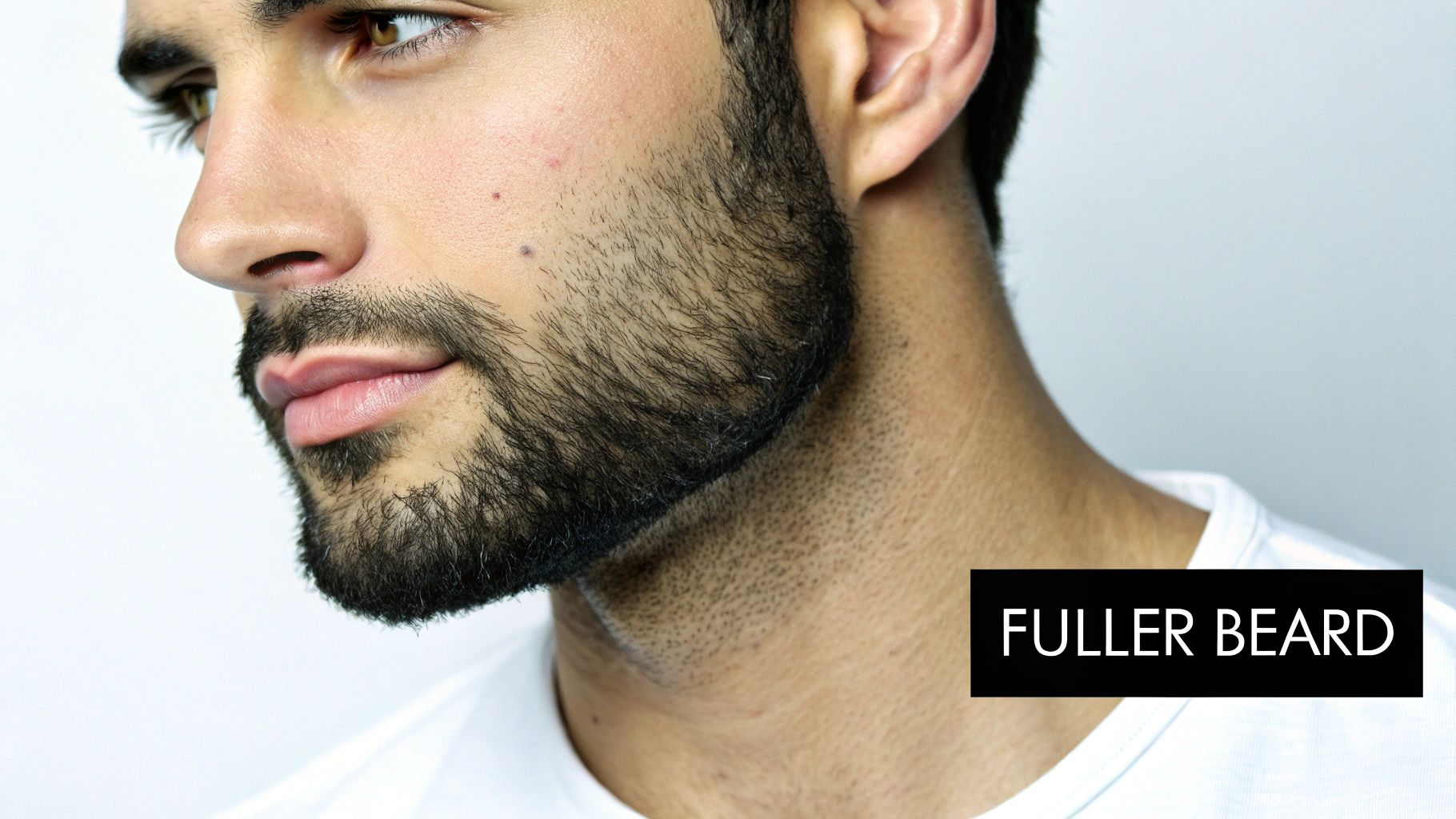
So, What Is a Beard Tattoo, Really?
Forget what you know about traditional body art. This is a completely different ball game. Think of it more like a highly skilled artist carefully placing thousands of tiny, individual dots of pigment onto your skin. Each dot is meticulously placed to mimic a natural hair follicle. We're not drawing lines or shading in a block of colour; we're building up layers of these micro-dots to create a convincing illusion of density.
The whole point of beard micropigmentation is to:
- Fill in patchy spots: Seamlessly blend tiny "follicles" with your real hair to make gaps disappear.
- Define your beard line: Carve out a crisp, sharp, and strong jawline or cheek line that looks freshly groomed, 24/7.
- Add overall fullness: Make a sparse beard look significantly denser and more robust.
- Conceal scars: Cleverly hide any acne scars, surgical marks, or other blemishes hiding in your beard area.
The final result is never a solid block of colour. It’s a textured, layered finish that looks just like real stubble, even when someone’s up close. A good practitioner makes the work completely undetectable.
Here’s a quick rundown of what beard micropigmentation delivers.
Beard Micropigmentation at a Glance
| Feature | Description |
|---|---|
| Technique | Thousands of tiny pigment dots are layered to mimic hair follicles. |
| Appearance | Creates the look of natural stubble or density, not a solid "painted on" colour. |
| Longevity | Semi-permanent, typically lasting 3-5 years before a touch-up is needed. |
| Pain Level | Mild discomfort, often managed with topical numbing cream. |
| Best For | Filling patches, defining edges, adding density, and hiding scars. |
This table shows just how targeted and effective the treatment is for achieving specific aesthetic goals.
Why It’s So Effective
The magic behind this method is all in the detail. Using specialised micro-needles and carefully chosen pigments, a trained technician can perfectly match your natural hair colour and skin tone. The pigment is placed in the upper layer of the dermis, which is much shallower than a regular tattoo. This is key, as it results in a softer, more natural look that can be easily touched up over the years if your style changes or a little fading occurs.
For the modern guy, a beard tattoo is a low-maintenance, high-impact way to get that consistently full beard you've always wanted. It's a serious confidence booster.
What Exactly Is Beard Micropigmentation?
Let's clear up any confusion straight away. When we talk about a "beard tattoo," we aren't talking about getting bold lines inked on your face. The procedure is actually a highly specialised technique called beard micropigmentation, a type of cosmetic tattooing that’s all about creating a subtle illusion of fullness.
Think of it like a painter using pointillism. Instead of using broad brushstrokes, they build an image with thousands of tiny, individual dots. That’s precisely what a micropigmentation specialist does on your skin. Using specialised pigments and micro-fine needles, they deposit countless layered dots into the upper layer of your dermis.
The whole point is to flawlessly replicate the look, texture, and colour of your natural hair follicles. This process lets us seamlessly fill in any patchy areas, sharpen up your beard line, and give an overall impression of much greater density. It’s a technique designed for subtlety, not for making a loud statement like a traditional tattoo.
Not Your Average Tattoo
It's really important to understand that beard micropigmentation and a standard tattoo from a parlour are worlds apart. While both use needles and pigment, that’s pretty much where the similarities end. The techniques, the tools, and the end goals are completely different.
Here’s a quick rundown of what sets them apart:
- Pigment Depth: A traditional tattoo deposits ink deep into the dermis. Micropigmentation, on the other hand, places pigment in a much shallower layer—the upper dermis. This is crucial because it stops the pigment from spreading or "blowing out," which keeps each dot looking crisp and just like a real hair follicle.
- Pigment Composition: The pigments we use are specifically formulated for cosmetic procedures. They’re designed to hold their true colour and fade naturally over time, without turning that dreaded blue or green shade you sometimes see with old, traditional black ink.
- Needle Size: The needles are incredibly fine, engineered specifically to create tiny impressions that perfectly mimic the size of a single hair follicle.
- Artistic Goal: The objective here is pure realism and camouflage. The perfect beard tattoo man result is one where nobody can even tell you’ve had it done. It should just look like you naturally have a thick, even stubble.
The shallow depth of the pigment is the real secret. It ensures the final result looks soft and natural, blending perfectly with any existing hair. It also means the pigment will fade gently over several years, giving you the flexibility to adjust the look down the track if you want to.
The growing acceptance of tattoos in general has really opened the door for specialised procedures like this. It's become a sought-after solution for men dealing with patchy facial hair, and its popularity here in Australia mirrors the broader national trends. In fact, by 2022, surveys showed that roughly 25% of Australians had at least one tattoo. This steady increase helped create the demand for cosmetic services like micropigmentation. You can even explore more about Australia's evolving tattoo culture to see how these trends fit together.
The Stubble Effect Explained
The final result is often called the "stubble effect" or a "density fill." A technician doesn't just colour in a patch of skin. Instead, they carefully build up layers of these tiny dots over two to three sessions, creating a 3D effect that gives the illusion of hair sitting just beneath the surface. For a man with a completely bare patch, this creates a permanent five o'clock shadow look.
If you already have some facial hair but it’s a bit thin, the dots are placed strategically between the real follicles. This simple trick reduces the contrast between your skin and your hair, making the entire beard appear much thicker and more uniform. It's all about enhancing what you've already got.
For a deeper dive into what the procedure involves from start to finish, have a look at our detailed guide on the beard tattoo process. This commitment to detail is what elevates micropigmentation from a simple procedure to a true art form.
Your Beard Tattoo Journey Step by Step
So, you're thinking about beard micropigmentation? It's a great decision, but knowing exactly what to expect can make the whole thing feel less daunting. We break the entire procedure down into a few simple stages. Think of it as a genuine partnership between you and your artist, where you work together to build a perfectly natural look from the ground up.
This diagram shows you the basic science behind it all—how tiny pigments and specialised needles work together to place colour into the upper layer of your skin.
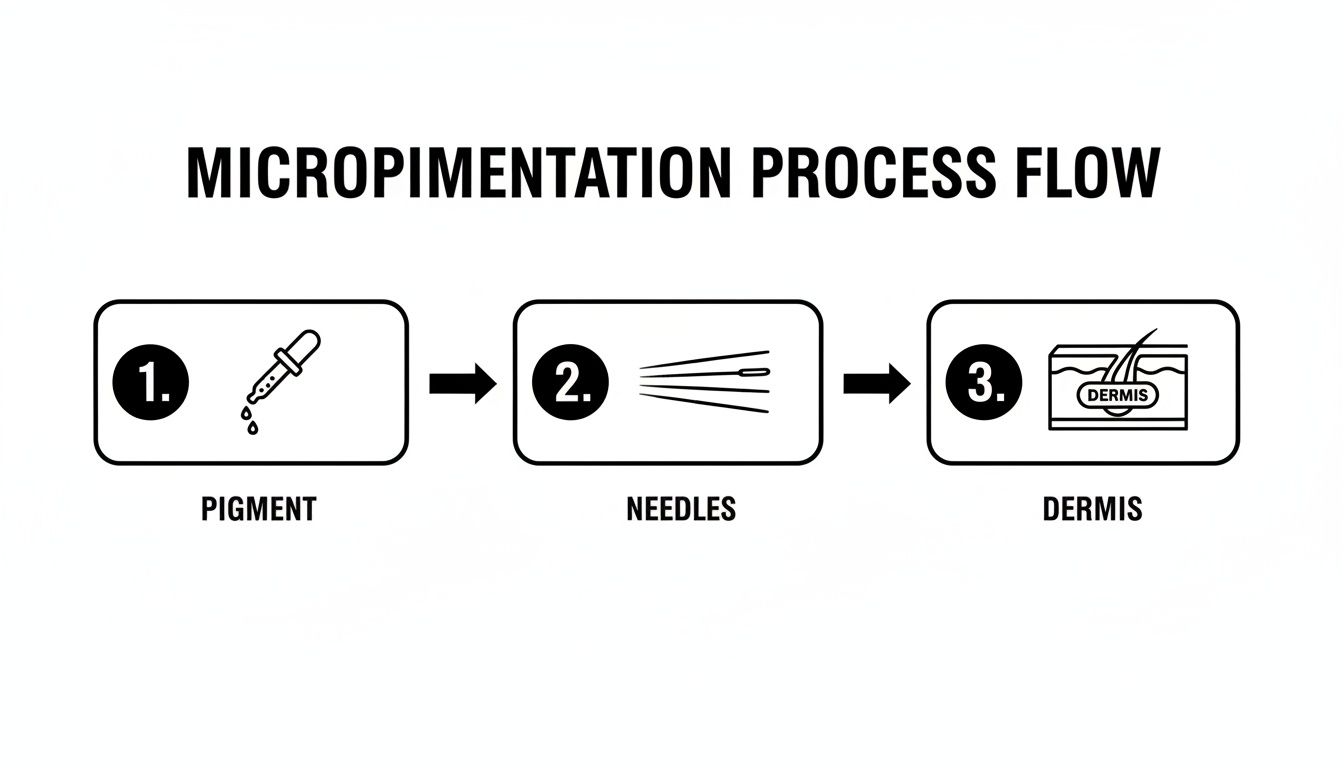
As you can see, the technique is all about precise, shallow application. This is what creates that realistic stubble effect, not a solid block of unnatural colour.
Stage 1: The Initial Consultation and Design
This first meeting is, without a doubt, the most crucial part of the process. It's not just a quick chat; it's a detailed planning session where you and your practitioner nail down the blueprint for your ideal beard.
Here’s what you’ll cover:
- Your Goals: You'll talk through exactly what you want to achieve. Are you looking to fill in a few annoying patches, define a stronger jawline, or just add some density all over?
- Your Beard Shape: Your artist will draw a proposed beard line right onto your face with a wax pencil. This is your time to play with the shape, height, and sharpness until it feels just right and complements your facial structure.
- The Perfect Pigment: Based on your existing hair colour and skin tone, the practitioner will custom-blend a pigment. They’ll even test a few shades against your skin to get a seamless, natural match.
This is also your chance to ask anything and everything. A good artist will be completely transparent about the process, costs, and the results you can realistically expect.
Stage 2: Your First Treatment Session
Once the design is locked in, it's time for your first session. This is all about laying the foundation. Your artist will carefully apply the first layer of density across the whole area, setting the stage for the realistic texture we'll build on later.
Don't worry about the pain. A topical numbing cream is applied beforehand to make sure you're comfortable. Most guys describe the feeling as a light, repetitive tapping or a minor irritation—definitely not outright painful. This session usually takes two to four hours, depending on how big the area is.
Heads up: Your beard will look darker and more defined right after this first session than it will once it's healed. This is totally normal. The pigment just needs about a week to settle and soften.
Stage 3: Building Depth and Dimension
After your first treatment, you’ll need to give your skin about 10 to 14 days to heal properly. Your second session (and sometimes a third) is where the real magic happens. This is when the artist adds layers of detail to create a truly three-dimensional look.
They’ll use slightly different shades of pigment and vary the dot placement to build up density in a way that looks completely authentic. It’s this layering technique that stops the treatment from looking flat or "stamped on." Each session adds another level of realism, making the tattooed follicles impossible to tell apart from your real ones. The method is very similar to scalp micropigmentation, which also depends on meticulous layering. For a deeper dive, check out our guide on what the process of getting a hair tattoo involves.
Stage 4: The Final Touch-Up and Perfection
The final session is all about fine-tuning. Once the main layers have healed, this appointment gives the artist a chance to obsess over the small details. They’ll scan for any spots where the pigment might have settled a bit lighter and make tiny adjustments to ensure the final look is absolutely flawless.
This is the last step in guaranteeing your new beard tattoo is perfectly blended, balanced, and ready to go. From here on out, with the right care, your new sharp, full beard will look its best for years.
Is a Beard Tattoo Right for You?
So, you’re thinking about a beard tattoo. That's a big decision, and it’s important to figure out if it's genuinely the right path for you. While beard micropigmentation is a game-changer for many blokes, it isn't a silver bullet for every beard problem.
Knowing who this treatment is perfect for—and who should maybe look at other options—is the key to being thrilled with the final look. This is about more than just wanting a thicker beard; it's about matching your specific situation, skin, and what you hope to achieve.
The Ideal Candidate for a Beard Tattoo
Beard micropigmentation is brilliant at solving some very specific, and very common, beard frustrations. If any of the following sound familiar, you’re likely a great candidate for this procedure.
You’re a perfect match if you:
- Have a Naturally Patchy or Thin Beard: This is the number one reason guys walk through our doors. Micropigmentation is fantastic for filling in those sparse patches on the cheeks or connecting the jawline to create a solid, even appearance.
- Want a Stronger, More Defined Jawline: If you’re tired of trying to shape a sharp beard edge every day, this is your answer. We can create that clean, permanently groomed look that makes your jawline pop.
- Need to Camouflage Scars: Got scars from old acne, an accident, or surgery? Micropigmentation is incredibly effective at concealing blemishes within the beard area, making them blend away seamlessly.
- Struggle with Alopecia Barbae: For men whose facial hair is affected by alopecia, the treatment can restore the look of a full, dense beard or a consistent five o'clock shadow, bringing back that sense of normalcy and confidence.
At its core, this procedure is about reclaiming confidence. It gives you a low-maintenance, long-lasting solution so you can stop stressing about gaps and just enjoy a consistently sharp look.
When a Beard Tattoo Might Not Be the Best Fit
Just as important is being upfront about who isn't a good fit for this treatment. Any reputable practitioner in Perth, or anywhere for that matter, will always put your health and getting a realistic result first.
You might want to hold off or look at other options if you:
- Have Certain Skin Conditions: If you have active psoriasis, eczema, or severe cystic acne in the treatment area, it can seriously mess with the healing process and the final look. Your skin needs to be healthy and calm before we can start.
- Are Prone to Keloid Scarring: For anyone with a history of developing keloid scars (those thick, raised scars), this procedure is generally a no-go. The tiny punctures from the needle could unfortunately trigger that type of scarring.
- Have Unrealistic Expectations: It’s crucial to remember that micropigmentation creates the illusion of hair density and stubble—it doesn't actually grow hair. If you’re hoping for the texture and feel of real hair where there isn't any, this isn't the right solution for you.
How It Stacks Up Against Other Options
To give you the full picture, let’s see how a beard tattoo measures up against other common ways to tackle a patchy beard. Each approach has its own pros and cons when it comes to how long it lasts, what it costs, and how invasive it is.
Here’s a simple breakdown to help you compare.
Beard Enhancement Options Compared
| Solution | Permanence | Initial Cost (AUD) | Invasiveness |
|---|---|---|---|
| Beard Tattoo | Semi-Permanent (3-5 years) | $1,200 – $3,500 | Minimally Invasive |
| Beard Transplant | Permanent | $7,000 – $15,000+ | Highly Invasive (Surgical) |
| Growth Serums | Temporary (Daily use) | $80 – $150 (Per bottle) | Non-Invasive |
| Beard Dyes/Fillers | Temporary (Daily use) | $20 – $50 (Per product) | Non-Invasive |
As you can see, things like serums and fillers are cheap to start, but they’re a daily chore you're stuck with forever. At the other end of the spectrum, a beard transplant offers a permanent fix, but it’s a serious surgical procedure with a hefty price tag and significant downtime.
Beard micropigmentation hits that sweet spot right in the middle. It delivers a long-lasting, incredibly natural result without the pain and expense of surgery or the daily grind of makeup. In the end, the right choice for any man thinking about a beard tattoo comes down to his budget, lifestyle, and what he wants to see in the mirror.
Aftercare and Long-Term Maintenance Explained
The work your practitioner does is only half the story. Once you walk out of the clinic, the success and longevity of your new beard tattoo are squarely in your hands.
Think of it this way: you’ve just made an investment in your appearance. Proper aftercare is how you protect that investment, ensuring the pigment settles perfectly, heals without a hitch, and gives you that sharp, natural look you were after. Skipping these steps can lead to fading, blotchiness, or even infection, wasting all that time and effort.
Your Initial Healing Checklist
The first week is without a doubt the most critical phase. Your skin is healing, and the pigment is finding its permanent home in the upper dermis. The game plan here is simple: keep the area clean, dry, and free from any kind of irritation.
For the first 4-5 days, you’ll need to be quite strict and avoid:
- Washing or scrubbing the area: Don’t let the shower spray hit your face directly.
- Heavy, sweaty exercise: Sweat can introduce bacteria and actually push the pigment out as your pores open up.
- Direct sun exposure: UV rays are the number one enemy of fresh pigment. They will cause it to fade, fast.
- Shaving: Put the razor and electric shaver away. Don’t go anywhere near the treated area.
- Swimming: Stay out of pools, saunas, and steam rooms to avoid any risk of infection.
Your technician will likely suggest a specific moisturiser to use after a few days—make sure it’s gentle and fragrance-free. Knowing how to choose the right products is key; understanding fragrance-free products can help you steer clear of common irritants that might mess with the healing process.
Managing Potential Side Effects
It's completely normal to see a bit of redness and minor swelling for the first 24 to 48 hours. This is just your skin’s natural reaction to the treatment, and it settles down very quickly for most guys.
You'll also notice the pigment looks much darker and bolder right after the session. Don't panic! This is all part of the process. As the tiny scabs form and flake off naturally over the first week, the colour will soften by about 20-30%, revealing the final, more subtle shade underneath.
The most important thing to remember is to resist the urge to pick or scratch at the area. Let your skin do its thing. Picking at the scabs can literally pull the pigment out, leaving you with patchy spots that will need to be corrected later on.
Choosing a certified, hygienic clinic is your best line of defence against any serious risks. The standards for cosmetic tattooing in Australia have become incredibly high, largely because clinics want to ensure clients are happy with their results long-term. This focus on safety and satisfaction is non-negotiable when you’re considering a beard tattoo.
Long-Term Care and Touch-Ups
Once your beard tattoo has fully healed, looking after it is surprisingly simple. The golden rule for keeping it looking fresh for years is sun protection.
Just get into the habit of applying a high-SPF sunscreen to your face every day. This will shield the pigment from UV damage and prevent it from fading prematurely.
Beard micropigmentation is considered semi-permanent, which means the pigment will gradually soften and lighten over time. Most clients come back for a touch-up session every 3 to 6 years to bring back that sharpness and density. How long you can go depends on your skin type, how much sun you get, and your general lifestyle. To get a better idea of how the treatment ages, check out our guide on how a hair tattoo looks as you get older.
This refresh session is quick and straightforward, getting your beard looking its best again in just a couple of hours.
How to Choose a Skilled Practitioner in Australia
Let's be blunt: finding the right artist is the single most important decision you'll make. The final result hinges entirely on the skill, artistry, and experience of the person performing the treatment. A great practitioner delivers a hyper-realistic result that no one will ever question; a poor one can leave you with something that just looks… off.
Think of this as your checklist for finding a safe, skilled, and artistic practitioner right here in Australia. Putting in the research now means you'll be happy with the results for years to come.

Analyse Their Portfolio Forensically
An artist's portfolio isn't just a gallery—it's their entire resume on display. Don't just give it a quick glance. You need to scrutinise the photos. A top-tier practitioner will be proud to show off high-resolution images that let you zoom right in on the details.
Here’s what to look for:
- Healed Results: Any fresh work is going to look dark and sharp. The real test of skill is what it looks like 4-6 weeks after healing. A good portfolio will have photos clearly labelled as "healed."
- Variety of Skin Tones: Do they have experience with skin tones and hair colours similar to yours? This is crucial, as it shows they know how to custom-blend pigments that look natural on different people.
- Natural Hairlines: Pay close attention to the edges. The transition from the micropigmentation to your real hair should be absolutely seamless, not a hard, stamped-on line. You're looking for a soft, natural fade.
Vet Their Reviews and Reputation
Client reviews give you the unfiltered truth about what it's like to work with an artist, from the first chat to the final touch-up. Look for reviews on independent sites like Google or social media, not just the glowing testimonials they’ve hand-picked for their own website.
See what past clients are saying about:
- The professionalism and cleanliness of the clinic.
- The artist's communication style and whether they actually listened.
- How happy people are with their results long-term.
A consistent pattern of positive, detailed reviews is a massive green flag. Be wary of feedback that's vague or overly generic. You want to see authentic comments that are specifically about their beard micropigmentation work.
Ask the Right Questions During the Consultation
The consultation is your chance to interview the practitioner. Seriously. Don't hold back your questions—a true professional will welcome them and be happy to put your mind at ease. If they seem vague, rushed, or dismissive, that’s your cue to walk away.
Go in prepared with a few key questions to make sure they're up to standard.
- What are your qualifications? Ask about specific certifications in cosmetic tattooing and, just as importantly, infection control.
- What type of pigments do you use? You want to hear that they use high-quality, stable pigments made for cosmetic use that won't discolour over time.
- Can you explain your sterilisation process? They should be able to confidently talk you through their use of single-use needles and hospital-grade sterilisation equipment. No hesitation.
- How many beard procedures have you performed? Experience is everything. You want a specialist who does this day in and day out, not a generalist who dabbles in it occasionally.
Finding the perfect practitioner takes a bit of legwork, but it's the most critical part of the process. For more tips on finding an expert in your area, check out our detailed guide on how to find a beard tattoo artist near you in Australia.
Your Beard Tattoo Questions Answered
Alright, so you’ve got the basics down, but there are always those lingering practical questions. Let's tackle some of the most common things guys ask before they decide to go ahead with beard micropigmentation.
Does Getting a Beard Tattoo Hurt?
This is usually the first question on everyone's mind, and the answer is reassuring: it’s really not that bad. Most guys describe the sensation as a light, repetitive pricking. Think more irritating than outright painful.
To make sure you're comfortable, we always apply a strong topical numbing cream to the whole area before we start. Honestly, it's a world away from the intensity of a traditional body tattoo.
How Much Does a Beard Tattoo Cost in Australia?
In Australia, you can expect the total cost for beard micropigmentation to land somewhere between $1,200 and $3,500 AUD.
What causes that price range? It really comes down to a few key things:
- The size of the area: Simply filling in a few small, patchy spots is going to cost less than creating a brand-new, full beard outline from scratch.
- The practitioner's expertise: You're paying for experience. Artists with years of proven results will naturally command a higher rate.
- Your location: Costs can differ a bit between major hubs like Perth and regional towns.
It's also important to know that this price almost always covers the full treatment, which includes the 2-3 sessions needed to build up that perfect, natural-looking density.
Will My Beard Tattoo Look Fake?
When done right, a beard tattoo should be completely unnoticeable to the naked eye. The whole point is to achieve subtle realism, not a solid, "drawn-on" beard. The secret to this is all in the artist's technique.
A natural result comes from perfectly matching the pigment to your existing hair, using the right-sized micro-needles, and patiently building up density over several sessions. The final effect should blend in so well that you can't tell where your real hair ends and the SMP begins.
At the end of the day, how real it looks comes down to the skill of the practitioner. You can get a better idea of what's possible by checking out some examples of natural-looking beard tattoo results.